
Arcade Fire revisit catalog on 2025 tour and look ahead
Published on 06/16/2026 at 15:29 | Editorial responsibility: Rafael Müller, Editor-in-Chief AD HOC NEWS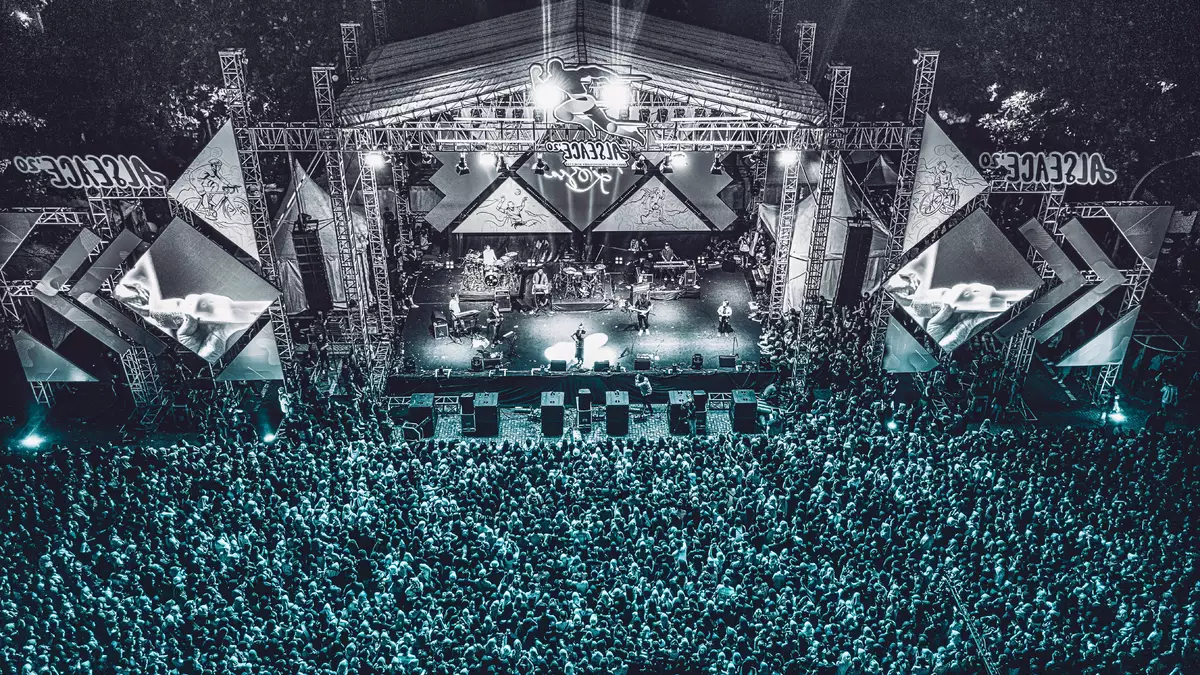
Arcade Fire remain one of the most discussed indie rock bands of the 2000s, even as the cycle around their latest studio album WE continues to wind down and the group shifts focus to touring, archival releases and long-term plans. Across two decades, the Montreal collective has moved from church-basement shows to arena headliners, reshaping the definition of indie rock along the way.
In the years since their breakthrough, the band around Win Butler and Régine Chassagne has built a catalog that stretches from the emotionally charged debut Funeral to the reflective and sometimes divisive WE. Each record arrived with a strong visual concept, carefully staged live shows and a growing sense that Arcade Fire were operating more like an art project than a conventional rock band.
Arcade Fire news, background and analysis at a glance
Use the AD HOC NEWS search to track further reports on Arcade Fire, from album reviews to tour updates and chart movements.
More news on Arcade Fire at AD HOC NEWS ->Tuesday spotlight: Arcade Fire’s path from Funeral to stadium stages
When Funeral appeared in 2004, few expected that a group of Canadian art rock musicians would soon play festivals and arenas around the world. The album’s mix of urgent guitars, baroque arrangements and cathartic singalongs created a new template for indie rock bands who wanted to be both emotionally intense and musically ambitious.
The follow-up Neon Bible widened that vision, bringing in organ, strings and a darker, more apocalyptic tone that felt closely connected to the political climate of the late 2000s. Songs grew bigger and more theatrical, while the band’s live set-ups expanded with more instruments, choir-like backing vocals and a light show that emphasized contrast and drama.
By the time The Suburbs arrived in 2010, Arcade Fire were no longer underground favorites but chart-topping, Grammy-winning artists. The record’s sprawling look at suburban life, nostalgia and unease resonated far beyond indie circles, helping the band win Album of the Year at major award shows and locking in their status as one of the essential rock acts of the era.
This success shifted expectations: audiences now saw Arcade Fire as a group that could bridge the gap between stadium rock and experimental music. The band responded by pushing further into concept-driven projects, collaborative visuals and stage productions that treated every show like an immersive piece of theater rather than a straightforward concert.
Over the years, key songs from this period, including tracks from The Suburbs and earlier singles, became staple moments in their live sets. Fans began to associate the band not only with albums and studio sound but with the communal rush of singing along in crowds, surrounded by multi-instrumental arrangements and dense lighting design.
As the group grew, the lineup also evolved around a core of long-term members and multi-instrumentalists who shifted between guitar, keyboards, percussion and additional instruments. This flexible structure allowed Arcade Fire to reproduce the layered studio sound on stage, often rearranging songs to suit different venues and touring cycles.
The overall narrative that emerged was one of transformation: from a scene-defining indie collective to a global touring act that took risks with every new release. Even when certain experiments divided critical opinion, audiences continued to follow the band’s journey, eager to see how each record would reshape the live show and visual identity.
Because of this background, every move Arcade Fire make now carries additional weight. Fans and observers listen for signs of stylistic shifts, changes in lyrical themes and adjustments to the live set that might point toward the group’s next recording phase. The band occupy a rare space where both their history and their future remain central to the discussion.
Inside the albums: how each era reshaped Arcade Fire’s sound
Looking back across the albums, one of the most striking elements is how consistently Arcade Fire have treated each release as a complete world. The debut centered on grief, memory and family bonds, while Neon Bible zoomed out to examine media saturation, religion and anxiety in modern societies, both through lyrics and image-heavy stage design.
With The Suburbs, the band pursued a looser, more narrative song cycle, capturing car rides, teenage confusion and the conflicting pull of home. Musically, this era brought more mid-tempo songs, classic rock references and moments that leaned into gentle reflection rather than constant urgency, all while retaining the band’s sense of scale.
The pivot with Reflektor introduced a stronger dance and groove element, with extended tracks built around bass lines, percussion and rhythmic guitar patterns. The album’s visual campaign also embraced mirrors, masks and street-art aesthetics, reflecting the band’s interest in identity, performance and the disorienting possibilities of modern technology.
On tour, this shift showed up in longer, more fluid live sections where songs bled into one another, lights pulsed in time with the beat and the band encouraged movement across the floor. For some fans, this marked a high point in the band’s ability to merge art rock and dance music, reimagining classic songs with new rhythmic emphasis.
The next major step, Everything Now, leaned heavily into satire and commentary on consumer culture, using bright visuals and an intentionally overloaded aesthetic. While reactions were mixed, the project underlined Arcade Fire’s willingness to take stylistic risks and confront the very mechanisms of hype and attention that had helped elevate them in the first place.
WE, the most recent studio album, arrived as a more introspective counterpoint, splitting its focus between isolation and reconnection, anxiety and community. Listeners heard echoes of earlier records, with arrangements that fused the raw emotion of Funeral and the expansive textures of Neon Bible, suggesting a band looking both backward and forward.
One consistent thread across all these projects is the role of collaboration. Producers, guest musicians and visual artists have joined the core group at different points, helping refine the sound and presentation. This collaborative approach has allowed Arcade Fire to adapt to changing trends without losing their underlying identity.
Longtime listeners also note how the band’s lyrics have grown more reflective about time, age and continuity. Early songs focused on immediate emotional experiences, while later albums grapple with longer arcs of life, technological change and the challenge of maintaining genuine connection in an increasingly mediated world.
As the catalog has expanded, the question of which songs define Arcade Fire has become more complex. Some point to early anthems connected to the indie rock boom, while others gravitate toward the rhythmic experiments and late-career meditations that showcase the band’s range. In practice, the live set now works as a curated survey of these phases.
Arcade Fire on stage: why fans keep returning to the live show
Part of Arcade Fire’s enduring appeal lies in the energy and unpredictability of their concerts. Over the years, they have built a reputation for shows that feel both carefully arranged and loose around the edges, blending rehearsed transitions with spontaneous crowd interactions, extended endings and frequent instrument swaps among members.
Audiences often describe the experience using words like communal, cathartic or celebratory. That impression comes from the way the band structures dynamics within a set: they may start with a slow build, gradually increase tempo and volume, then drop back into quieter passages that let the room breathe before another wave of drums, synths and voices hits.
Lighting and stage design play equally important roles. Depending on the tour, Arcade Fire have used mirror balls, video screens, minimal setups or elaborate props, always with the goal of reinforcing the themes of the current album cycle. The visual side of the show rarely feels like an afterthought; instead, it functions as a parallel narrative to the music.
Another hallmark is the multi-instrumental nature of the performance. Band members regularly shift from guitar to keys, percussion, violin or other instruments, sometimes within a single song. This flexibility allows arrangements to remain close to the studio versions while also leaving room for variations that make each night distinct for dedicated followers.
For fans who have followed Arcade Fire since the early days, watching the group command large stages can be a powerful reminder of how far the band has travelled. Older songs still appear in the set, but they sit alongside newer material and reworked arrangements that reflect the musicians’ evolving tastes and technical skills.
Newer listeners, by contrast, often discover the band through streaming playlists or recommendations and only later realize how much of the Arcade Fire story unfolds in front of live audiences. Concert films, fan recordings and festival broadcasts have helped extend this reach, turning singular shows into shared experiences scattered across platforms.
Because of this, each tour contributes to the ongoing perception of Arcade Fire more than a simple promotional cycle might suggest. Song choices, pacing and visual themes send signals about what the band values in a given moment, whether that is raw emotion, dance-floor momentum, social commentary or reflective storytelling.
As the group continues to revisit older material on stage, many observers note how these performances can subtly reframe songs. A track that once spoke primarily to youthful urgency might come across differently when played years later by musicians who have lived through shifting personal and cultural contexts.
This living, evolving approach to concerts keeps interest high around the band’s next steps. Even without constant studio releases, the live history continues to grow, offering fresh angles on songs that long-time listeners thought they already fully knew.
Cultural impact and influence on the indie rock landscape
Arcade Fire’s rise coincided with a moment when indie rock bands could still break into the mainstream on the strength of word-of-mouth, touring and early online forums. Their success helped demonstrate that ambitious, emotionally intense guitar music with orchestral flourishes could reach large audiences without flattening its personality.
Other acts took note, and in the years after Funeral, more bands began to experiment with strings, choirs and big-tent choruses that invited crowd participation. The line between underground and mainstream blurred as festivals booked acts that once belonged solely to small clubs, and fans grew accustomed to seeing so-called indie bands headline major stages.
Critics have often placed Arcade Fire in conversations about generational voice and social commentary, especially around albums like The Suburbs and Neon Bible. These records framed personal stories against broader shifts in technology, politics and everyday life, resonating with listeners who felt caught between nostalgia and unease about the future.
Beyond sound and lyrics, the band’s commitment to full-album concepts and clear visual identities has also influenced younger artists. It is now common for acts to release records with cohesive artwork, video campaigns and stage designs that echo a central theme, a strategy that Arcade Fire embraced early and refined over time.
The group’s multi-member, multi-instrumentalist setup has similarly encouraged other projects to treat bands less like static lineups and more like flexible collectives. This model allows for growth, side projects and collaborations without breaking the core identity, something that has become increasingly important in a fragmented musical landscape.
Fans and commentators sometimes describe Arcade Fire as a bridge between classic rock traditions and more experimental or electronic trends. The band’s willingness to absorb influences from dance music, art pop and global sounds while still foregrounding guitars and live drums has helped widen the definition of what rock and indie can encompass.
At the same time, the band’s catalog has entered the unofficial canon of 2000s and 2010s rock, appearing on numerous lists and retrospectives that seek to define the era. Songs from across their albums regularly surface in television, film and streaming playlists, keeping the music in circulation for new listeners who may not have been around for the original release dates.
This ongoing cultural presence ensures that each new generation of fans discovers the group in a different context. Some come in through curated playlists, others via streaming algorithms or recommendations, and still others through live recordings or documentary features that frame the band as a pivotal part of modern rock history.
Whether one agrees with that elevated status or not, it is clear that Arcade Fire have left a distinctive mark. Their blend of emotional intensity, conceptual ambition and live-show spectacle continues to shape how many listeners and younger bands think about what a rock or pop project can attempt on a large scale.
Listening tips: how to dive into Arcade Fire’s catalog today
For listeners who want to explore Arcade Fire in depth, one approach is to start at the beginning with Funeral, then move sequentially through the albums to hear how the sound and themes evolve. This path highlights the shift from intimate indie rock toward widescreen, genre-blending productions.
Another method is to begin with the most accessible, widely acclaimed record, often considered to be The Suburbs, and then work outward. From there, it becomes easy to trace backward to the rawer early material and forward to the more experimental or reflective later albums, comparing how recurring motifs change over time.
Some listeners prefer to assemble playlist-style introductions that collect key songs from each era. A set could include select tracks from Funeral, highlight tracks from Neon Bible, several singles from The Suburbs, rhythm-forward cuts from Reflektor, standouts from Everything Now and emotionally resonant moments from WE.
Because the band pays careful attention to sequencing, hearing each album front to back at least once can be rewarding. Transitions between songs, subtle reprises and shifts in mood often carry part of the storytelling weight, and these elements can get lost when tracks are heard only in shuffled playlists or out-of-context streaming suggestions.
Listening alongside live recordings or concert films can also deepen appreciation. Studio versions reveal the detailed arrangements and production choices, while live takes show how the band reshapes the music to fit different stages, crowds and phases of their career, sometimes extending or reinterpreting familiar songs.
Casual fans might focus on the most widely shared or playlisted songs at first, then gradually explore album cuts and deeper tracks. Over time, it is common for listeners to develop personal favorites that differ from the usual list of singles, reflecting the breadth and variety within the catalog.
Given the complexity of some arrangements, headphones listens can uncover details in the mix that are easy to miss on speakers in a noisy environment. Layers of percussion, backing vocals, synth lines and guitar textures often interlock in ways that reward closer attention, especially on albums with dense production.
At the same time, the emotional core of the music remains accessible. Even without dissecting every lyric or arrangement choice, listeners can connect to the overall mood of the songs, whether that means the rush of collective singing or the quieter introspective passages that run through the catalog.
In this sense, Arcade Fire’s music functions on multiple levels. It can serve as a soundtrack to everyday life, a focal point for focused listening sessions or a touchstone for discussing broader cultural shifts, depending on how deeply one chooses to engage with the material.
For many, the ideal combination is to mix album listens, curated playlists and live clips, allowing each format to highlight different strengths of the band. This approach, spread out over time, often leads to repeated rediscovery as songs take on new meanings in changing personal contexts.
Where Arcade Fire stand now and what fans watch for next
At this stage of their career, Arcade Fire occupy a position where every decision is viewed through the lens of their legacy. Longtime followers compare new work to beloved early records, while newer listeners encounter the band with fresher ears, absorbing the full catalog at once through streaming platforms.
Observers often look for signs in the band’s touring patterns, occasional interviews and public appearances to anticipate where the sound might head next. A shift toward more intimate shows, for example, could suggest a focus on quieter material, while a renewed emphasis on large festival stages might hint at another batch of high-energy, expansive songs.
Behind these speculations lies the simple fact that Arcade Fire have already passed a crucial test: they have built a body of work that continues to generate discussion years after initial release. Songs are revisited, reevaluated and recontextualized as cultural and musical landscapes change, keeping the band relevant even between album cycles.
For fans, that means there is rarely a shortage of material to explore or revisit. From early singles and deep cuts to late-period compositions that may gain new appreciation over time, the catalog offers a wide range of entry points, moods and sonic textures.
As streaming keeps back catalogs constantly available, younger listeners can map their own pathways through Arcade Fire’s work, unconstrained by the original timeline of releases. This can lead to different hierarchies of favorites and influences, further diversifying how the band’s impact is understood.
Whatever direction the next studio steps take, the accumulated history ensures that new releases will not arrive in a vacuum. Instead, they will slot into a larger narrative shaped by past albums, tours and cultural responses, adding another chapter to a story that has already had significant influence on modern rock and indie pop.
Fans and critics alike will likely continue weighing each development against prior milestones. Whether the emphasis falls on raw emotion, conceptual ambition, rhythmic experimentation or quiet reflection, the standard of comparison remains the remarkably strong and varied run of albums that first brought Arcade Fire to global attention.
That continuing dialogue between past and present is part of what keeps interest alive. Even in quieter phases between major announcements, the band’s songs, videos and live recordings continue to circulate, sparking new interpretations and maintaining a steady presence in conversations around contemporary rock and pop music.
Key facts about Arcade Fire
- Act: Arcade Fire
- Genre: Indie rock, art rock, alternative rock
- Origin: Montreal, Quebec, Canada
- Active since: Early 2000s
- Key works: Funeral, Neon Bible, The Suburbs, Reflektor, Everything Now, WE
- Label: Known for releases on prominent independent and major-affiliated labels
- Charts / certifications: Multiple charting albums and award-winning releases across North America and Europe
Arcade Fire FAQ: albums, style and legacy
How would you describe the Arcade Fire sound?
Arcade Fire blend indie rock and art rock with elements of baroque pop, post-punk and, at times, dance music. Their songs often feature layered arrangements, multiple instruments and emotionally charged vocals that build toward cathartic climaxes.
Which Arcade Fire albums are essential for new listeners?
Many fans recommend starting with Funeral and The Suburbs, then exploring Neon Bible and Reflektor to understand the band’s development. Later records like Everything Now and WE show how the group experiments with commentary on media and introspective themes.
Why are Arcade Fire considered influential in indie rock?
The band’s combination of emotional intensity, conceptual ambition and large-scale live shows helped redefine what an indie rock act could be in the 2000s and 2010s. Their success opened doors for other projects that mix orchestral touches, theatrical presentation and socially aware lyrics.
This article was created with a.i. assistance and reviewed by editors. All information without guarantee.


