
The Crucial P3 SSD - Micron bets on affordable PCIe storage
Published on 07/26/2026 at 09:53 | Editorial responsibility: Rafael Müller, Editor-in-Chief AD HOC NEWS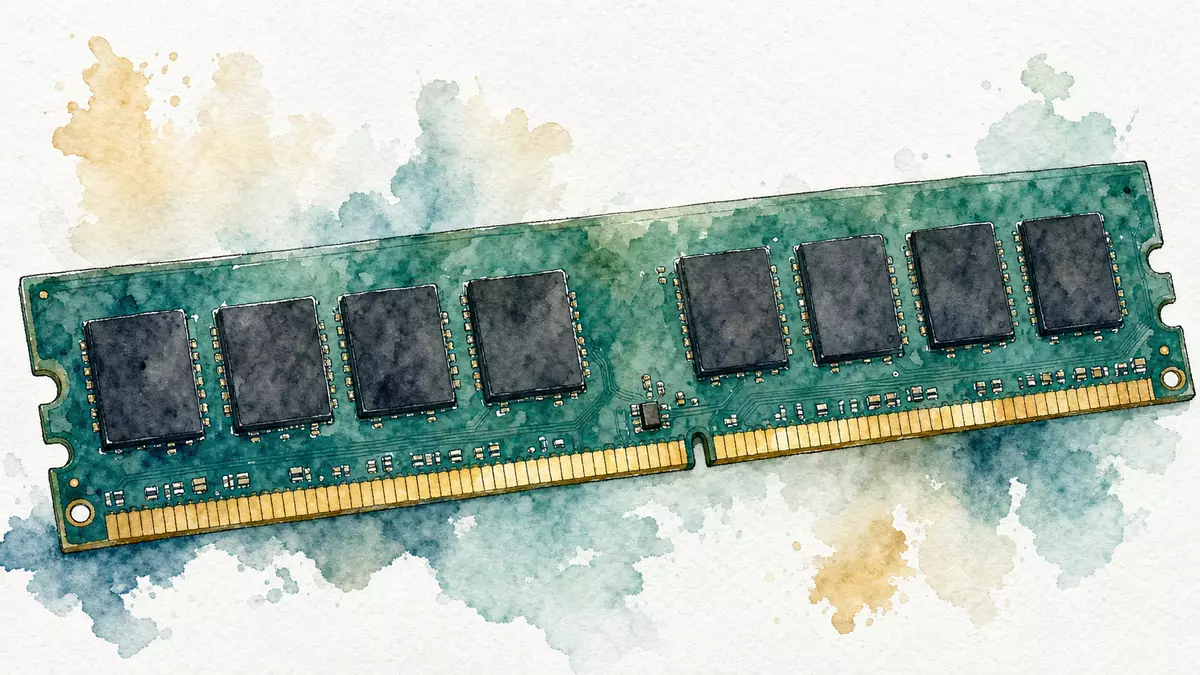
The Crucial P3 SSD sits quietly under a laptop palm rest, a slim black rectangle you barely see but feel whenever apps open faster and files snap into view. It is Micron Technology Inc.'s entry-level PCIe NVMe drive, built to make solid-state storage a standard rather than a luxury.
Affordable NVMe from Micron
Micron positions the Crucial P3 SSD as an accessible NVMe option for users stepping up from hard drives or aging SATA SSDs. According to the Crucial product page, the P3 uses PCIe 3.0 and the NVMe 1.4 protocol, with advertised sequential read speeds up to around 3,500 MB/s and write speeds up to about 3,000 MB/s, depending on capacity. The drive is available in 500 GB, 1 TB, 2 TB and 4 TB versions, all in the common M.2 2280 format.
On Micron’s side, storage business unit leader Teresa Kelley has repeatedly emphasized that the Crucial consumer line is about delivering reliable NAND technology at mass-market prices, rather than chasing headline benchmark records. That stance fits the P3: it sits below higher-end Crucial models, but gives mainstream buyers access to NVMe performance that feels dramatically quicker than spinning disks in everyday use.
What makes the P3 tick
Inside the Crucial P3 SSD, Micron uses its own NAND flash and an entry-class controller tuned for PCIe 3.0. Reviews from specialist sites describe the drive as relying on QLC NAND, supported by a dynamic SLC cache that buffers writes to maintain speed in typical desktop workloads. For users, the technology details show up as snappy boot times and faster application launches, especially compared to older SATA drives.
Under continuous heavy writes, the P3’s performance can tail off once the cache fills, a trade-off reviewers measure but say most home and office users rarely hit. Those who routinely move multi-terabyte video projects might prefer a more expensive TLC-based drive, but for installing games, syncing cloud folders or handling photo libraries, the P3 covers the basics without drama.
Micron storage strategy behind Crucial P3
Read more background on Micron Technology Inc., its NAND roadmap and how the Crucial consumer line fits into overall earnings.
Target users and everyday feel
Micron and the Crucial team talk about the P3 as a drive for typical PC users and console owners who want faster loading without overthinking NAND types. Product manager Jonathan Weech has highlighted that many buyers simply want "NVMe that works" when they are upgrading a five-year-old laptop. In that scenario, the sensory change is clear: Windows or Linux boots in seconds, and office apps no longer grind when opening large documents.
Gamers, meanwhile, report that switching to a Crucial P3 SSD can cut level load times noticeably compared to hard drives. The difference is not just numbers on a spec sheet; it shows up when textures pop in smoothly and co-op lobbies don’t keep friends waiting. The drive’s PCIe 3.0 interface ensures broad compatibility with older motherboards, making it a practical upgrade path for many existing systems.
Form factor, software and reliability
The Crucial P3 SSD comes only in the M.2 2280 format, a thin stick that slides into standard slots on most modern desktops and laptops. Installation is usually one screw and a gentle press, and Crucial’s manuals emphasize handling the PCB edges rather than pressing the components directly. Users who have swapped drives describe the tactile click of the mounting screw as the moment the upgrade feels real.
On the software side, Crucial provides its own storage tool, Crucial Storage Executive, which allows firmware updates, drive health checks and some performance tweaks. Having a vendor-supported utility matters for users who do not want to rely solely on generic operating system SMART readouts. Warranty coverage for the P3 typically runs three to five years depending on region, and the product documentation lists endurance ratings in terabytes written (TBW) appropriate for mainstream workloads.
Positioning against other Crucial SSDs
Within the Crucial SSD portfolio, the P3 sits below models like the P3 Plus, which uses PCIe 4.0 for higher bandwidth, and the P5 Plus, which targets enthusiasts and workstation users. Micron effectively layers its consumer range: the P3 as entry NVMe, P3 Plus as mid-range, and P5 Plus for higher performance niches. For investors, that ladder shows how the company monetizes different segments without cannibalizing its own premium drives entirely.
Price comparisons from online retailers show the P3 often trading at a noticeable discount to higher-end PCIe 4.0 drives of similar capacity. That pricing makes it attractive for system integrators and OEMs who build budget gaming PCs or office desktops, a volume segment where Micron’s manufacturing scale can translate directly into recurring sales.
Micron Technology Inc. share and SSD demand
From a market perspective, the Crucial P3 SSD contributes to Micron’s broader narrative: shifting more of the installed base from rotating storage to flash and capturing value higher up the stack. As PC and console cycles move toward NVMe as the default, drives like the P3 help the company deepen its consumer footprint while leveraging the same NAND supply as its data center products. On Xetra and other venues, Micron Technology Inc. stock reflects expectations around flash pricing, inventory cycles and demand across PCs, smartphones and servers, and consumer SSD lines such as Crucial P3 form one revenue pillar among several.
Key facts: Crucial P3 SSD
- Product: Crucial P3 SSD
- Manufacturer: Micron Technology Inc.
- Category: Classic/Longseller consumer SSD
- Market launch: Around mid-2022 as part of Crucial’s consumer NVMe range
- MSRP / Price: Typically positioned below higher-end PCIe 4.0 drives; street prices vary by capacity and region
- Availability: Widely available through online retailers and system builders in North America, Europe and other regions
- Target group: Mainstream PC users, gamers and console owners upgrading from HDD or SATA SSD
- Highlight / USP: Affordable PCIe 3.0 NVMe storage with Micron NAND, designed for everyday performance rather than headline benchmarks


