World Cup 2026: Ronaldo’s Historic Goal Record Ignites North American Tournament
24.06.2026 - 18:21:01 | ad-hoc-news.de
The 2026 FIFA World Cup in North America has surged into a defining early phase, with a wave of headline performances led by Cristiano Ronaldo’s historic scoring record, Lionel Messi’s relentless pursuit of even more milestones, and a new generation of talent flashing across stadiums in the United States, Canada and Mexico. As the expanded 48-team format rolls through its group-stage dates, the global spotlight has locked onto a handful of iconic veterans and fearless newcomers whose exploits are reshaping the narrative of this uniquely North American tournament.
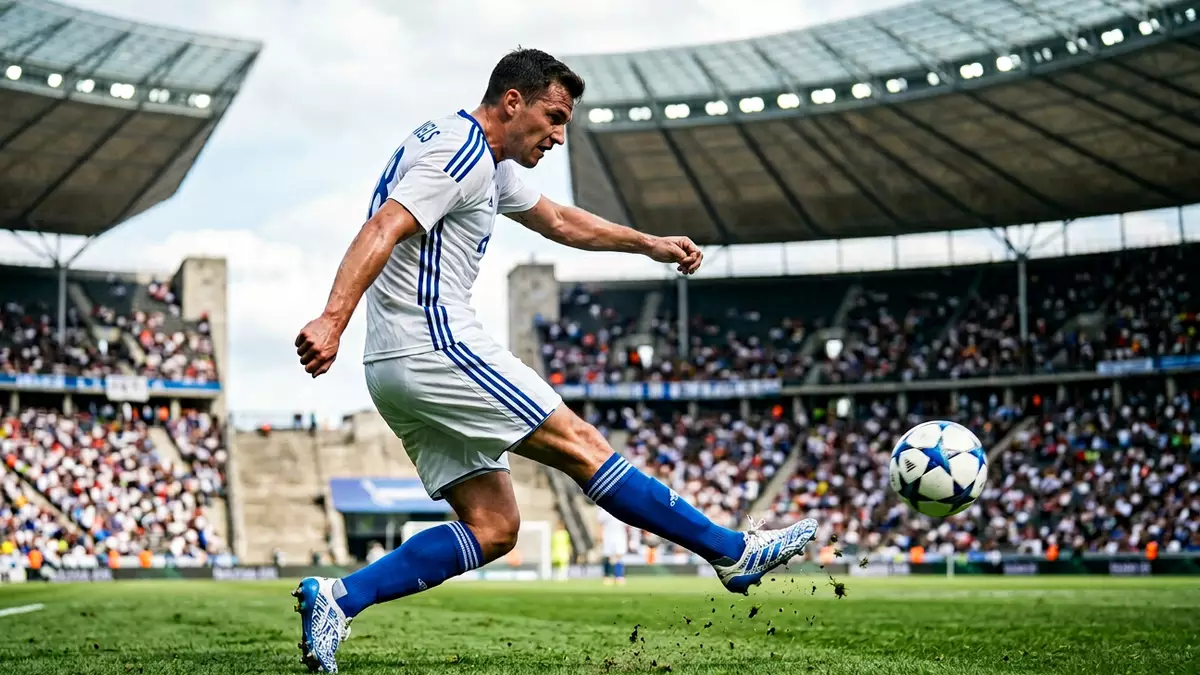
In one of the most talked?about moments of the competition so far, Portugal captain Cristiano Ronaldo scored twice in a commanding 5–0 victory over Uzbekistan in the group stage, reaching an unprecedented benchmark: he has now found the net in six different World Cup editions, more than any player in the history of the tournament. This double also pushed him beyond Portugal legend Eusébio’s tally at the World Cup, establishing a new national benchmark for goals on football’s grandest stage. The match, played on North American soil as part of the expanded group schedule, underlined Ronaldo’s enduring relevance at an age when most forwards have long since retired from international duty.
Ronaldo’s records are unfolding within a radically reimagined World Cup structure. The 2026 edition is the first to feature 48 teams, arranged into 12 groups in the opening phase, with 32 nations advancing to an expanded knockout bracket. Hosted across the United States, Canada and Mexico—the first time three countries share the tournament—the competition will span 104 matches, another all?time high. The group stage is compacted into the first weeks of the tournament, setting a relentless pace of fixtures that has kept stadiums from New Jersey to Vancouver packed with fans and reverberating with chants in myriad languages. For a player who built his legend in Europe’s elite leagues and on previous World Cup stages, Ronaldo’s North American chapters add a new layer of geographic and cultural resonance to his legacy.
Alongside Ronaldo’s heroics, the defending champions Argentina have announced themselves as a formidable force in the group stage, spearheaded again by Lionel Messi. In a disciplined 2–0 win over Austria in their group, Messi turned a missed penalty into motivation, responding by scoring twice from open play. Those goals pushed his career World Cup tally into record?breaking territory for a men’s player, further separating him from challengers and adding additional weight to Argentina’s bid for back?to?back titles. Rather than fading after delivering Argentina’s long?awaited global crown at the previous tournament, Messi has shown an ability to adjust his tempo and positioning to preserve energy while still delivering decisive moments in the final third.
France have also stamped their authority on the early stages in North America. In a match in Philadelphia, Les Bleus recorded a 3–0 win over Iraq, with Kylian Mbappé scoring twice and winger Ousmane Dembélé adding another. The contest was interrupted for more than two hours due to severe weather, but the defending finalists did not lose their edge during the delay. Mbappé’s brace reinforced his status as one of the most feared forwards in the world, and his combination play with Michael Olise—who assisted both goals—has offered France a fresh creative axis as they chase a deep run. The ability to maintain focus through a prolonged stoppage in an open?air North American venue also highlighted the mental resilience required to manage the unique environmental variables of this World Cup.
Spain, too, have delivered one of the most eye?catching attacking performances of the group phase to date, cruising to a 4–0 victory over Saudi Arabia. The match showcased both their traditional possession?heavy identity and a renewed cutting edge. Young forward Lamine Yamal scored his first goal of the tournament in his first start, marking a symbolic moment for a generational shift in Spanish football. Mikel Oyarzabal added a first?half brace, while relentless pressure down the left forced an own goal in the second half. The result placed Spain on top of their group and rekindled memories of their possession?dominant peak, but with more vertical running and dribbling from wide areas, reflecting tactical evolution in response to modern pressing trends.
Brazil’s group?stage form has been similarly impressive. The five?time world champions dispatched Haiti 3–0, with former Bundesliga striker Matheus Cunha striking twice and star winger Vinícius Júnior scoring the third before halftime. Brazil’s blend of traditional flair and high?intensity pressing has suited North American pitches, which tend to be widely cut and favor direct transitions. With Vinícius drawing multiple defenders and Cunha exploiting gaps between the lines, Brazil have looked capable of overwhelming opponents early and then managing the tempo in the second half—a blueprint that historically serves tournament heavyweights well as the calendar compresses.
The co?hosts have not been content merely to provide venues and hospitality. Canada recorded their first?ever World Cup finals victory with a resounding 6–0 win over Qatar, a result that electrified supporters at Vancouver’s BC Place. Playing in front of a passionate home crowd, Canada capitalized on a numerical advantage after Qatar were reduced to nine men, turning the match into a statement performance that resonated across the country. Interestingly, talismanic full?back Alphonso Davies did not feature, remaining on the bench as he completes his recovery from fitness issues. Canada’s ability to score freely without their marquee star offered a glimpse of improved squad depth and tactical flexibility, essential for any team hoping to advance beyond the group phase in an expanded tournament field.
Beyond individual matches, the broader shape of the tournament has begun to crystallize. A growing list of teams has already punched their tickets to the Round of 32, including all three co?hosts and several traditional powers. Mexico and the United States have secured enough points to progress from their groups, leveraging home?field energy in stadiums packed with partisan crowds. Germany, Argentina, France, Norway and Colombia have also locked in knockout berths, creating a Round of 32 landscape that mixes heavy favorites with ambitious dark horses. The qualification of Norway, for example, underscores the growing influence of European nations beyond the usual giants, while Colombia’s advance highlights South America’s depth behind perennial contenders like Brazil and Argentina.
The path to the knockout rounds in this expanded format introduces new strategic considerations. With 32 teams advancing from 48, some nations can afford a draw in their final group match yet still progress, while others face complex tiebreaker scenarios involving goal difference and head?to?head results. Coaches must balance rotation with continuity, resting key players in lower?stakes fixtures without sacrificing the cohesion required for sudden?death knockout ties. For the co?hosts, these decisions are amplified by the pressure of playing at home and the desire to maintain momentum, especially as travel across the vast geography of North America introduces additional fatigue and logistical challenges.
From a tactical standpoint, several trends have emerged across the early rounds. High pressing and aggressive counter?pressing have been common among top European and South American sides, but the summer heat in certain US and Mexican cities has forced teams to manage their intensity in carefully timed bursts. Deep?lying defensive blocks and compact midfields remain popular approaches for underdogs, yet the quality of individual attackers like Mbappé, Vinícius, Messi and Ronaldo has repeatedly broken through tight structures. Set pieces, always important in tournament football, have become even more decisive with the condensed group schedule, as a single well?executed corner or free kick can tilt the balance of a group where only two or three matches decide a team’s fate.
Off the pitch, the co?host model has created a distinct fan experience. With 16 venues spread across three countries, traveling supporters have embraced the chance to combine football with tourism, moving from iconic American cities and college?football cathedrals to Canadian waterfront skylines and Mexico’s historic football hotbeds. Matchdays in cities like Philadelphia, Vancouver, and others have seen fan zones spill into downtown areas, while upgraded public transit links and enhanced security measures have been tested by unprecedented volumes of international visitors. For local communities, the World Cup has brought short?term challenges—crowded transit lines, high demand for accommodations—but also significant economic gains and a sense of shared celebration.
This World Cup has also become a showcase of evolving technology in football. Semi?automated offside systems and connected match balls continue to be central talking points, designed to reduce controversial calls while speeding up refereeing decisions. Video assistant referee (VAR) protocols have been refined since previous tournaments, with a greater emphasis on rapid review to minimize lengthy stoppages. While debates about marginal offsides and handball interpretations persist in fan conversations, the overall trend has been toward more consistent enforcement, an important consideration in a tournament where a single refereeing decision can swing the fate of an entire campaign.
For North American fans, the presence of global icons like Ronaldo and Messi on their home continent has deep cultural resonance. Many supporters grew up watching these players through screens; now, they are seeing them break records live in stadiums a short flight or drive away. Youth participation in soccer across the United States and Canada, already on the rise, is likely to receive another boost as children attend matches or watch highlight reels featuring dramatic goals and emotional celebrations. In Mexico, where football is already tightly woven into national identity, hosting games featuring global stars alongside El Tri’s own fixtures has created a festival atmosphere blending local traditions with international fan cultures.
There is also a long?term legacy dimension to consider. The 2026 World Cup arrives at a moment when Major League Soccer in the United States, the Canadian Premier League, and Liga MX in Mexico are all seeking to strengthen their global profiles and player development pipelines. High?visibility performances from local and regional players on the World Cup stage could accelerate transfers to top European clubs, while upgraded stadiums and training facilities built or renovated for the tournament will remain as infrastructure assets for domestic leagues and national teams. The success of Canada’s national team, for instance, could inspire further investment in youth academies and grassroots coaching across the country.
As the group stage moves toward its conclusion, the focus will increasingly narrow onto qualification battles and potential Round of 32 matchups. With heavyweights already through and several traditional powers on the brink of joining them, observers are beginning to map out possible routes to the final at MetLife Stadium in New Jersey. Fans are speculating about whether a Ronaldo?led Portugal might cross paths with Messi’s Argentina one last time in a knockout clash, or whether up?and?coming sides from Africa, Asia, or the CONCACAF region might produce a deep run that disrupts the usual hierarchy. The combination of a broader field, three host nations, and familiar superstars in unfamiliar surroundings ensures that narrative possibilities remain wide open.
In this context, Ronaldo’s latest record is more than an isolated statistical achievement; it is a symbol of continuity and evolution in a tournament that itself is undergoing a profound transformation. The expanded format, tri?nation hosting model, and layering of technological innovation over century?old traditions have created a World Cup that feels both familiar and radically new. Whether this hybrid era ultimately belongs to grizzled veterans extending their dominance or to the teenagers and twenty?somethings taking their first steps on the global stage, North America’s World Cup is already delivering the drama, spectacle and talking points that define football’s most watched event.
With the Round of 32 taking shape and storylines multiplying across three countries, attention now turns to how the stars and their supporting casts handle the mounting pressure. As knockout football looms, every touch from a Ronaldo, Messi, Mbappé or Vinícius—and every surge from lesser?known names eager to seize their moment—will be magnified under the bright lights of stadiums stretching from the Pacific Northwest to the eastern seaboard and deep into Mexico. The record books are already being rewritten, and with weeks still to play, the 2026 World Cup is poised to add yet more unforgettable chapters to football’s shared global memory.