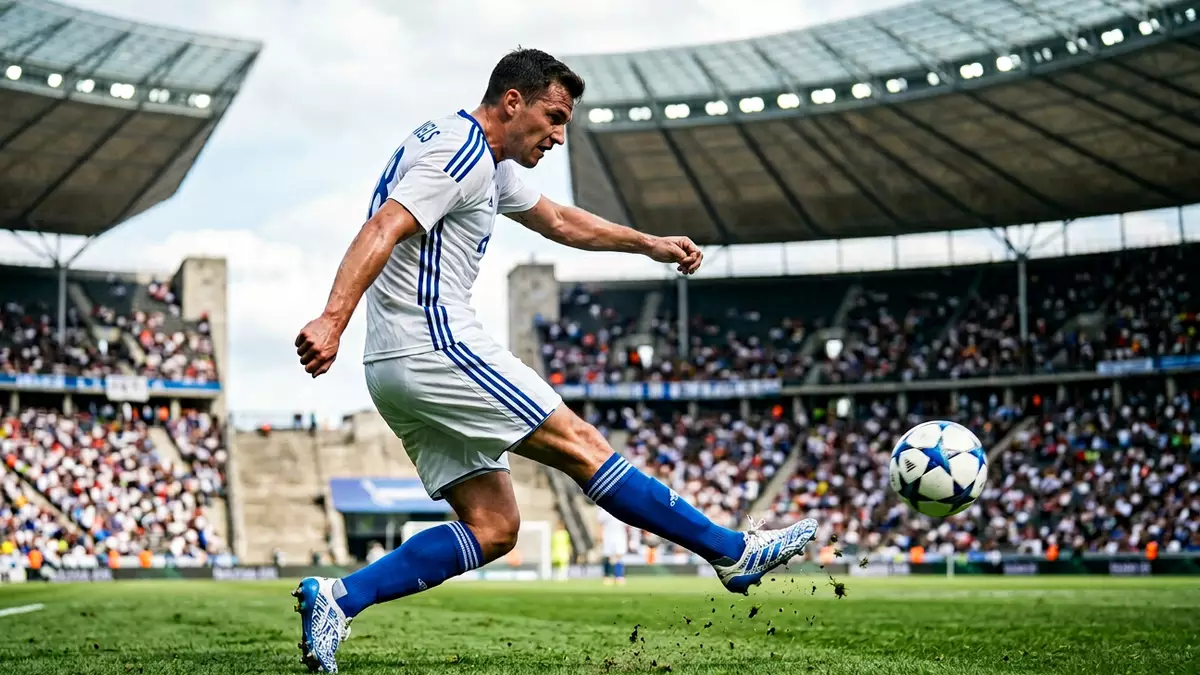
Germany Edge Ivory Coast As Group E Power Shifts At World Cup 2026
21.06.2026 - 18:22:45 | ad-hoc-news.de
Germany’s 2-1 victory over Ivory Coast in FIFA World Cup 2026 group play has sharpened the battle for qualification from Group E, with the four-time champions moving to six points and tightening their grip on a Round of 32 berth while leaving the African side with work to do in their final group match.
The result, confirmed across multiple live-score and recap services, was part of a busy slate of World Cup fixtures that also saw the Netherlands thrash Sweden 5-1, Ecuador draw 0-0 with Curaçao, and Japan dismantle Tunisia 4-0. Those combined outcomes have effectively redrawn the competitive map of several groups heading into the final round of matches, but Germany’s narrow win in particular stands out in the larger narrative of a tournament co-hosted by the United States, Canada, and Mexico.
While official minute-by-minute details and full goalscoring breakdowns remain limited in open reports, the consensus across score services and highlight packages is clear: Germany secured all three points, Ivory Coast responded to stay in the game, and the encounter underscored both Germany’s efficiency and Ivory Coast’s resilience. With the victory, Germany sit atop Group E with six points, ahead of Ivory Coast on three and Ecuador and Curaçao on one point each, turning the final matchday into a high-stakes battle for second place.
For a German side trying to reassert itself on the world stage after underperforming at recent major tournaments, a second win from two matches in North America represents both relief and renewed expectation. The nation’s media and supporters had labeled this World Cup as a pivotal moment in Germany’s footballing identity; now, with six points in the bank, the team has laid the foundations for a deep run in a tournament that demands consistency across a longer, expanded format.
From Ivory Coast’s perspective, the 2-1 defeat is a setback but not a fatal blow. Sitting on three points in Group E, the West African side remains in position to challenge for a Round of 32 place, but the margin for error has narrowed. Their final group match will likely require either a victory or, depending on other results, at least a positive result with goal difference in mind; that math is now front and center for coaching staff and supporters alike.
Germany’s six-point haul has also clarified the stakes for Ecuador and Curaçao, who shared a scoreless draw in the other Group E fixture. That result left both nations with a single point and no goals scored in their head-to-head meeting, a combination that increases the importance of every chance, set piece, and defensive action in their final group games. With Germany already on six and Ivory Coast on three, the final round will likely feature a multi-way battle for the second qualifying spot in a group that has offered few easy openings.
Across the wider tournament, Germany’s performance against Ivory Coast fits a broader trend: traditional powers are beginning to find their stride after earlier wobblier appearances, while mid-tier and debutant nations are learning how small the margins can be at this expanded World Cup. The Netherlands’ emphatic 5-1 win over Sweden, for example, was a statement result that vaulted the Dutch toward control of their group, while Japan’s 4-0 rout of Tunisia further cemented the Asian side’s reputation as one of the most organized and dynamic teams in the field.
In Group E, multiple analytic breakdowns highlight Germany’s balance between disciplined structure and attacking fluidity as the key differentiator. The defensive line has looked more cohesive than in some recent tournaments, while the midfield’s ability to control tempo has made it difficult for opponents to string together extended attacking phases. Ivory Coast, by contrast, leaned on athleticism and direct play to trouble Germany, especially in transition moments, but their inability to fully convert those opportunities into goals underscored how unforgiving the World Cup can be.
Tactical observers have noted that Germany’s approach in this World Cup blends familiar possession-first principles with a heightened emphasis on counter-pressing and vertical attacks following recoveries in midfield. That blend was visible again against Ivory Coast, as Germany repeatedly looked to pounce on loose touches and second balls, turning turnovers into quick strikes into the attacking third. Ivory Coast responded with aggressive wing play and attempts to isolate German defenders in one-on-one situations, yet Germany’s defensive organization and compactness often limited the effectiveness of those forays.
Crucially, Germany’s six-point start also relieves some pressure on squad rotation heading into the final group match. With qualification all but secured—exact scenarios depend on other results and goal difference—the coaching staff can consider managing minutes for key players, reducing injury risk in a grueling tournament schedule that involves extensive travel across the United States, Canada, and Mexico. For a veteran core that has endured multiple compressed seasons at club level, that breathing room may prove decisive later in the knockout rounds.
Ivory Coast, meanwhile, face a more precarious balancing act. The loss to Germany leaves little room for conservative decision-making; the team must seek a positive result in the final group game while guarding against being exposed at the back. Analysts point out that the side’s best path forward may involve leaning into its attacking strengths—pace on the wings, physical presence up front, and strong set-piece delivery—while tightening defensive coordination, especially in moments immediately after losing possession.
Group E’s evolving storyline is not unfolding in isolation. The broader group-table picture across the tournament shows multiple heavyweights and ambitious dark horses carving out early advantages. Mexico, for example, sit on six points in Group A, leading a pack that includes South Korea, Czechia, and South Africa, while co-hosts USA also have six points in Group D, underlining the home-nation bounce often seen in World Cups. Canada, the third co-host, have collected four points in Group B, leaving their own qualification hopes firmly in their own hands as they approach their final group fixture.
Those trajectories add extra resonance to Germany’s progress at a World Cup where logistical demands and travel distances differ markedly from previous tournaments. Matches are spread across a vast North American footprint, and teams must adapt not only to sporting challenges but also to changing climates, time zones, and stadium conditions in the USA, Canada, and Mexico. Efficient early wins like Germany’s over Ivory Coast help mitigate those stresses by reducing the desperation that can come with a must-win final group match.
Beyond standings and tactics, Germany’s win also feeds into the evolving Golden Boot and Golden Ball conversations that accompany every World Cup. While detailed individual scoring tallies in this specific match remain sparse in publicly available summaries, the aggregate goal output for leading forwards and attacking midfielders is beginning to influence how analysts view the award races. Early reports have highlighted a German attacker among the tournament’s early top scorers, a storyline that will gather momentum if the team continues its current trajectory.
The 2-1 scoreline also reflects a broader theme of this World Cup: the narrowing gap between traditional powers and well-organized, athletically gifted challengers from Africa, Asia, and CONCACAF. Ivory Coast’s ability to stay within one goal of Germany and create periods of pressure is consistent with several other group-stage matches in which underdogs have limited established giants to slim margins or forced them to grind out wins. That increased competitiveness is one of the defining features of the expanded 2026 format.
For fans in the United States and across North America, Germany’s match against Ivory Coast offered another showcase of high-intensity international football as the continent embraces its role as World Cup host. Crowds across the three host nations have produced vibrant atmospheres, with large traveling contingents from traditional football powers blending with local supporters and diaspora communities from across Africa, Europe, Asia, and the Americas. Germany and Ivory Coast both benefit from strong overseas fan bases, and that presence has translated into noise and color in the stands.
As the second round of group matches nears completion, attention is already shifting to the decisive third round, where Group E’s fates will be sealed. Germany, with six points, can now begin tailoring their plan for the knockout stage, refining tactical wrinkles and managing player workloads. Ivory Coast, Ecuador, and Curaçao, on the other hand, must approach their remaining fixtures with both urgency and clarity, aware that a single moment—a defensive lapse, a set-piece winner, a VAR decision—could define their World Cup campaigns.
Looking across other groups, Spain’s upcoming clash with Saudi Arabia and Belgium’s meeting with Iran—highlighted in pre-match previews and live-schedule trackers—offer parallel examples of traditional powers seeking to stabilize their campaigns after mixed starts. Uruguay’s test against Cabo Verde and New Zealand’s opportunity against Egypt further emphasize how every group now contains multiple plausible qualifiers, a product of the global spread of talent and tactical sophistication.
In that environment, Germany’s ability to secure a second straight win, even by a slim margin, carries substantial strategic value. It provides a buffer against any surprise in the final group game, keeps squad morale high, and sends a message to other contenders that the four-time champions remain a force at World Cup level. For Ivory Coast, the close defeat may serve as both warning and motivation: the team has shown it can compete with a European giant, but small margins and missed chances can quickly shape tournament destiny.
As North America’s first men’s World Cup continues to unfold, the Germany–Ivory Coast result stands as one of several key markers of how the group stage is crystallizing. The co-host nations are performing strongly, big names are beginning to assert themselves, and ambitious challengers are refusing to yield easily. Group E is now defined by Germany’s control, Ivory Coast’s pursuit, and the looming drama of a decisive final matchday that will determine who joins the Germans in the Round of 32.