Taylor Swift opens a new era with record-breaking 2026 shows
17.05.2026 - 02:14:54 | ad-hoc-news.de
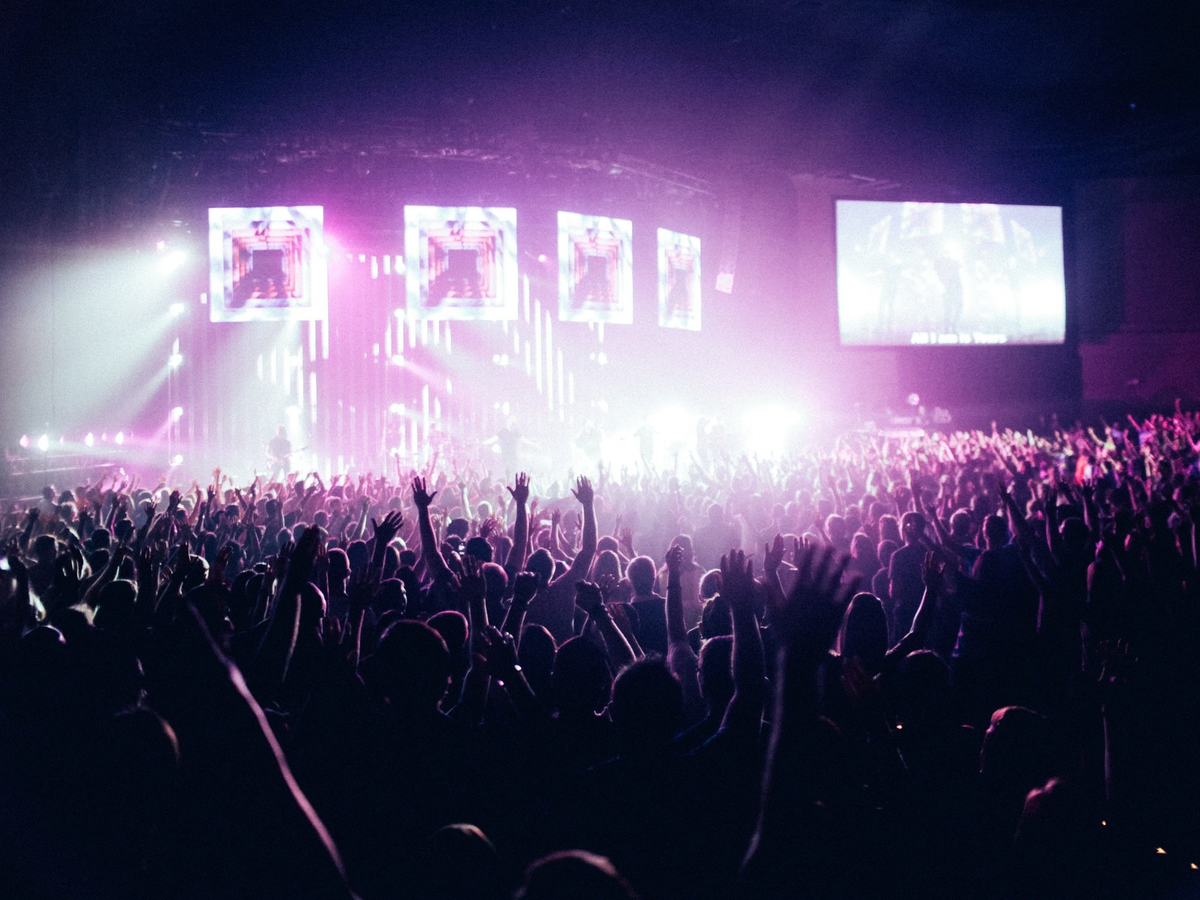
On a warm spring night in 2026, Taylor Swift is once again walking onto a stadium stage, framed by towering LED screens and a deafening, phone-lit roar that hits long before the first chord of Miss Americana & The Heartbreak Prince. For Taylor Swift, the most dominant pop and rock-adjacent artist of her generation, the era of victory laps has turned into something more like a marathon.
Taylor Swift in 2026 — why this latest live era still matters
Over the past year, the singer has turned her career-spanning Eras Tour into a cultural juggernaut that reshaped the live-music economy, pushed stadium infrastructure to its limits, and kept local transit systems in cities like Los Angeles, Kansas City, and Philadelphia running late to handle the crowds. As of 17.05.2026, the tour remains one of the most in-demand tickets in North America, with resale prices routinely soaring into four figures.
According to Billboard, the trek has already set records for the highest-grossing tour ever reported in a single year, driven by multiple-night stands at venues like SoFi Stadium outside Los Angeles, MetLife Stadium in New Jersey, and Atlanta's Mercedes-Benz Stadium. Pollstar data, cited by The New York Times in late 2023 and followed up by industry analysts in 2024 and 2025, placed Swift's box-office totals in territory once reserved for legacy acts like U2 and The Rolling Stones, even as she continues to release new material at a pace that would exhaust most younger peers.
The late-2020s leg of her global run has leaned heavily on US stadiums, often pairing shows with civic celebrations that turn downtown cores into Swift-themed block parties. City councils have issued temporary street renamings, and transit agencies have added themed signage. The scale is reminiscent of classic rock eras when arena tours by acts like Bruce Springsteen or Madonna felt like traveling holidays; in Swift's case, it is happening in the era of TikTok and Instagram, amplifying every moment far beyond the 70,000 fans inside the stadium.
For local economies, this touring wave has had tangible upside. USA Today and CNBC have reported hotel booms and restaurant rushes tied to Swift weekends, with some cities estimating direct spending in the tens of millions of dollars around each stop. While those figures vary by methodology and source, there is broad agreement across economic analyses that Swift's shows now rival major sporting events in short-term regional impact.
From a fan perspective, though, the numbers are only part of the story. The Eras concept, which sequences Swift's albums like chapters in a memoir and gives each one its own color scheme, set design, and costume language, has turned the stadium into a hybrid of rock concert, Broadway revue, and fan convention. Fans dress as their favorite album, trade friendship bracelets inspired by a lyric from You Are On Your Own, Kid, and treat the set list's rotating acoustic section as a high-stakes lottery.
As the 2026 shows roll on, Swift continues to add small changes designed to keep repeat attendees guessing: swapping in deep cuts from Speak Now (Taylor's Version), extending the rock-leaning outro of Vigilante Shit with more live guitar, or dropping surprise mashups that nod to her evolution from country prodigy to pop maximalist and, more recently, to a moody, alt-leaning songwriter.
- Extended US stadium runs keep demand high while boosting local economies.
- Rotating acoustic segments and set-list tweaks reward hardcore fans and collectors who chase rare performances.
- Each album era receives its own staging and visual narrative, turning the show into a three-hour-plus retrospective and reinvention at once.
These factors make Swift's current tour cycle more than a nostalgia play. It functions as a live, evolving anthology of her catalog, highlighting how much of contemporary pop, rock, and country now sits in conversation with songs she wrote as a teenager.
Who Taylor Swift is, and why her story resonates now
Taylor Swift has long since graduated from promising young country act to full-spectrum pop star, but in 2026 her cultural position is different from virtually any peer. She is simultaneously a chart-topping artist, a touring powerhouse, an album-focused songwriter, and a business figure whose negotiations with labels, streamers, and ticketing companies have rippled through the entire music industry.
Born in Pennsylvania and raised partly in suburban Nashville, Swift built her early reputation in country music, issuing her self-titled debut album Taylor Swift in 2006 through Big Machine Records. That project, anchored by songs like Tim McGraw and Teardrops On My Guitar, positioned her as a teenager with an unusually sharp eye for character detail. According to an early profile in The New York Times, veteran songwriters in Nashville were struck by how fully formed her melodic instincts were even before she turned 18.
Her commercial breakthrough came with the 2008 album Fearless, which blended country instrumentation with pop choruses and led to multiple singles on the Billboard Hot 100 and Country Airplay charts. The album later won the Grammy Award for Album of the Year, making Swift one of the youngest artists ever to receive that honor at the time. The crossover success hinted at a future that would move beyond Nashville without forgetting its narrative discipline.
In the 2010s, Swift pivoted decisively toward pop with Red and then embraced full-on synth-pop on 1989, working with producers like Max Martin, Shellback, and Jack Antonoff. This period saw her increasingly dominate the Billboard 200 albums chart and the Billboard Hot 100 singles chart, with songs such as Shake It Off, Blank Space, and Style becoming omnipresent on US radio and streaming playlists.
Part of Swift's enduring relevance lies in her ability to reshape her sound without losing her songwriting fingerprint. Whether working in the glossy, drum-machine-driven landscapes of Reputation or the indie-folk textures of Folklore and Evermore, she keeps the focus on narrative arcs, emotional turns, and sharp, conversational lines. NPR Music has described her as a bridge between Nashville's story-song tradition and the hyper-online confessional style that defines much of contemporary pop.
By the early 2020s, Swift's decision to re-record her early albums — resulting in releases like Fearless (Taylor's Version), Red (Taylor's Version), Speak Now (Taylor's Version), and 1989 (Taylor's Version) — turned a contractual dispute over masters ownership into a multi-year artistic campaign. Billboard and Variety both reported that these re-recordings not only matched but sometimes exceeded the chart performance of the original versions, underscoring the strength of her fan base and the catalog's ongoing relevance.
Origin and rise — from Pennsylvania songwriter to global headliner
Swift's path to global dominance began well before she was a household name. Growing up in Wyomissing, Pennsylvania, she started writing songs in grade school and convinced her family to support a move to the Nashville area so she could pursue country music professionally. According to interviews archived by CMT and early coverage in USA Today, she spent her early teens playing songwriter rounds and performing at small venues and industry showcases.
The turning point came when she signed with Big Machine Records, a then-new label helmed by Scott Borchetta. Her self-titled debut album slowly built momentum, and by the time follow-up Fearless arrived, Swift was headlining her own tours and establishing a direct rapport with fans through online diary entries, MySpace updates, and early Twitter posts. That element of perceived proximity — fans felt they could trace the timeline between diary entry and chart hit — would become a hallmark of her career.
As her audience grew, so did the scale of her shows. The Fearless Tour and subsequent Speak Now World Tour saw Swift move from theaters to arenas across the United States, including landmark stops at Madison Square Garden in New York and Staples Center (now Crypto.com Arena) in Los Angeles. These shows foreshadowed her later stadium dominance, with elaborate set pieces, costume changes, and extended monologues that placed storytelling on equal footing with explosive pop hooks.
By the time Red landed in 2012, Swift was positioned not just as a country artist with pop appeal, but as a crossover performer whose every move influenced radio programming and festival bookings. She played major events like the iHeartRadio Music Festival in Las Vegas and the CMA Awards in Nashville, often straddling genre lines in ways that challenged old marketing categories.
The full pivot to pop with 1989 in 2014 marked another inflection point. Rolling Stone praised the album's crisp production and focus on big, bold choruses, likening its impact on mid-2010s pop to the way Michael Jackson or Madonna had dominated previous decades. The accompanying 1989 World Tour, which featured guest appearances from artists across genres and surprise collaborations in cities like Seattle and Washington, D.C., helped cement Swift's reputation as an artist who could command not just radio, but also the live-music circuit at the highest level.
Even when public controversies surfaced, Swift tended to incorporate them into her narrative arc rather than retreat. Projects like Reputation reshaped media scrutiny into a hyper-stylized, aggressive aesthetic that flirted with industrial pop and hard-edged electronic elements. Later releases like Lover, Folklore, Evermore, and Midnights showed that she could pivot again into warmer palettes or more introspective, indie-inspired atmospheres without losing her commercial footing.
Signature sound, production allies, and key works
Musically, Taylor Swift is less defined by a single genre than by a set of recurring strategies. At her core, she is a songwriter obsessed with perspective, timeline, and framing. Songs like All Too Well and Enchanted stretch small emotional moments into multi-part epics, while pop smashes like Shake It Off distill big ideas about self-image and public scrutiny into simple, repeatable hooks.
Her collaborations with producers have played a central role in translating those impulses into world-conquering records. With Nathan Chapman on her early country albums, the palette leaned on acoustic guitars, banjo, and subtle percussion, anchoring teen diary entries in a sound that fit comfortably on country radio. The move to Max Martin and Shellback on Red and 1989 introduced punchier drums, synth bass, and crisp, layered vocals that aligned her with chart peers like Katy Perry and Ariana Grande, yet her writing style remained rooted in narrative detail.
Jack Antonoff, a frequent collaborator from the mid-2010s onward, helped shape Swift's move into more atmospheric territory. On albums like 1989, Reputation, Lover, and Midnights, his influence can be heard in the shimmering synth textures, unexpected chord progressions, and subtle rhythmic shifts that give tracks like Out Of The Woods, Delicate, and Anti-Hero their emotional elasticity. Meanwhile, her work with Aaron Dessner on Folklore and Evermore brought in elements of indie rock and alternative folk, drawing comparisons to acts like The National and Bon Iver.
These partnerships created a catalog rich enough for fans and critics to map out multiple entry points. For rock listeners, the guitar-forward tracks on Red, the snarling production of I Knew You Were Trouble, or the muscular live arrangements in tour settings highlight Swift's affinity for dynamic builds and cathartic electric-guitar climaxes. For pop fans, albums like 1989 and Midnights function as near-perfect front-to-back listens, packed with sleek, radio-ready hooks.
Across this body of work, several albums and songs have become lodestars:
Fearless remains a foundational text, its blend of teenage romance narratives and soaring choruses serving as a blueprint for a generation of country-pop hybrids. Red is often cited by critics, including writers at Pitchfork and Stereogum, as her most emotionally ambitious early work, skipping from arena pop to acoustic ballads in ways that foreshadowed her later genre-hopping. 1989 marked the point when she fully embraced mainstream pop, while Folklore and Evermore demonstrated her ability to thrive in a quieter, more introspective mode.
On the singles side, tracks like Love Story, You Belong With Me, We Are Never Ever Getting Back Together, Style, Look What You Made Me Do, Cardigan, and Anti-Hero have each captured different phases of Swift's artistic evolution. According to Billboard, she has accumulated a long string of number-one albums on the Billboard 200 and multiple chart-topping singles on the Billboard Hot 100, with her streaming performance placing her among the most-played artists globally in the 2020s.
The re-recordings of her early albums add another layer to this story. On Red (Taylor's Version), for instance, the 10-minute version of All Too Well turned a fan-favorite album cut into a centerpiece of her live shows and won new critical acclaim. Rolling Stone called it one of the definitive breakup songs of the century, praising its expanded narrative scope and the way the longer version reframed an already-beloved track as a kind of mini-novel.
Live, Swift's arrangements often lean more heavily into rock dynamics than her studio recordings might suggest. Guitars are louder, drum parts more forceful, and songs like Bad Blood and I Did Something Bad become full-on rockers in the stadium environment. This live energy has helped her connect with audiences who grew up on classic rock or pop-punk, even as her recorded work sits comfortably in playlists alongside mainstream pop and indie-folk acts.
Cultural impact, business power, and long-term legacy
Beyond her music, Taylor Swift's influence is deeply embedded in how the modern music business operates. Her public statements about streaming payouts in the mid-2010s coincided with changes at services like Apple Music, which modified some policies around compensating artists during free-trial periods after she criticized the practice. While many factors contribute to such shifts, industry observers often point to Swift's interventions as key moments in the broader campaign for fairer digital revenue splits.
Her decision to re-record her catalog after a dispute over masters ownership has had an even wider ripple effect. The RIAA database and industry commentary from outlets like Variety and The Wall Street Journal note that other artists have begun exploring similar strategies or renegotiating contracts with master ownership in mind, citing Swift's success as a proof of concept. In practical terms, the strong streaming performance of her re-recordings has given artists leverage in discussions about the long-term value of their work.
In cultural terms, Swift sits at the center of a dense web of fan communities. Swifties trade analysis of lyrics, Easter eggs, and rollout strategies with a level of attention more commonly associated with prestige TV or comic-book franchises. This fandom operates across TikTok, Instagram, Reddit, and X (formerly Twitter), generating memes, theory threads, and in-depth breakdowns of everything from chord progressions to outfit color schemes.
Her presence at major US festivals has also shifted expectations. While Swift's own touring calendar has often focused on headlining stadium runs rather than extensive festival circuits, her rare appearances at events like iHeartRadio's multi-artist shows or curated performances around major sports events underscore how her brand intersects with broader pop culture. In an era when Coachella and Lollapalooza bookings increasingly blend pop, hip-hop, electronic, and rock, Swift's hybrid appeal exemplifies the fluidity of genre boundaries.
Awards and institutional recognition mirror these cultural shifts. Swift has won multiple Grammy Awards, including several for Album of the Year, placing her in an elite group alongside legends like Stevie Wonder and Paul Simon. Billboard and the American Music Awards have repeatedly recognized her as Artist of the Year or Artist of the Decade, underscoring her sustained chart dominance. The Recording Academy, through Grammys telecasts and tributes, has frequently spotlighted her as a songwriter as much as a performer.
Certification bodies tell a similar story. The RIAA lists numerous Swift albums as multi-Platinum, with catalog staples like Fearless, Red, 1989, and Reputation reaching sales and streaming-equivalent milestones that place them among the most consumed albums of their respective release years. As of 17.05.2026, updated tallies continue to push several of these projects further into multi-Platinum territory, reflecting both catalog endurance and the effect of re-recordings driving renewed interest.
Her influence can be heard in a new wave of artists across genres. Young country and pop songwriters frequently cite Swift as a formative influence, pointing to her early albums as manuals for confessional yet radio-friendly writing. In indie and alternative circles, artists have praised the storytelling on Folklore and Evermore for validating quieter, more literary approaches to mainstream pop. Even rock bands, from pop-punk revivalists to emo-leaning outfits, have covered her songs live, reframing them as guitar anthems and demonstrating their structural resilience.
At the same time, Swift's career has sparked debates about celebrity, fandom, and the role of political expression in pop. While she was initially cautious about public political statements, she has in recent years endorsed candidates and supported voter-registration drives, including partnerships with nonpartisan organizations aimed at boosting turnout among young voters. Coverage in outlets like The Washington Post and CNN has positioned her as a case study in how high-profile entertainers navigate the expectations of politically engaged fan communities.
All of this feeds back into the live experience. The stadium shows function not just as concerts, but as communal gatherings where fans process relationships, friendships, and social identities through a shared library of songs. In that sense, Swift's role in the 2020s US music scene is similar to what acts like U2 or Bruce Springsteen represented in earlier decades: artists whose tours feel like civic events as much as entertainment.
Frequently asked questions about Taylor Swift
How did Taylor Swift become one of the biggest touring artists in the world?
Swift's rise as a touring powerhouse was gradual but relentless. She moved from small venues to arenas during the Fearless and Speak Now eras, then fully embraced stadiums with tours behind Red and 1989. Her current multi-era stadium productions, with narrative through-lines and rotating surprise songs, rely on a catalog deep enough to sustain three-plus-hour shows. Industry trackers like Pollstar and Billboard Boxscore have repeatedly placed her tours among the top-grossing runs in the world, reflecting both the scale of the venues and unusually high demand.
What makes Taylor Swift's songwriting stand out from other pop artists?
Critics frequently highlight Swift's command of perspective and detail. She shifts between first-person confession, cinematic third-person storytelling, and meta-commentary on fame and narrative itself. Albums like Red and Folklore showcase this range, moving from straightforward breakup songs to character studies and myth-like tales. Publications such as Rolling Stone, NPR Music, and The New Yorker have praised the way she uses recurring imagery, callbacks to prior songs, and evolving motifs to build a cohesive, novelistic body of work.
Why did Taylor Swift re-record her old albums?
Swift began re-recording her early albums after a dispute involving the ownership and sale of the master recordings from her Big Machine years. By re-recording projects like Fearless, Red, Speak Now, and 1989, she created new master recordings that she controls, encouraging fans and sync partners in film, TV, and advertising to use these versions instead of the originals. According to reporting in The Wall Street Journal and Variety, the commercial success of these releases has reinforced industry conversations about artists' rights and catalog ownership.
How does Taylor Swift influence the broader US music industry today?
Swift's impact extends well beyond her own releases. Her touring model has pushed other top-tier acts to rethink how they structure multi-night runs, VIP experiences, and dynamic pricing. Her approach to streaming, masters, and re-recordings has affected how labels negotiate with new artists who now cite her as a precedent for retaining more control. On the creative side, her blend of country, pop, and indie influences has helped normalize fluid genre boundaries on US radio and streaming playlists, influencing which artists get signed and how they are marketed.
Where can fans find official updates on Taylor Swift's shows and releases?
Fans looking for official news on Swift's upcoming shows, ticket information, and release announcements should start with her official website and verified social media accounts. Her site typically lists tour dates, including US stadium stops at venues like SoFi Stadium, MetLife Stadium, and others, while platforms such as Instagram, X, and TikTok feature behind-the-scenes content and announcements. Major outlets including Billboard, Variety, and The Hollywood Reporter frequently cover her new releases and industry moves, offering additional context and analysis.
Taylor Swift on social media and streaming
Across platforms, Swift's presence is both carefully curated and intensely scrutinized, with fans parsing every caption, like, and playlist addition for hints about upcoming eras.
Taylor Swift – moods, reactions, and trends across social media:
More coverage from AD HOC NEWS
More coverage of Taylor Swift at AD HOC NEWS:
Read more on Taylor Swift at AD HOC NEWS ->Browse all Taylor Swift coverage at AD HOC NEWS ->
So schätzen die Börsenprofis Aktien ein!

Für. Immer. Kostenlos.