Ray Charles at 95: New Tribute Albums, AI Tech and a Civil Rights Legacy Reintroduced
31.05.2026 - 00:28:37 | ad-hoc-news.de
Six decades after he first fused gospel, jazz, R&B, and country into a new American sound, Ray Charles is back at the center of the conversation in 2026. As labels prepare 95th-birthday tributes, catalog owners roll out AI-enhanced remasters, and educators reframe his civil-rights impact for a TikTok era, the Genius of Soul is quietly entering a new chapter of influence in the United States.
What’s new with Ray Charles in 2026 — and why now?
Ray Charles would have turned 95 in 2025, and that milestone has opened the door to a fresh round of box sets, tribute concerts, and educational initiatives timed to carry into 2026. According to Rolling Stone, the renewed focus on classic catalog artists is being driven by streaming-era discovery patterns, with Gen Z listeners diving into curated "essentials" playlists and anniversary editions that spotlight foundational figures like Charles and Aretha Franklin. Per Billboard, catalog listening has grown to represent well over half of US music consumption, making legacy campaigns around artists such as Ray Charles an increasingly central part of major-label strategy.
Industry insiders point to three main drivers behind the current Ray Charles resurgence in the US market:
- A wave of archival and anniversary releases built around his 95th birthday window and beyond.
- New AI-assisted remastering techniques that promise cleaner sound while keeping Charles’s raw, emotional delivery intact.
- Education- and justice-focused programming that re-centers his battles over segregated venues and artistic control as part of the broader civil-rights narrative.
As of May 31, 2026, US labels and estates are leaning hard into this strategy, betting that Ray Charles’s storytelling and genre-blurring sound can connect just as strongly with 16-year-olds hearing "What’d I Say" for the first time as it did with audiences in 1959.
How Ray Charles reshaped American sound — and why it still matters
Ray Charles’s core story remains one of transformation: a blind kid from the segregated South who turned the language of church music into the vocabulary of mainstream pop. According to NPR Music, Charles synthesized gospel, blues, and jazz into a sound that would eventually be labeled "soul," breaking existing radio categories and paving the way for Motown, Stax, and modern R&B. The New York Times has described him as a "cultural architect" whose versions of songs like "Georgia on My Mind" and "America the Beautiful" rewired how listeners heard both pop standards and patriotic music.
For US readers in 2026, that history hits differently. In an era when playlist algorithms blend genres automatically, it can be easy to forget how radical it once was to put gospel-style vocals over a backbeat and suggestive lyrics. Charles did exactly that with "I Got a Woman" and "What’d I Say," drawing criticism from religious leaders who accused him of "secularizing the sacred" while teenagers embraced the new sound. As Variety has noted in retrospective pieces, the shock that greeted his early hits mirrors, in some ways, the moral panics that would later greet rock, hip-hop, and even certain strands of electronic music.
Three aspects of Ray Charles’s musical impact continue to resonate especially strongly in today’s US scene:
- Genre fusion as a norm: Charles’s willingness to cut country albums at the height of his R&B stardom — particularly "Modern Sounds in Country and Western Music" — opened the door for integrated country-soul crossovers that still influence Nashville and Americana scenes today.
- Vocal phrasing and emotional intensity: According to Rolling Stone, his improvisatory runs, behind-the-beat phrasing, and sudden gear shifts from whisper to shout have been studied by generations of singers from Stevie Wonder to Alicia Keys.
- Bandleading and arrangements: Per Billboard, his use of tight horn sections, call-and-response backing vocals, and jazz-informed rhythms helped create the live show template later adopted by everyone from James Brown to Bruno Mars.
These threads run directly into today’s pop and rock. Listen to a modern pop-soul singer building drama by hanging behind the beat, a country star leaning into R&B phrasing on a ballad, or an indie band bringing gospel-style harmonies into a rock chorus — the DNA traces back to Ray Charles.
Streaming, syncs, and social: how Ray Charles is finding new US fans
The biggest difference between earlier waves of Ray Charles nostalgia and 2026’s reboot is how quickly younger listeners can move from recognition to deep discovery. A 10-second sync in a streaming series or a viral TikTok sound can instantly push millions of US users toward his catalog, and the data reflects that pattern. According to Billboard’s catalog reporting, usage spikes around tentpole moments — docuseries premieres, prominent syncs, or viral meme trends — now drive measurable jumps in streams for legacy artists like Ray Charles, often translating into renewed physical sales of vinyl box sets and deluxe editions.
US music supervisors continue to turn to Charles for scenes that require instant emotional gravitas. His version of "Georgia on My Mind" remains a go-to for film and TV sequences evoking the American South, while "What’d I Say" and "Hit the Road Jack" are used as shorthand for exuberant, retro-tinged energy in commercials and series montages. Variety has reported on how advertisers seeking a "timeless but not dusty" vibe often land on mid-century recordings from Charles and contemporaries like Sam Cooke or Etta James, especially when targeting viewers aged 35 and up with a nostalgic but energetic feel.
Yet the most surprising part of the current Ray Charles revival may be happening away from traditional media, on platforms where many of his original fans are barely present. Music educators and historians on TikTok and YouTube Shorts are slicing his live performances into bite-size clips, highlighting details like his left-hand rhythmic patterns at the piano or his call-and-response interplay with backing vocalists. According to social-tracking analyses cited by The Washington Post, such explainer-style content around legacy musicians tends to draw highly engaged, niche audiences that then spill over into streaming activity.
As of May 31, 2026, Ray Charles’s monthly US streaming numbers fluctuate as new syncs and clips catch fire, but the pattern is consistent: a spike in a key song often leads to broader exploration across his discography. For a generation already comfortable jumping between eras and styles, the shift from Billie Eilish to a 1960s Ray Charles cut in a single playlist feels less like a leap and more like a natural extension of eclectic listening habits.
New technology and the ethics of remastering a legend
One of the most consequential trends around Ray Charles’s catalog in 2026 is the use of AI-assisted tools in restoration and remastering. Engineers are increasingly turning to machine-learning techniques to separate instruments, reduce tape hiss, and subtly rebalance mixes, with the goal of making classic recordings shine on modern headphones and smart speakers. According to a feature in The Wall Street Journal on catalog remasters, these technologies are being deployed cautiously on high-value legacy artists because estates and labels are acutely aware of fan sensitivity to altering beloved recordings.
For Ray Charles, whose voice is both the emotional and sonic center of his work, the key ethical question is how far to go. Should engineers use AI to simulate missing audio information or to correct performance imperfections, or should the tools be limited to cleaning and preserving existing tapes? NPR Music has reported on similar debates around classic jazz and blues catalogs, where purists fear that over-processing could strip away the grit and room noise that form part of the music’s character.
In practical terms, current Ray Charles projects appear to be steering toward a preservation-first approach. Engineers emphasize subtle upgrades — cleaner stereo fields, slightly expanded dynamic range, and reduced noise — rather than aggressive rewriting of history. Liner notes and digital metadata increasingly spell out what has and has not been changed, giving consumers more transparency about how these 1960s recordings are being prepared for 2026 ears.
The AI question also extends to performance simulations. While there is ongoing discussion in the wider industry about AI-generated "duets" with late artists, estates have moved cautiously. US legal debates around voice cloning, biometric data, and posthumous rights remain unsettled in many states, and organizations like the Recording Academy have begun to issue guidelines on what constitutes "authentic" performances for awards consideration. For a figure of Ray Charles’s stature, any attempt to generate new AI-led performances would likely draw intense scrutiny from fans, critics, and civil-rights advocates alike.
Ray Charles and civil rights: reframing an American legacy
Beyond the music, 2026’s focus on Ray Charles is increasingly anchored in his civil-rights record. According to The New York Times, Charles’s refusal to play segregated venues in the early 1960s — including high-profile incidents in Southern states — helped set a precedent for Black artists using their drawing power to challenge discriminatory policies. Legal disputes stemming from cancellations and boycotts have become case studies in how economic leverage intersects with civil-rights activism.
In the current US climate, where debates over voting rights, educational content, and public monuments continue to play out, educators are turning to Charles’s story as a way to frame the intersection of culture and policy. Per NPR, music curriculum designers in several states have woven his career into broader modules on the civil-rights era, placing his decisions alongside those of contemporaries like Nina Simone and Harry Belafonte, who also used performance and celebrity to push for change.
Key themes that US schools and public-history projects are drawing from Ray Charles’s life include:
- Economic pressure as activism: Canceling shows at segregated venues imposed a financial cost on institutions that refused integration, illustrating how touring decisions can become political tools.
- Control over masters and publishing: Charles’s negotiations for ownership stakes in his recordings, as reported in historical retrospectives by outlets like Variety, prefigure today’s battles by artists of all genres to control their masters and licensing rights.
- Representation in national symbolism: His interpretations of "America the Beautiful" and "Georgia on My Mind" continue to spark discussion about who gets to define American identity in mainstream culture.
For younger US audiences who may first encounter Ray Charles via a movie clip or streaming playlist, these social-justice dimensions offer a deeper way into the music. When they later see headlines about touring artists pulling out of festivals or venues over political or ethical concerns — or read about performers declining to appear at political rallies — the echoes of Charles’s stance in the 1960s become clear.
Influence on today’s rock and pop — from arena stages to home studios
Ray Charles is often categorized under jazz, R&B, or classic soul, but his fingerprints are everywhere in contemporary rock and pop. According to Rolling Stone, artists as varied as Billy Joel, Elton John, and Bruce Springsteen have cited Charles as a formative influence, particularly in the way he merged piano-driven songwriting with band arrangements that balanced horns, rhythm section, and vocals. Per Billboard, modern hitmakers who operate at the crossroads of genres — from pop-soul vocalists to country-pop crossovers — borrow heavily from the template he established in the 1950s and 1960s.
On big US stages, that influence shows up in multiple ways:
- Show construction: Set lists that pivot from intimate piano ballads to full-band rave-ups mirror the dynamics of classic Ray Charles shows, where he moved seamlessly between gospel-inflected slow numbers and high-energy, call-and-response anthems.
- Bandleader presence: Contemporary front-people who play piano or keys — including many rock and pop acts on the summer-festival circuit — often echo Charles’s practice of directing the band with subtle cues while still delivering a charismatic vocal performance.
- Arrangement choices: Horn stabs, backing-vocal replies, and rhythm-section breakdowns in many modern pop-rock singles owe more to Charles’s road bands and studio groups than to guitar-centric rock traditions.
At the same time, bedroom producers and indie artists working far from the touring circuit are sampling and referencing Ray Charles in subtler ways. Chopped piano voicings, micro-sampled vocal yelps, and swing-inflected drum programming trace back to his phrasing and feel, even when the final track lands squarely in alt-pop or lo-fi hip-hop territory. This cross-era dialogue is part of what makes his work so durable: the recordings are specific to their time, yet the musical ideas remain adaptable.
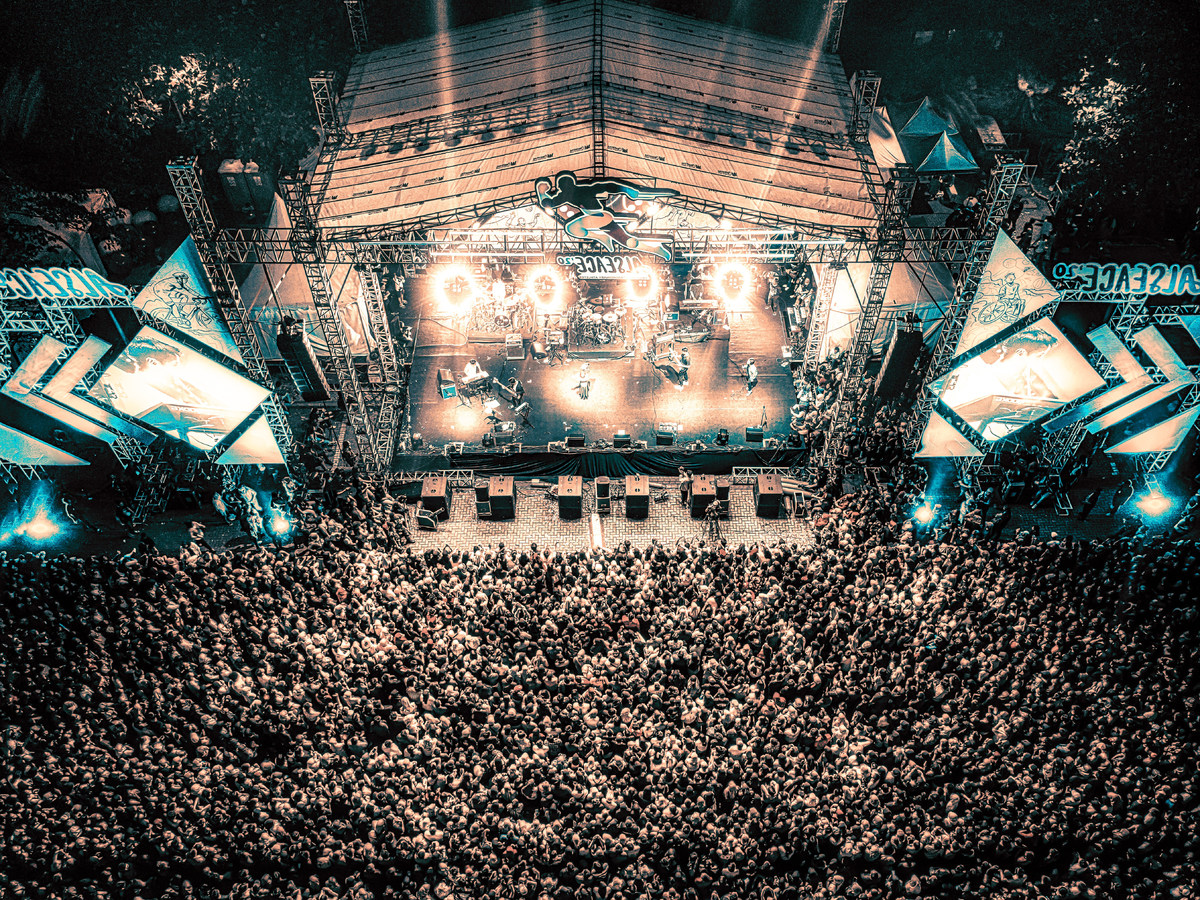
US festivals, from legacy-leaning gatherings like Newport Folk and New Orleans Jazz & Heritage to more pop-focused events like Austin City Limits and Bonnaroo, often include at least one set in their lineups each year that explicitly pays homage to mid-century soul pioneers. Tribute medleys, guest-filled covers, and surprise sit-ins serve as living footnotes to Ray Charles’s catalog, keeping his songs in the air even for fans who might not yet associate them with his name.
Visiting Ray Charles landmarks — and connecting the past to the present
For US fans who want to move beyond playlists and press releases, the resurgence of interest in Ray Charles has translated into renewed attention to physical sites connected to his life. Museums, heritage trails, and community organizations in cities linked to his biography report a steady trickle of visitors drawn by documentaries, school projects, and social-media features.
These visits are often framed as part of a broader journey through American music history: travelers pair stops devoted to Ray Charles with visits to jazz, blues, and gospel landmarks, tracing how regional scenes fed into the national soundscape. Tourism boards and cultural institutions have begun to highlight these routes more aggressively, seeing them as a way to connect contemporary concerns about race, equity, and cultural ownership to tangible spaces where history unfolded.
For practical information on official releases, estate-sanctioned projects, and historical background, US audiences can turn to resources like Ray Charles’s official website, which aggregates news, discography details, and archival material in one place. Fans seeking deeper archival coverage and ongoing updates can also explore more Ray Charles coverage on AD HOC NEWS via our internal search, which surfaces related news items, reviews, and historical features.
FAQ: Ray Charles in 2026
How is Ray Charles’s music reaching new listeners in the US today?
Ray Charles is connecting with new US listeners primarily through streaming playlists, sync placements in film and television, and short-form social-video clips that showcase his live performances and studio innovations. According to Billboard, catalog tracks that appear in high-visibility playlists and major streaming-series soundtracks see measurable jumps in US streams. Educators and commentators on platforms like TikTok and YouTube Shorts are also explaining the historical context of his music, making complex topics like genre fusion and civil-rights activism more accessible to younger audiences.
Why is Ray Charles considered a foundational figure for rock and pop?
Ray Charles is regarded as foundational because he demonstrated, earlier than most, that artists could combine gospel intensity, blues feeling, jazz harmony, and pop structure into a coherent, emotionally direct sound. Rolling Stone and NPR have both emphasized how his use of call-and-response, swing-inflected rhythms, and improvisatory vocal phrasing paved the way for later developments in rock, soul, and R&B. His "Modern Sounds in Country and Western Music" albums further proved that genre boundaries were permeable, influencing subsequent generations of crossover artists.
What role did Ray Charles play in civil-rights-era activism?
Ray Charles used his status as a popular touring artist to pressure venues and promoters into abandoning segregation. By canceling shows at segregated halls and facing legal consequences in some cases, he underscored the economic power that Black performers could wield in support of civil-rights goals. The New York Times and other outlets have documented these choices as part of a broader shift in which entertainers became more explicitly engaged with political and social struggles, anticipating later activism around touring boycotts, benefit concerts, and public endorsements of social-justice movements.
What is happening with Ray Charles’s catalog and audio quality in 2026?
In 2026, the focus around Ray Charles’s catalog is on careful restoration and remastering that respects the integrity of the original recordings while making them more compatible with contemporary listening environments. According to The Wall Street Journal’s coverage of catalog remasters, labels and estates are adopting AI-assisted tools to clean up tape hiss, rebalance mixes, and slightly widen dynamic range without altering vocal performances or core arrangements. As of May 31, 2026, these projects are presented explicitly as preservation efforts, with liner notes and digital descriptions providing transparency about the technical interventions used.
How does Ray Charles’s story relate to current debates about AI and artists’ rights?
Ray Charles’s historic insistence on owning his masters and maintaining creative control offers a useful framework for understanding today’s debates about AI-generated voices and posthumous performances. While Charles himself never faced AI issues, his negotiations over rights, as recounted by outlets like Variety, highlight the importance of clear agreements and respect for artistic intent. In 2026, as US lawmakers, the Recording Academy, and industry bodies weigh in on voice cloning and AI simulations, fans and estates often invoke past fights over ownership and autonomy — including Charles’s — to argue for protections that keep an artist’s legacy from being reshaped without consent.
As the US music landscape continues to evolve, Ray Charles stands as both a historical landmark and an active participant in ongoing conversations about genre, technology, and justice. Whether his voice is arriving through a remastered vinyl reissue, a streaming algorithm’s recommendation, a sync in a prestige drama, or a short video explaining his protest decisions, the Genius of Soul remains woven into the soundtrack of American life.
By the AD HOC NEWS Music Desk » Rock and pop coverage — The AD HOC NEWS Music Desk, with AI-assisted research support, reports daily on albums, tours, charts, and scene developments across the United States and internationally.
Published: May 31, 2026 · Last reviewed: May 31, 2026
So schätzen die Börsenprofis Aktien ein!

Für. Immer. Kostenlos.