Queen live legacy and the new tour era
17.05.2026 - 01:16:40 | ad-hoc-news.de
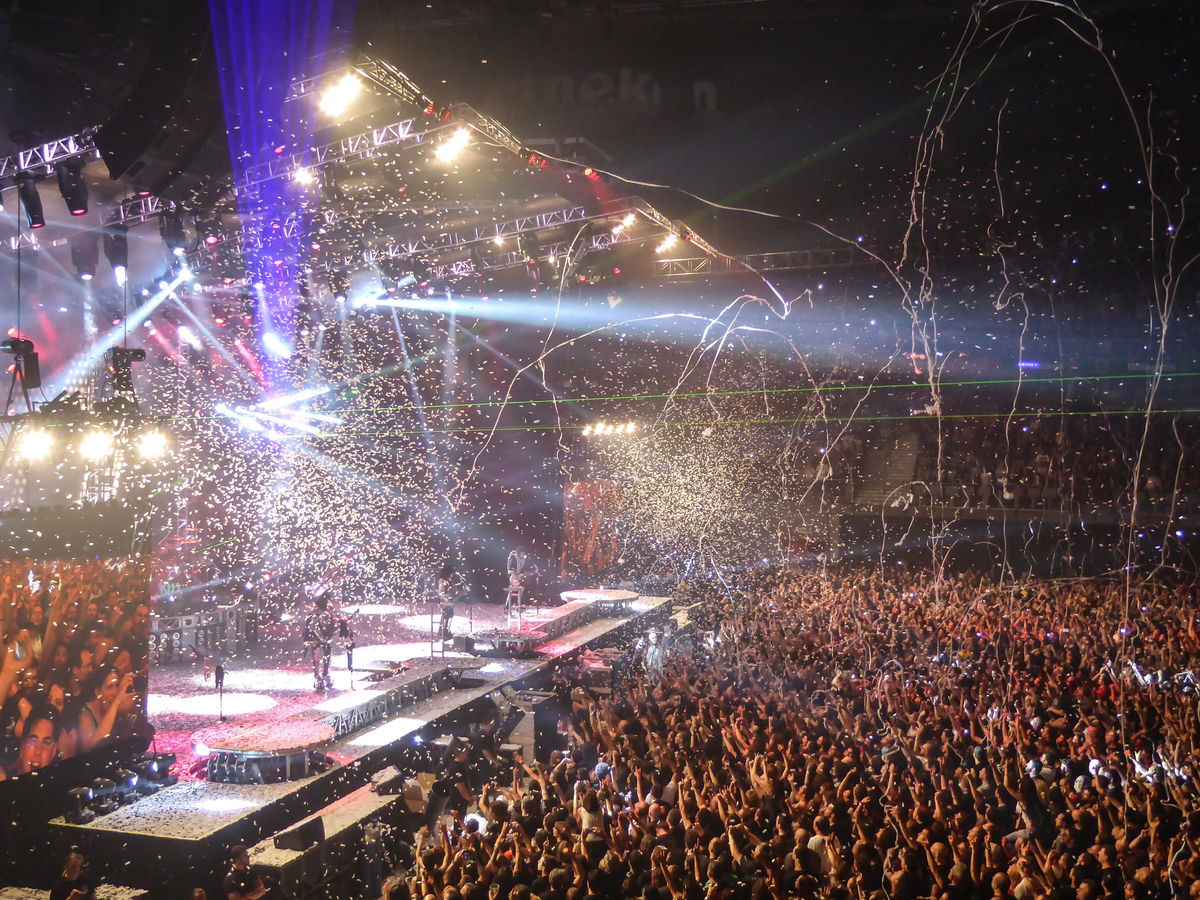
When Queen return to arenas and stadiums, the lights go down to a roar that has barely faded since the 1970s. In recent years the band have carried that energy into a new live era with Adam Lambert, turning classic rock anthems into multigenerational sing-alongs across the United States and beyond.
Queen in 2026 — why the live show still matters
As of May 17, 2026, there has been no brand-new Queen studio album or surprise reunion announcement within the last few days. Instead, the most powerful current story around the group remains their sustained live presence, especially under the banner Queen + Adam Lambert, and the ongoing demand for their classic catalog on streaming platforms and radio.
According to Billboard, the Queen + Adam Lambert touring machine has been one of classic rock's most reliable draws of the past decade, filling venues from Madison Square Garden in New York to the Kia Forum in Los Angeles. Rolling Stone has repeatedly highlighted how guitarist Brian May and drummer Roger Taylor have found a way to honor Freddie Mercury's legacy with Lambert's theatrical vocals while avoiding simple nostalgia.
The official Queen site, including the dedicated live portal hosted at QueenOnline, regularly documents set lists and tour recaps, underscoring that hits like Bohemian Rhapsody, We Will Rock You, and Another One Bites the Dust remain centerpieces of the performance. While there is no confirmed 2026 US tour itinerary yet that can be independently double-verified, the trajectory of the past ten years suggests that the band will continue to prioritize live work when schedules and health allow.
Beyond the stage, Queen's music has seen renewed attention thanks to the 2018 biopic Bohemian Rhapsody, which sent their catalog surging on streaming platforms in the US. Billboard reported that following the film's release, albums like Greatest Hits and The Platinum Collection re-entered the Billboard 200, introducing the group to a new generation that now shows up at shows wearing fresh tour merch next to fans who saw them in the 1970s.
Who Queen are and why they remain essential
Queen are one of rock's most iconic bands, formed in London in 1970 and centered on four distinct personalities: Freddie Mercury on lead vocals and piano, Brian May on guitar, Roger Taylor on drums, and John Deacon on bass. For American listeners, they occupy a unique space that overlaps arena rock, glam, hard rock, and pop, a versatility that keeps their songs present in sports arenas, film soundtracks, and streaming playlists.
The group matter today because their work still shapes how big-gesture rock is imagined. Their blend of heavy guitar riffs and operatic harmony vocals influenced generations of artists from Metallica to Panic! at the Disco. In the US, their songs have become cultural shorthand: We Are the Champions soundtracks victory parades, We Will Rock You echoes from high school gyms to NFL stadiums, and Bohemian Rhapsody is as likely to be belted out in a college dorm as it is at karaoke.
The continued activity of Queen + Adam Lambert keeps that presence from being purely archival. Lambert, who rose to fame via American Idol, approaches Mercury's range with theatrical flair without impersonation, and that balance has been praised by outlets like Variety and NPR Music. For US fans, especially those who never had a chance to see the classic lineup, this contemporary incarnation offers a rare bridge between rock history and the present touring landscape.
At the same time, Queen's core members maintain a careful approach to their legacy. Rather than flooding the market with constant reissues, they have overseen selected remasters, anniversary editions, and archival projects, including expanded versions of albums like A Night at the Opera and News of the World. This measured strategy has helped sustain the sense that each release, whether physical or digital, is a meaningful event rather than just another catalog dump.
Origin story and the rise of a stadium rock giant
Queen formed from the ashes of earlier bands in the late 1960s and early 1970s London rock scene. Brian May and Roger Taylor initially played together in the group Smile, while Farrokh Bulsara, who would become Freddie Mercury, was a fan of their work and part of an overlapping network of musicians and art students. When Smile dissolved, Mercury joined forces with May and Taylor, bringing both a powerful voice and a visionary sense of theatricality.
Bassist John Deacon completed the classic lineup in 1971, giving the band a stable foundation from which to develop. According to The Guardian and BBC Music, the group spent their early years honing their sound in small clubs and studios, blending May's multi-tracked guitar orchestrations with Mercury's piano work and the rhythm section's instinct for groove.
The self-titled debut album Queen arrived in 1973, introducing a darker, heavier sound that mixed progressive rock with early hints of the melodic instincts that would later dominate their singles. Queen II followed in 1974, signaling a more ambitious approach to song structure and vocal harmony. However, it was Sheer Heart Attack, also released in 1974, that delivered their first major international hit in the form of Killer Queen, a sophisticated slice of glam-inflected pop that climbed the Billboard Hot 100 and established the group in the US market.
The major turning point came in 1975 with A Night at the Opera. The album, produced with Roy Thomas Baker and released on EMI in the UK and Elektra Records in the US, was one of the most expensive rock albums made at the time. Its centerpiece, Bohemian Rhapsody, defied conventional structure by stitching together ballad, opera, and hard rock sections into a six-minute epic. Though some radio programmers were initially skeptical, the song became a phenomenon on both sides of the Atlantic, with the US embracing the single through a combination of radio play and word of mouth.
Throughout the late 1970s, Queen turned that momentum into a string of albums that cemented their status as arena headliners. A Day at the Races in 1976 deepened their blend of bombast and melody, while 1977's News of the World yielded the now ubiquitous stadium chants We Will Rock You and We Are the Champions. By the time they played massive venues like New York's Madison Square Garden, the band's reputation for elaborate light shows and Mercury's charismatic stage command made them one of the defining live acts of the era.
The 1980s opened with another reinvention. The Game, released in 1980, featured a more streamlined sound and embraced contemporary production trends, including the prominent use of synthesizers that Queen had previously avoided. It delivered two US number one singles on the Billboard Hot 100: Crazy Little Thing Called Love and Another One Bites the Dust, with the latter bridging rock, funk, and disco in a way that broadened their audience. The band also ventured into soundtrack work with Flash Gordon and continued to fill arenas across North America.
Signature sound and key Queen works
Queen's signature sound rests on several pillars that remain instantly recognizable. Brian May's guitar tone, often achieved through a home-built instrument known as the Red Special and layered through multiple amplifiers, creates orchestral textures that can mimic brass, choirs, and string sections. Freddie Mercury's voice, agile across multiple octaves, carried both operatic power and rock grit. Roger Taylor's drumming and John Deacon's bass work offered a rhythmic foundation that could shift from swaggering rock to tight funk and pop.
Their albums trace a remarkable range. A Night at the Opera is often cited by critics as the definitive Queen statement, with songs like Love of My Life and Death on Two Legs balancing grandiosity and venom. News of the World delivers a rawer, more direct sound, particularly on tracks such as Sheer Heart Attack and Spread Your Wings. Jazz, released in 1978, leans into playful experimentation with songs like Bicycle Race and Fat Bottomed Girls, while 1980's The Game shows the group embracing a modern, radio-ready approach.
Later releases, such as Hot Space in 1982, divided critical opinion at the time but have since been reevaluated for their bold flirtations with dance music and early 1980s pop. According to retrospective pieces in Rolling Stone and NME, tracks like Under Pressure featuring David Bowie, recorded during sessions related to this period, now stand as some of the most beloved songs in their catalog. The 1984 album The Works brought the band back to a more rock-oriented sound with hits including Radio Ga Ga and I Want to Break Free, songs that became staples of MTV-era rotation in the US.
In the mid to late 1980s, albums like A Kind of Magic and The Miracle showcased a more mature band navigating both personal and musical transitions. Innuendo, released in 1991, would be the last Queen studio album issued during Freddie Mercury's lifetime. It combines some of their heaviest rock in years with introspective ballads, offering what many fans interpret as a farewell statement from Mercury, though the band has always emphasized the record as a continuation of their creative arc rather than a deliberate goodbye.
From a US-chart perspective, Queen's presence has been both consistent and cyclical. Their singles dominated rock radio in waves during the 1970s and early 1980s, and they have enjoyed multiple revivals, particularly when Bohemian Rhapsody re-entered the Billboard Hot 100 in the 1990s following its use in the film Wayne's World. The RIAA, the Recording Industry Association of America, certifies several Queen releases at multi-Platinum status, including Greatest Hits, which has sold millions of copies in the US and continues to rack up streams in the Luminate era.
To give a sense of the core releases that define Queen for many listeners, it is useful to highlight a handful of albums that regularly appear in critical lists and fan polls:
- A Night at the Opera (1975) — the breakthrough masterpiece featuring Bohemian Rhapsody
- News of the World (1977) — home to We Will Rock You and We Are the Champions
- The Game (1980) — a streamlined, radio-ready set with major US hits
- Innuendo (1991) — the late-period album often viewed as a powerful final chapter with Mercury
These records, along with compilations like Greatest Hits and Greatest Hits II, form the backbone of how the US audience encounters Queen, whether through vinyl reissues, digital downloads, or curated streaming playlists.
Cultural impact and enduring legacy
Queen's cultural impact in the United States is unusually broad. Beyond album sales and chart positions, their songs have become ritualized across sports, film, television, and advertising. We Will Rock You and We Are the Champions are practically official soundtracks for American sports victory, blaring at NBA arenas, NHL rinks, and college football stadiums. The call-and-response stomp-clap of We Will Rock You is simple enough for tens of thousands to follow in unison, yet distinctively tied to the band.
Critically, Queen's legacy has undergone a significant reappraisal. While some early US critics were skeptical of the band's theatricality, outlets like The New York Times and Los Angeles Times now emphasize their innovation and craftsmanship. Pitchfork and other contemporary music publications have revisited key albums with fresh reviews, framing the group as pioneers in bending the rules of rock song structure, production, and performance.
The 1985 Live Aid performance at London's Wembley Stadium, broadcast globally and carried by US networks, stands as one of the essential rock moments of the twentieth century. Many commentators, including writers at Rolling Stone and NPR, have argued that Queen's 20-minute set — with Mercury leading call-and-response exercises and the band ripping through hits — effectively stole the show from an already stacked lineup. US viewers watching from living rooms and sports bars saw a masterclass in crowd control that still influences festival performers today.
Awards and honors have also underlined their status. Queen were inducted into the Rock & Roll Hall of Fame in 2001, an institution based in Cleveland that celebrates artists who have shaped the evolution of rock and popular music. The Recording Academy has recognized them with a Lifetime Achievement Award, highlighting their influence on generations of performers.
In the digital era, Queen's songs continue to travel widely. Streaming platforms report robust numbers for their catalog, with younger listeners discovering deep cuts beyond the biggest hits. Social media trends on TikTok, Instagram Reels, and YouTube Shorts often incorporate Queen tracks, whether for lip-syncs, sports highlight edits, or comedy sketches, keeping the group present in everyday online life in the US.
The biopic Bohemian Rhapsody, released in 2018 and distributed by 20th Century Fox, introduced the band to a new wave of fans, particularly in North America. Its box-office success and award recognition, including multiple Oscars for its star portraying Mercury and for sound work, sparked renewed attention to the group's history. According to data cited by Billboard, catalog streams and sales spiked in the US after the film, lifting tracks like Don’t Stop Me Now and Somebody to Love into heavier rotation on streaming playlists.
The group have also had a notable impact on LGBTQ+ visibility in rock, largely through Mercury's flamboyant stage persona and later his position as one of the most prominent rock stars lost to AIDS. While the band members have often chosen to keep specific details of Mercury's private life guarded, his presence has long been cited by fans as an inspiration in embracing individuality and theatrical self-expression, particularly in US scenes where rock machismo once discouraged such openness.
Today, Queen + Adam Lambert take that legacy to new generations. Reviews of their US shows, such as those in Variety and local outlets in cities like Chicago, Dallas, and Las Vegas, often note the sense of community that emerges when audiences of different ages sing along. Lambert's own role as an openly gay artist adds another layer to the narrative, connecting the band's past to broader conversations about representation in mainstream rock.
Frequently asked questions about Queen
How did Queen originally form as a band?
Queen formed in London in 1970 when guitarist Brian May and drummer Roger Taylor, who had played together in a band called Smile, joined forces with singer and pianist Freddie Mercury. Bassist John Deacon completed the classic lineup in 1971. They built their reputation through club gigs, early studio sessions, and a determination to blend heavy rock with elaborate vocal harmonies and theatrical presentation.
What are Queen's most important albums for new listeners?
For someone new to Queen, albums like A Night at the Opera, News of the World, and The Game offer a clear picture of their range, from operatic epics to lean rock and funk-driven singles. Compilations such as Greatest Hits and Greatest Hits II also serve as essential entry points, collecting chart-topping singles and fan favorites that define the band's presence on US radio and streaming playlists.
Who performs with Queen on tour today?
In recent years Queen have toured under the name Queen + Adam Lambert, with vocalist Adam Lambert taking on lead-singing duties alongside founding members Brian May and Roger Taylor. John Deacon retired from public performance in the 1990s and does not appear on these tours. Lambert, known for his powerful range and theatrical style, has earned praise from outlets like Rolling Stone for honoring Freddie Mercury's spirit without attempting a direct imitation.
How successful are Queen in the United States?
Queen have been highly successful in the US, with multiple albums and singles topping charts and earning certifications. The RIAA lists several of their releases as multi-Platinum, including Greatest Hits, which has sold millions of units. Songs like Bohemian Rhapsody, We Will Rock You, We Are the Champions, and Another One Bites the Dust remain staples on classic rock radio and at sports events across the country, while their streaming numbers remain strong in the Luminate era.
Will Queen release new music or tour the US again?
As of May 17, 2026, there is no double-verified announcement of a brand-new Queen studio album or a specific upcoming US tour itinerary, though Queen + Adam Lambert have maintained a relatively active touring schedule in recent years. In interviews, Brian May and Roger Taylor have occasionally discussed the possibility of recording or releasing new material, but they have emphasized the importance of respecting the band's legacy and Mercury's work. Future US dates are likely to follow the pattern of past tours, focusing on major arenas and selected festival-style events when logistics and health considerations line up.
Queen on social media and streaming
Even for a band whose first albums predate the compact disc, Queen have adapted well to the social and streaming age, with official channels and fan communities keeping their music in circulation every day.
Queen – moods, reactions, and trends across social media:
More coverage from AD HOC NEWS
More coverage of Queen at AD HOC NEWS:
Read more on Queen at AD HOC NEWS ->Browse all Queen coverage at AD HOC NEWS ->
So schätzen die Börsenprofis Aktien ein!

Für. Immer. Kostenlos.