Orbital Data Centers Fuel SpaceX’s $75 Billion IPO as $920 Million Monthly Google Deal Offsets $5 Billion Loss
10.06.2026 - 01:03:43 | boerse-global.de
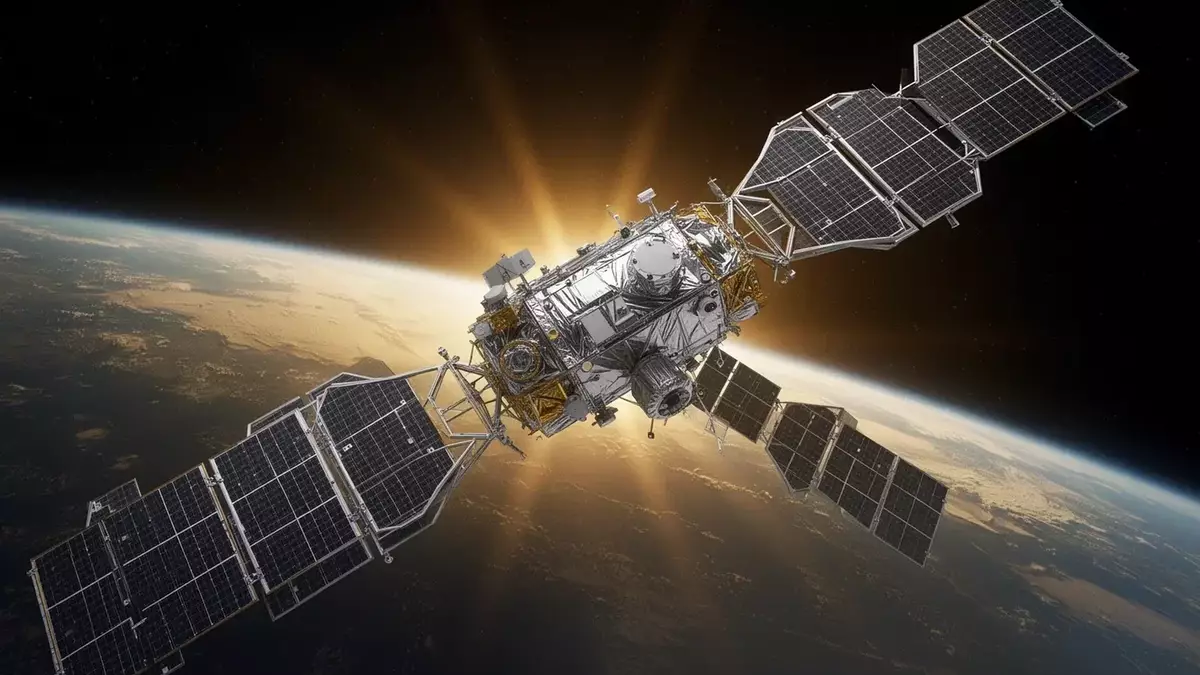
When SpaceX begins trading on the Nasdaq under the ticker SPCX this Friday, it will do so with a story that stretches far beyond rocket launches. The company has inked a cloud contract with Google that generates roughly $920 million a month through 2029, renting out orbital computing capacity for artificial intelligence workloads. That deal, together with a separate partnership with the AI firm Anthropic, has reshaped how investors view the business: not merely as a launch provider or satellite operator, but as the builder of a new layer of infrastructure that runs in space.
The initial public offering itself is unprecedented in scale. SpaceX has set an issue price of $135 a share, giving the company a market capitalization of nearly $1.8 trillion. It aims to raise $75 billion, making it the largest IPO in financial history by a wide margin — the previous record holder, Saudi Aramco, pulled in $29.4 billion. The order book is already double oversubscribed, with institutional and retail investors together submitting bids worth around $150 billion for the 555.6 million shares on offer. Around 30% of the allocation has been reserved for individual investors, many of whom can participate with as little as $2,000 through brokers like Fidelity.
Behind the massive demand lies a stark financial paradox. SpaceX’s Starlink division produced an operating profit of $4.4 billion on $11.4 billion in revenue in 2025. Yet the group as a whole posted a net loss of $4.94 billion last year, hammered by capital-intensive programs including the Starship rocket and a rapid build-out of AI infrastructure. Losses accelerated in the first quarter of 2026, reaching $4.28 billion. The company’s total 2025 revenue came in at $18.7 billion, implying that the core launch and Starlink businesses alone are profitable only when the heavy investment spend is excluded.
Should investors sell immediately? Or is it worth buying SpaceX?
The valuation has divided analysts sharply. Morningstar pegs the fair value of the stock at $63 a share — less than half the IPO price. Finance professor Aswath Damodaran estimates the company’s intrinsic worth at between $1.25 trillion and $1.35 trillion, well below the $1.8 trillion valuation the offering implies. Supporters counter that SpaceX controls roughly 90% of the global commercial launch market, giving it a monopoly that justifies a multiple of 94 times revenue. They also point to the Google and Anthropic contracts as proof that the orbital infrastructure business can eventually turn the losses into profits.
Governance concerns are adding another layer of debate. After the listing, Elon Musk is expected to command between 80% and 85% of the voting rights through a dual-class share structure, despite holding only a minority of the economic interest. Critics note that shareholders will also be barred from bringing class-action lawsuits — SpaceX moved its legal domicile to Texas to facilitate that arrangement. Mark Levine, the New York City comptroller who oversees $300 billion in pension assets, has called the structure unprecedented, while European funds including Denmark’s AkademikerPension and Norway’s Storebrand have voiced similar reservations.
A low free float of just 5% could amplify price swings on the first trading day. To mitigate that, the Nasdaq is planning an accelerated inclusion into its leading technology index after only 15 trading sessions, which would draw in passive fund flows. The timeline is tight: pricing is set for June 11, and the first trades are scheduled for June 12. Morgan Stanley recently hosted a roadshow with 300 institutional investors, featuring presentations from SpaceX president Gwynne Shotwell and CFO Bret Johnsen.
If the IPO goes through at the planned price, it will smash every existing benchmark for a stock market debut. The real test will come after the initial pop, when investors begin weighing the $5 billion in annual losses against the promise of a monopoly in orbital computing — a bet that no other company can currently match.
Ad
SpaceX Stock: New Analysis - 10 June
Fresh SpaceX information released. What's the impact for investors? Our latest independent report examines recent figures and market trends.
So schätzen die Börsenprofis Orbital Aktien ein!

Für. Immer. Kostenlos.