Hozier opens a new era with Unreal Unearth tour momentum
17.05.2026 - 01:23:34 | ad-hoc-news.de
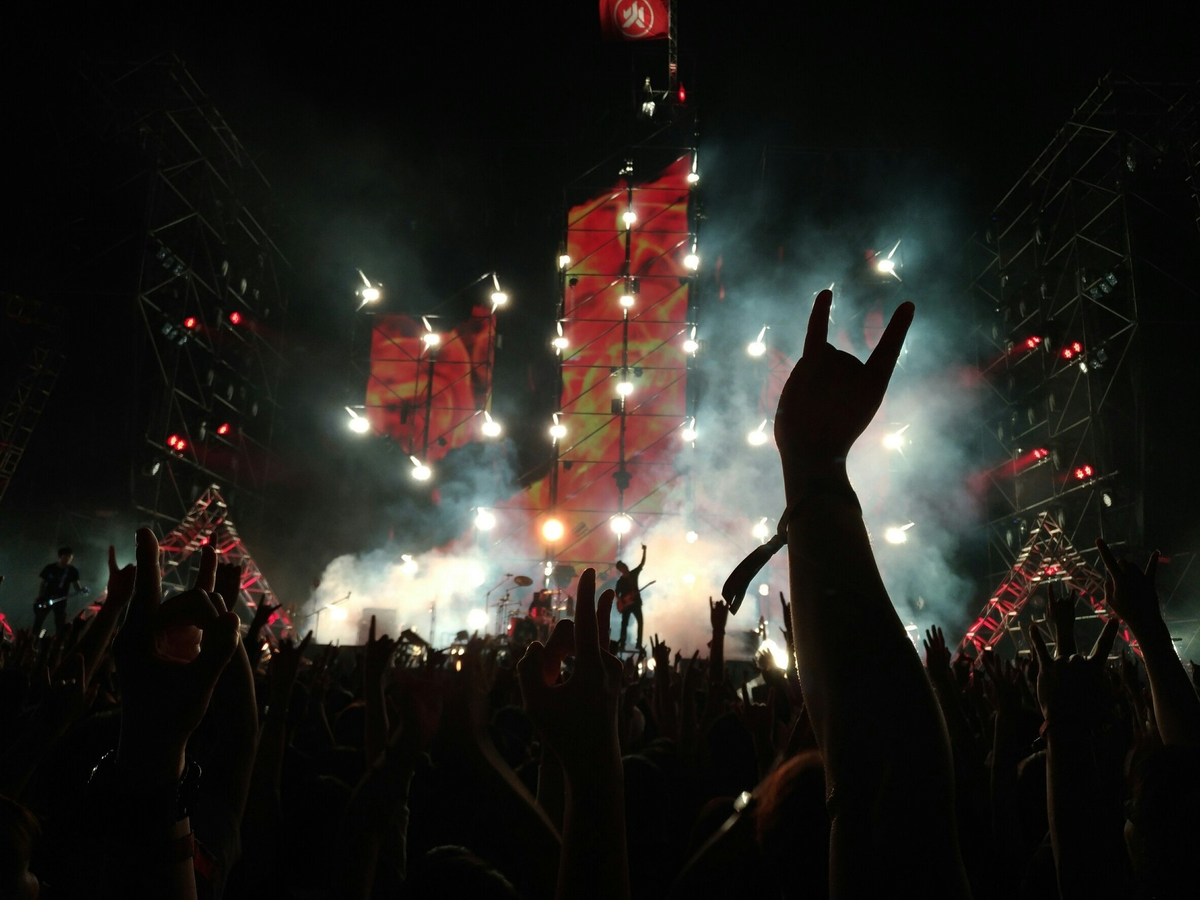
Under blue and amber lights in arenas across the country, Hozier has been turning the success of his 2023 album Unreal Unearth into a full-fledged new era, with roaring sing-alongs, quietly devastating ballads, and a touring schedule that keeps expanding through 2026.
Hozier's latest chapter: Unreal Unearth and a relentless live run
While there has not been a brand-new album announcement within the last few days, the ongoing arc around Unreal Unearth and its extended touring life remains the center of Hozier's story in 2026. The Irish singer's third studio album arrived in August 2023 via Columbia Records and Rubyworks, after a string of teaser tracks that reminded listeners how expansive his songwriting could be.
According to Billboard, the record debuted at number three on the Billboard 200, marking the artist's highest charting album in the United States to date and reinforcing his place on the upper tier of modern rock and alternative-leaning pop performers. NPR Music highlighted the album's ambitious concept, built loosely around Dante's Inferno, with songs that move through emotional circles of grief, anger, hope, and renewal while drawing on blues, folk, soul, and choral traditions.
As of May 17, 2026, Hozier continues to work through an extended world tour that has already seen major US arena stops, festival slots, and theater headline shows in key markets such as New York, Los Angeles, Chicago, and Nashville. On earlier legs of the Unreal Unearth tour, he performed at venues including Madison Square Garden in New York City, the Kia Forum in Inglewood near Los Angeles, and Red Rocks Amphitheatre outside Denver, cementing his evolution from indie breakout to arena-level act.
In keeping with the artist's history of stretching album cycles with EPs and stand-alone singles, the current era has also featured songs recorded during the Unreal Unearth sessions but released separately, as well as live arrangements that reimagine older tracks from Hozier and Wasteland, Baby!. These live versions, shared widely via fan clips and official concert videos, have helped maintain algorithmic momentum on platforms from YouTube to Spotify even as the core album approaches the three-year mark.
Onstage, Hozier has been leaning into full-band arrangements with rich vocal harmonies, multi-instrumentalist support on cello, violin, and brass, and a lighting design that shifts from candlelit intimacy to stormy blues and reds. The setlists often stretch past two hours, pulling material from every phase of his catalog and making room for extended intros, acoustic interludes, and crowd-led refrains that blur the line between folk club and rock spectacle.
For US fans, the ongoing tour and the still-growing footprint of Unreal Unearth on streaming platforms keep the singer in active conversation with contemporary pop and rock trends, even as his music resists easy categorization. In a landscape where short viral snippets often eclipse full-length projects, Hozier's insistence on album-scale storytelling and patient live builds stands out as an old-school but timely alternative.
- Breakthrough moment: Hozier (2014) and the global impact of Take Me to Church
- Second chapter: chart-topping sophomore album Wasteland, Baby! in 2019
- New era: 2023's Unreal Unearth with a concept-driven arc and extended tour
- Live footprint: arena and amphitheater-level shows across major US cities
- Core themes: love, faith, power, resistance, myth, and the natural world
Who Hozier is and why his music resonates with US listeners
Hozier, born Andrew Hozier-Byrne in County Wicklow, Ireland, is a singer, songwriter, guitarist, and producer whose work sits at the intersection of rock, soul, folk, and blues. He emerged in the mid-2010s with a voice that felt both ancient and modern, combining gospel cadences and choir-like harmonies with restrained but powerful guitar work.
For many US listeners, his appeal begins with the unmistakable timbre of his vocals: a deep, resonant baritone that can shift from hushed confession to full-throated wail in a single phrase. That voice is wrapped in arrangements built on fingerpicked guitar, gospel choirs, horns, and percussive builds that feel closer to classic rock and soul than to most contemporary charts.
Lyrically, the artist often writes in dense imagery, drawing on religious symbolism, mythological references, and natural landscapes. Yet the emotions remain direct, whether he is singing about queer liberation, the corrosive effects of power and institutions, or intimate heartbreak and desire. This combination of poetic language and plainspoken feeling has made his songs staples of personal playlists, wedding ceremonies, protest marches, and television soundtracks in equal measure.
Within the US scene, Hozier often gets grouped with alternative and indie-adjacent rock acts, yet his songwriting has crossed into mainstream pop spaces since Take Me to Church became a fixture on Top 40 radio. While he rarely follows the formula of a three-minute hook-driven single, his choruses are undeniably strong, and his melodies linger in a way that has helped songs like Cherry Wine, Someone New, and Would That I become slow-burn favorites.
His public persona has also played a role. The musician has cultivated a reputation for thoughtful activism, particularly around LGBTQ+ rights, racial justice, and reproductive freedom, often using interviews and stage banter to amplify organizations and campaigns. In the US, this has resonated with college-aged audiences and young professionals who see his concerts not only as entertainment but as community spaces.
At the same time, older rock and folk fans have gravitated toward his reverence for classic influences. His live covers of artists such as Nina Simone, Van Morrison, and Stevie Wonder make explicit the lineage he draws from, reinforcing a sense of continuity between past and present within the broader rock and soul canon.
From Bray to global stages: Hozier's origin and rise
Before he was filling US arenas, Hozier was a teenager in Bray, a coastal town south of Dublin, teaching himself guitar and absorbing American blues and soul records. He joined his school choir and later sang with the Trinity Orchestra and the choral ensemble Anúna, experiences that would shape his fondness for layered vocals and choral textures.
According to The Guardian and Rolling Stone, he recorded early demos at home while studying at Trinity College Dublin, eventually leaving school to concentrate fully on music. That decision led him to Rubyworks, an independent Irish label, where he began crafting the songs that would form his breakthrough EPs.
In 2013, he released the Take Me to Church EP, with its title track initially gaining traction on Irish radio and later through a stark black-and-white video that addressed homophobia and violence. The clip, highlighting a same-sex couple targeted by a violent mob, circulated widely online at a moment when conversations about marriage equality and queer rights were intensifying across Europe and the United States.
Billboard reports that Take Me to Church climbed steadily up the Billboard Hot 100, ultimately peaking at number two in 2015 after a long chart run that made it one of the decade's most recognizable rock-influenced hits. The Recording Industry Association of America (RIAA) later certified the single multi-Platinum, marking Hozier as an international success story driven more by word-of-mouth and streaming than by traditional pop machinery.
His self-titled debut album, Hozier, arrived in the US in 2014, blending spiritual and secular themes across tracks like From Eden, Work Song, and Jackie and Wilson. The record spent an extended stretch on the Billboard 200 and went on to earn Platinum certification from the RIAA, demonstrating that the vocalist was more than a one-hit wonder.
In the years following the debut, Hozier toured extensively across Europe and North America, playing festivals such as Coachella in Indio, California, and Bonnaroo in Tennessee, alongside club and theater dates. These live shows introduced US audiences to his full-band sound and set the template for future tours, where high-drama dynamic shifts and hushed intimacy could sit within the same setlist.
After spending time between Dublin and the United States, he released the Nina Cried Power EP in 2018, with a title track that featured Mavis Staples and explicitly honored a lineage of protest music. The EP built momentum for his second full-length album, Wasteland, Baby!, released in March 2019. That record debuted at number one on the Billboard 200, a milestone that confirmed his status as a major album artist in the US market.
Between album cycles, the singer kept a relatively low public profile but continued writing and recording, hinting at his third record through interviews and scattered singles. That path eventually led to the unveiling of Unreal Unearth in 2023, a project shaped in part by the global upheavals of the late 2010s and early 2020s and by his own reflections on faith, climate, loss, and connection.
Inside Hozier's sound: key albums, songs, and collaborators
Across his three studio albums, Hozier's sound has evolved without abandoning its core DNA: a blend of bluesy guitar work, gospel-rooted harmonies, and lyrical structures that borrow as much from poetry as from pop. His debut, Hozier, laid out that template with tracks like Take Me to Church, Angel of Small Death and the Codeine Scene, and Like Real People Do, songs that framed love and spiritual longing in the language of alt-gospel and indie rock.
On Wasteland, Baby!, he broadened the palette. Songs such as Movement, Almost (Sweet Music), and Dinner & Diatribes leaned into soul, jazz, and groove-oriented arrangements, often with brass and backing vocals that nodded to classic rhythm-and-blues. The album's production, led by Hozier himself alongside collaborators like Markus Dravs and Rob Kirwan, maintained an organic feel even as the arrangements grew more intricate.
Unreal Unearth marked a further expansion, both in concept and in sound. According to Pitchfork and Variety, the record weaves through dense layers of folk instrumentation, chanted vocal lines, and thickly distorted guitars, placing songs like De Selby (Part 2), Eat Your Young, and Francesca in conversation with medieval folk motifs and modern rock dynamics. The result is an album that feels cinematic without sacrificing the rawness that initially drew fans in.
In the studio and onstage, Hozier often works with a tight-knit group of musicians, including multi-instrumentalists who switch between guitar, keyboards, strings, and percussion. While he has not tied himself to a single marquee producer in the way some pop acts do, his collaborations with engineers and co-producers like Rob Kirwan have helped maintain continuity in tone and texture across projects.
His songwriting process, as described in interviews with outlets such as The New York Times and NPR, often begins with guitar patterns and melodic fragments, which he then builds into full arrangements by layering vocal harmonies and experimenting with rhythmic accents. He frequently drafts lyrics in notebook form, drawing on images from literature, history, and nature, and revises them until they strike a balance between metaphor and clarity.
Live, these songs can shift significantly from their studio incarnations. Extended intros, a cappella sections, and re-harmonized bridges allow the band to stretch out, while lower-key tracks like Cherry Wine or Shrike become moments of near-silence in otherwise surging sets. This willingness to rework material has contributed to a reputation for concerts that feel distinct from night to night, even when the overall structure remains similar.
In addition to his own catalog, Hozier has contributed songs and performances to a variety of projects, from charity compilations to soundtrack placements. While he has not yet released a full collaborative album, guest appearances and live duets with artists such as Mavis Staples and Maggie Rogers underscore his comfort moving across generations and genre boundaries.
Instrumentally, his guitar work is rooted in blues, with a fondness for minor-key progressions, open tunings, and subtle fingerstyle patterns. That foundation is often paired with arrangements that bring in organ, piano, strings, and layered backing vocals, creating a sense of space and depth that recalls both church music and classic studio productions from the 1960s and 1970s.
Impact, legacy, and the place of Hozier in modern rock and pop
In a decade marked by rapid shifts in streaming trends and social media cycles, Hozier's slow-building, album-focused career provides a counter-narrative to the rise-and-fall arcs that can define pop. Rather than chasing every new format, he has leaned into a model closer to classic rock and singer-songwriter traditions, emphasizing strong live performances and cohesive records.
Critically, his work has been recognized not only for its vocal power but also for its political and ethical engagement. Outlets such as Rolling Stone and The Washington Post have highlighted the way songs like Take Me to Church and Nina Cried Power tackle institutional hypocrisy, homophobia, and the legacy of protest music without sacrificing melody or emotional richness.
Commercially, the artist has racked up major milestones. Beyond the multi-Platinum status of Take Me to Church, RIAA certifications reflect the staying power of the Hozier album, with tracks like Work Song and From Eden earning their own Gold or Platinum plaques over time. His Billboard 200 number one with Wasteland, Baby! further cemented his status, while the robust debut of Unreal Unearth at number three demonstrated that his audience had grown rather than faded.
On the festival circuit, Hozier has become a reliable headliner or sub-headliner, appearing at US events such as Coachella, Lollapalooza in Chicago, Austin City Limits in Texas, and Outside Lands in San Francisco. These slots place him alongside rock, pop, and hip-hop heavyweights, reinforcing his position as a bridge figure who can appeal to fans across genre lines.
His influence is visible in a wave of younger singer-songwriters who combine literary lyrics with gospel or choral elements, as well as in the renewed presence of guitar-driven, soul-inflected rock on streaming platforms. Artists in the US and beyond have cited his work as proof that it is still possible to build a large audience around dense, emotionally complex songs rather than just quick-hit singles.
Culturally, Hozier's image as a bookish, politically engaged, slightly reclusive rock poet contrasts with flashier pop archetypes, offering an alternative for fans who connect more deeply with introspection and long-form storytelling. His transparency in interviews about subjects such as climate anxiety, social justice, and the challenges of modern life has strengthened the parasocial bond between artist and listener without feeling overly manufactured.
At the same time, his music has found a second life on social platforms. Clips of live performances, fan-made edits set to tracks like Would That I and Unknown / Nth, and the viral resurgence of older songs have kept him present in algorithm-driven feeds. This digital afterlife extends the impact of each project long after the typical album cycle would have ended.
Looking forward, industry observers expect Hozier to remain a mainstay of the global touring circuit and to continue releasing albums at a deliberate pace rather than chasing yearly cycles. His proven ability to translate complex concepts into accessible songs positions him well to respond to whatever cultural shifts the next decade brings, whether in the form of climate-focused storytelling, new forms of protest music, or unexpected collaborations.
Frequently asked questions about Hozier
How did Hozier first break through in the United States?
Hozier's breakthrough in the US came with the single Take Me to Church, originally released on an EP in 2013 and featured on his 2014 debut album Hozier. The song's powerful video addressing homophobia and violence went viral, and the track climbed the Billboard Hot 100 to a peak of number two, supported by radio play, streaming, and high-profile live performances.
What are Hozier's most important albums so far?
As of mid-2026, Hozier has released three studio albums: Hozier (2014), Wasteland, Baby! (2019), and Unreal Unearth (2023). The debut established his sound and global fan base, Wasteland, Baby! debuted at number one on the Billboard 200 and solidified his US presence, and Unreal Unearth expanded his artistic scope with a loosely conceptual framework inspired by Dante's vision of the underworld.
What kind of music does Hozier make?
Hozier's music blends elements of rock, soul, folk, blues, and gospel. He is known for a deep, expressive voice, guitar-driven arrangements, and lyrics that often use religious and mythological imagery to explore love, power, politics, and the human condition. While he is frequently categorized under alternative or indie rock on streaming platforms, his songs also resonate with fans of classic soul and singer-songwriter traditions.
Has Hozier won major US music awards?
Hozier has received Grammy nominations and significant critical acclaim, particularly for Take Me to Church, but his career has so far been defined more by chart success, touring, and long-term streaming than by trophy counts. His albums and singles have earned multiple RIAA certifications, and he has headlined major US festivals and venues, underscoring his impact on the American music landscape even without a large shelf of awards.
Is Hozier currently touring, and where can US fans see him?
Hozier has been actively touring in support of Unreal Unearth, with North American dates that have included arenas, amphitheaters, and festivals across the United States. As of May 17, 2026, additional legs and one-off shows continue to be added in major markets. Fans interested in specific cities, venues, and dates should check his official live page for the most up-to-date information on upcoming performances.
Hozier on social media and streaming
For listeners wanting to explore performances, official videos, and fan conversations, Hozier's presence across major social and streaming platforms offers multiple entry points into his world of rock, soul, and folk-inflected songwriting.
Hozier – moods, reactions, and trends across social media:
More coverage from AD HOC NEWS
More coverage of Hozier at AD HOC NEWS:
Read more on Hozier at AD HOC NEWS ->Browse all Hozier coverage at AD HOC NEWS ->
So schätzen die Börsenprofis Aktien ein!

Für. Immer. Kostenlos.