Hensoldt Insiders Placed Their Bets at the Bottom — and the Stock Is Already Paying Off
04.07.2026 - 03:14:11 | boerse-global.de
When a €200 million radar contract for Germany’s F126 frigate programme suddenly evaporated in late June, most defence investors braced for a sell-off. Instead, Hensoldt’s boardroom went on the offensive. Chief executive Oliver Dörre and finance chief Inka Tews channelled their personal capital into the open market, picking up shares at prices as low as €63.12 — the stock’s 52-week trough.
Dörre executed multiple purchases between €63.46 and €64.28 on 26 June 2026, sending a clear signal that management saw the frigate setback as a transient blow, not a structural fracture. Within a week, the stock had surged 17.6%, erasing much of the damage from the previous months’ slide. On Friday, Hensoldt shares traded at €76.40, a whisper above flat on the day.
The trigger for the sell-off was the German defence ministry’s decision to scrap the six-vessel F126 programme in favour of eight MEKO A-200 class frigates. Rising costs and persistent delays had made the original plan untenable. Hensoldt had been slated to supply the TRS-4D maritime surveillance radar for the F126s — a contract valued at roughly €200 million. Yet more than a third of that revenue had already been recognised in prior periods, and the company still expects low double-digit million euro sales from the project this year. Dörre stressed that neither the short- nor medium-term guidance would be affected.
Should investors sell immediately? Or is it worth buying Hensoldt?
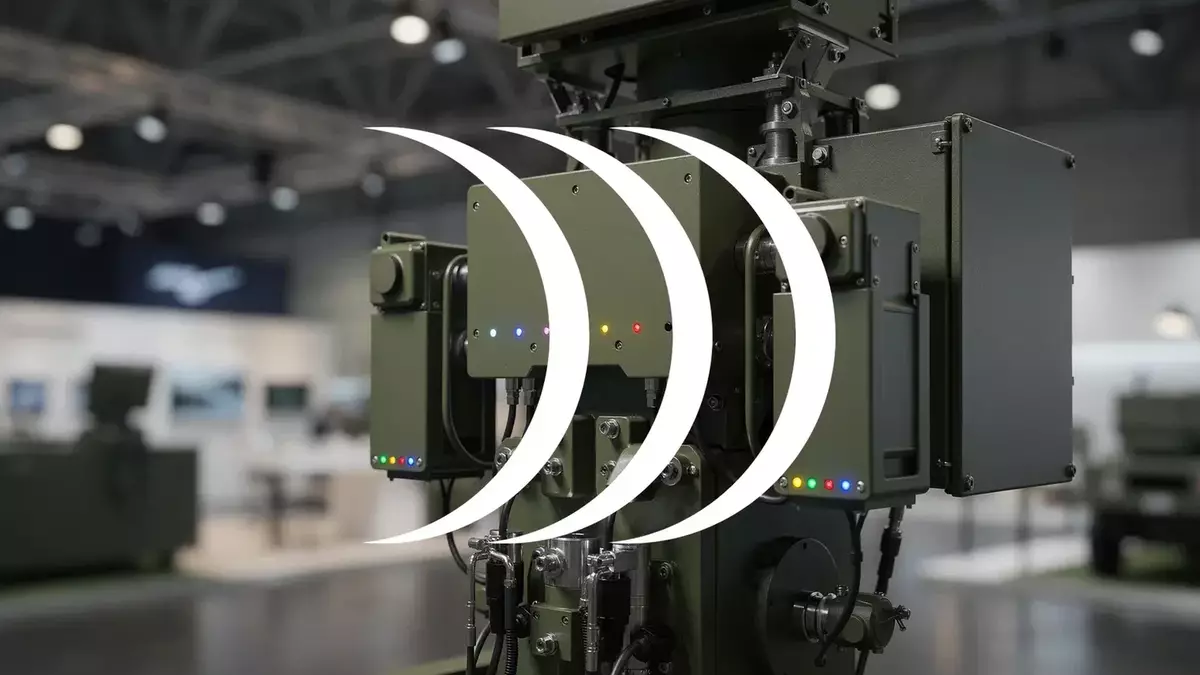
That resilience stems from the radar’s modular design. The TRS-4D is not a custom-built one-off; it belongs to an established product family already deployed on the F125 frigates and K130 corvettes. The same technology is also installed on international MEKO-class vessels, such as Brazil’s Tamandaré class, making Hensoldt a natural candidate for the replacement programme. Market watchers noted that while peers like Rheinmetall took a heavier hit from the cancellation, Hensoldt’s broad sensor portfolio provided a cushion.
The company’s order book underlines that strength. Backlog stood at nearly €9.8 billion at the end of the first quarter, with almost €1.5 billion in new orders flowing in during the three months to March. Revenue for that period reached €496 million, supported by an operating margin of 8.9%. The demand for high-end electronic warfare and sensor systems has decoupled entirely from the woes of large platform programmes.
Technically, the rally has room to run. The relative strength index sits at 54.8, squarely in neutral territory after bouncing from oversold levels just days ago. The 200-day moving average of €80.78 remains the next major obstacle — a hurdle more than 5% above the current price. On a 30-day view, the stock is still down 3.29%, and the year-to-date deficit stands at 18.59%, a reminder that the recovery is only partial. At its October 2025 high, Hensoldt changed hands at €115.10.
Investors are now scrutinising the details of the MEKO A-200 procurement. If Hensoldt can secure the TRS-4D order for the new vessels, the F126 cancellation will be remembered as a mere detour. The company’s insiders have already bet that the radar maker’s electronic eyes will prove far more durable than the steel hulls they are meant to equip.
Ad
Hensoldt Stock: New Analysis - 4 July
Fresh Hensoldt information released. What's the impact for investors? Our latest independent report examines recent figures and market trends.