Foo Fighters tour keeps rock arena fire burning
17.05.2026 - 02:04:35 | ad-hoc-news.de
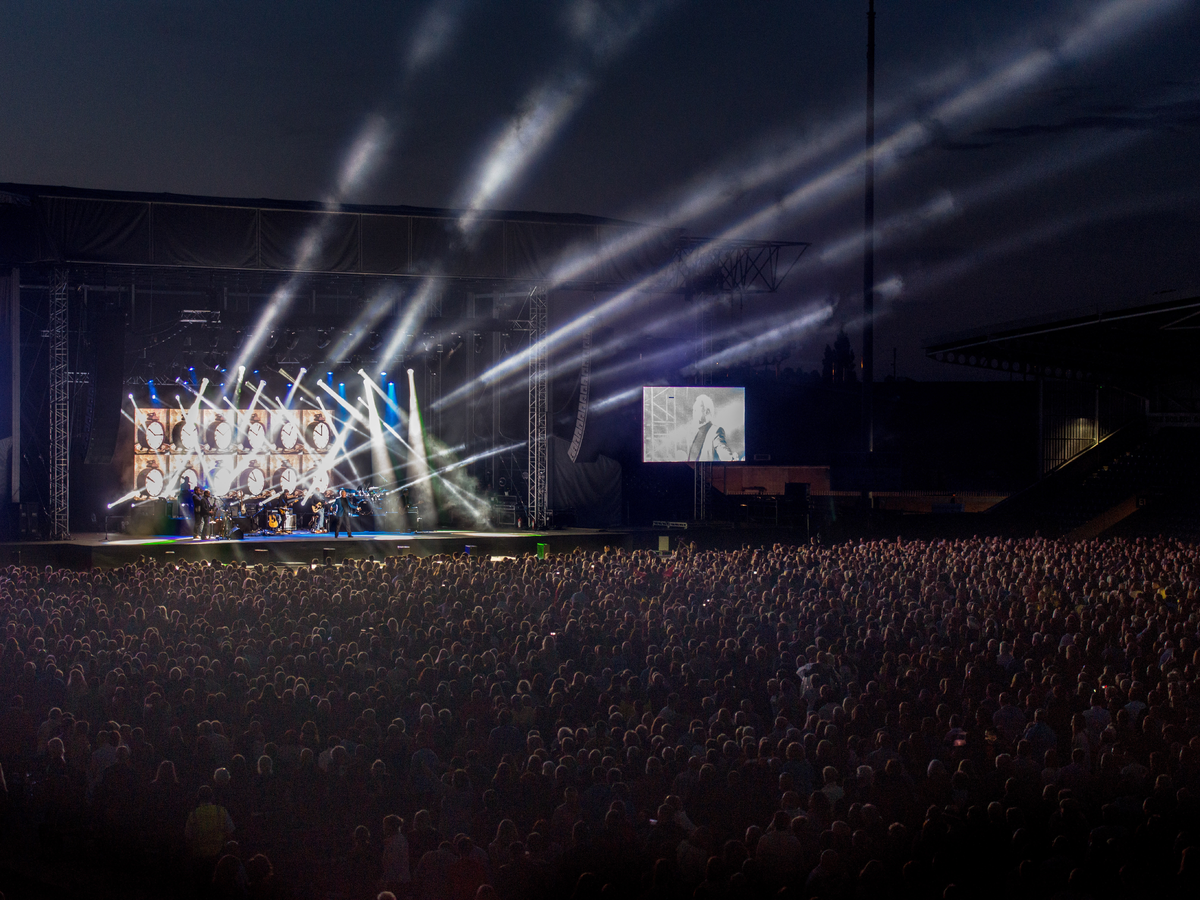
On a warm night in a packed stadium, Foo Fighters slam into the opening riff of All My Life and thousands of US fans roar back every word. Three decades into their run, the band still treats every arena like a garage, only with louder amps and bigger sing-alongs. That push-and-pull between intimacy and scale has turned Foo Fighters into one of rock's most reliable live forces.
Foo Fighters on the road — why the tour still matters now
As of 17.05.2026, the official Foo Fighters website highlights a fresh run of tour dates that keeps the band firmly on US stages in front of arena and stadium crowds. While exact nightly set lists change, the shows lean on a deep catalog that stretches from mid-1990s radio staples to recent material recorded after a period of intense loss and regrouping. For American fans, the current tour underlines how the group continues to function as a living, evolving rock institution rather than a nostalgia act.
According to coverage in Billboard and Rolling Stone, Foo Fighters' recent touring years have seen them headlining large US venues such as Madison Square Garden in New York City, the Forum in Los Angeles (now often branded as Kia Forum), and outdoor amphitheaters similar in scale to Red Rocks Amphitheatre near Denver. This latest touring cycle follows the pattern of mixing their own headlining dates with key festival appearances, keeping the band visible to both longtime followers and younger listeners discovering them through streaming platforms.
Across recent US shows, fans have reported marathon sets that often run well past two hours, with frontman Dave Grohl sprinting across catwalks, trading jokes with the crowd, and building big call-and-response moments on songs like Best of You and Everlong. Rather than chasing elaborate stage production, the act focuses on tight musicianship, stacked guitar tones, and a pace that rarely lets up. In an era when many legacy rock groups scale back, Foo Fighters lean into the physicality of their performances.
The band also uses the tour to thread newer songs into a canon of mainstays. Tracks from later albums, which explore grief, survival, and resilience, now sit alongside earlier bursts of post-grunge energy from the late 1990s and early 2000s. That sequencing reinforces a narrative that runs through their career: heavy things happen, but the band keeps showing up to play loud, direct rock songs that invite a communal release.
US outlets such as Variety and NPR Music have emphasized how Foo Fighters' touring presence helps anchor a broader live rock ecosystem, especially at a time when many mainstream festivals tilt toward pop, hip-hop, and electronic lineups. When the group headlines events alongside newer rock and alternative acts, it creates a bridge between generations that keeps guitar bands visible on large stages.
To help fans keep track of the constant motion, the official tour schedule on the band site remains the best real-time reference for upcoming shows, including city, venue, and on-sale details. That centralized hub distinguishes confirmed appearances from rumors and ensures that ticket buyers can align plans with verified dates rather than speculative social chatter.
- Foo Fighters' official tour page lists current and upcoming dates, including US arena and stadium stops.
- Coverage from Billboard and Rolling Stone documents the band’s ongoing status as a top-grossing live rock act.
- Recent tours have featured marathon sets, deep cuts, and tributes to peers and influences.
- The group continues to anchor festival bills while also mounting extensive headlining runs.
- Fans rely on the band’s official channels for accurate timing and venue information.
Who Foo Fighters are and why they still resonate in the US
Foo Fighters began as Dave Grohl's post-Nirvana project, but over three decades they have evolved into one of the most durable American rock outfits. In the US, they occupy a rare lane: a guitar-driven band that can still sell out arenas from coast to coast while maintaining steady rock radio presence and a multi-generational fan base. Their songs are accessible without feeling lightweight, built on sturdy riffs, shout-along choruses, and a direct emotional clarity.
According to The New York Times and NPR, the act's sustained resonance comes from a mix of reliability and relatability. Grohl's public persona, shaped by years of candid interviews and guest spots ranging from late-night television to music documentaries, casts him as an approachable lifer rather than a distant rock star. That image, combined with the group's workmanlike touring ethic, helps audiences see Foo Fighters as a band that simply refuses to age out of the conversation.
The core US lineup has shifted over time but has long centered on Grohl as singer and guitarist, Nate Mendel on bass, and Pat Smear on guitar, with later additions rounding out the live sound. This collective identity reinforces the sense that the group is less a studio construct and more a road-tested ensemble whose songs were built to be played at volume in front of real people. For American listeners raised on both classic rock and alternative radio, that balance feels familiar.
Even younger fans who did not grow up with 1990s alternative rock often encounter Foo Fighters as a gateway act. Their music appears on mainstream rock playlists, film and TV soundtracks, and highlight reels for sports and streaming platforms. Songs such as Everlong, My Hero, and Learn to Fly have become shorthand for adrenaline, introspection, or cathartic release in US pop culture, which keeps the band in circulation well beyond dedicated rock channels.
Culturally, the group also stands in for a certain vision of American rock bandhood: a mix of self-deprecation, DIY ethos, and an insistence on the live show as the ultimate measure of success. That framing continues to attract fans who crave guitar-based, full-band performances in a music landscape dominated by solo artists and genre hybrids. In interviews highlighted by outlets like Rolling Stone, Grohl often talks about the simple joy of plugging in and turning up, which resonates with players and listeners alike.
Foo Fighters' continued relevance shows up not only in ticket sales but also in how often they are invited to serve as ambassadors for rock at high-profile US events. From televised award shows to special tribute concerts, they appear when organizers want a modern act that can honor tradition while bringing mass appeal. This ambassador role further cements them in the American mainstream imagination.
From one-man project to arena headliners — the origin and rise
The origin story of Foo Fighters is by now a rock-modern legend. In the mid-1990s, after the end of Nirvana, Dave Grohl booked studio time and recorded a batch of songs largely on his own, playing almost every instrument. According to reporting from Billboard and the BBC, those sessions, initially intended as a low-key demo under a band name to deflect attention, quickly gained industry interest due to their tuneful aggression and energy.
The resulting self-titled debut, Foo Fighters, introduced a sound that merged the grit of post-hardcore with the hooks of classic power pop. Songs like This Is a Call and Big Me received heavy rotation on US alternative radio and MTV, positioning Grohl not as a former drummer stepping out of his lane but as a credible frontman. The project soon morphed into a full band, with touring musicians solidifying into a lineup that would grow into a long-term unit.
The real commercial breakthrough came with the 1997 album The Colour and the Shape, released through Capitol Records, which deepened the songwriting and clarified the band's identity. According to RIAA records and Billboard chart data, the album eventually achieved multi-Platinum status in the United States and produced enduring singles such as Everlong, My Hero, and Monkey Wrench. The record's blend of muscular rock dynamics and emotional vulnerability helped define late-1990s mainstream rock.
Producer Gil Norton, known for work with Pixies, played a crucial role in shaping the album's sound, pushing arrangements toward both heft and melody. Critics at outlets like Rolling Stone and Spin praised the way Foo Fighters balanced ferocity and tunefulness, framing the band as heirs to both punk's directness and classic rock's songcraft. Extensive touring followed, including slots at US festivals and opening runs that gradually turned into headlining tours.
Through the early 2000s, albums such as There Is Nothing Left to Lose and One by One expanded the band’s reach. Tracks like Learn to Fly and All My Life topped rock radio charts, and the group began winning major awards. The Recording Academy recognized Foo Fighters repeatedly; according to Grammy.com, the band has earned multiple Grammy Awards across categories such as Best Rock Album and Best Hard Rock Performance, underscoring both critical and industry respect.
By the time they released In Your Honor in the mid-2000s, Foo Fighters had become a fixture of US rock radio and a staple of late-night television performances. That double album, split between electric and acoustic material, showcased a willingness to push beyond the tight, three-minute single format. Acoustic tours and MTV Unplugged-style appearances helped broaden their fan base to listeners who favored more reflective material.
The rise continued with Echoes, Silence, Patience & Grace and Wasting Light, the latter recorded largely to analog tape with producer Butch Vig, famous for Nirvana's Nevermind. According to coverage in The Guardian and Pitchfork, recording to tape in Grohl's garage was both a technical and symbolic choice, reaffirming a commitment to raw, performance-driven rock in a digital age. The album debuted strongly on the Billboard 200 and won additional Grammy recognition.
Parallel to these releases, the band cultivated a reputation for creative side projects and media crossovers. Grohl directed and fronted the HBO series and album project Sonic Highways, which explored the history and studios of eight US cities. Each song on the album drew from local stories and musical lineages, and the series featured interviews with legends of American music. This multimedia effort reinforced Foo Fighters' position as rock historians as well as practitioners.
The Foo Fighters sound — signature style and key works
At its core, the Foo Fighters sound is built on layered guitars, dynamic shifts, and choruses designed to be shouted in unison. The basic template often involves a verse that rides a tight groove or palm-muted riff, followed by a pre-chorus that ratchets up tension and an explosive chorus with stacked vocals. Yet within that framework, the band has explored a range of textures and moods across its discography.
Early singles such as This Is a Call and Monkey Wrench captured a scrappy, almost punk-like energy, steeped in the post-grunge landscape of the mid-1990s. As the band matured, tracks like Everlong and Times Like These leaned into more expansive, emotionally nuanced songwriting, with arpeggiated guitars, dynamic builds, and bridges that open into wide-screen climaxes. These songs became staples of US rock radio and remain fixtures on playlists today.
On records like There Is Nothing Left to Lose, the group experimented with more melodic and even atmospheric touches, incorporating harmonies and guitar effects that softened the edges without dulling the impact. The song Learn to Fly, with its buoyant hook and memorable video, highlighted this pop sensibility, leading to extensive MTV and VH1 airplay in the United States. The track's upbeat tone contrasted with heavier material, showing the band’s range.
The decision to record Wasting Light to tape under Butch Vig resulted in some of the most sonically robust work in the band's catalog. Songs like Rope and Walk combine precision riffing with thick, organic tones that stand out amid the hyper-compressed sound of much 2010s rock. Critics at Rolling Stone and Spin praised the album’s warmth and immediacy, with several reviews noting that it captured the feel of a live band playing in a room rather than a collage built entirely on digital editing.
Foo Fighters have also embraced conceptual framing with projects like Sonic Highways. Each song on that album draws lyrical and musical themes from a specific US city, with studio sessions held at historic recording locations. For instance, the Chicago episode leans into that city’s blues and punk heritage, while the Nashville segment nods toward country and Americana traditions. The HBO series that accompanied the album brought viewers inside these studios, weaving interviews with local legends into the band’s writing process.
Beyond albums, individual songs have taken on lives of their own in American culture. My Hero, with its surging chorus, often surfaces in sports montages, tribute videos, and television dramas, where it underscores narratives of everyday courage. Best of You became an anthem of frustration and perseverance, used in contexts from political rallies to personal highlight reels. When these tracks appear in arenas, they trigger massive sing-alongs that blur the line between performer and audience.
The band’s ballads and mid-tempo tracks also deserve attention. Songs like Everlong in its acoustic form, Walking After You, and select cuts from Echoes, Silence, Patience & Grace reveal a more fragile side to Grohl's songwriting. Stripped of distortion, the melodies and chord progressions still hold up, which explains why so many US guitarists learn these songs as early covers.
Producers who have shaped the Foo Fighters sound include Gil Norton, Butch Vig, and Greg Kurstin, among others. Each has brought a distinct approach: Norton emphasized intricate arrangements and stacked harmonies, Vig focused on capturing powerful live takes with analog grit, and Kurstin highlighted layered textures and occasional stylistic diversions into piano-driven or more experimental territory. The band's willingness to collaborate with multiple producers, while keeping a consistent core identity, has helped them avoid stagnation.
Key albums that US listeners often cite as entry points include:
Foo Fighters — the raw, largely solo debut that set the tone.
The Colour and the Shape — the breakthrough mainstream rock statement.
There Is Nothing Left to Lose — a more melodic, open-sounding record that broadened the band’s appeal.
Wasting Light — a late-career high point recorded to tape with Butch Vig.
Sonic Highways — a cross-country concept project tying the band to American music history.
Across these albums, themes of resilience, personal struggle, and the healing power of loud rock recur. While lyric quotations must remain brief, lines about holding on, starting again, or screaming to let go echo the lived experiences of listeners who grew up with the band. That thematic reliability reinforces the trust many US fans place in Foo Fighters as companions through various stages of life.
Foo Fighters' cultural impact and legacy in American rock
Foo Fighters' legacy in American rock culture extends beyond sales or streaming numbers. The band functions as a bridge between the grunge explosion of the early 1990s and the present-day live music economy. Because Grohl carries the historical weight of having played in Nirvana, his later work inevitably draws comparisons to that era. Yet over time, Foo Fighters have carved out their own identity, earning respect on their own terms.
According to the RIAA database, multiple Foo Fighters albums have achieved Gold and Platinum certifications in the United States, reflecting sustained sales and, more recently, streaming-equivalent consumption. Billboard reports that the band has logged numerous entries on both the Billboard 200 albums chart and various rock singles charts, with several releases debuting near or at the top. This consistent chart performance keeps them visible to casual listeners who browse rankings as a barometer of what matters in mainstream rock.
In terms of awards, the Recording Academy's Grammy database lists Foo Fighters among the most decorated rock bands of their generation. Repeat wins in categories such as Best Rock Album underscore their reputation among peers and industry professionals. While award tallies alone do not define musical value, they contribute to the narrative that the band represents a standard for modern rock craft.
On stage, the group's presence at major US festivals has cemented their status as reliable headliners. Over the years, they have topped bills at events comparable in stature to Coachella in California, Lollapalooza in Chicago, and Bonnaroo in Tennessee, among others. These festival sets often serve as critical moments where younger audiences encounter the band for the first time, watching seasoned players command massive crowds with seemingly simple tools: guitars, drums, and unfiltered energy.
Media portrayals further contribute to their cultural impact. Rolling Stone, The New York Times, and NPR Music have all published extensive features on Foo Fighters, treating them not only as hitmakers but as key storytellers of the post-grunge era. Grohl's side projects, including documentaries like Sound City, explore the history of analog recording studios and the broader culture of American rock, positioning him as a passionate advocate for preserving that heritage.
Among musicians, Foo Fighters often serve as a touchstone for how to balance mainstream success with perceived authenticity. Younger rock and alternative bands cite them as an example of how to build long-term careers by investing in live performance, staying close to fans, and allowing albums to evolve without abandoning core elements. The group’s history of inviting guests on stage, covering everything from classic rock staples to punk deep cuts, reinforces a sense of community.
In American fan culture, the band’s story of perseverance in the face of personal and collective challenges resonates deeply. Many fans share testimonials about how songs helped them navigate difficult periods, major life transitions, or moments of celebration. The fact that the group continues to release new music and tour heavily gives those listeners fresh experiences to attach to an existing emotional bond.
Foo Fighters also occupy a unique space in intergenerational listening. It is common in the US for parents who discovered the band in the 1990s or early 2000s to bring their children to shows today. That passing down of fandom mirrors how previous generations shared artists like Bruce Springsteen or Tom Petty. In this way, Foo Fighters act as a living link connecting past and present rock traditions.
From a broader industry perspective, the band’s ability to fill arenas and large theaters at a time when rock often plays a supporting role in the streaming economy helps keep the genre viable at the top touring tier. Pollstar and Billboard Boxscore data have repeatedly placed Foo Fighters among top-grossing rock tours in the years they hit the road heavily, demonstrating that a guitar-driven act can still compete with pop, hip-hop, and country at the box office.
All of these elements—chart performance, touring clout, cultural visibility, and intergenerational appeal—contribute to a legacy that appears likely to endure. Even as the music landscape changes, Foo Fighters continue to represent the idea that a loud, hook-heavy rock band can still matter on the biggest stages, especially in the United States where arena rock remains a key part of the live entertainment ecosystem.
Frequently asked questions about Foo Fighters
How did Foo Fighters start as a band?
Foo Fighters began as a solo studio project by Dave Grohl in the mid-1990s, when he recorded a batch of songs largely by himself after his time as drummer in Nirvana. Those recordings, circulated as a demo under a band name, attracted label interest and led to the release of the debut album Foo Fighters. Grohl then recruited musicians to form a full band so the songs could be performed live, setting the stage for the group’s evolution into an arena headliner.
What kind of music do Foo Fighters play?
Foo Fighters are generally classified as a rock band, often described as alternative rock, post-grunge, or hard rock depending on the era and specific song. Their music typically features distorted guitars, driving rhythms, and big, melodic choruses designed for crowd participation. Over time, they have also explored acoustic, power-pop, and more experimental textures, but the core sound remains guitar-based and rooted in traditional band interplay.
Which Foo Fighters albums are essential for new listeners?
For new listeners, several albums offer strong entry points. The Colour and the Shape is widely regarded as a cornerstone, containing songs like Everlong and My Hero that define the band’s emotional and sonic range. There Is Nothing Left to Lose showcases a more melodic, open sound, while Wasting Light captures the energy of a band playing live to tape. The concept-driven Sonic Highways, tied to an HBO documentary series, provides a deeper dive into American music history through the band’s lens.
How successful are Foo Fighters on charts and with awards?
In the United States, Foo Fighters have achieved sustained chart success and significant industry recognition. Billboard data show that many of their albums have entered the Billboard 200 near the top, with a number of singles topping rock-specific charts. The RIAA credits the band with multiple Gold and Platinum releases. According to Grammy.com, Foo Fighters have also won numerous Grammy Awards, particularly in rock categories, making them one of the most awarded rock groups of their generation.
Where can US fans find the latest Foo Fighters tour dates?
US fans looking for accurate, up-to-date Foo Fighters tour dates should rely on the band’s official website and verified social media channels. The tour page lists upcoming shows by city and venue, including on-sale information and any schedule changes. While news outlets and fan communities often share announcements and reviews, the official site remains the primary source for confirmed dates and practical details such as venue addresses and show times.
Foo Fighters on social media and streaming
Foo Fighters maintain an active presence on major social and streaming platforms, where live clips, studio teasers, and archival footage keep fans engaged between tours and album cycles. These channels also serve as key discovery points for younger listeners who first encounter the band through curated playlists or viral video snippets.
Foo Fighters – moods, reactions, and trends across social media:
More Foo Fighters coverage from AD HOC NEWS
More coverage of Foo Fighters at AD HOC NEWS:
Read more on Foo Fighters at AD HOC NEWS ->Browse all Foo Fighters coverage at AD HOC NEWS ->
So schätzen die Börsenprofis Aktien ein!

Für. Immer. Kostenlos.