Eric Clapton extends 2026 US tour dates and legacy
17.05.2026 - 00:15:00 | ad-hoc-news.de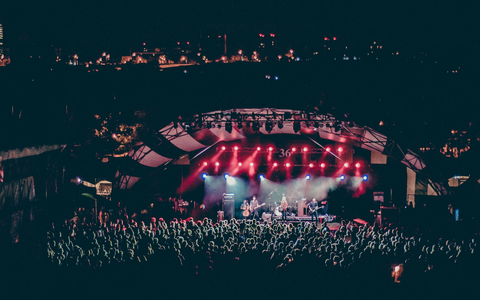
The stage lights drop to a deep blue, a single Stratocaster cuts through the murmur, and Eric Clapton leans into a slow, anguished bend that has defined rock and blues guitar for decades. Across arenas and historic halls, the veteran performer continues to draw multigenerational crowds who know every note of Layla, Tears in Heaven, and Wonderful Tonight. In 2026, the guitarist is once again mapping out dates that keep his live legacy in front of US audiences.
Eric Clapton keeps 2026 tour momentum going
While no brand-new studio album has emerged in the last few weeks, the clearest current storyline around the guitarist is his ongoing touring schedule. As of May 17, 2026, his official website lists an active slate of 2026 dates that extend his long-running pattern of alternating between full US runs and select city residencies. The tour portal highlights a mix of arena shows, festival-style bills, and classic theater appearances that underscore how enduring his draw remains.
According to the official Eric Clapton site, the 2026 itinerary continues the approach he has used in recent years: focused clusters of dates instead of grueling year-long treks. That format allows the veteran player to return to major markets like New York, Los Angeles, and Nashville while still making room for European and Japanese legs. Billboard has previously reported that this strategy keeps his production lean and his performances sharp, even as he plays material that spans more than half a century.
Across recent tours, the guitarist has often balanced electric and acoustic segments, revisiting hits from his solo catalog while nodding to his time in bands like Cream and Derek and the Dominos. Fans attending 2026 shows can reasonably expect a similar structure: blues deep cuts, radio staples, and at least one extended jam where he stretches out for the kind of guitar work that first made him a star in the late 1960s.
To give a snapshot of how his current live era fits within his larger career, it helps to see recent activity alongside a few landmark albums and phases:
- Classic rock radio remains anchored by his 1970s albums, especially 461 Ocean Boulevard and Slowhand.
- The MTV era raised his profile again with 1980s and early 1990s releases like Behind the Sun and Journeyman.
- The acoustic-driven Unplugged set in the early 1990s reframed his hits for a new generation and swept the Grammys.
- Later projects, from From the Cradle to collaborations with B.B. King and J.J. Cale, emphasized his roots in blues and Americana.
- His recent touring years have focused on carefully curated runs, often including guest appearances from peers and protégés.
That long arc sets up his 2026 live activity as another chapter in a performing life that shows few signs of truly winding down. For US fans, the combination of arena-level production and deeply familiar songs makes each new tour leg feel less like a nostalgia cash-in and more like a continuing conversation with a musician they have grown up with.
Who Eric Clapton is and why his work still matters
Eric Clapton is widely regarded as one of the most influential guitarists in rock and blues history. Rising first in the 1960s British scene and then as a solo artist in the United States, he has become a fixture of classic rock radio, guitar pedagogy, and festival lineups. For many American listeners, his work serves as a gateway into electric Chicago blues, Delta roots, and British rock experimentation.
Rolling Stone has consistently placed him near the top of its periodic rankings of all?time guitarists, often emphasizing not only his technical fluency but also his phrasing and sense of melody. NPR Music, in its coverage of his catalog, has noted that his best performances show a kind of conversational quality in the solos, using bends, vibrato, and call-and-response ideas in ways that echo the singers and horn players he admires. That blend of virtuosity and restraint helps explain why his style has remained influential even as younger generations gravitate toward different genres.
For US audiences specifically, the guitarist occupies a complex space. He is both a rock-radio mainstay and a student of American roots music. His interpretations of songs by Robert Johnson, Muddy Waters, and Freddie King introduced those figures to listeners who might not otherwise have dug into older blues records. At the same time, his own hits have become part of the pop-cultural fabric, from wedding slow dances to movie soundtracks and late-night TV performances.
Clapton has also been a constant presence in major American venues. Over the decades he has headlined Madison Square Garden in New York, the Forum in the Los Angeles area, and arenas across the country. He has played benefit concerts, festival slots, and multi-artist tribute events that position him as both a performer and an elder statesman, a role solidified by his induction into the Rock & Roll Hall of Fame three times — with the Yardbirds, with Cream, and as a solo artist.
In 2026, his relevance is less about chasing chart trends and more about sustaining a long-running dialogue with fans, peers, and the blues tradition itself. The fact that he can still sell out large rooms, release archival and new recordings, and attract coverage from major outlets suggests that his name carries enduring weight in the US music conversation.
From Surrey to supergroups: origin and rise
Eric Clapton was born in Surrey, England, in 1945, and his early life intersected with the explosion of postwar youth culture in Britain. As a teenager, he immersed himself in American blues and rock and roll, listening closely to artists distributed in the UK through import shops and specialty labels. According to biographies documented by outlets like the BBC and The Guardian, this immersion in US music shaped his approach to phrasing, tone, and song selection.
His first significant professional exposure came with the Yardbirds in the early 1960s, a group that fused blues structures with pop and R&B. The band scored hits in both the UK and the US, but Clapton ultimately left as they pursued a more overtly commercial direction. That decision set the pattern for much of his early career: an ongoing tension between mass appeal and a more purist dedication to blues forms.
After the Yardbirds, he joined John Mayall & the Bluesbreakers, a move that deepened his ties to the British blues community. The album Blues Breakers with Eric Clapton, sometimes nicknamed the Beano album because of its cover image, became a touchstone for guitar tone and phrasing. Guitar magazines would later pore over his use of Gibson guitars and Marshall amplifiers on that record, tracing a direct line from those sessions to the sound of late 1960s rock.
The next phase of his ascent came with Cream, the power trio featuring Jack Bruce and Ginger Baker. Combining extended improvisations with heavy riffs and psychedelic touches, Cream helped define what American listeners came to know as late?1960s hard rock. Songs like Sunshine of Your Love and White Room entered the US charts and have remained classic rock staples. Rolling Stone and Billboard both credit Cream as one of the key bridges between British blues-rock and the arena-rock era that followed.
Following Cream, Clapton briefly joined Blind Faith, a short-lived supergroup that nonetheless produced a self-titled album and a US tour. From there, he moved into Derek and the Dominos, the project that yielded the seminal album Layla and Other Assorted Love Songs. Although its initial commercial performance in the US was modest, the record would later be recognized as one of the defining guitar albums of the rock era, particularly for the title track, co-written with Jim Gordon and featuring Duane Allman on slide guitar.
By the early 1970s, Clapton was positioned as both a virtuoso player and a potential mainstream star. His ability to move between bands and collaborations while retaining a distinctive tone and melodic sensibility set the stage for a solo career that would fully emerge later in the decade.
Signature sound, studio milestones, and key songs
One of the reasons Eric Clapton remains a fixture in discussions of rock and blues guitar is the recognizability of his tone. Whether he is playing a Gibson Les Paul through a cranked Marshall stack or a Fender Stratocaster with a cleaner, glassier sound, listeners can usually identify him within a few notes. Guitar Player and similar magazines have noted that this identity comes less from gear choices and more from his phrasing, bending, and dynamic control.
His solo discography is extensive, but several albums have become shorthand for different eras of his creative life. The mid?1970s release 461 Ocean Boulevard showcased a more relaxed, song-oriented approach and included his hit version of Bob Marley's I Shot the Sheriff. That single reached the top of the Billboard Hot 100, according to chart data reported by Billboard, and it helped cement his solo viability in the US market.
Later in the decade, the album Slowhand delivered what may be his most enduring run of radio staples. Tracks like Cocaine, Wonderful Tonight, and Lay Down Sally became classic rock fixtures, and the record itself reached the upper tier of the Billboard 200 album chart. American critics often highlight Slowhand as the point where his songwriting, guitar work, and production fully aligned with the sound of US FM rock radio.
The 1980s brought shifts in production styles, but Clapton adapted. Albums such as Behind the Sun and August incorporated synthesizers, gated drums, and contemporary pop-rock arrangements. While some purists preferred his earlier, rawer recordings, these projects kept him visible on MTV and radio, particularly with songs like Forever Man and It Is in the Way That You Use It, which found its way into a major film soundtrack.
The late 1980s and early 1990s marked another transformation with Journeyman and especially Unplugged. The latter, recorded for MTV, reimagined several of his hits in stripped-down acoustic arrangements. His new take on Layla, slowed and recast as an acoustic shuffle, became a hit in its own right. The Unplugged album went on to win multiple Grammy Awards, including Album of the Year and Best Male Rock Vocal Performance, according to the Recording Academy, and it achieved multi?Platinum certification from the RIAA.
In parallel, the song Tears in Heaven emerged as one of his most emotionally resonant works, resonating with listeners worldwide and earning additional Grammy recognition. Even decades later, it remains a staple of his live sets, illustrating how a softer, ballad-oriented side of his writing can coexist with blistering blues solos in the same show.
Clapton continued to explore his roots with projects such as From the Cradle, a full-throated tribute to electric blues, and collaborations like Riding with the King with B.B. King and The Road to Escondido with J.J. Cale. These records, praised by outlets such as AllMusic and American Songwriter, draw a direct line between his early inspirations and his late-career interests. They also tend to feature understated, groove-oriented playing rather than the overt flash that marked his Cream-era solos.
Across this body of work, certain songs have taken on lives of their own beyond the albums that birthed them. A brief, non-exhaustive list of key tracks that frequently appear in US set lists and radio rotations would include:
Layla (Derek and the Dominos era but central to his identity as a guitarist)
Wonderful Tonight (a slow ballad often associated with weddings and sentimental moments)
Cocaine (a riff-driven rock song that remains a bar-band staple)
Tears in Heaven (a reflective ballad that showcases his quieter vocal delivery)
Crossroads (a reworked Robert Johnson song that became a Cream live centerpiece)
Those songs, along with deep cuts and blues standards, form the toolkit he draws from when assembling set lists for tours like the 2026 run.
Cultural impact, US charts, and legacy
Eric Clapton's influence extends far beyond the confines of record sales or individual guitar solos. In the United States, he played a significant role in popularizing electric blues among rock audiences. His interpretations of material by Robert Johnson, Howlin' Wolf, and others helped bring those artists into the mainstream consciousness at a time when many younger listeners might have been more focused on contemporary rock or pop.
According to the RIAA database, multiple albums in his catalog have achieved Gold and Platinum certification in the US, reflecting cumulative sales and streaming figures that continue to grow in the digital era. Records like Slowhand, Unplugged, and major compilations have particularly strong certified numbers, underscoring how often American listeners return to his work. At the same time, Billboard chart histories show his presence across formats, from rock and mainstream pop to adult contemporary and even crossovers into country-leaning playlists.
Critically, his standing has evolved over the decades. Early pieces in publications like Rolling Stone framed him as part of a new wave of guitar heroes alongside Jimi Hendrix and Jimmy Page. Later, as punk, hip-hop, and electronic music transformed the landscape, critics tended to engage with his work through questions of authenticity, appropriation, and the relationship between British rock and African American musical traditions. Outlets such as The New York Times and NPR have examined these tensions while still acknowledging his technical mastery and the emotional resonance of his best performances.
Live, his impact is also tangible. Clapton has organized and headlined cross-genre events, including the long-running Crossroads Guitar Festival, which has taken place at major US venues like Madison Square Garden and the United Center in Chicago. There, he brings together guitarists from blues, rock, country, and beyond, creating a living archive of guitar styles for audiences who fill arenas to watch extended jams and once-in-a-lifetime collaborations. These events, widely covered by outlets such as USA Today and local press in host cities, reinforce his role as a curator as much as a solo star.
His influence shows up in the playing of countless guitarists across genres. Country pickers in Nashville, jam-band improvisers, indie-rock minimalists, and metal shredders have all cited his phrasing, vibrato, or melodic sensibility as an early reference point. Instructional materials, from tablature books to YouTube tutorial channels, frequently use his solos as teaching tools, making him part of the basic curriculum for rock and blues guitar.
The legacy extends into film and television as well. His songs have appeared on soundtracks for dramas, comedies, and music documentaries, often deployed to evoke a specific mood or era. Live concert films and documentary projects have traced his journey from the 1960s clubs to stadiums and back to more intimate rooms, giving viewers a sense of how his stage presence has shifted over time.
At the institutional level, his three-time induction into the Rock & Roll Hall of Fame is a statistic rarely matched by other musicians. It signals recognition not just of one band or era, but of a career that has intersected with several key movements in rock history. Combined with his Grammy wins, RIAA certifications, and long Billboard footprint, it creates a layered legacy that continues to be analyzed and debated.
In 2026, as younger listeners discover his work through streaming platforms rather than radio, his influence persists in a more diffuse way. A high-school student learning the intro to Layla on a used guitar in a bedroom, a bar band in the Midwest closing out a set with Cocaine, and a veteran fan buying a remastered box set all participate in the same continuum. That ongoing engagement ensures that his story remains part of the broader narrative of rock and pop music in the United States.
Frequently asked questions about Eric Clapton
What kind of music does Eric Clapton play?
Eric Clapton is best known for blending electric blues with rock and pop songwriting. His catalog ranges from heavy, jam-oriented material with Cream to radio-ready solo hits and acoustic ballads. Over time he has also recorded straight blues tribute albums, country-tinged tracks, and collaborations that touch on Americana and roots music, but the core of his identity remains blues-based guitar work.
What are Eric Clapton's most famous albums?
Several albums stand out as milestones in his career. 461 Ocean Boulevard marked his emergence as a solo hitmaker, while Slowhand delivered enduring songs such as Wonderful Tonight and Cocaine. The Derek and the Dominos album Layla and Other Assorted Love Songs is a cornerstone of guitar rock, and the acoustic set Unplugged became one of his best-selling releases, winning major Grammy Awards and introducing his work to a new generation in the 1990s.
Has Eric Clapton won Grammy Awards and other honors?
Yes. Clapton has received multiple Grammy Awards across categories, including Album of the Year and Record of the Year, primarily for work associated with Unplugged and songs like Tears in Heaven. He is a three-time inductee into the Rock & Roll Hall of Fame in Cleveland, recognized for his work with the Yardbirds, Cream, and as a solo artist. His recordings have also earned numerous RIAA Gold and Platinum certifications, reflecting strong US sales and streaming.
Is Eric Clapton still touring and performing live?
As of May 17, 2026, Eric Clapton continues to schedule live performances, including 2026 dates listed on his official tour site. His recent tours tend to focus on limited runs rather than long, continuous world tours, with appearances at major arenas, historic theaters, and special events such as guitar festivals. Fans in the United States can often catch him in major markets like New York, Los Angeles, and Nashville when new legs are announced.
How can new listeners start exploring Eric Clapton's music?
New listeners might begin with a concise greatest-hits collection or a playlist that blends his solo work with tracks from Cream and Derek and the Dominos. Starting points often include songs such as Layla, Wonderful Tonight, Tears in Heaven, Cocaine, and his version of I Shot the Sheriff. From there, diving into full albums like Slowhand, 461 Ocean Boulevard, Layla and Other Assorted Love Songs, and Unplugged provides a sense of how his style has evolved over decades.
Eric Clapton on social media and streaming
While Eric Clapton came of age long before the social-media era, his catalog and live clips circulate widely on digital platforms, allowing new generations of fans to encounter his music with a few taps.
Eric Clapton – moods, reactions, and trends across social media:
More Eric Clapton coverage from AD HOC NEWS
More coverage of Eric Clapton at AD HOC NEWS:
Read more on Eric Clapton at AD HOC NEWS ->Browse all Eric Clapton coverage at AD HOC NEWS ->
So schätzen die Börsenprofis Aktien ein!

Für. Immer. Kostenlos.