Why Prince Still Feels More 2026 Than 2026 Itself
04.03.2026 - 17:59:26 | ad-hoc-news.de
If you feel like Prince is suddenly everywhere again in 2026, you’re not imagining it. From viral TikTok edits of "Purple Rain" to fans obsessing over every scrap of unreleased music talk, the purple buzz is back in a big way. Younger fans who never saw him live are discovering just how wild his shows were, and older fans are quietly freaking out over what might still be locked in the vault.
Explore the official Prince universe
Even though Prince passed away in 2016, his name keeps popping up in news alerts, subreddit threads, and late-night conversations: new anniversary reissues, whispers of another posthumous project, fan campaigns for hologram-free tributes, and heated debates about how his legacy should be handled. You can feel the tension between what he created in his lifetime and what the world still wants from him now.
So what exactly is happening with Prince in 2026, what could be coming next, and why are fans so emotionally invested in every tiny update?
The Backstory: Breaking News in Detail
First, some reality check: as of early 2026, there’s no officially confirmed new Prince studio album dropping this month, no world tour for obvious reasons, and no verified plan for a hologram tour in the US or UK. But that doesn’t mean nothing is happening. The Prince news cycle now is mostly about reissues, vault releases, estate decisions, and tribute events, and those are more than enough to keep the fandom on edge.
In the past years we’ve seen expanded editions of classics like "1999," "Sign o’ the Times," and other landmark albums packed with demos, live versions, and unreleased tracks. Every time one of these drops, it ignites fresh speculation: if this much was sitting in the vault, how much more is still there? And are we getting closer or further away from Prince’s original intentions with each release?
The big storyline fans are tracking in 2026 is the ongoing balancing act between artistic respect and commercial pressure. Estate representatives and label partners know there’s global demand for new Prince content: box sets, deluxe vinyl, immersive audio mixes, never-before-seen concert films, and maybe even AI-assisted remasters of rehearsal tapes. But Prince himself was famously strict about how, when, and where his music appeared. This creates a moral tension the fandom feels deeply.
Commentary from music journalists and biographers points out that the estate has gradually opened the doors wider: more streaming availability, more collaborations with major platforms, more curated releases drawn from his legendary vault. Insiders hint that there are hundreds, maybe thousands of hours of live recordings and unfinished songs. So every time someone connected to the estate gives an interview or appears at a conference, fans listen for tiny clues: a throwaway line about "future releases," a mention of "multitrack concert archives," anything that sounds like the next move.
At the same time, the rising wave of younger fans — especially across the US and UK — is pushing the conversation in a new direction. Many Gen Z listeners never had to fight with Prince’s old anti-streaming stance; for them, he’s already part of the same algorithmic universe as Frank Ocean, Beyoncé, or The Weeknd. They want more live videos on official channels, more curated playlists, more behind-the-scenes studio stories, and properly mixed live sets on streaming. Their energy is keeping the demand loud, even a decade after his death.
So while there might not be a single headline-grabbing breaking story this week, the "news" around Prince in 2026 is more like a constant low-key earthquake: quiet, steady shifts in how his catalog is handled, plus rumors that one big announcement — a definitive vault project, a huge live box set, or a next-level documentary — could be on the horizon.
The Setlist & Show: What to Expect
There are no new Prince tours, but the obsession with his setlists is somehow getting stronger with time. Old tour archives are being treated like sacred texts. Fans swap bootleg track lists and official release notes the way people trade fantasy football stats. If you’ve only ever watched a couple of YouTube clips, you might not realize how wild his shows really were.
Prince’s typical show across the 80s, 90s and 2000s was built around a few anchor songs that almost always appeared in some form: "Purple Rain," "1999," "Little Red Corvette," "When Doves Cry," "Kiss," "Let’s Go Crazy," and later, "Cream," "Diamonds and Pearls," "The Most Beautiful Girl in the World," and "Musicology." But the magic was never just what he played — it was the way he rearranged everything on the fly.
Setlists from legendary tours like the "Purple Rain" tour, the "Sign o’ the Times" era, or the "Musicology Live 2004ever" tour show how much he loved medleys and surprise pivots. A typical night could swing from the raw funk of "Controversy" and "Uptown" straight into the emotional punch of "Nothing Compares 2 U," then flip into a guitar shred on "Bambi" or "Let’s Go Crazy." And just when you thought he was done, he’d come back for another encore, maybe dropping a cover like "Play That Funky Music," "All Along the Watchtower," or even "Creep," depending on the year.
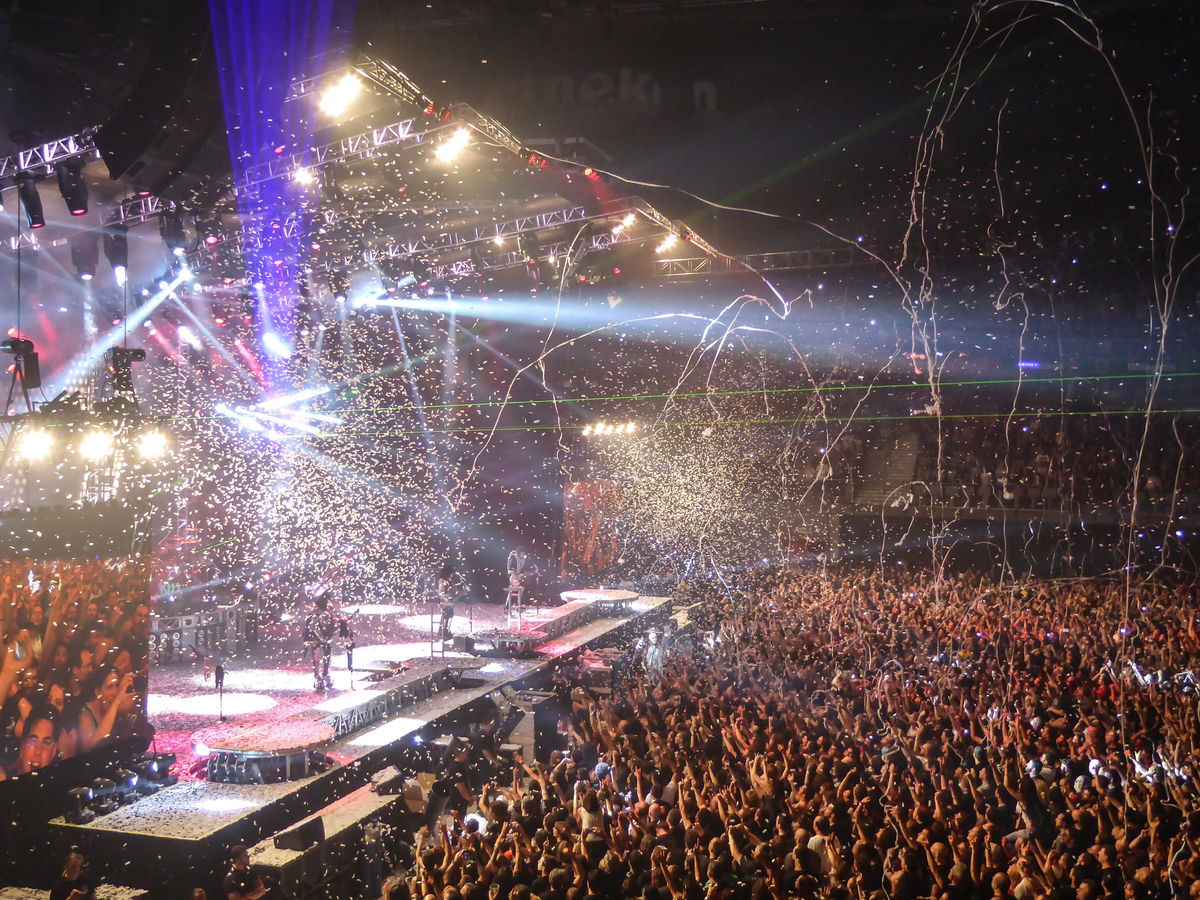
Atmosphere-wise, everyone who saw Prince live says the same thing: the room felt smaller, hotter, and riskier than it actually was. He controlled lighting, pacing, and silence as much as sound. He could make an arena feel like a club by stripping everything down to piano and voice for tracks like "Sometimes It Snows in April" or "Adore." Then seconds later, the full band would slam into "Housequake" or "Partyup" and the entire venue turned into a dance floor.
For fans in 2026, the "setlist" you can expect isn’t from an upcoming tour; it’s from tribute nights, archive releases, and curated playlists. Official and semi-official tributes across the US and UK often build nights around fantasy Prince setlists: opening with "Let’s Go Crazy," weaving through deeper cuts like "Mountains," "The Beautiful Ones," or "I Would Die 4 U," and closing with a massive communal sing-along to "Purple Rain." Younger artists covering him at festivals tend to focus on the big singles, but hardcore fans keep pushing for deep cuts and B-sides to get proper shine.
Every new live recording that surfaces — whether it’s a cleaned-up version of an 80s stadium show or an intimate aftershow — adds another layer to the understanding of how he designed his nights. Can you really say you "get" Prince if you’ve only heard the studio "Purple Rain" and not a 12-minute live version where he leaves half the guitar phrases hanging in the air?
So while we can’t stand in front of a stage and wait for him to walk out anymore, we can build an idea of what a 2026 Prince show would feel like: a crowd made up of three generations, phones up but then slowly being put away, a setlist that jumps from "Sexy MF" to "Raspberry Beret" to a piano medley of "Sometimes It Snows in April" and "Nothing Compares 2 U," finishing with a storm of purple light and a chorus everyone in the room knows by heart.
What the web is saying:
Rumor Mill: What Fans Are Speculating
Prince fandom has always loved a good theory, and 2026 is no different. Reddit threads on r/music and r/popheads, plus TikTok stan edits and deep-dive creators, are full of speculation that ranges from plausible to absolutely out there.
1. The "Massive Vault Drop" Theory
One of the loudest theories is that the estate is quietly lining up a multi-volume vault series — something on the scale of a box set covering entire tours or specific creative eras. Fans point to the pattern: big reissues landing around key anniversaries, plus carefully teased unreleased tracks that feel like a test run for something much larger. The dream? A full 80s live box, or a project dedicated just to aftershows, where Prince often played looser, weirder, and funkier than on the main stage.
2. The "Hologram Line in the Sand" Debate
Every few months, someone posts a rumor about a possible hologram tour and the fandom collectively panics. Most longtime fans push back hard, arguing that a hologram would go against everything Prince stood for in terms of live performance. TikTok and Insta comments show a clear split: some younger casual fans think a hologram show could be "a cool tribute," while dedicated fans and older heads insist that Prince was about real-time risk, not pre-programmed illusions. So any rumor about a holographic tour instantly becomes a flashpoint.
3. The "AI Prince" Anxiety
Another emerging debate in 2026: could someone try to use AI to recreate Prince’s voice or write "new" Prince songs? Tech fans whisper about models trained on isolated vocals and guitar stems; music fans loudly say, "Please don’t." The general vibe: people might be okay with AI being used to clean up old live tapes or restore damaged recordings, but fake new songs or "Prince-featuring" remixes without his direct involvement would cross a line for a lot of listeners.
4. Hidden Collabs and Secret Folders
Prince collaborated with a lot of artists behind the scenes, especially in the 80s and 90s, and fans think we haven’t heard the last of those tracks. Whenever an artist hints in an interview that they "worked with Prince back in the day," Reddit jumps on it: is there an unreleased duet? Did he write a song that’s still sitting on a drive somewhere? Some fans keep running lists of artists who’ve mentioned studio time with him, hoping that one day, some of those sessions will surface as official releases.
5. Ticket Price Controversies… for Tributes
Because there’s no actual Prince tour, the ticket price debate is mostly about tribute shows and immersive experiences. Some events in big US and UK cities charge premium prices for "Prince nights" featuring tribute bands, orchestral versions of his music, or museum-style exhibits. Fans argue over whether those prices are respectful or exploitative. On one side: "He deserves to be presented on a big scale." On the other: "Prince fought against industry greed; this feels off." The discourse gets especially loud when promoters lean too heavily on purple branding without delivering a thoughtfully curated show.
All of these theories and debates share a common root: fans don’t just want more content; they want it handled in a way that feels aligned with who Prince actually was — mysterious, playful, stubborn, spiritual, and fiercely protective of his art.
Key Dates & Facts at a Glance
- Birth: Prince Rogers Nelson was born on June 7, 1958, in Minneapolis, Minnesota, USA.
- Death: He passed away on April 21, 2016, at Paisley Park, his home and creative headquarters in Chanhassen, Minnesota.
- Debut Album: "For You" was released in 1978, introducing Prince as a writer, producer, and multi-instrumentalist even in his teens.
- Breakthrough Era: "1999" (1982) and "Purple Rain" (1984) pushed him into global superstardom, with "Purple Rain" serving as both an album and film soundtrack.
- Iconic Singles: US and UK charts were dominated at various points by songs like "When Doves Cry," "Let’s Go Crazy," "Kiss," "Sign o’ the Times," "Raspberry Beret," and "Batdance."
- Band Names: Over the years, he performed with backing bands including The Revolution, The New Power Generation, and 3rdeyegirl, among others.
- Name Change Era: In the 90s, Prince famously changed his name to an unpronounceable symbol and was often referred to in the media as "The Artist Formerly Known As Prince" as a protest against his label situation.
- Paisley Park: His studio complex, opened in the mid-80s near Minneapolis, now operates as a museum and event space, drawing fans from around the world.
- Awards: Prince won multiple Grammys, an Academy Award (for "Purple Rain"), a Golden Globe, and numerous other honors during his career.
- Volume of Work: He officially released dozens of studio albums across nearly four decades, with many more songs believed to be stored in his vault.
- Streaming Shift: While he was initially hostile to digital platforms, his catalog is now widely available on major streaming services, expanding his reach with younger listeners.
- Legacy Events: Each year, anniversary celebrations and tribute concerts are held in major cities and at Paisley Park, often around his birthday (June 7) and the date of his passing (April 21).
FAQ: Everything You Need to Know About Prince
Who was Prince, in simple terms?
Prince was an American singer, songwriter, producer, and multi-instrumentalist who blurred the lines between funk, rock, pop, R&B, and soul. Think of him as an all-in-one creative engine: he wrote his songs, played most of the instruments on many records, produced the sessions, and designed the live experience. He wasn’t just a performer — he was an entire music ecosystem in one human body.
To newer fans, the easiest way to understand him is to see him as a bridge: without Prince, the swagger and genre-fluidity of many modern stars from The Weeknd to Janelle Monáe to Harry Styles would look very different. He mixed religious themes with sexuality, political commentary with party tracks, and mainstream hooks with weird, experimental sounds.
What made Prince’s music so different?
Prince’s sound hit differently because he refused to stay in one box. On one album you could have stripped-down funk like "Kiss," guitar-heavy rock like "Purple Rain," sugary pop like "Raspberry Beret," and haunting piano ballads like "The Beautiful Ones." He layered harmonies with his own voice, stacked synths over live drums, and constantly tweaked arrangements on stage.
Another big factor is his sense of rhythm and space. Listen closely to tracks like "When Doves Cry" — there’s no bass line, which was almost unthinkable for a song that funky in the 80s. He loved removing elements to make the groove feel tense and raw. He also embraced weird song structures: intros that felt like entire mood shifts, sudden breakdowns, unexpected key changes. That willingness to be strange inside a pop framework is part of why his music still sounds fresh in 2026.
Where should a new fan start with Prince’s catalog?
If you’re just stepping into Prince’s world, you don’t have to listen chronologically. A lot of fans recommend starting with a few key albums and then spiraling outward:
- "Purple Rain" (1984): The obvious entry point, stacked with hits like "When Doves Cry," "Let’s Go Crazy," and the title track.
- "1999" (1982): A bit darker and more electronic, with long jams like "Little Red Corvette" and "Lady Cab Driver."
- "Sign o’ the Times" (1987): Widely considered one of his masterpieces — eclectic, emotional, and experimental.
- "Dirty Mind" (1980): Raw, stripped-down, and incredibly bold both lyrically and sonically.
- "The Gold Experience" (1995): A 90s-era highlight with "Gold" and "The Most Beautiful Girl in the World."
Once those hook you in, you can go deeper into eras like "Parade," "Diamonds and Pearls," "Lovesexy," and his 2000s albums such as "Musicology" and "3121." There’s no wrong way in; the catalog is big enough to match almost any mood.
When did Prince really become a global icon?
Prince was already respected by the late 70s and early 80s, but the "1999" and "Purple Rain" era turned him into a global icon. The combination of massive singles, the movie, and that visual identity — purple coats, ruffled shirts, motorcycles, dramatic lighting — turned him from a talented musician into a phenomenon.
By the mid-80s, he was standing alongside names like Michael Jackson and Madonna as one of the most influential pop stars on the planet. Tours were selling out across the US and Europe, MTV was playing his videos constantly, and critics were trying to figure out how to categorize someone who clearly didn’t want to be boxed in.
Why is Prince still so relevant in 2026?
Several reasons:
- Genre fluidity: The way artists move between pop, R&B, rock, and hip-hop now owes a lot to the way Prince treated genres as colors on a palette instead of strict borders.
- Visual identity: Fashion-forward, androgynous, fearless — his look feels aligned with how Gen Z and younger millennials think about gender expression and style.
- DIY creativity: Prince’s reputation as a control freak in the studio now reads like a blueprint for independent artists who write, record, and produce at home.
- Massive vault: The idea that there’s still so much unheard Prince music keeps the story alive. Every new release or remaster brings him back into the conversation.
- Timeless songs: "Purple Rain" at a festival, "Kiss" in a club, "I Would Die 4 U" at 2 a.m. — these tracks still land, no context needed.
Where can fans go to connect with Prince’s world offline?
If you’re in the US, especially the Midwest, Paisley Park in Minnesota is the ultimate physical connection point. It’s part museum, part shrine, part time capsule. Guided tours walk you through studios, stage setups, wardrobes, and personal artifacts that make the music feel human again.
Across the US and UK, you’ll also find regular tribute nights, orchestral shows, DJ sets, and themed parties dedicated to his music — especially around June 7 (his birthday) and late April. While nothing replaces seeing him live, these events give fans a way to experience his songs in a shared space instead of just through headphones.
How do fans feel about posthumous releases?
It’s complicated. Many fans are grateful to hear deeper cuts and live shows that were impossible to access before. Posthumous releases have already revealed new sides of his songwriting and studio work, especially when curated with care.
At the same time, there’s always a nervous question hovering in the background: Would Prince have wanted this out? He was known for locking things away for a reason. Some fans draw a line at heavily reworked or overdubbed material, preferring releases that feel closer to what he actually recorded. Others are more open, as long as the people making decisions are transparent about what’s original and what’s been altered.
In 2026, that debate is still live, and it probably will be for decades. The one thing nearly everyone agrees on: the music should be treated with care, not as quick content to fill a release schedule.
Why does loving Prince sometimes feel so emotional?
Because his music doesn’t sit at a distance; it gets under your skin. He wrote about longing, desire, faith, sadness, joy, and confusion with a directness that still hits hard. Tracks like "Sometimes It Snows in April" or "Condition of the Heart" can wreck you on a quiet night. "Purple Rain" can make stadiums cry. "Let’s Go Crazy" can snap you out of a bad week in one guitar chord.
For many fans, Prince soundtracked first crushes, heartbreaks, spiritual shifts, and late-night identity crises. For younger fans discovering him now, there’s the bittersweet realization that they’ll never stand in a crowd and watch him walk onstage — but they can still build a connection through recordings, footage, and community. That mix of joy and loss is part of why his name in a headline still hits your chest before it hits your brain.
So schätzen die Börsenprofis Aktien ein!

Für. Immer. Kostenlos.