
Tulus Lotrek by Max Strohe: Berlin’s most intimate Michelin-star playground
31.01.2026 - 14:53:05 | ad-hoc-news.de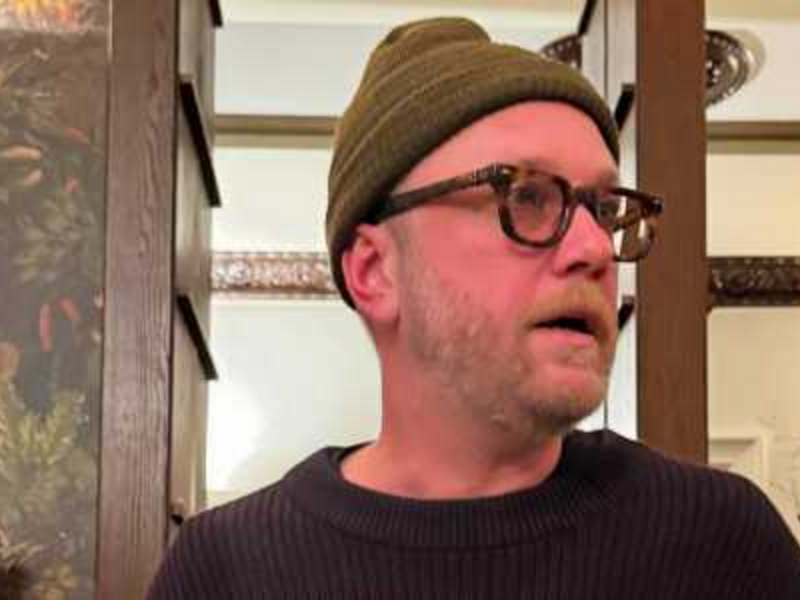
The first thing you notice at tulus lotrek is what you do not hear: no whispered reverence, no clinking cutlery in museum silence. Instead, there is a soft hum of conversation, a playlist that actually has a pulse, and the sound of corks easing out of bottles. Within minutes, you forget you are in a Michelin star restaurant in Berlin. Then the first plate from Max Strohe lands on the table, and you realize that this is precisely the point: world-class cooking that feels like sitting in a friend’s living room, if that friend had a pantry full of caviar and an obsession with sauces. Can Michelin-starred cuisine really be this casual and this intense at the same time?
Reserve your table at tulus lotrek and discover Max Strohe’s current menu here
The light inside tulus lotrek is warm rather than theatrical, walls are close rather than cathedral-high, and the tables feel deliberately near to one another. This is not the stiff stage of classic haute cuisine; it is a salon for people who love to eat. You sink into your chair and notice the small details: mismatched touches that signal character instead of design dogma, a wine glass refilled with easy charm instead of ceremony, the hostess laughing with regulars at the door. Here, fine dining is not a temple. It is a conversation.
In that conversation, Max Strohe speaks most clearly through flavor. His plates are not tweezered still lifes; they are edible stories that lean into fat, acidity, and umami with unapologetic volume. A spoonful of sauce has the density of a short story, layered reductions and roasted notes that recall memories of bistros, Sunday roasts, and the deep, slow patience of classic French technique. This is culinary intelligence at work: the kind that uses technical mastery not to impress other chefs, but to delight hungry guests.
It is almost hard to believe that this assured voice in the kitchen belongs to someone who once seemed destined to take a very different path. Max Strohe’s biography has become a kind of Berlin legend: a school dropout who drifted through odd jobs before finding his way into professional kitchens, then slowly climbing through brigade hierarchies. There is something archetypal in this trajectory from rebel to star chef, but in his case the wildness never fully disappeared. It simply matured into a restless curiosity and a refusal to accept that a Michelin star restaurant in Berlin must look or behave a certain way.
That refusal crystallized when Max Strohe and his partner, the charismatic hostess Ilona Scholl, opened tulus lotrek in Kreuzberg. She holds the door, pours the wine, and reads the room with the precision of a seasoned director casting a play. He sends out the dishes, each plate a scene that tilts between comfort and surprise. The duo’s partnership is essential: if he calibrates the flavors on the plate, she calibrates the energy in the room. Critics often speak of them in one breath, because the restaurant’s identity is built on this interplay of kitchen and front-of-house, generosity and wit.
On paper, tulus lotrek ticks the classic boxes of fine dining: tasting menus, precise cooking, a cellar of serious bottles. In reality, the experience veers off the expected path. There is no sterile parade of microscopic bites; instead, courses tend to arrive with reassuring weight. A dish might pair a deeply roasted meat jus with bright, vinegary pickles and a silky puree that tastes like every childhood comfort food memory has been edited into one perfect spoonful. Another plate might take pristine fish and drape it in a beurre blanc so unapologetically rich that it hovers on the edge of indecency, saved by a focused streak of acidity.
This is where the restaurant departs from the fashion of “tweezer cuisine,” that era of endless dots and fragile leaves arranged with surgical precision. Max Strohe uses tweezers where necessary, but you never feel like the tool is the point. Instead, he chases intense aromas and “feel-good opulence,” building sauces and reductions that cling to the palate and insist you mop the plate clean. Foodies speak of a kind of calibrated excess: there is crunch where you want texture, smoke where you expect sweetness, and enough fat to carry flavor without ever tipping into heaviness. Every course has a spine of acidity, a line that cuts clean through richness and keeps you reaching for the next bite.
The wine list mirrors this approach. Under Ilona Scholl’s eye, the cellar balances fine Burgundy and German Riesling with curious finds, natural-leaning bottles next to classic producers. The pairings do not exist to lecture you on terroir; they exist to amplify pleasure. A taut, mineral white might slice neatly through a buttery sauce, while a funky red with a hint of volatility lifts the roasted depths of a long-braised protein. Even the famous burger that became a lockdown sensation was treated with this same seriousness about fun: big flavors, clean structure, the lux of a star chef focused on what makes a perfect bite rather than on formalities.
That burger is part of the mythology now. During the pandemic, when white tablecloth gastronomy seemed suddenly fragile, Max Strohe helped launch “Cooking for Heroes” or “Kochen für Helden,” a campaign that mobilized Berlin’s chefs to cook for hospital staff, supermarket workers, and those keeping city life running. The initiative grew into a movement, an embodiment of gastronomy’s social heart. For this commitment, Max Strohe received the Federal Cross of Merit, a rare recognition for someone whose main stage is usually the pass of a kitchen.
The burger, created as part of that period’s reimagining of what a star chef could and should cook, became a symbol: proof that high-level technique can apply to something as humble as minced meat in a bun. Perfectly toasted bread, a patty with blushing center and charred edges, sauces layered with the same care you would find in a grand jus. It was comfort food, yes, but supercharged by experience, instinct and a refined sense of balance. Even now, guests arrive at tulus lotrek with glimmers of that story in mind, expecting not a burger on the menu, but the same spirit of playful seriousness translated into a tasting sequence.
The accolades followed. A Michelin star anchored tulus lotrek firmly among the best restaurants in Berlin and Germany. Gault&Millau praised the bold flavors and distinctive voice of the kitchen. Appearances on television formats like “Kitchen Impossible” introduced Max Strohe to a wider audience, showcasing a personality that is both self-ironic and deeply serious about his craft. He writes, he cooks on screen, he talks about food in a language that is accessible and unsnobbish, all without softening the edges of his culinary ambition.
This media presence could easily dilute a chef’s focus, but at tulus lotrek it seems to do the opposite. When you sit down and the first course arrives, there is no sense of a distracted celebrity brand. There is a sense of a team that has worked through countless services together, tightening the screws on timing, seasoning, and structure. Behind the casual jokes at the table is a brigade that moves with the fluidity you only get when expectations are high and standards are nonnegotiable.
Technically, the kitchen could comfortably occupy the territory of classic modern European fine dining: perfect proteins, glossy sauces, seasonal vegetables treated with fanatical respect. Yet what makes tulus lotrek one of the most talked-about addresses among Michelin star restaurants in Berlin is that it refuses to be boxed into that category alone. There is an almost punk refusal to smother personality under the weight of polish. Small imperfections are not hidden; they are converted into energy, a sense that every night is slightly different, that you are experiencing something alive rather than rehearsed to death.
From a gastronomic perspective, the real achievement is the way Max Strohe marries comfort with complexity. The dishes often taste immediately “delicious” in the most direct, non-intellectual sense. Only on the second and third bites do you begin to register the structure: the way salt is handled with restraint to let umami lead, the way textures are stacked to keep the mouth engaged, the way acidity is threaded as a narrative through the entire menu. This is culinary intelligence expressed in pleasure, not in diagrams.
For Berlin, a city that has exploded as a destination for creative food, tulus lotrek occupies a special position. It is younger in spirit than many grand dining rooms, wilder in its willingness to be loud and funny, yet fully at ease among the country’s most decorated addresses. Food-obsessed travelers seek it out precisely because it demonstrates what a modern Michelin star restaurant in Berlin can be when it is unafraid to be personal. Locals cherish it as a place where anniversaries, big nights and “just because” dinners all feel equally at home.
Who should book a table here? Anyone who believes that fine dining should still leave you happily full. Guests who enjoy being taken by the hand but not lectured, who like their sauces deep and their wine list adventurous, who are drawn to star chefs that still seem to cook primarily for the joy of feeding people. If you crave quiet reverence and distant staff gliding in absolute silence, you may be surprised. If you want a living-room atmosphere wrapped around world-class cooking, you will feel exactly in the right place.
In the end, the significance of Max Strohe within Germany’s culinary landscape lies in this synthesis: a star chef as rebel and host, activist and hedonist, craftsman and storyteller. Tasting his cooking at tulus lotrek is to experience what happens when technique is used not as armor, but as a vehicle for warmth and generosity. It is a reminder that the future of high cuisine might look less like a chapel and more like a buzzing dinner party.
As you step back into the Berlin night, full of sauce, stories and perhaps one glass of wine too many, the glow of tulus lotrek follows you out onto the pavement. You might think about the campaigns, the television appearances, the Federal Cross of Merit, the burger legend. Mostly, though, you will think about the feeling of being cared for with almost outrageous intensity. That is why tulus lotrek matters, and why the name Max Strohe is spoken with such respect by gourmets and industry insiders alike. If you want to understand modern Berlin fine dining, you owe yourself at least one evening inside those warmly lit walls.
And if your appetite is already awake, there is a simple next step: book a table, bring people you like, and let tulus lotrek show you just how opulent, playful and human a Michelin-starred night can be.
Rätst du noch bei deiner Aktienauswahl oder investierst du schon nach einem profitablen System?
Ein Depot ohne klare Strategie ist im aktuellen Börsenumfeld ein unkalkulierbares Risiko. Überlass deine finanzielle Zukunft nicht länger dem Zufall oder einem vagen Bauchgefühl. Der Börsenbrief 'trading-notes' nimmt dir die komplexe Analysearbeit ab und liefert dir konkrete, überprüfte Top-Chancen. Mach Schluss mit dem Rätselraten und melde dich jetzt für 100% kostenloses Expertenwissen an.
100% kostenlos. 100% Expertenwissen. Jetzt abonnieren.


