Tears for Fears 2026: Why Everyone Wants Tickets Now
12.02.2026 - 04:13:01 | ad-hoc-news.de
If you feel like everyone around you suddenly decided that 2026 is the year they have to see Tears for Fears live, you're not imagining it. Between fresh tour dates, viral TikToks soundtracked by Everybody Wants to Rule the World, and fans hunting down every last ticket, the band's name is everywhere again. If you're even slightly Tears for Fears-curious, this is the moment to pay attention.
Check the latest Tears for Fears tour dates & tickets here
The buzz isn't just nostalgia. It's the mix of a legendary catalog, a late-career creative comeback, and the simple fact that Roland Orzabal and Curt Smith are still delivering shows that younger bands would kill to pull off. Fans are swapping setlists on Reddit, arguing over which city gets the best encore, and asking the same burning question: is this the last big global run, or is a new chapter just getting started?
Let's break down what's actually happening with Tears for Fears in 2026, what the shows look and feel like, and what fans are quietly (and not so quietly) predicting online.
The Backstory: Breaking News in Detail
Over the last few years, Tears for Fears have quietly shifted from being a "classic 80s band you love" to a fully active, in-demand touring act again. That momentum really reignited around their 2022 album The Tipping Point, their first studio LP in nearly two decades. Critics praised it as some of their sharpest writing since the mid-80s, and long-time fans loved that it didn't just chase nostalgia. It sounded like two grown men who've lived, lost, and still care about making meaningful songs.
From there, the touring machine re-lit. They hit arenas and outdoor amphitheaters across the US, UK, and Europe, often co-headlining or supported by other alt and pop names. What matters in 2026 is that the band hasn't gone back into hibernation. Instead, they've been steadily announcing new dates, festival appearances, and one-off headline nights, especially in markets that sold out quickly last time around.
Recent interviews in major music outlets have painted a consistent picture: Orzabal and Smith know exactly how lucky they are to have a second wave of demand. They've talked about how the success of The Tipping Point revived their confidence and reminded them there's a huge audience that doesn't just want to hear the hits, but actually cares about new material. At the same time, they're extremely aware of age, health, and the physical cost of playing big shows night after night, which subtly adds urgency for fans eyeing these dates. There's no official "farewell tour" branding, but no one is pretending this can go on forever.
In the last month, fan communities have zeroed in on two key developments:
- New and updated tour listings on the official site, including fresh North American and European stops, some in cities they haven't visited in years.
- Ongoing chatter in interviews about continuing to write and record, leaving the door wide open for more post-Tipping Point music.
On the business side, demand has stayed strong enough that tickets for well-placed seats in major US and UK venues are still climbing. Fans report standard tickets in many markets landing in a mid-range bracket compared with other legacy acts: not as wild as some superstar pop tours, but absolutely not cheap. VIP packages—meet-and-greet or early entry—push prices higher, and they do sell out, which says a lot about how emotionally attached this fanbase is.
For younger fans, especially Gen Z listeners who met the band through streaming playlists, Netflix-era syncs, and TikTok edits, there's a different kind of story unfolding. They're discovering that the guys who wrote the songs on their "Vintage Vibes" playlists are still out here singing them—live, in key, and with full bands behind them. That revelation alone drives a lot of the 2026 hype: people feel like they've been handed a rare second chance to see an 80s-defining act at something close to full power.
The Setlist & Show: What to Expect
If you're thinking about grabbing tickets, the first thing you probably want to know is simple: what do they actually play?
Recent Tears for Fears shows have followed a clear pattern: a carefully paced career-spanning set that hits all the classics, showcases key tracks from The Tipping Point, and occasionally pulls in deeper cuts for hardcore fans. While exact setlists shift from city to city, here's the kind of run you can realistically expect based on recent tours and fan-shared lists:
- No Small Thing – Often used as an opener in recent years, setting a slow-burn, cinematic tone before kicking into the hits.
- The Tipping Point – One of the standout newer tracks, with emotionally heavy lyrics and a big, almost apocalyptic swell.
- Everybody Wants to Rule the World – A guaranteed centerpiece. Crowds scream from the first guitar figure; phones go up instantly.
- Shout – Usually near or at the end of the main set or as a closer. The chorus turns the entire venue into a mass sing-along.
- Mad World – Often triggered big reactions since the Gary Jules cover made it a generational sad-anthem; Tears for Fears playing the original feels like seeing the source code.
- Head Over Heels – A pure, soaring pop moment that plays as bright and emotional live as it does on record.
- Sowing the Seeds of Love – Their Beatles-on-steroids era in full bloom, complete with lush vocal layers and a massive chorus.
- Break It Down Again, Woman in Chains, Pale Shelter, Change – These rotate, but multiple recent tours show they like to pepper the set with these fan favorites.
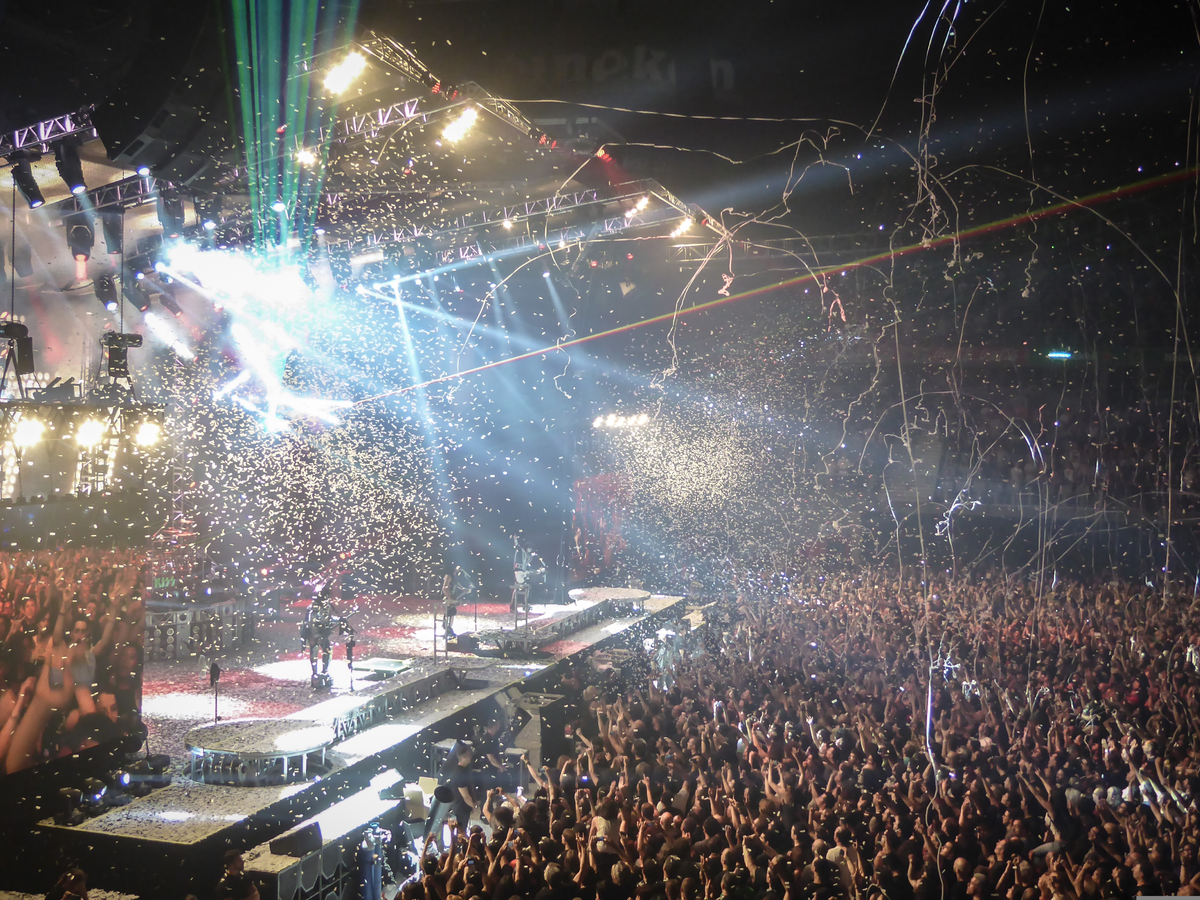
Atmosphere-wise, Tears for Fears shows don't feel like dusty retro packages. The band leans into emotion instead of choreography and spectacle for its own sake. Production is clean and modern: sharp lighting design, big but tasteful video backdrops, and arrangements that stay close to the records while adding a bit more muscle. Drums hit harder, guitars crunch more, and the synth lines you know by heart wrap around the room instead of just sitting politely in the mix.
Vocally, fans keep pointing out how strong things still sound. Roland's voice has aged—everyone's has—but he's adjusted his delivery rather than trying to pretend it's 1985. Curt's parts bring warmth and contrast, and those key harmonies on songs like Everybody Wants to Rule the World and Head Over Heels remain the backbone of the live experience. No AI, no tracks doing the heavy lifting; it's still very clearly a human performance.
Another point fans love: they actually talk to the crowd. There are stories behind songs, little jokes, and flashes of that famously complicated Orzabal/Smith chemistry that fueled both their break-up and their reunion. When they introduce newer songs off The Tipping Point, they often explain the real-life losses and grief behind them, which hits completely differently when you're standing there in the dark with thousands of strangers listening.
Support acts have varied by region and leg, from alt-leaning singer-songwriters to 80s-adjacent artists with their own cult followings. In some markets, the bill leans more "nostalgia night" with multi-artist packages; in others it feels like Tears for Fears are positioned alongside younger, tastefully chosen openers. Either way, the general fan consensus online is that you want to be inside the venue early—openers are usually solid and the main set tends to run long enough that you'll be glad you paced yourself.
What the web is saying:
Rumor Mill: What Fans Are Speculating
Spend ten minutes on Reddit or TikTok under the Tears for Fears tag and you'll notice a few recurring obsessions.
1. Is there a new album coming?
The biggest question right now: does The Tipping Point have a follow-up? In recent interviews, both Roland and Curt have hinted that the writing hasn't stopped. Fans on r/music and r/popheads frequently quote lines where they talk about "having more songs" or feeling creatively unlocked after finally getting that record out.
The speculation: some users believe we'll get at least an EP or a deluxe edition with new tracks tied to this ongoing touring cycle. Others think the band might take a slower route, quietly collecting material for a full album while they still enjoy being on the road. Without an official announcement, it's still theory—but it's informed theory, based on their own comments about not wanting another 17-year gap between releases.
2. Will they do a full-album anniversary tour?
Another hot rumor centers on the idea of a dedicated anniversary run for a classic record like Songs from the Big Chair or The Seeds of Love. With every new year, fans point out fresh milestones. On Reddit threads, you'll see people begging for a tour where they play one of those albums front-to-back. So far, the band has leaned toward more balanced, career-spanning sets instead of single-album nostalgia plays, but that hasn't stopped fans from dreaming—and planning imaginary setlists down to the encore.
3. Ticket prices and "worth it?" debates
Because Tears for Fears hover in that middle zone between cult heroes and mainstream legends, pricing sparks constant conversation. On social media, some fans complain about dynamic pricing nudging solid seats into premium territory. Others argue that, compared to the sky-high tiers for mega-tours, these shows still feel relatively accessible and absolutely worth it for the chance to hear Shout scream-sung by an entire arena.
One thread that keeps coming back: older fans comparing 80s ticket stubs to 2020s pricing, and younger fans pointing out that this might be the only realistic window they'll ever have to see the band at all. The end result? A lot of people caving and buying anyway, especially after seeing live clips circulating on TikTok that showcase how tight the band still is.
4. Surprise guests and deep cuts
Any time Tears for Fears book a big city or a festival date, there's a low-key hope for surprises. Fans speculate about guest appearances—especially from artists who have cited them as influences—or rare songs sneaking into the set. Deeper cuts like The Working Hour or I Believe are often at the center of these wish lists. When one of these finally appears on a setlist in one city, social feeds blow up with "Why didn't they play that at my show?"
5. Are they done after this?
There's also a quieter, more anxious undercurrent: some fans read every interview like tea leaves, looking for signs of a final chapter. Whenever Roland mentions health or the toll of grief—topics he's opened up about around the making of The Tipping Point—threads pop up asking if the current touring run might be their last big global push.
Right now, nothing official supports a "this is it" narrative. But that uncertainty fuels demand; people don't want to be the ones who decided to "catch them next time" and then discovered there wasn't a next time.
Key Dates & Facts at a Glance
Here's a quick reference snapshot to help you plan and nerd out at the same time. For the most up-to-date schedule and ticket links, always cross-check the official tour page.
| Type | Item | Date / Era | Notes |
|---|---|---|---|
| Album | The Hurting | 1983 | Debut LP; includes Mad World, Pale Shelter, Change. |
| Album | Songs from the Big Chair | 1985 | Breakthrough; features Shout and Everybody Wants to Rule the World. |
| Album | The Seeds of Love | 1989 | More expansive sound; includes Sowing the Seeds of Love, Woman in Chains. |
| Album | The Tipping Point | 2022 | First studio album in ~18 years; sparked the current touring wave. |
| Tour | Post-Tipping Point runs | 2022–2026 | Multiple legs across US, UK, and Europe; ongoing demand. |
| Signature Song | Everybody Wants to Rule the World | 1985 | One of their biggest global hits; a live staple. |
| Signature Song | Shout | 1984–1985 | Massive chorus; often used to close shows. |
| Live Info | Official Tour Page | Updated 2026 | See latest dates & tickets at tearsforfears.com/tour. |
FAQ: Everything You Need to Know About Tears for Fears
Who are Tears for Fears, in simple terms?
Tears for Fears are an English band formed by Roland Orzabal and Curt Smith in the early 1980s. If you know songs like Everybody Wants to Rule the World, Shout, Head Over Heels, or Mad World, you already know their impact. They helped define a particular kind of emotionally charged, synth-driven pop-rock that carried real weight beneath the hooks. Unlike some 80s acts that were all aesthetic and no depth, Tears for Fears built their sound around big feelings, layered production, and lyrics that weren't afraid to get dark.
They came up alongside other synth-pop and new wave acts but always felt slightly out of place in the best way—more introspective, more ambitious, more interested in how songs could stretch and swell instead of just hitting a chorus and calling it a day.
What makes their live shows in 2026 worth seeing?
Two big reasons: the songwriting and the emotional punch.
First, the songs themselves are basically built for live settings. Everybody Wants to Rule the World and Shout sound enormous in a crowd, but even more atmospheric tracks like Mad World or Woman in Chains hit differently with a full band behind them. There's a reason these tracks keep getting rediscovered by new generations—they're sturdy enough to survive changing trends.
Second, the band now has decades of perspective behind every lyric. The newer material from The Tipping Point is shaped by grief, loss, and reconciliation, and that sits right alongside the 80s material about pressure, control, and identity. The result is a set that feels like a life story, not just a playlist of old hits. Fans leave these shows talking about how surprisingly emotional it all was, not just how good the sing-alongs felt.
Where can you find official Tears for Fears tour dates and tickets?
The safest, cleanest starting point is the band's own site. Promoters, ticket platforms, and secondary sellers will all have their own listings, but those can get confusing quickly with resellers and variable pricing.
To see what's actually on the books right now, plus fresh announcements as they go live, head to the official tour page: https://tearsforfears.com/tour. That's where you'll find confirmed dates, venues, and links out to authorized ticket partners. If you're trying to dodge inflated resale prices, start there and sign up for any mailing lists or presale alerts they offer.
When did Tears for Fears become huge in the first place?
Their takeover moment hit in the mid-1980s. The Hurting (1983) made an impact in the UK and gave them early hits like Mad World, but it was Songs from the Big Chair in 1985 that blew things wide open globally. That album delivered Shout, Everybody Wants to Rule the World, and Head Over Heels—songs that still live on radio, playlists, and soundtracks today.
By the late 1980s, they followed up with The Seeds of Love, stretching their sound into even more colorful, psychedelic, and orchestral territory with tracks like Sowing the Seeds of Love. After that came band tensions, a split, and years of intermittent activity. But those early albums never left rotation, which is why, when they finally came back with The Tipping Point decades later, there was already a huge built-in global audience.
Why are they having a resurgence with younger fans now?
A mix of algorithms, syncs, and word-of-mouth.
Streaming platforms constantly serve up 80s and 90s tracks on mood and decade playlists. Put on a "chill" or "retro" mix and you'll eventually land on Everybody Wants to Rule the World or Mad World. On top of that, film and TV syncs have kept their catalog alive. Every time a show or movie uses their music—or the Gary Jules cover of Mad World sends people back to the original—another wave of younger listeners shows up.
Then there's TikTok and Instagram Reels. Clips soundtracked by those instantly recognizable riffs and choruses circulate nonstop. For Gen Z and younger millennials, Tears for Fears aren't a "parent band"; they're just another artist who keeps popping up on the For You page. Once those same fans realize there are real humans behind those songs who are still on tour, it clicks. That pipeline—from algorithm discovery to live ticket—is a big part of why 2026 shows are selling as hard as they are.
What's the best way to prep for a Tears for Fears show?
If you want to go in ready to scream-sing every word, a quick prep route looks like this:
- Run through The Hurting, Songs from the Big Chair, and The Seeds of Love front-to-back at least once.
- Hit a "Best of" playlist to sweep up singles like Break It Down Again.
- Spend time with The Tipping Point; several of its songs have become live staples and feel even heavier in person.
- Check recent setlists shared by fans so you know what's likely—and what might be a surprise.
On the practical side, Tears for Fears shows tend to reward early arrival: you get the full opener set, a better spot (for GA pits), and more time to soak up the pre-show energy. And yes, it's absolutely a sing-along crowd, so don't stress if your voice cracks on the big choruses. That's kind of the point.
What if this is your first-ever "legacy act" concert?
Tears for Fears are actually a great entry point if you've never seen a band with a long history. The setlists are packed with familiar songs, but the show doesn't feel like a museum piece. You're not just watching a reenactment of 1985; you're watching artists who have aged into their own material and are still actively adding to it.
You'll see older fans who were around for the original releases standing next to teens who only know the songs from playlists. That mix gives the night a strange, beautiful energy: everyone is meeting in the same room, at the same volume, over the same melodies. If you're even half-considering going, this is one of those tours that tends to turn "casual" listeners into lifers.
So schätzen die Börsenprofis Aktien ein!

Für. Immer. Kostenlos.