Talking Heads: Why Everyone’s Suddenly Obsessed Again
01.03.2026 - 05:22:34 | ad-hoc-news.de
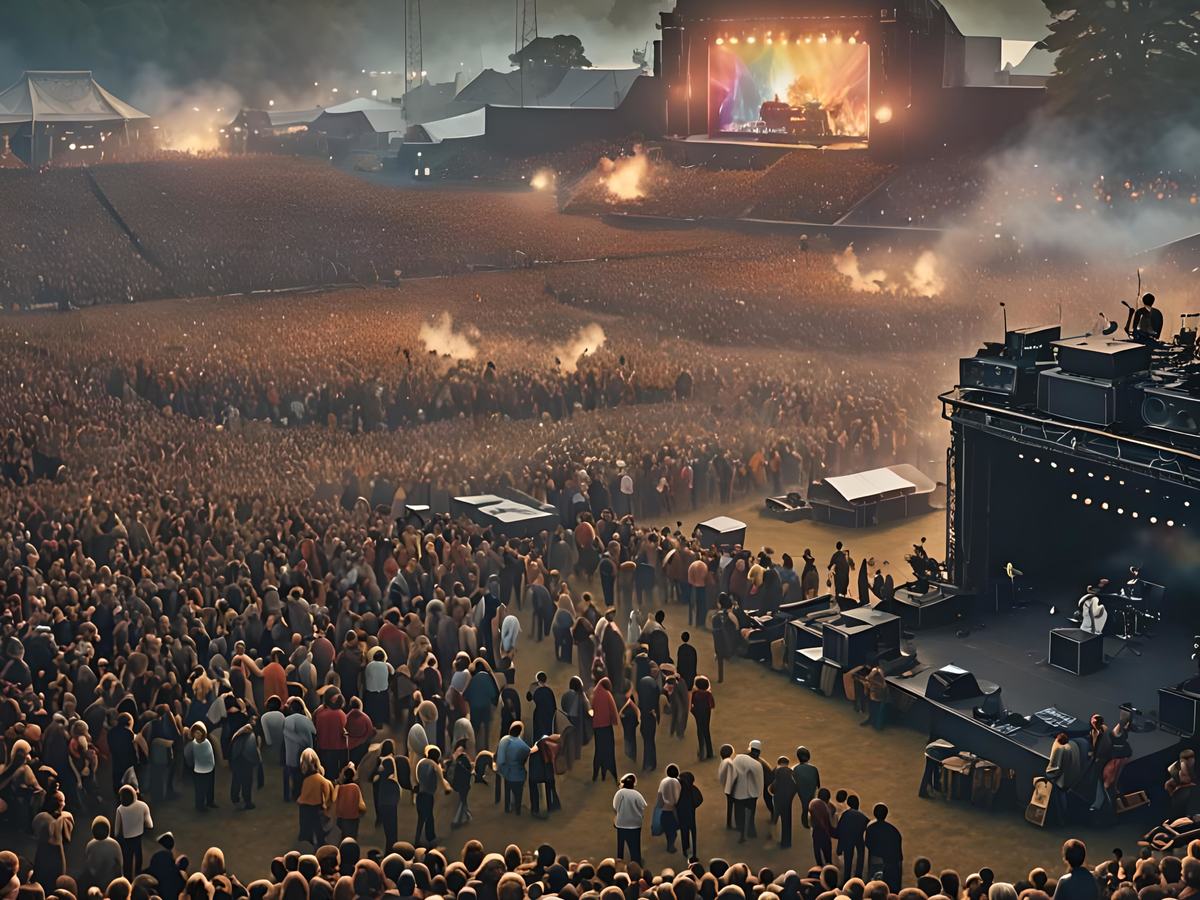
If it feels like Talking Heads are suddenly everywhere again, you’re not imagining it. Your TikTok feed, film nerd friends, older cousins who swear 1980 was the peak of culture – everyone’s talking about Talking Heads as if they just dropped a brand?new album yesterday. From restored concert footage to reunion whispers, the energy around the band in 2026 is very real, and it’s pulling in Gen Z and Millennials who weren’t even born when “Once in a Lifetime” first blew people’s minds.
Tap into the official Talking Heads universe here
What’s wild is that this isn’t just nostalgia. It’s not just parents forcing their kids to watch grainy VHS clips. The band’s catalog suddenly feels current again – in the way TikTok eats up weird, angular grooves, paranoid lyrics and off?beat style. Add the high?definition reissues of the legendary stop?motion?meets?sweat fever dream that is Stop Making Sense, and you’ve got a perfect storm: a classic band that now looks, sounds and memes like it was invented for your For You Page.
The Backstory: Breaking News in Detail
So what exactly is happening with Talking Heads in early 2026? There isn’t a glossy "new studio album out now" headline – but the story is actually more interesting than a basic rollout. Over the last couple of years, the band’s legacy has gone through a full?blown reboot, powered by a restored version of Stop Making Sense, new press appearances, and a rare sense of peace between band members who famously didn’t always get along.
The big spark came when the remastered edition of Stop Making Sense hit theaters and streaming platforms in 4K. Critics called it one of the greatest concert films ever all over again, and younger fans saw David Byrne in the Big Suit for the first time not as some dusty meme, but as legit stagecraft. Music outlets in the US and the UK picked up the story hard: long interviews, breakdowns of the band’s influence on everything from indie rock to hyperpop, and think?pieces on why this anxious, jittery, funky art?rock still hits in the age of doomscrolling.
In the process, the four core members – David Byrne, Tina Weymouth, Chris Frantz and Jerry Harrison – found themselves doing rare joint appearances, talking about the old days with a mixture of honesty and actual warmth. That alone blew fans’ minds; for years, the story around Talking Heads was mostly about why they weren’t together. Now, suddenly, they were on the same stage for Q&As, smiling, telling wild stories about downtown New York, and quietly shutting down decades of drama.
This, naturally, lit the fuse on reunion talk. Every time the band shared a stage to talk about the film, social feeds exploded with questions: would they ever play together again? Was a one?off show possible? A festival headlining spot? Maybe a surprise late?night TV performance in New York or London? No one from the band has promised anything concrete, but they also haven’t slammed the door as hard as they did in the past. That small shift – from "absolutely not" to "never say never" – is all it took for the rumor mill to go nuclear.
Meanwhile, the catalog itself has been getting a quiet but serious push. Remastered editions of classic albums like Fear of Music, Remain in Light and Speaking in Tongues keep resurfacing on playlists. Editorial features on streaming platforms highlight key tracks. Vinyl represses sell out, especially in the US and UK, where a new wave of indie kids has decided that Talking Heads are basically the blueprint for anything smart, funky and slightly unhinged.
The result: even without a signed, sealed reunion tour, Talking Heads feel active again. The band is trending, the art is front?and?center, and every tiny move – a fresh interview, a new archive clip, a hint from a former bandmate – gets treated like a breaking news moment by fans.
The Setlist & Show: What to Expect
Because there’s no official full?scale tour on the books right now, the closest you get to a "current Talking Heads show" is pieced together from three sources: the restored Stop Making Sense performances, solo and side?project sets by the band members, and fantasy setlists that fans design and share obsessively online.
If Talking Heads did walk on stage in 2026, here’s the kind of arc you’d be looking at – based on recent conversations, historical sets and what fans are begging for on Reddit and TikTok.
You’d almost certainly get the slow burn opener inspired by the film: David Byrne alone on stage, portable tape deck or a minimalist backing beat, starting with "Psycho Killer." That track has fully broken back into the culture thanks to TikTok and meme culture – the bassline, the chopped?up French, the nervous energy all feel made for short?form video. Fans imagine Byrne walking out in regular clothes, building tension, then the band joining song by song.
From there, the dream set moves into the twitchy, paranoid era: "Warning Sign," "Life During Wartime," "Found a Job." Musically, this is where Talking Heads slot perfectly into modern playlists next to bands like LCD Soundsystem or Yard Act – choppy guitars, rubbery bass from Tina Weymouth, and grooves that make you dance while the lyrics spiral about cities, technology and anxiety.
Mid?set is where the big communal scream?along hits: "Once in a Lifetime" (which new fans often discover via movie syncs and TikTok edits), "Burning Down the House," "This Must Be the Place (Naive Melody)," and "Girlfriend Is Better." The shift in the room during "This Must Be the Place" in particular is legendary – even just watching the film, you can feel it. It’s the rare Talking Heads song that’s openly tender instead of jittery or ironic. For a modern crowd used to heartbreak ballads and bedroom pop, that one track is often the gateway drug to the rest of the catalog.
Visually, any current?era Talking Heads show would lean into the mix of minimalism and surreal theater that Stop Making Sense nailed. Fans talk about how the Big Suit might be reinterpreted: a future?facing version with LED panels, or a stripped?down, eco?conscious fabric but the same exaggerated shape. There’s also a lot of love online for the idea of live cameras, glitchy projections and contemporary dance elements, connecting the band’s original artsy outsider vibe to modern visual culture.
In the absence of actual setlists, we do have related shows to pull from. Jerry Harrison and Adrian Belew have been performing Remain in Light-themed sets in recent years, which gave a pretty clear picture of which deep cuts still hit hard live. Songs like "Crosseyed and Painless," "Houses in Motion" and "Born Under Punches (The Heat Goes On)" are rhythm monsters that feel surprisingly modern. Fans who caught those shows in the US and Europe came away raving about how physically intense that material still feels – more like dance music than heritage?rock.
On top of that, David Byrne’s own solo shows and his acclaimed Broadway production American Utopia quietly functioned as a sort of Talking Heads 2.0 live experience. Those sets mixed solo work with Talking Heads classics, performed by a marching?band?style ensemble with no visible cables, amps or stands on stage. Tracks like "Once in a Lifetime" and "Burning Down the House" showed up there in radically fresh arrangements, and fans now point to that production as proof the songs can absolutely exist in a 2020s live context without feeling like a museum exhibit.
All of this fuels the imagination: we can’t pull a 2026 Talking Heads setlist from reality yet, but the building blocks are all around. The band’s songs are already being re?staged, re?arranged and re?experienced in front of live audiences – which makes a full reunion feel less like fantasy and more like the next logical step.
What the web is saying:
Rumor Mill: What Fans Are Speculating
If you want the pure, unfiltered Talking Heads discourse, you go to Reddit and TikTok. That’s where the hopes, conspiracy boards and hot takes live – and where every tiny move from any band member gets turned into a 30?second theory video.
On Reddit (especially r/music and band?specific threads), there are three major rumor streams right now:
1. The "One Night Only" Theory
Fans are obsessing over the idea of a single, historic reunion show instead of a full tour. The favorite fantasy: a New York or London theater, announced last?minute, with cameras rolling and special guests. Anytime the band members appear in the same city for an event, comment sections explode with people tracking flights, venues and dates, trying to see if the stars are quietly lining up. Some users argue that a tight, one?off show feels more realistic than a months?long tour, given the band’s history and age – but also more mythic, like their own version of the "last waltz."
2. Festival Headliner Hopes
Another chunk of fans believes a major festival – think Glastonbury, Coachella or a big European weekender – will be the place where it finally happens. The theory is that a festival solves a few problems: shorter set, massive production budget, lower pressure than building an entire tour. Threads are full of mock posters with Talking Heads billed at the top, often above modern acts who clearly owe them a debt, like LCD Soundsystem, Vampire Weekend or even certain alt?pop stars. Rumors spike hard whenever a festival lineup release is incoming and there’s a "mystery headliner" slot.
3. The Studio Curveball
A more niche but very loud camp on TikTok likes to predict a different kind of reunion: not a tour, but a studio or visual project. Think an EP, a collaborative single, or even a one?off recording of updated versions of classics tied to a film release. People point to the way Byrne has embraced multimedia projects and the band’s art?school roots as signs that if they do return, it might be in a way that bends the idea of what a "reunion" looks like.
On TikTok, the vibe is even more chaotic and fun. Sounds from "Psycho Killer," "This Must Be the Place" and "Once in a Lifetime" keep getting recycled as audio for everything from outfit checks to existential memes. One trend pairs the "How did I get here?" line with people showing off wild life pivots – moving cities, quitting jobs, messy breakups, coming?out stories. Another uses "Naive Melody" as a kind of soft?focus lens over relationship montages, giving the song this new life as a dreamy, queer?coded love anthem.
There’s also ongoing debate about ticket prices – not for a real tour, but pre?emptively. Fans look at the sky?high costs for legacy act tours and say, flat?out, that a Talking Heads reunion can’t follow that path if it wants to feel true to the band’s outsider roots. Some threads argue for smaller venues and tiered pricing. Others point out that if a reunion happens, demand will be brutal no matter what, and scalpers will swarm. You’ll see users swapping strategies for beating bots, from pre?sale sign?up hacks to camping online the second anything official drops.
Underneath all the noise, one emotional thread runs through almost every platform: people want the band to feel happy and respected if they come back. Fans who’ve read about past conflicts genuinely worry about the emotional cost of reuniting. The ideal scenario everyone seems to share is a situation where the four of them control the narrative, pick the setting, and walk away feeling it was worth it – artistically and personally – rather than just ticking a box for nostalgia cash.
Key Dates & Facts at a Glance
- Band formation: Talking Heads formed in the mid?1970s after art?school connections in Rhode Island and a move to New York’s CBGB scene.
- Debut album: Talking Heads: 77 introduced "Psycho Killer" and came out in the late 1970s, marking the band as part of the first wave of post?punk and new wave.
- Breakthrough era: Albums like Fear of Music and Remain in Light (around the turn of the 1980s) turned them into critics’ darlings and cult heroes, blending rock, funk, African rhythms and studio experimentation.
- Biggest US/UK hits: Key singles include "Once in a Lifetime," "Burning Down the House," "Road to Nowhere" and "And She Was," many of which charted strongly in both the US and the UK.
- Iconic live document: The original release of the concert film Stop Making Sense in the 1980s captured the band at their peak and became a cult classic; its recent restoration has sparked the current resurgence.
- Hiatus and split: After their late?80s work, the band effectively stopped operating as a unit, with members moving on to other projects. Tensions over communication and control became part of the band’s lore.
- Rock Hall recognition: Talking Heads were inducted into the Rock and Roll Hall of Fame in the early 2000s, briefly reuniting to perform.
- Recent spotlight: The 4K restoration and re?release of Stop Making Sense in cinemas and on streaming platforms in the mid?2020s rekindled mainstream interest.
- Last few years: Members have appeared together for Q&As, interviews and events centered on the film and their legacy, feeding reunion speculation.
- Official hub: For updates, catalog info and any future announcements, the official site remains a key reference point: talkingheadsofficial.com.
FAQ: Everything You Need to Know About Talking Heads
Who are Talking Heads, in simple terms?
Talking Heads are a band that started in the New York art?punk scene and grew into one of the most influential alternative groups of all time. At their core, you’ve got David Byrne (vocals, guitar, songs, wild stage presence), Tina Weymouth (bass, one of the coolest and most innovative players of her era), Chris Frantz (drums, groove machine) and Jerry Harrison (guitar, keys, texture and brains in the arrangements). They took punk energy, added funk and global rhythms, layered in anxious, brainy lyrics, and ended up with a sound that a lot of modern indie bands still try to copy.
For younger listeners, the easiest way to think of them is: if you like LCD Soundsystem, Vampire Weekend, St. Vincent, or even parts of Radiohead, you’re probably already into things Talking Heads helped invent – you just haven’t connected the dots yet.
Why are people suddenly talking about them again now?
The main trigger has been the high?definition comeback of Stop Making Sense, their legendary concert film. When a new generation saw it in cinemas and on big screens, it didn’t feel like a museum piece. It felt strangely modern: wireless?looking staging long before that tech existed, dancers moving like contemporary performance art, and songs that lock into grooves for minutes at a time like DJ sets.
Music media, podcasts and TikTok seized on that. Clips from the film started circulating. People who had only heard "Once in a Lifetime" in passing suddenly realized there was an entire catalog of equally wild music. At the same time, band members began appearing together in public more often, creating a sense of live, ongoing story rather than static history. That combination – visual re?introduction plus human presence – is what made the band suddenly feel new again to people who weren’t around the first time.
Are Talking Heads actually going to reunite for a tour?
Right now, there is no confirmed full tour. What exists is energy, interviews, and a ton of fan hope. Historically, David Byrne has been very clear about moving forward rather than looking back, and the band’s breakup was not exactly gentle. That’s why the recent friendly appearances have hit so hard: they’ve changed the emotional context.
The most realistic scenarios people discuss are limited. Think: a one?off show tied to a film or documentary, a few special festival dates, or a collaborative performance built around the music of Remain in Light with guests. A grueling, arena?to?arena world tour seems less likely, especially given how careful some of the members have been about not repeating old tensions. But in music, "never" has a way of turning into "okay, just this once" when the timing, money and emotional stakes align. That’s why fans stay glued to every hint.
What songs should a new fan start with?
If you’re just getting into Talking Heads, you can treat them like a playlist journey:
- For instant hooks: "Burning Down the House," "And She Was," "Road to Nowhere" – catchy, weird, very sing?alongable.
- For emotional punch: "This Must Be the Place (Naive Melody)" – widely loved as one of the most quietly beautiful songs of the 1980s.
- For groove and chaos: "Crosseyed and Painless," "Born Under Punches," "Life During Wartime" – this is where you feel the band’s connection to funk, Afrobeat and dance music.
- For lyrics and brain fog: "Once in a Lifetime," "Cities," "Heaven" – tracks that feel like someone narrating your 3 a.m. overthinking session.
From there, you can dive into full albums like Remain in Light for the dense, layered vibe, or Speaking in Tongues for the more polished, pop?leaning side.
How important is Talking Heads to current music?
Very. Beyond the obvious sonic influence, Talking Heads gave later artists a kind of permission slip: you can be smart, anxious, political, funny and deeply danceable all at once. You don’t have to choose between head and body. Producers and bands still reference their layering tricks – looping patterns, interlocking guitar lines, call?and?response rhythms – while pop stars borrow the awkward?but?intentional outsider persona Byrne helped pioneer.
On a pure numbers level, you see their resurgence in streaming stats and chart re?entries whenever a movie, show or viral clip uses one of their songs. But the deeper impact is in how often you hear artists name?drop them in interviews, or how many festival lineups are packed with bands that sound like they grew up on Fear of Music.
Where can you legally watch or listen to the new?attention material?
The restored version of Stop Making Sense has been in cinemas and on selected streaming platforms, depending on region, and clips from that restoration circulate widely in official form on video platforms. The band’s entire studio catalog is available on the major streaming services in both the US and the UK, often in remastered form with improved sound. Vinyl stores and online retailers regularly stock reissues of key albums, with some limited?edition pressings selling out quickly thanks to the new demand.
If you want the most official, clean info on what’s happening next – whether it’s a new pressing, a Q&A event, or something more – the safest bet is to keep an eye on the band’s official channels, including their website and verified social accounts, instead of just trusting rumor threads.
Why does Talking Heads resonate so much with Gen Z and Millennials?
Partly, it’s the anxiety. A lot of their lyrics feel like someone trying to stay calm while the world collapses in slow motion: housing stress, technology, war, media overload. They were singing about those feelings decades ago, but the language maps disturbingly well onto life in the 2020s.
Then there’s the vibe: they never fit neatly into one box. They were too artsy to be a straight pop band, too groovy to be strict punk, too weird to be corporate rock. For generations raised on algorithm?blended playlists, that genre?fluid identity makes sense. Add the visuals – the oversized suit, the expressionist dancing, the low?budget?but?high?concept videos – and you get a band that feels memeable without losing depth.
Also, there’s something powerful about discovering a group that your parents or older friends might love, but realizing it still feels like it’s yours. Talking Heads have enough strangeness, enough darkness and enough groove that even when they’re being celebrated in think?pieces, they never feel fully domesticated. That’s a big reason why, in 2026, they’re not just a nostalgia act – they’re a band new listeners are actively claiming for themselves.
So schätzen die Börsenprofis Aktien ein!

Für. Immer. Kostenlos.