Psychedelic Rock vs Post Punk: Mystery Art Orchestra
08.03.2026 - 17:14:36 | ad-hoc-news.de
Rock history has a habit of looping back on itself. Sounds that once felt radical are rediscovered, reworked and folded into new contexts by younger artists who never experienced those eras firsthand. Instead of simple nostalgia, the most interesting bands treat the past as a toolbox: they borrow moods, recording ideas and playing styles, but reframe them through contemporary anxieties and digital-age listening habits.
Two genres currently being revisited with particular care are Psychedelic Rock and Post Punk. Both arrived as reactions to their own times and challenged rock's default settings, but they did so in almost opposite ways. Where psych-rock stretched songs into expansive journeys filled with texture and studio experimentation, post punk tightened the screws, sharpening rhythm and mood into something lean, tense and emotionally direct.
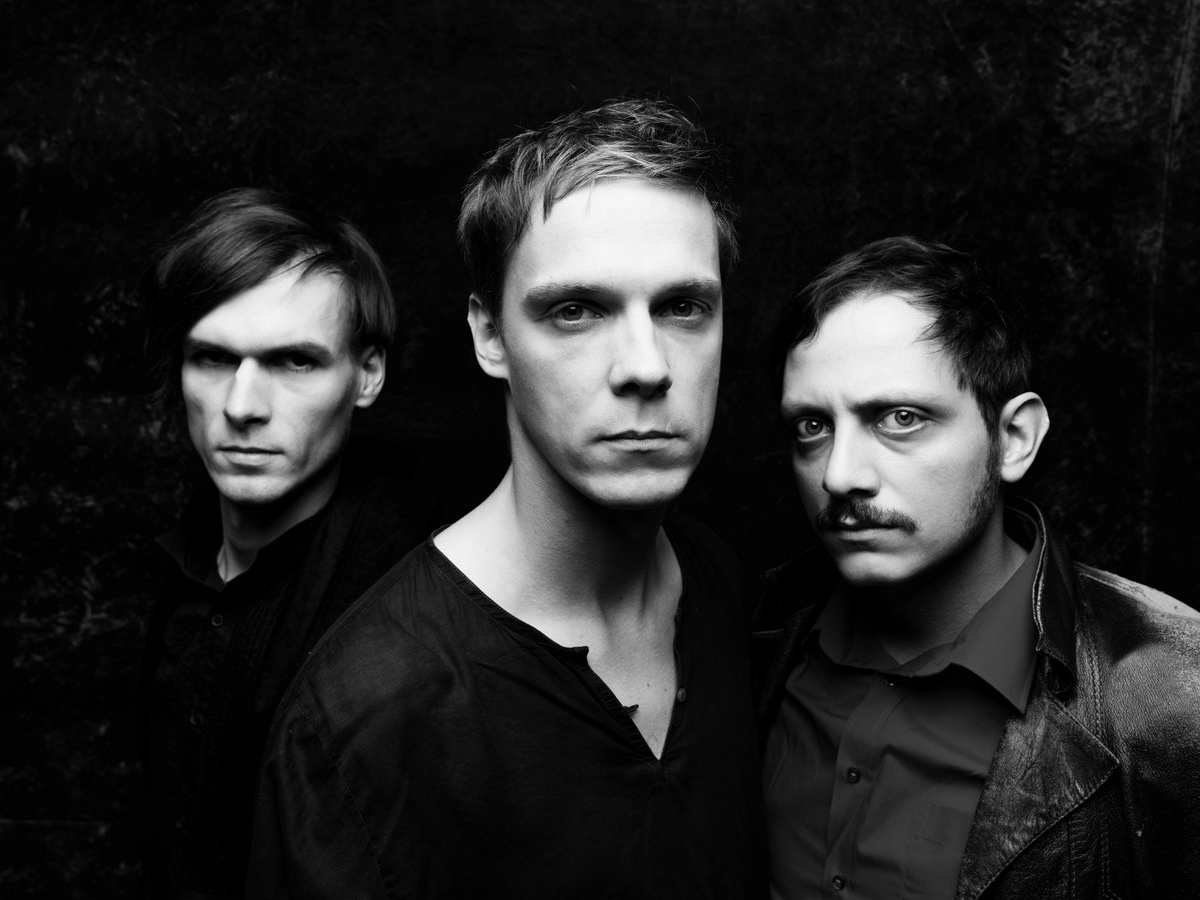
Mystery Art Orchestra sit right at that junction. At their core they are a post punk band, driven by bass, drums and clipped guitar lines that carry the legacy of late-70s and early-80s underground music. Yet woven through their tracks are subtle but unmistakable psychedelic touches: reverberant guitar drones, foggy synth beds and production choices that gently bend the edges of their songs outwards. The result is not retro cosplay but a focused hybrid that feels closely tuned to how listeners absorb music today—on headphones, in small venues and through algorithmic playlists that no longer respect genre boundaries.
Tracing the Roots: Psychedelic Rock and Post Punk Explained
Psychedelic Rock first emerged in the mid-to-late 1960s, closely linked to youth counterculture, experiments with consciousness and a rejection of rigid social norms. Bands like the 13th Floor Elevators, early Pink Floyd, Jefferson Airplane and The Jimi Hendrix Experience began to treat the studio as a creative instrument rather than just a place to document live performance. Extended solos, tape effects, reversed sounds, echo and reverb became tools for suggesting altered states of mind.
Musically, psych-rock often leans on a few key traits. Guitars are heavily processed, using fuzz, phasers, wah pedals and delay to blur their attack and create swirling overtones. Songs may stretch far beyond radio-friendly lengths, favouring gradual build-ups and dissolves over neat verse-chorus structures. Organ and early synthesizers play an important role, either doubling guitar lines or filling in the spaces between them with drones and chords that slowly shift. Vocals can sound distant or submerged, less like a narrative lead and more like another texture in the mix.
Thematically, psychedelic rock often reflects curiosity, introspection and sometimes disorientation. Lyrics explore inner worlds, dreams, politics and spirituality, sometimes in abstract terms. That sense of exploration extended to live shows, which frequently used light projections and improvised sections to push songs into new shapes. Even when psych-rock faded from the mainstream in the 1970s, its influence lingered: progressive rock, space rock, shoegaze and much of modern psych all draw from that initial decision to expand rock's sonic possibilities.
Post Punk, which began to coalesce in the late 1970s, arrived in a very different state of mind. It followed the first wave of punk, which had already stripped rock back to simple chords, loud guitars and confrontation. Instead of continuing punk's straightforward attack, post punk players asked a different question: what else can we do with this raw energy? The answer often involved turning away from blues-based guitar heroics and towards rhythm, repetition and a more oblique form of emotion.
Typical post punk tracks place the bass at the centre of the arrangement. The instrument doesn't just support the harmony; it carries riffs and hooks, using simple but insistent patterns. Drums tend to be dry and precise, with a lot of emphasis on hi-hats and toms rather than just crash cymbals. Guitars cut across this framework with jagged chords, harmonics, and sometimes almost skeletal melodic figures that hint rather than fully state. Early Joy Division, Wire, The Cure, Gang of Four and Siouxsie and the Banshees are all foundational examples, though their individual sounds differ greatly.
Where psychedelic rock tends towards spaciousness and an almost fluid sense of time, post punk usually feels tight and slightly claustrophobic. Song structures are often concise. Repetition can become hypnotic, but instead of drifting aimlessly, it locks into a groove that pushes the song forward. Vocals range from monotone speak-singing to desperate yelps, often expressing alienation, uncertainty and the bleak underside of urban life. Production is generally more minimal than in psych-rock, especially in the early years, with clear separation between instruments and an avoidance of lush studio polish.
Despite their clear differences, both genres grew from a countercultural impulse. Psychedelic rock questioned traditional culture with a focus on inner freedom and expanded perception. Post punk questioned it with scepticism and critical distance, often incorporating art-school ideas, political theory and a willingness to break song forms apart. Each, in its own way, represented a refusal to accept rock music's standard templates. That shared instinct to push beyond the ordinary is exactly where a band like Mystery Art Orchestra finds creative fuel today.
A Modern Synthesis: The Sound of Mystery Art Orchestra
Mystery Art Orchestra function essentially as a post punk group, but they treat the genre as a living framework rather than a fixed aesthetic. Their rhythm section operates with the kind of discipline that defined early post punk: bass lines are prominent and melodic, drums favour lean patterns that keep tension high, and the overall groove often walks that fine line between danceable and unsettling. This foundation anchors their songs, ensuring that even their most atmospheric moments retain a sense of direction.
On top of that rhythmic backbone, the band introduce elements more commonly associated with psychedelic rock. Guitars don't just chop out chords; they linger, ring and smear across the stereo field. Delay and reverb are used not to wash everything into a blur, but to create controlled pockets of space—short echoes that answer the vocals, or long, decaying tails that hang over drum hits. Synthesizers and sampled textures appear as thin veils rather than thick blankets, surrounding the core band without overwhelming it.
This hybrid approach allows Mystery Art Orchestra to balance clarity with atmosphere. You can usually pick out each instrument in the mix, a hallmark of post punk's more analytical production style, but the edges between them are softened by carefully placed effects. The result is a sound that feels both immediate and slightly unreal, as if the band are performing in a familiar room that someone has quietly shifted sideways.
Lyrically, they tend to lean towards introspection and urban observation, echoing post punk's long history of narrating everyday disconnection. At the same time, there is a reflective, almost dreamlike tone in some of their writing that aligns with psychedelic rock's inward gaze. Instead of literal storytelling or overt social slogans, they often favour images and phrases that suggest emotional states without completely explaining them. This leaves space for listeners to project their own experiences onto the songs.
Visually and aesthetically, Mystery Art Orchestra echo this in-between position. Their artwork and stage lighting typically avoid the cliché neon glow of retro synth culture or the maximalist posters associated with 60s revivalism. Instead, they gravitate toward muted colours, stark shapes and subtle visual distortion—a style that fits their music's balance of restraint and haze. It signals a band that cares about coherence across sound, image and performance, but does so quietly rather than shouting their concepts at the audience.
Crucially, Mystery Art Orchestra do not treat genre-blending as a gimmick. Their songs still live or die on songwriting, dynamics and the emotional shift that occurs across three or four minutes. The post punk core gives them structure and momentum; the psychedelic elements give them dimension and emotional ambiguity. Together, those elements position the band in an interesting space: accessible enough for listeners who like sharp, bass-driven rock, yet rich enough in detail to reward deeper, headphone-based listening.
Current Releases and Live Performances
For bands that work with both tight rhythm and subtle atmosphere, the live stage can be a serious test. Mystery Art Orchestra approach their shows with the same sense of balance that shapes their recordings. The bass and drums typically land with more physical weight in a venue, pushing their post punk side to the front. Guitars and keys then drape over that impact, using carefully chosen effects rather than endless pedal tweaking to maintain the duskier, psychedelic shadings.
The band's current touring plans and one-off shows are regularly updated on their official site, which has become the central hub for announcements. Anyone curious about catching them in person can check the Mystery Art Orchestra Homepage for upcoming concert dates, ticket links and occasional notes about support acts. This direct communication matters for independent groups, who often build their following city by city, club by club, rather than relying on large festival slots or mainstream radio.
On the release side, Mystery Art Orchestra have embraced a mixed model that recognises both streaming habits and the renewed interest in tangible music formats. Their catalogue is available on the usual digital platforms, but they also offer physical editions through Bandcamp. For listeners who still value records as objects—complete with artwork, liner notes and the simple act of flipping a side—Bandcamp has become an important meeting point.
Their page, Mystery Art Orchestra on Bandcamp, provides access to LP and CD versions, often with small extras like lyric booklets or limited-colour pressings. Buying directly in this way tends to send a clearer signal of support than passive streaming and helps sustain touring, recording and the kind of patient development that genre-blending bands often need.
A key entry point into their current sound is the single "Going Under," accompanied by a video that underscores the song's themes. Musically, the track leans heavily on a pulsing bass figure that repeats with minor variations, a classic post punk technique. The drums are tight and slightly dry, creating a sense of compressed space. Over this, the guitar alternates between sharp, rhythmic stabs and longer, echoing notes that slowly decay into a haze—exactly the kind of subtle psychedelic colouring that defines their approach.
The vocal delivery on "Going Under" is measured but tense, hovering just above the instrument bed rather than soaring on top of it. Lines are delivered in short phrases, leaving gaps that the production fills with reverb tails and delay repeats. Lyrically, the song circles around the feeling of being stuck in a loop of thoughts or behaviours, not with grand declarations but with concrete, almost mundane images. This adds to the impression that the song is less about spectacle and more about the quiet pressure of everyday life.
The accompanying visual, available at Watch "Going Under" on YouTube, reinforces this mood. Rather than relying on rapid cuts or narrative drama, the video employs measured pacing, muted colours and recurring visual motifs that echo the song's cyclical structure. Blurred backgrounds, slow camera movements and subtle light shifts give the clip a slightly disorienting quality, again nodding to psychedelic traditions without copying their more obvious iconography.
As a complete package, "Going Under" does a clear job of outlining what Mystery Art Orchestra aim for: songs that function immediately on a rhythmic level, but reveal their depth through repeated listens. For potential fans discovering them through algorithmic recommendations or online recommendations, this single is a concise yet representative snapshot of where the band currently stand artistically.
Community Discussion & Reviews:
Audience Reception and the Independent Music Scene
Mystery Art Orchestra are emerging in an environment where younger listeners are less concerned with strict genre boundaries than previous generations. Playlists frequently place post punk revival tracks next to dream pop, shoegaze, darkwave and electronic music, creating a space where their blend of rhythmic drive and subtle psychedelia feels natural rather than unusual.
Early reception around the band largely centres on two aspects: their command of mood and the strength of their rhythm section. Fans often highlight how their songs build a consistent emotional tone across an entire set or release, shifting intensity without breaking continuity. That sense of narrative arc is particularly valued in independent circles, where listeners look for more than just isolated singles.
At the same time, critics and bloggers in the DIY and alternative press have noted the group's restraint. Mystery Art Orchestra rarely crowd their arrangements, even when they employ multiple guitar layers or synths. This disciplined approach distinguishes them from both more maximalist psych-inspired acts and from purely minimal post punk projects that prioritise austerity over atmosphere. It positions them in a niche that can appeal to fans of both schools without diluting their identity.
The band's growth has been steady rather than explosive, which in the independent scene is often a healthier sign. Word-of-mouth recommendations, smaller club shows and online discussions seem to be doing most of the work that major-label marketing campaigns might otherwise handle. The presence of their music on Bandcamp and other fan-friendly platforms also reinforces a sense of transparency; listeners can see when releases came out, what formats are available and where their money is going.
In a broader cultural context, Mystery Art Orchestra's mix of post punk directness and psychedelic shading speaks to contemporary anxieties. Many younger listeners report feeling both overstimulated and emotionally detached—a combination that suits music which is rhythmically assertive yet slightly blurred around the edges. Their songs offer structure without neat resolution, mirroring how much of modern life feels simultaneously organised and unstable.
Within scenes that value authenticity and sustainable careers, this measured approach can carry more weight than quick hype. As they continue to release material and refine their live shows, Mystery Art Orchestra are well-placed to become a reference point for how classic genre vocabularies can be recombined with care rather than pastiche. Their reception so far suggests that there is a sizeable audience for rock music that honours its predecessors while still sounding anchored in the present tense.
Frequently Asked Questions
Who are Mystery Art Orchestra and where are they from?
Mystery Art Orchestra are an independent rock band whose core sound is rooted in post punk traditions, with a strong emphasis on bass-driven songwriting and tightly focused rhythmic interplay. While the group draw inspiration from a range of international influences, their creative base sits within the current wave of underground alternative rock, playing small-to-mid-sized venues and engaging directly with their audience through shows, social platforms and self-managed releases.
How would you describe their music to someone new?
A practical way to describe Mystery Art Orchestra is to imagine a classic post punk band whose rehearsal room has been quietly filled with subtle psychedelic effects. The drums and bass lock into grooves that feel urgent and slightly tense, echoing early-80s acts, but the guitars and synths often hover, resonate and smear at the edges, more in line with atmospheric psych and shoegaze. Vocally, the band avoid both theatrical excess and flat detachment, favouring a measured style that fits their reflective lyrics. It is music that works both on headphones and in small venues, with enough low-end drive for physical impact and enough textural detail for close listening.
What makes their blend of post punk and psychedelic rock stand out?
Genre blending is common, but Mystery Art Orchestra's approach stands out because of their sense of proportion. Rather than simply stacking reverb and delay onto a standard post punk template, they treat psychedelic elements as tools for shaping space and mood. Effects are applied sparingly, emphasising contrast: a mostly dry verse might give way to a more echo-laden chorus, or a clean guitar pattern might suddenly bloom into a sustained, modulated chord at a key emotional moment. This restraint keeps their tracks from feeling washed out while still granting them a slightly dreamlike quality. The balance allows listeners who favour rhythm and clarity to engage, while also appealing to those drawn to more atmospheric rock.
Where can listeners find their music and support the band?
Mystery Art Orchestra release their music across standard streaming platforms, making it easy to sample their songs. For those who want to go further and directly support their work, the most direct route is through their Bandcamp presence at Mystery Art Orchestra on Bandcamp. There, listeners can purchase digital downloads as well as physical editions such as LPs and CDs, often accompanied by artwork and liner information that do not always appear in streaming contexts. Buying through Bandcamp also typically sends a more substantial share of revenue to the band, helping fund recording, touring and future projects.
How does their single "Going Under" represent their overall sound?
"Going Under" functions as a concise statement of what Mystery Art Orchestra do best. The track opens with a firm bass motif and controlled drum pattern, immediately signalling their post punk allegiance. As the song unfolds, guitar textures and production choices gradually widen the frame: delayed notes ping across the stereo field, background voices and subtle synths creep into the mix, and reverbs open up at key transitions. The lyrics meditate on recurring emotional patterns and the pull of familiar, unhelpful habits, aligning with the band's broader interest in interior states and quiet pressure rather than grand external drama. For new listeners, the song offers a digestible but accurate glimpse of their methods and concerns.
What is their live show like compared to the studio recordings?
Live, Mystery Art Orchestra tend to tilt slightly more towards their post punk foundation. Bass and drums become more prominent, gaining physical presence that recordings can only approximate. Guitars and synths still provide the atmospheric layer, but the band generally avoid relying on complex backing tracks, choosing parts that can be reproduced by the members on stage. This gives their shows a sense of risk and immediacy, as songs breathe and shift slightly from night to night. The psychedelic aspects come through in the use of lighting, occasional extended codas and the way reverbs and delays interact with room acoustics, rather than in long, open-ended jam sections.
How do Psychedelic Rock and Post Punk shape their future direction?
Looking ahead, Mystery Art Orchestra's evolution will likely depend on how they continue to reinterpret the legacies of both genres. Psychedelic rock offers them an ongoing supply of ideas about texture, harmony and studio experimentation, while post punk gives them a grounding in economy, rhythm and emotional sharpness. As they write new material, they can either stretch outward—incorporating longer forms, more layered arrangements and broader harmonic palettes—or refine inward, focusing further on concise songs with meticulously chosen sounds. Their current work suggests an interest in walking a line between these options: tracks long enough to develop atmosphere, but controlled enough to avoid drift.
For listeners paying attention to the next wave of genre-aware guitar music, following Mystery Art Orchestra now means witnessing that negotiation in real time. The interplay between their influences is not just a stylistic decoration; it is the framework within which they are slowly defining their own place in contemporary independent music.
So schätzen die Börsenprofis Aktien ein!

Für. Immer. Kostenlos.