New Order 2026: Why Everyone’s Talking About Their Live Return
22.02.2026 - 05:09:13 | ad-hoc-news.de
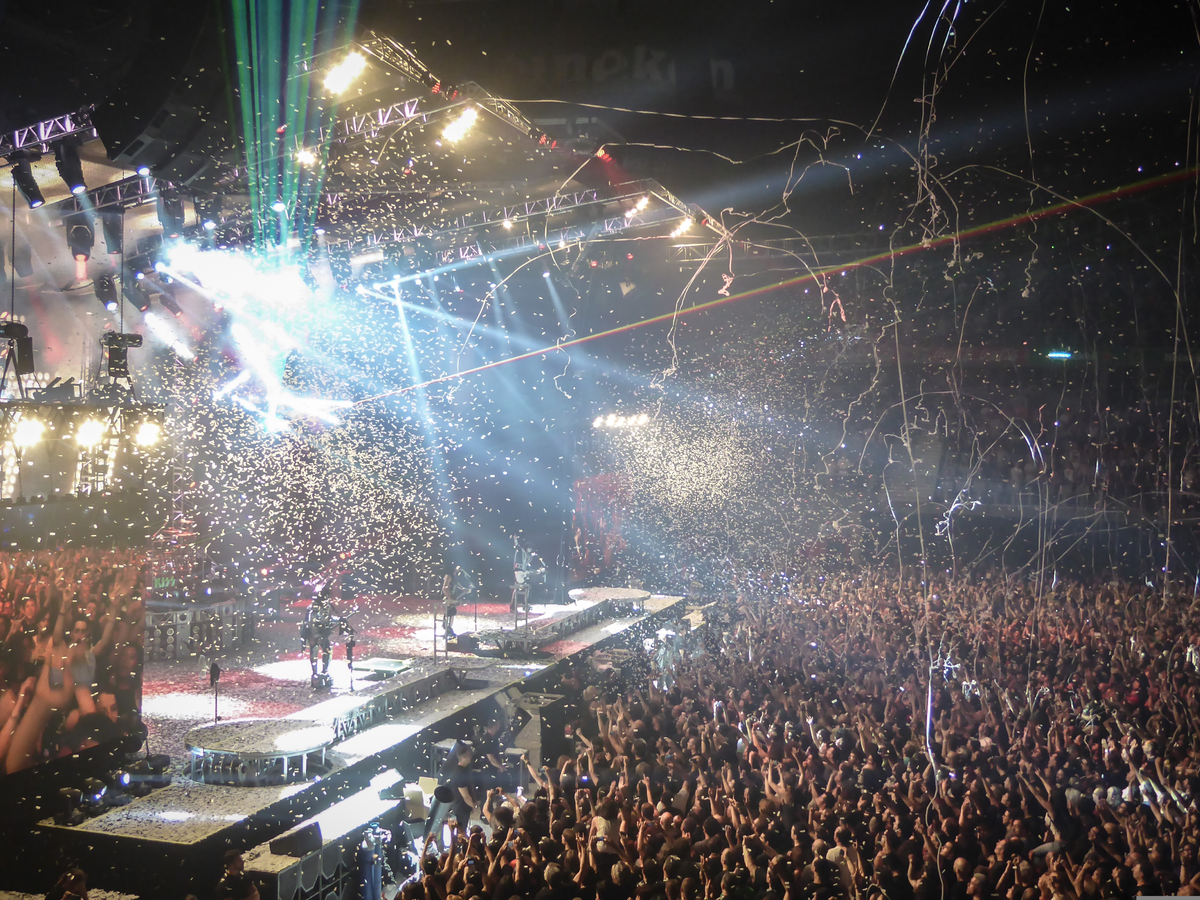
If you’ve scrolled TikTok, X, or music Reddit lately, you’ve probably felt it: New Order are suddenly everywhere again. Clips of Blue Monday dropping at festivals, people crying to Regret in the nosebleeds, zoomers discovering Bizarre Love Triangle like it just came out last week. And now, with fresh live dates and constant tour chatter, it feels like New Order have quietly become one of the must-see bands of 2026 for both longtime fans and kids who were born after Technique.
Check New Order's latest official live dates & tickets here
You can feel that weird, electric mix of nostalgia and FOMO building: are they about to announce more US dates? Another festival headline slot? A surprise anniversary show? If you're trying to decide whether to spend your money on New Order this year, or just want to know why your For You Page is suddenly full of 80s synth anthems, this deep read is for you.
The Backstory: Breaking News in Detail
New Order have settled into an unusual late-career lane: they aren't flooding the world with new albums every year, but their live presence has become stronger, sharper, and more in-demand than at any point since the early 2000s. In the last few years, we've seen them upgrade from nostalgia-curated side slots to full-on headline billing at major festivals, often sharing poster real estate with acts half their age.
Recent months have been all about one question: where are New Order playing next, and is this the last big touring cycle? The band have leaned into a strategy of selective, high-impact dates rather than a never-ending grind of small venues. That means a mix of festivals, key arena or theatre dates in the US and UK, and some carefully chosen European stops. Every time a new show appears, fans immediately jump to, “Is this part of a bigger tour?”
In interviews with British and US music outlets over the past year, Bernard Sumner has hinted at two big things: first, that the band know how much these songs mean to multiple generations; and second, that they have to be realistic about energy, age, and what they can physically commit to. Translation: they want these shows to count. Don't expect a 60-date world tour with three nights in every city. Expect smart, well-planned, emotionally heavy nights that feel more like events than just another gig.
There's also a big undercurrent of legacy-management going on. With Joy Division's shadow always present and New Order's own back catalogue now stretching over four decades, every performance doubles as a living documentary on how post-punk mutated into synth-pop, rave, and indie-dance. Music journalists have pointed out that contemporary dance and electronic acts owe so much to New Order that seeing them in 2026 is almost like seeing the source code running live on stage.
Then there's the data. Ticket announcements lately have triggered rapid sell-outs in major cities, with second dates added in a few hotspots when scheduling allows. The pattern is clear: when New Order play somewhere, demand spikes fast, especially in cities with strong club history—New York, Chicago, Manchester, London, Berlin, LA. Interspersed are festival plays where they essentially take over the electronic-leaning part of the lineup, pulling in everyone from aging ravers to Dua Lipa fans who discovered Blue Monday in a playlist.
For fans, the implications are pretty direct:
- If they hit your city or a nearby festival, you probably won't get ten more chances this year. You either go, or you tell yourself for the next decade that you “should’ve gone when you had the chance.”
- The shows themselves are being treated like celebrations of an entire era of alternative music, not just a band running through old radio singles.
- Every new batch of dates restarts the rumor cycle—new music, special guests, deeper cuts—and that keeps interest high across social platforms.
Put bluntly: New Order's live schedule in 2026 isn't just a tour plan. It's a carefully controlled drip-feed that keeps their name in the cultural conversation while letting the shows feel genuinely special.
The Setlist & Show: What to Expect
If you haven't checked a New Order setlist in a while, here's what the recent shows make very clear: they are no longer shy about being a full-career, full-emotion band. A typical night now plays like a guided tour through both Joy Division and New Order, stitched together with the kind of modern production you'd expect from a serious electronic act.
Recent gigs have consistently circled around a core group of songs:
- Blue Monday – usually placed late in the set, sometimes as the final knockout or just before the encore. The kick drum and that instantly recognizable synth line land like a rave siren. It's the moment phones go up, even for people who claimed they were “just there for the vibes.”
- Bizarre Love Triangle – probably the emotional center of their modern shows. The chorus hits differently when you're in a room full of people screaming it back, many of whom first heard it through a soundtrack, a YouTube algorithm, or their parents’ record collection.
- True Faith – one of their most perfect songs in terms of structure and melody, it tends to produce that spine-tingle moment you only get when thousands of people sing a hook that's survived decades of changing trends.
- Regret – an early-90s standout that has quietly become a fan-obsession moment. It pulls everyone who grew up in that era right back to their first heartbreak, while younger fans attach it to TikTok edits and late-night drives.
- Age of Consent – now often an early-set highlight, setting a sharp, slightly jittery mood.
- Temptation – a long-time live staple; the “Oh, you’ve got green eyes” section is a chorus-of-strangers bonding exercise.
Then come the Joy Division songs. In modern New Order sets, it's become standard for the band to close with at least one or two Joy Division tracks—often Love Will Tear Us Apart and sometimes Atmosphere or Transmission. These are not casual additions. When those opening notes ring out, the entire atmosphere in the venue turns. People get visibly emotional; older fans think about where they were when they first heard Ian Curtis's voice; younger fans experience a sacred moment they've only known through headphones.
Visually, New Order in 2026 aren't trying to compete with pop stars who bring twelve dancers and pyrotechnics to every chorus. Their production leans on three things: lights, screens, and texture. Expect:
- Clean but intense LED wall visuals—abstract shapes, archival-feeling video clips, moody colour palettes that reference classic Factory Records art without being on-the-nose retro.
- Strobing moments during songs like Blue Monday and Temptation that turn the venue into a club for a few terrifyingly good seconds.
- Minimalist staging that keeps your eyes on the band, on the instruments, and on the crowd around you losing it.
One thing fans keep repeating in reviews: the band sound huge. The rhythm section hits with a weight that live clips don't fully capture. Guitars cut through the mix more than some people expect, considering New Order's image as “the synth band,” and the sequenced parts are woven in with care instead of just playing from a laptop in the corner.
Lately, there's also been a willingness to rotate in deeper cuts—songs like Your Silent Face, Sub-culture, or Vanishing Point have popped up often enough to keep hardcore fans obsessively checking setlist sites after each show. That unpredictability is part of why people are buying tickets to multiple nights in the same city when they can: you know you'll get the anthems, but you might also get that one track you thought they'd retired forever.
Put simply: if you go to a New Order show in 2026, you're signing up for a night that moves from icy post-punk to sweaty club euphoria, with several gut-punch emotional peaks baked in. It doesn't feel like watching a museum piece. It feels like standing in the middle of a timeline that still hasn't fully closed.
What the web is saying:
Rumor Mill: What Fans Are Speculating
Spend ten minutes on r/music, r/indieheads, or r/popheads and you'll see the same topics looping around New Order right now: tour expansion, new material, and ticket drama.
1. “Are they about to announce a bigger US/UK run?”
Any time a festival or a one-off city date appears, the comment sections fill up with screenshots and theories. Fans track the gaps between shows, the travel distances, and even venue holds to guess where New Order might add more nights. People in cities like Toronto, Seattle, Atlanta, Dublin, and smaller UK locations are especially vocal, pointing out that they either got skipped last time or only got a festival appearance with a shorter set.
Some Reddit posts have plotted out fantasy routes based on flight times and production logistics, arguing that if the band are already in North America or mainland Europe, it would be “a crime” not to add at least a couple of extra theatre shows. Others are more realistic, pointing out that New Order tend to stick to a mix of major hubs and curated festival offers rather than chase every possible market.
2. “Is new music coming, or are we in legacy-mode forever?”
This one divides the fandom. On one side: users who swear that the band wouldn't tour this actively without at least considering some form of new release—whether that's a full album, a standalone single, or special edition reworks. They point to comments made in past interviews about unfinished material, studio experiments, and the band's ongoing interest in modern electronic sounds.
On the other side: realists and older fans who argue that the priority now is clearly live shows and celebrating the catalogue. They're quick to remind everyone that it takes huge effort to make an album that stands next to Power, Corruption & Lies, Low-Life, or Technique, and that forcing out “one more” just to tick a box could do more harm than good.
Still, the rumor that won't die is a special anniversary release tied to one of their landmark albums, potentially accompanied by a handful of new tracks or remixes with younger producers. Fans keep throwing out wish lists: a Peggy Gou remix of Blue Monday, a collab with a modern indie-electronic act, or a club-ready reboot of a deeper cut like Sub-culture.
3. Ticket prices, fees, and “who are these shows really for?”
No modern tour conversation escapes the ticket discourse. Some fans vent about dynamic pricing, service fees, and VIP upsells, arguing that a band born from DIY post-punk scenes should be more aggressive about capping costs. Others push back, pointing out that the production level, crew wages, and travel costs in 2026 are brutal—and that New Order are actually more reasonable than many major heritage acts charging eye-watering sums for stadium shows.
On TikTok and Instagram Reels, you'll see side-by-side comparisons: one fan flexes a cheap upper-bowl ticket that still delivered a “life-changing” experience, while another shows off the view from a VIP seat, arguing it was worth the splurge to see details on stage and soak up the full visual production.
4. “Will they ever do a full Joy Division-only set?”
This rumor pops up every time a setlist leans slightly more into Joy Division material. Fan threads spin up immediately: a one-off Joy Division tribute night in Manchester, a small-venue run revisiting early material, or a streamed performance of Unknown Pleasures front-to-back. Right now, there's zero solid evidence that the band want to go that far. Most seasoned fans think they've found the right balance: a mostly New Order set with a couple of Joy Division songs as a powerful closing chapter.
Still, purely as fantasy fodder, the idea refuses to die, especially among younger fans discovering Ian Curtis through documentaries and TikTok edits. For now, though, you should go into a 2026 show expecting those Joy Division moments to stay special, selective, and tightly controlled.
Key Dates & Facts at a Glance
Here's a quick-reference snapshot to help you plan, research, or just win arguments in the group chat.
| Type | Detail | Location / Platform | Notes |
|---|---|---|---|
| Official live info | Current and upcoming New Order concert listings | neworder.com/live | First stop for confirmed dates, venues, and ticket links |
| Classic album | Power, Corruption & Lies original UK release | Album | Widely cited as a post-punk to synth-pop pivot point |
| Classic single | Blue Monday original release | 12" single | Has become a centerpiece of modern New Order shows |
| Setlist staples | Blue Monday, Bizarre Love Triangle, True Faith, Temptation, Regret | Live set | Expect most of these in a standard 2026 set |
| Joy Division moments | Love Will Tear Us Apart + rotating picks | Encore / closing segment | Often closes the night; high emotional peak |
| Fan hotspots | Manchester, London, New York, LA, Berlin | Tour routing | Cities that tend to get priority when dates are announced |
| Demographic mix | Gen X, millennials, Gen Z | Live audience | Shows now feel like three generations sharing one catalogue |
FAQ: Everything You Need to Know About New Order
Who exactly are New Order, and why do people care so much in 2026?
New Order formed in the early 1980s out of the ashes of Joy Division, after the death of singer Ian Curtis. Instead of trying to remake Joy Division with a new frontperson, the remaining members—Bernard Sumner, Peter Hook, Stephen Morris, and Gillian Gilbert—shifted into something stranger and more influential: a hybrid of post-punk guitars, synths, drum machines, and club culture.
They didn't just ride trends; they helped invent the DNA of modern indie, dance, and electronic-pop. Songs like Blue Monday, Bizarre Love Triangle, True Faith, and Temptation sit behind everything from festival EDM drops to the sound of The 1975, LCD Soundsystem, and half the indie-sleaze revival. That's why in 2026, you see such a weirdly broad crowd at their shows: club kids, older ravers, black-clad post-punks, and teens who heard Age of Consent on a viral TikTok edit.
What kind of show do you get if you see New Order now?
You get a fully plugged-in, high-production performance that doesn't feel like a museum act going through the motions. Recent tours have proven that they still care deeply about sound quality, visual design, and song selection. A typical 2026 show will run around 90–110 minutes, with a tight balance of hits, cult favourites, and at least one or two Joy Division songs to close.
It's not a singalong rock show in the classic sense, but there are anthemic moments where the entire venue shouts the words back—especially during True Faith, Bizarre Love Triangle, and Love Will Tear Us Apart. Between those peaks, there are long stretches of pure groove where the band lean into their dance side and the room feels more like being inside a legendary nightclub than at a traditional rock gig.
Where do you find the most reliable info on New Order's live plans?
Start with the official source: the band's live page at neworder.com/live. That's where confirmed dates, cities, and official ticket links show up first or get verified after being teased elsewhere. From there, fans usually cross-check with major ticketing platforms and venue websites.
For rumours, setlists, and fan reports, sites like Setlist.fm, r/NewOrder on Reddit, and TikTok search results for “New Order live” are goldmines. But always treat anything that isn't mirrored on the official site or a venue page as speculation, not confirmation.
When is the best time to buy tickets—right away, or can you wait?
With a band like New Order in 2026, “it depends” isn't a cop-out; it's reality. For small or mid-sized venues in major cities—especially in the UK, US coasts, and big European hubs—waiting is a gamble. Those dates tend to sell out or push prices higher quickly, driven by both core fans and casuals who just want to hear Blue Monday live once in their life.
If the show is part of a big festival, you have more flexibility, but then you're dealing with the entire festival economy (lineups, day splits, travel). For standalone arena or amphitheatre dates in markets that don't always sell out instantly, you sometimes see decent last-minute deals or fan-to-fan resales as plans change. The safest play, if you really care about going, is to buy as early as your budget allows and treat any later price dips as the cost of certainty.
Why do people keep bringing up Joy Division at New Order shows?
Because the story of New Order and Joy Division is one of the most emotionally charged narratives in modern music. Joy Division burned bright and brief, leaving behind just two studio albums and a handful of now-iconic songs before Ian Curtis died in 1980. New Order emerged from that loss, carrying forward some of the same people, instruments, and emotional weight—but channeled into music that invited people to dance instead of just brood.
When New Order play Joy Division songs now, it's not nostalgia in the shallow sense. It's a living connection to that history, filtered through decades of growth and survival. Older fans remember losing Ian in real time; younger fans discover him through stories, films, and playlists. In a single show, those generations meet in the same room. That's why the closing stretch of a New Order concert can feel heavier and more cathartic than many bands half their age.
What should you listen to before you go to a New Order concert?
If you want a fast-track crash course, do this:
- Play a greatest-hits or essentials playlist to lock in the big ones: Blue Monday, Bizarre Love Triangle, True Faith, Temptation, Age of Consent, Regret, The Perfect Kiss, Love Will Tear Us Apart.
- Then pick at least one full album—Power, Corruption & Lies, Low-Life, or Technique—and listen straight through. That gives you a feel for their deep cuts and how the songs flow in album context.
- Finally, jump to a recent live clip on YouTube to see how the band reinterpret the old material on modern gear. You'll notice slightly different arrangements, extended intros, and a stronger low-end thump compared to the studio versions.
Going in with that foundation makes the show hit harder. You'll recognise the hooks, sure—but you'll also notice the subtle choices in how they play them now.
Why is New Order such a big deal for younger fans who weren't alive in the 80s or 90s?
Because their sound quietly shaped so much of what came after that even if you've never put on a New Order record intentionally, you've probably felt their influence. The mix of emotional, sometimes gloomy lyrics with bright synth lines and driving beats is all over modern alternative pop. The idea that a band can be both vulnerable and danceable, both guitar-based and electronic, owes a lot to what New Order carved out.
There's also a huge online factor. Algorithm-driven platforms constantly surface tracks like Age of Consent or Elegia in mood playlists, film and TV supervisors drop New Order songs into coming-of-age scenes, and edits on TikTok reframe their music for new storylines. By the time those younger listeners see "New Order – Live" pop up in their city, they don't feel like they're going to see some random legacy act; they feel like they're finally seeing the band behind all those feelings their playlists have been stirring up.
So when you step into a New Order concert in 2026, you're not just attending a retro night. You're entering a real-time conversation between past and present—one kick drum at a time.
So schätzen die Börsenprofis Aktien ein!

Für. Immer. Kostenlos.