Motörhead Buzz 2026: Why the Legends Won’t Stay Silent
27.02.2026 - 03:50:00 | ad-hoc-news.de
If you’ve felt Motörhead popping up everywhere again in your feed lately, you’re not imagining it. Between anniversary chatter, vinyl reissues and fans rallying to keep Lemmy’s legacy loud, "Motörhead" is trending like a brand-new band, not a group whose frontman died in 2015. The energy online right now feels less like nostalgia and more like a fresh ignition of everything loud, fast and filthy about rock & roll.
Visit the official Motörhead site for the latest drops and legacy news
For Gen Z and younger millennials, Motörhead is no longer just a logo on vintage tees in H&M. It’s the soundtrack to TikTok edits, gym playlists, Twitch streams, and a whole lot of "I discovered them through a video game" origin stories. And now, with every new remaster, box set and tribute show, the conversation keeps getting louder: how do you keep a band alive when its heart, Lemmy Kilmister, left the planet years ago?
Let’s break down what’s actually happening with Motörhead in 2026, what fans are hyping, and why the band still hits harder than most current rock acts.
The Backstory: Breaking News in Detail
First, a reality check: Motörhead as an active touring band ended the day Lemmy died in December 2015. Surviving members Phil Campbell and Mikkey Dee have said repeatedly in past interviews that Motörhead without Lemmy is not Motörhead. So if you’ve seen random posts claiming a "Motörhead reunion tour," take that with a huge grain of salt.
What is very real in 2026 is the ramping up of legacy activity around the band. Labels and the Motörhead estate have leaned heavily into anniversary cycles over the last few years—40th anniversary editions of classic albums, expanded reissues, live archives, and merch capsules that feel closer to streetwear drops than old-school band shirts. Fans online are now expecting some kind of major focus around upcoming milestone years for cornerstone records like Iron Fist and Orgasmatron, and speculation around fresh box sets or never-before-heard live recordings surfaces every time a date rolls around.
In interviews over the past few years, both Campbell and Dee have been open about two parallel goals: protecting Motörhead’s legacy and still playing the songs they lived on for decades. That’s why you see Motörhead’s music living two lives: the archival, curated, official one—handled via reissues, documentaries, and the band’s official channels—and the live, human one, where Lemmy’s former bandmates rip into "Ace of Spades" and "Overkill" with their own current projects and special tribute nights.
There’s also a long-tail effect of Motörhead’s aggressive sync strategy. The band’s songs have shown up in everything from sports broadcasts to video games and car commercials. Every time a new sync hits, Shazam spikes, streaming jumps, and a new wave of listeners digs back into the catalog. That’s why you see teenagers on Reddit in 2026 discovering Bomber for the first time and asking if anyone has seen them live, only to be gently informed that they missed the original run.
Another angle: Lemmy has become a kind of rock & roll folk hero. Clips from old interviews keep going viral—him calling out fake behavior, talking about freedom, or casually chain-smoking while delivering brutal one-liners about the music business. These short-form clips introduce him not just as a singer, but as a philosophy. For a generation burned out on polished PR-speak, Lemmy’s blunt honesty feels refreshing, even radical.
So when fans talk about "Motörhead news" in 2026, they’re really talking about three things at once: legacy projects tied to anniversaries and archives, tributes and festival sets where the songs still roar, and the ongoing cultural aftershock of Lemmy himself turning into a mythic figure across social media. None of this replaces the band that once detonated clubs on a nightly basis—but it explains why the name refuses to fade from music headlines.
The Setlist & Show: What to Expect
Because Motörhead is no longer an active touring unit, the closest you’re going to get to an actual Motörhead show in 2026 comes from two sources: classic live recordings and Lemmy’s former bandmates tearing through the catalog in other settings.
Start with the historic setlists. For years before Lemmy’s death, Motörhead shows had a core spine of songs that almost never moved. If you hit a gig in the 2010s, odds are good you heard a run built around:
- "We Are Motörhead"
- "Damage Case"
- "Stay Clean"
- "Metropolis"
- "Over the Top"
- "The Chase Is Better Than the Catch"
- "Overkill"
- "Ace of Spades"
- "Bomber"
- "Killed by Death"
Those songs functioned almost like a mission statement: fast, simple, brutal, and weirdly catchy. If you scroll through fan-uploaded setlists and live recordings, you see how tightly the band locked those in—Lemmy liked giving people what they came for. Adds and swaps would happen around the edges: "Orgasmatron" on a good night, "Iron Fist" punching through the mid-section, or deeper cuts like "I Got Mine" or "Rock It" appearing for diehards.
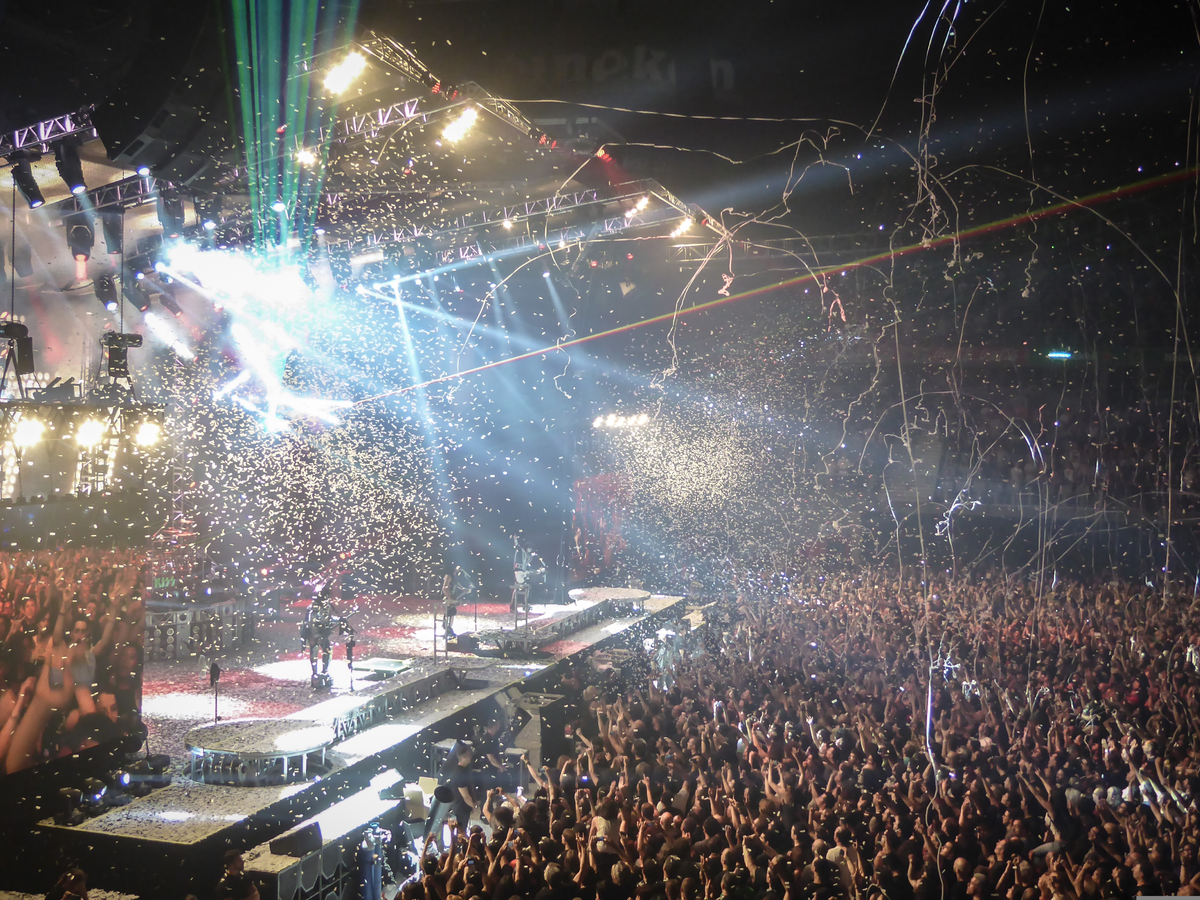
In live footage from the last decade of the band, the atmosphere is a mix of punk show and metal ritual. There’s not much staging—just blinding lights, a wall of amps, and that classic Motörhead bomber lighting rig when the budget allowed it. Lemmy barely moves, posted at the mic stand, bass slung low, mic tilted up at that iconic angle. Phil Campbell’s guitar carves through the mix with solos that feel like they’re about to fall apart but never do. Mikkey Dee anchors everything with thrash-level precision. It’s not theatrical in the modern sense. There are no costume changes, no confetti cannons, no synced visuals. The light show is basically: bright, brighter, blinding.
If you catch Phil Campbell & The Bastard Sons or Mikkey Dee sitting in with other bands—Scorpions being the big one in recent years—you’ll sometimes get Motörhead tracks closing out festival sets. The song choices in those moments tend to mirror late-era Motörhead encores: "Ace of Spades" is almost guaranteed, "Overkill" often shows up as an extended closer, and occasionally "Born to Raise Hell" or "Killed by Death" sneaks in as a deep fan treat.
The energy at those tribute slots is different from a typical nostalgia set. You’ll see teenagers in fresh merch next to older fans in faded tour shirts from the 80s and 90s. Crowd chants of "Lem-my! Lem-my!" still break out, even when he’s not physically there. Singalongs on the "You win some, lose some" line in "Ace of Spades" hit like a stadium anthem, even at mid-sized festivals. The vibe is simultaneously celebratory and a little emotional—people aren’t just moshing, they’re saying thank you.
And if you can’t get to a show where those guys are playing, the best way to feel the setlist in 2026 is to build your own. Stream the live albums—No Sleep ’til Hammersmith, Everything Louder than Everyone Else, Better Motörhead than Dead—and notice how consistent the song rotation is. Those records are basically prototypes for the modern heavy show: no filler, no ballads, minimal banter, maximum impact.
What the web is saying:
Rumor Mill: What Fans Are Speculating
Hit Reddit or TikTok and type in "Motörhead" and you’ll tumble into a maze of theories, wishlists, and hot takes about what should happen next with the band’s legacy.
One of the biggest ongoing topics: will there ever be a full-blown hologram or avatar show like we’ve seen with ABBA? The idea splits the fanbase hard. Some younger fans argue that if it’s done with respect and heavy involvement from the estate and surviving members, an immersive digital Motörhead show could introduce Lemmy to people who never had the chance to see him. Older fans tend to shut that down fast, pointing out how much Lemmy hated anything that felt fake or overly polished. The common middle ground: most agree that if any tech-heavy tribute ever happens, it would have to feel rough and live, not glossy and sanitized.
Another thread that keeps resurfacing is about unreleased music. There’s constant speculation that there are fully recorded Motörhead songs sitting in the vaults, especially from the late 2000s and early 2010s sessions. Some users claim to know people who "heard demos" that never came out; others think what’s left is mostly alternate takes and half-finished ideas. Without official confirmation, it sits in rumor territory, but you can feel the hunger: fans want one more surprise, even if it’s just a couple of rough bonus tracks bundled with an anniversary reissue.
Ticket prices also show up in fan discussions, but in a sideways way. Because there’s no official Motörhead tour, the conversation is about tribute nights, Lemmy-focused events, or festivals where Phil Campbell or Mikkey Dee are on the bill. Fans swap stories of small-club tribute shows that feel more real and intense than some huge-name arena tours. A recurring sentiment: people are happier paying reasonable money to see a sweaty local band nail "Overkill" in a 300-cap room than dropping triple digits on a giant arena show where everything feels distant.
TikTok has its own micro-mythology forming. There are edits of anime fights, skate clips, car builds and gym PRs synced to "Ace of Spades," "Built for Speed," or "Eat the Rich." There’s a mini-trend of people discovering Motörhead through a meme or edit, then posting "POV: you just realized this band from your dad’s shirts is actually insane." Some creators rank Motörhead albums, compare Lemmy to modern alt heroes, or break down how much the band influenced everything from thrash metal to punk to rock-infused EDM drops.
Then you’ve got the emotional side of the rumor mill: constant posts about a possible major biopic or limited series focused on Lemmy. There has been on-and-off talk about a Lemmy film for years, and every time a new music biopic hits theaters, fans ask: "Okay, but where is the Lemmy story?" That speculation folds into casting debates (everyone from A-list character actors to total unknowns get suggested) and heated threads about whether anyone should even try to recreate him on screen. For many, the documentary footage we already have feels more than enough; others believe a high-profile film could clue in a whole new wave of listeners.
Underneath all the takes, one mood dominates: fans don’t want Motörhead turned into a safe, sanitized heritage brand. They want the legacy to stay loud, weird, and a little dangerous—exactly the way Lemmy ran the band for 40 years.
Key Dates & Facts at a Glance
- Band formation: Motörhead formed in 1975 in London, fronted by bassist/vocalist Ian "Lemmy" Kilmister.
- Classic lineup: Lemmy (bass, vocals), "Fast" Eddie Clarke (guitar), and Phil "Philthy Animal" Taylor (drums) during the late 70s and early 80s.
- Signature albums: Overkill (1979), Bomber (1979), Ace of Spades (1980), Iron Fist (1982), Orgasmatron (1986), 1916 (1991), Bastards (1993), Inferno (2004), Bad Magic (2015).
- Breakthrough single: "Ace of Spades" (1980), which became the band’s defining song and a rock anthem across generations.
- Live landmark: No Sleep ’til Hammersmith (1981), often cited as one of the greatest live metal albums of all time.
- Lemmy’s passing: Lemmy died on December 28, 2015, just days after his 70th birthday and shortly after the release of Bad Magic.
- Touring after Lemmy: Motörhead officially stopped as an active touring band after Lemmy’s death; surviving members continue to play in other projects.
- Logo & mascot: The iconic "snaggletooth" (also known as Warpig), created by artist Joe Petagno, remains one of rock’s most recognizable logos.
- Genre impact: Frequently cited as a bridge between punk and metal, influencing thrash, speed metal, hardcore punk, and modern heavy rock.
- Official hub: Motörhead’s releases, merch and official updates are centralized through their official website and label channels.
FAQ: Everything You Need to Know About Motörhead
Who exactly are Motörhead, and why do they matter so much in 2026?
Motörhead is a British band formed in 1975 by Lemmy Kilmister after he was kicked out of the space-rock band Hawkwind. From day one, the mission was simple: play faster, louder, and meaner than everyone else. Musically, they pulled from rock & roll, blues, punk, and early metal, but refused to sit neatly in any genre box. Lemmy always insisted they were a rock & roll band, even while metal magazines claimed them as their own.
They matter in 2026 for a couple of reasons. First, the sound they developed—high-speed riffs, relentless drumming, barked vocals, and catchy hooks—basically wrote the rulebook for thrash and speed metal. Bands like Metallica, Slayer, and Anthrax all cite Motörhead as a key influence. Second, Lemmy’s persona has aged into something beyond music. His no-bullshit attitude, sense of humor, and refusal to play by industry rules resonate strongly with younger fans tired of overly curated pop culture. Motörhead’s influence isn’t just sonic; it’s about an attitude that still feels rebellious now.
What are the essential Motörhead songs if I’m just getting into them?
If you want a quick starter pack, you can’t skip the core classics: "Ace of Spades," "Overkill," "Bomber," "Iron Fist," "Killed by Death," and "Orgasmatron." Those songs give you the main flavors: speed, groove, menace, and anthemic choruses. From there, dig into "Stay Clean" and "Metropolis" for the sleazier side of the band, "The Chase Is Better Than the Catch" for hooky mid-tempo swagger, and "Rock ’n’ Roll" or "Born to Raise Hell" for pure attitude.
For deeper cuts, fans often recommend "Love Me Like a Reptile," "(We Are) The Road Crew," "I Got Mine," "In the Name of Tragedy," and "Life’s a Bitch." If you’re a live-show addict, spinning a full concert album like No Sleep ’til Hammersmith is the fastest way to understand why people still talk about them as one of the loudest and tightest bands to ever hit a stage.
Is Motörhead still touring or playing shows now?
No. Motörhead as a band stopped when Lemmy died in late 2015. Both Phil Campbell and Mikkey Dee have been very clear that without Lemmy, there is no Motörhead. You won’t see an official tour under that name with a stand-in singer or a half-original lineup. That said, you can still see the songs live in various forms. Phil Campbell has played lots of Motörhead material with his band Phil Campbell & The Bastard Sons. Mikkey Dee brings songs like "Overkill" or "Ace of Spades" into special moments with other bands he plays with, especially at festivals or tribute events.
The energy at those shows can be intense and emotional, but they’re presented as tributes, not replacements. If you’re buying tickets and see anything billed as a "Motörhead tour" with no official confirmation, treat it as a tribute act and do your homework before spending serious money.
Why do people call Motörhead a bridge between punk and metal?
Motörhead came up at a time when punk and metal scenes didn’t fully trust each other. Punk kids saw metal as bloated and cheesy; metal fans thought punk was sloppy. Motörhead lived in the middle. Their songs were fast and rough enough to appeal to punks, but heavy and technical enough to satisfy metalheads. Lemmy’s songwriting was rooted in classic rock & roll, which gave the tracks a core groove that both sides could grab onto.
Stylistically, you can hear punk in the tempo and rawness, and metal in the riffing and solos. Bands that defined later heavy styles—especially thrash—lifted that template. Metallica covering "Overkill" or "Damage Case" isn’t just fandom; it’s them nodding to the DNA of their own sound. So when people call Motörhead a bridge, they’re acknowledging that without them, a lot of the heavy music that blew up in the 80s and 90s just wouldn’t sound the same.
What’s the best way for new fans to explore their albums without getting overwhelmed?
Motörhead’s discography is big, and it can look intimidating if you just hit a streaming page and see a wall of titles. One simple path: start with a greatest-hits or curated playlist to get the obvious tracks. From there, pick three cornerstone studio albums to understand different phases. Many fans recommend this trio:
- Overkill (1979) – raw, fast and hungry, with the title track setting the tone.
- Ace of Spades (1980) – the most famous one; nearly every song slaps.
- 1916 (1991) – later-era Motörhead showing more variety, emotion, and songwriting range.
After that, jump to a live record like No Sleep ’til Hammersmith or Everything Louder than Everyone Else. Live albums are where you really feel how these songs breathe in front of a crowd. If you find yourself replaying them obsessively, then you can go deeper into the 80s and 2000s albums—there are gems scattered everywhere.
Why is Lemmy treated like a cult hero beyond his music?
Lemmy’s appeal goes way beyond bass riffs. He’s become a symbol of living on your own terms. He didn’t pretend to be healthy, didn’t chase trends, and didn’t try to polish his image. In interviews he was brutally honest about everything: his own flaws, the music industry, politics, relationships. For a lot of people, especially in an era of hyper-managed celebrity images, that blunt honesty feels almost shocking.
His style is also instantly iconic: mutton chops, cowboy boots, bullet belt, aviator shades, Rickenbacker bass, and a mic stand tilted up. It’s like a visual logo you can spot from a mile away. Add in massive amounts of touring—he basically lived on the road—and you have someone who seems larger than life but also extremely real to the people who met him. Online, short clips of Lemmy speaking or performing compress that legend into shareable moments, which is why he keeps finding new fans who weren’t even alive during Motörhead’s peak years.
How can fans in 2026 support Motörhead’s legacy in a real way?
Streaming helps, but if you want to support in a more concrete way, there are a few options. Buying official merch and physical releases feeds back into the estate and keeps the catalog in circulation. Hitting up shows where Phil Campbell or Mikkey Dee are playing Motörhead songs keeps the live tradition alive. Supporting local tribute acts that treat the material with respect also helps keep the music echoing in small venues, which is very much in the spirit of how the band actually lived.
On the cultural side, you can keep sharing the music with friends, dropping Motörhead tracks in playlists, edits, and mixes. The more those songs stay in circulation in gyms, cars, skateparks, and streams, the less they become museum pieces. For a band that always saw themselves as a living, breathing rock & roll machine, that ongoing noise might be the most fitting tribute of all.
So schätzen die Börsenprofis Aktien ein!

Für. Immer. Kostenlos.