
Mike Steiner: Pioneer of Contemporary Art and Video Innovations in Berlin
14.02.2026 - 07:10:08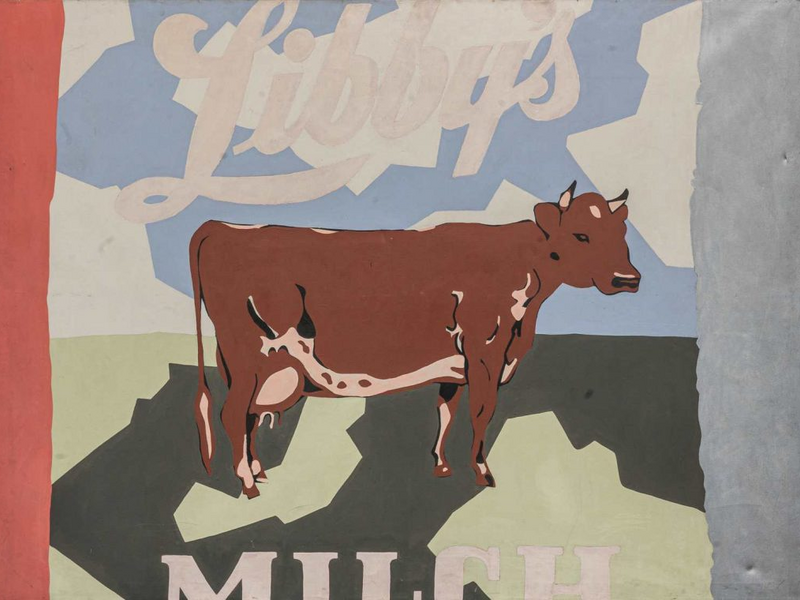
Few names carry such resonance in the realm of contemporary art as Mike Steiner. Through a distinctly boundary-pushing spirit, Steiner did not merely create art—he created a new language for it. How does one redraw the borders between painting, video, and live performance, and what remains when these boundaries dissolve into one another? Steiner’s life and work offer compelling answers, defined by relentless experimentation, transgressive collaborations, and an unceasing desire to challenge the status quo of the art world.
Discover Contemporary Artworks by Mike Steiner in this exclusive presentation
Mike Steiner’s creative journey began with the classic brush but soon exploded into diverse media, reflecting—and sometimes foreshadowing—the pulse of contemporary arts in Berlin. His early paintings, shown as a mere teenager at major Berlin exhibitions, already hinted at a restless intellect. Yet it was contact with avant-garde titans like Allan Kaprow and Al Hansen in 1960s New York that catalyzed his metamorphosis. Steiner’s time in Robert Motherwell’s orbit and New York’s pulsating art scene would anchor him permanently in the vanguard of innovation.
Upon returning to West Berlin, Steiner launched the legendary Hotel Steiner—a crucible of exchange for artists and thinkers reminiscent of the Chelsea Hotel. Here, Joseph Beuys, Valie Export, and other luminaries found not just a bed, but inspiration. It is no overstatement to say that for a time, contemporary art in Berlin beat to the rhythm of Mike Steiner’s gatherings, a network later formalized in the Studiogalerie, which evolved into a hub for video and performing arts. The Studiogalerie became synonymous with the new, hosting groundbreaking figures such as Marina Abramovi? and Ulay at crucial points in their careers.
Steiner’s adoption of video art in the early 1970s was not so much a shift as an expansion—a moving beyond the canvas to capture movement, gesture, and the ephemeral. His interest in the moving image blossomed in tandem with pivotal art movements: Fluxus, Happening, and Multimedia Art. In Florence’s Studio Art/Tapes/22 and then back in Berlin, Steiner’s first video works emerged in close dialogue with the new international avant-garde. He was not only a creator but an enabler, lending his sophisticated video equipment to local and international artists when such access was a rare privilege.
The body of work that followed is marked by radical interdisciplinarity: hard-edge painting alongside Super-8 films, installations, and what would later be called painted tapes—a poetic synthesis of video and painting. Fascinating here is Steiner’s Painted Tapes series: images that oscillate between abstraction and electronic pulse, echoing strategies similar to those seen in the works of Nam June Paik and Bill Viola, yet always bearing his own singular, Berlin-informed touch.
As a documentarian, Steiner immortalized performances that would otherwise live only in memory. His videos of Marina Abramovi?’s "Freeing the Body" or the notorious 1976 action with Ulay—"Irritation – Da ist eine kriminelle Berührung in der Kunst"—do not just record; they transform transient gestures into lasting conversations within contemporary art discourse. Steiner’s pioneering television project Die Videogalerie (1985–1990) brought more than 120 episodes of video art and artist interviews to public television, fostering a novel form of curatorial outreach unrivaled in Germany at the time. The format bears comparison to Gerry Schum’s TV gallery but remained uniquely rooted in Berlin’s energy and Steiner’s charisma.
All of this activity found public recognition in 1999, when the Hamburger Bahnhof—Nationalgalerie der Gegenwart in Berlin honored him with a major solo exhibition. The show—and the permanent inclusion of his substantial video archive in the museum’s collection—cemented his influence, positioning Mike Steiner alongside such game-changing artists as Joseph Beuys, Marina Abramovi?, and Nam June Paik in the pantheon of multimedia innovation.
Biographically, Mike Steiner navigated a complex postwar German identity: born in Allenstein, raised in West Berlin, yet profoundly international in outlook, with American, Italian, and Middle Eastern phases enriching his vocabulary. His ties to figures like Allan Kaprow and Lil Picard brought not only access, but conceptual provocation—a drive to experiment, to question, to reinvent. This is reflected in his support for feminist voices like Carolee Schneemann and Valie Export and his astute recognition of the burgeoning Performance and Fluxus movements.
Equally significant is Steiner’s role as a collector and preserver of ephemeral art. His archive at Hamburger Bahnhof, containing early works by such artists as Ulay, Jochen Gerz, and Gary Hill, is a vital resource—a living memory of a crucial era in European art. One senses in his life story a rare, almost missionary conviction: that art’s transience must not preclude its communication, preservation, and wider understanding.
The breadth of his exhibition history—from early painting shows in Berlin and New York, to 1990s video retrospectives, and finally to installations and abstract paintings in his later years—attests to an artist for whom renewal was a principle of practice. Even following a stroke in 2006, Steiner continued his creative work, turning in his later years with almost meditative focus to abstract paintings and fabric pieces. This late period was less about spectacle and more about essence: the distillation of decades of exploration into form, color, and surface.
Why does Mike Steiner’s art matter today? In a contemporary art world obsessed with boundaries—between media, genres, and histories—his persistent refusal of limitation provides a blueprint for creative courage. His legacy points to the necessity of cross-disciplinary curiosity, technological play, and the courage to archive the fleeting. For Berlin, especially, his story is a reminder of the city’s role as an incubator for radical visions, where contemporary arts are not just shown, but made, debated, and, crucially, remembered.
To dive deeper into Steiner’s oeuvre, nothing replaces the encounter with his works firsthand: both online and in exhibitions, the visitor senses the pulse of decades—a dialogue between color, sound, movement, and the ever-changing self. A visit to the official site of Mike Steiner unlocks further details, rare images, and the compelling narrative of a restless creator whose biography is inseparable from the story of contemporary arts in Berlin.
In the age of digital archives and instantaneous media, Mike Steiner’s emphasis on real, lived experience—in the gallery, on the screen, on the painted canvas—remains more vital than ever. His archive and living legacy beckon art lovers and scholars alike to revisit the very idea of what contemporary art can be.
@ ad-hoc-news.de
Hol dir den Wissensvorsprung der Profis. Seit 2005 liefert der Börsenbrief trading-notes verlässliche Trading-Empfehlungen – dreimal die Woche, direkt in dein Postfach. 100% kostenlos. 100% Expertenwissen. Trage einfach deine E-Mail Adresse ein und verpasse ab heute keine Top-Chance mehr.
Jetzt anmelden.


