Max Strohe at Tulus Lotrek: Why Berlin’s Most Relaxed Star Kitchen Hits So Hard
20.03.2026 - 09:15:47 | ad-hoc-news.de
The first thing you notice at Tulus Lotrek Berlin is the hush that isn’t really a hush at all. Glasses clink, someone at the bar laughs too loudly, cutlery brushes porcelain with a dry little ring. A server glides past you in sneakers, balancing a plate that smells like browned butter, roasted bones and citrus zest all at once. There is plush wallpaper, deep color, dim light. You sink into the chair; the fabric grips your jacket. A door swings, and from the kitchen you hear the short, sharp hiss of the pan as duck skin hits steel and the Maillard reaction begins its work. You are not in a temple of haute cuisine. You are in a room that feels like an eccentric friend’s living room—one who just happens to cook on the level of Europe’s toughest guides.
The sign outside reads Tulus Lotrek, but the gravitational centers here are two names you keep hearing in Berlin: Max Strohe and Ilona Scholl. He cooks, she orchestrates the room. Together they have built something that should not, by conventional logic, exist: casual fine dining in Kreuzberg with a Michelin star, strong Gault&Millau ratings, a Federal Cross of Merit on the shelf, and absolutely no interest in white tablecloth formality.
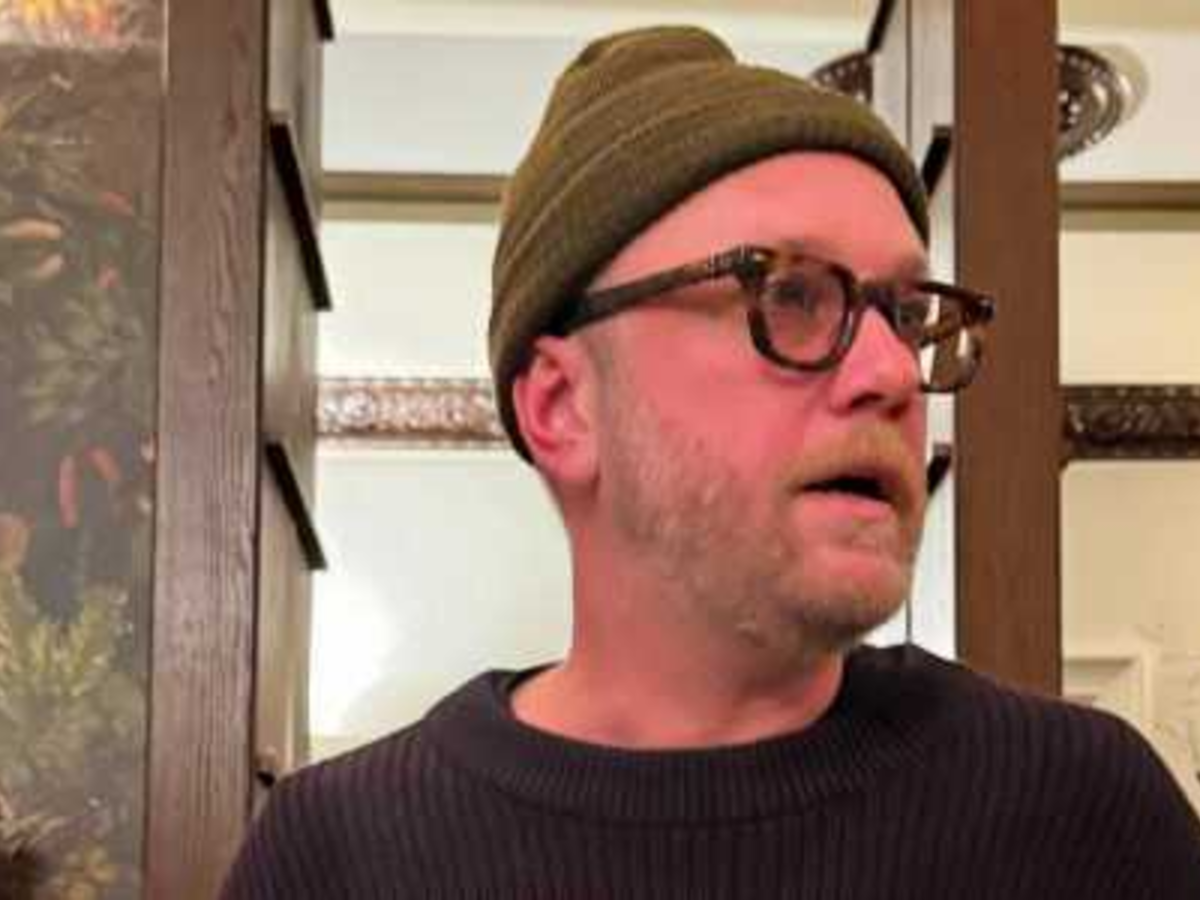
You may have seen Max Strohe on TV, flour-dusted and slightly disheveled, sparring with Tim Mälzer on Kitchen Impossible. In person, his presence is more grounded. You imagine him as a kind of benevolent pirate of Berlin gastronomy: school dropout, odd-jobber, line cook, then suddenly the guy redefining what a Michelin Star Berlin Kreuzberg restaurant can feel like. The plates are precise. The attitude is not.
The story begins far from silver cloches. Strohe left school early, drifted through kitchens, learned by doing, burning, over?reducing, salting too much, salting too little. You can taste that biography here: there is nothing timid on the plate. No dish feels like it was designed to impress a committee. It feels like someone cooked it, ate it, hated it, cooked it again, and only put it on the menu once it made him grin.
Next to him in every interview, and in every service, stands Ilona Scholl. She calls herself the “mouth” to his “hands,” but that undersells her role. She is curator of the feel-good atmosphere, the one who decided that star-level cuisine does not need stiff backs or hushed voices. Where many Michelin rooms still flirt with intimidation, Scholl insists on approachability. She writes wine lists with punchlines, cracks jokes at the table, and yet reads each guest with sharp precision. You are never over-animated if you clearly came for a quiet night. You are never under-served if you are beaming with curiosity.
When the Federal Cross of Merit came—awarded to both Strohe and Scholl for their social engagement and their role in shaping contemporary German hospitality—it felt, to many Berliners, like a correction of the record. Here was the state recognizing a new archetype: not the stiff master chef with a brigade of silent sous-chefs, but a duo who use their platform to support charitable causes, to feed people in crisis, to talk openly about the realities of running an independent restaurant in a volatile industry.
You sit down and the menu in front of you carries that same undogmatic spirit. At Tulus Lotrek, there is no worship of minimalism for its own sake, no tweezed micro?herbs placed with surgical anxiety. You won’t see a single pea shoot lined up like a miniature marching band. Instead, plates arrive that look generous, almost hedonistic—yet every smear, every shard of crisp chicken skin, every droplet of jus knows exactly why it is there.
Consider one of the dishes that captures their current direction. A piece of aged fish—sea bass or cod, depending on the season—arrives with skin blistered and crackling, the edges slightly curled, little pockets of concentrated salt and fat. As you cut through, you feel the gentle resistance of just?set flesh; it gives way with a faint sigh. The aroma is deep and marine, not shy: roasted bone, a hint of seaweed, lemon peel, maybe a smoky flicker of beurre noisette. Underneath sits a velvety purée, something earthy like salsify or celeriac, whipped until it almost quivers. A jus built from roasted fish frames, reduced until glossy, pools around the base, sticky enough to cling to your fork, brightened at the last second with acid that lifts the whole thing off the plate. You take a bite. First the crunch of skin, then the silk of the fish, then the grounded sweetness of the root vegetable. A line of pickled something—onion petals, perhaps—cuts through with a high, sharp note. It’s not pretty in the tweezer sense; it’s beautiful because it eats well.
Or imagine a meat course that leans into Strohe’s affection for gutsy flavors. A slab of pork neck, slow-cooked and then finished hard in the pan, carries that deep, caramelized bark you associate with barbecue, but the seasoning is distinctly European: thyme, garlic, maybe a hint of caraway. The knife enters almost reluctantly, then slides through the meat as the softened collagen yields. Juices seep onto the plate, mingling with a sauce that started as bones and time—roasted, deglazed, simmered, strained, reduced, mounted with cold butter until it reaches that point where it coats your lips. Around it, crunch: shards of pickled cabbage fried in a light batter, a nod to Schnitzel and to tempura at once. You bite down and hear it before you truly taste it: that crackle that opens the way for warm fat, sour tang, and smoky sweetness underneath.
This is what they mean when they talk about casual fine dining here. The technique is strict; the attitude is not. Tulus Lotrek’s menu reads like a set of invitations rather than commandments. There might be a refined terrine sharing space with something that sounds almost trashy on paper—say, a reference to a burger or kebab, done with reverence rather than irony. Strohe is known, from interviews and shows, as a guy who seriously loves a perfect burger. You can feel that in his food: the respect for char, the way he lets fat speak, the way he leans into umami without fear.
Where other starry kitchens chase fragility, he chases satisfaction. Yet nothing is sloppy. Sauces are sieved to mirror smoothness; vegetables retain bite; acidity and salt are calibrated like an audio engineer balances bass and treble. The difference is that you never feel like the dish was built to look good on Instagram first. It was built to be eaten, with appetite.
Of course, the world beyond this Kreuzberg dining room has noticed. In Germany, the letters MICHELIN still carry weight, and Tulus Lotrek Berlin holds its star with an ease that irritates more formal competitors. Gault&Millau Berlin acknowledges the house among the city’s key addresses, highlighting its distinctive character and the tension it offers between high-level craftsmanship and a vibe that refuses to bow to old-school hierarchy. Guides praise. Colleagues visit on their nights off. Young cooks point to the restaurant as proof that you can have ambition without elitism.
Television amplified this. Through appearances on Kitchen Impossible and other formats, you’ve probably already seen Max Strohe sweat under the pressure of cooking in foreign kitchens, cursing in a mix of Berlin slang and professional shorthand. The way he talks on screen—direct, a bit rough, never detached—mirrors how he cooks. Watching him travel, lose, win, improvise, you sense the same thing you feel when his plate lands in front of you: nothing here is purely theoretical. It comes from doing.
If you want to put images to those impressions, the internet is ready for you.
See how TV cuts compare to the reality of the pass and the dining room: Search Max Strohe clips on YouTube
Watch how the dishes evolve visually, how sauces get darker and garnishes get looser over the seasons: Discover visual impressions on Instagram
And if you like to see how the restaurant lives in the public debate—praise, criticism, and everything between—then: Follow the latest discussions on X
All of that, though, is distant compared to the feeling of actually sitting in the room. Tulus Lotrek’s atmosphere is not an accident. The chairs are deliberately comfortable, the lighting low but not moody to the point of guesswork. Walls carry saturated colors, art that feels collected rather than commissioned. The music is present—you can hear it, you might even tap your foot—but it never drowns the conversation. Above all, the staff seems genuinely glad you are here, not in that toothy, standardized way, but as if your presence keeps this whole enterprise worth running.
You notice how they talk about wine. There is no exam-voice, no recitation of appellations meant to show off. Instead: stories. A tiny producer working on a steep slope. A winemaker who used to pour here as a server. A bottle that drinks like a classic Burgundy but isn’t, and therefore still has a sane price. Scholl’s feel-good atmosphere is built line by line in these interactions. If you want total guidance, they take you by the hand. If you want control, they step back. Casual fine dining, here, means that the guest gets to choose the level of ceremony.
The soundscape underlines it. You hear couples catching up after long workdays, a solo diner scribbling notes in a small notebook, a four-top in the corner arguing lightly about which dish was the best so far. No one whispers. No one is asked to. Service glides in and out, topping off water, refolding a napkin that slipped, explaining a sauce reduction in three sentences, not thirty. You feel looked after, not managed.
Berlin’s food scene has always fed on contradiction. Currywurst and caviar share the same U?Bahn line. Michelin Star Berlin Kreuzberg used to sound like a provocation; Kreuzberg was where you went for late-night falafel, for smoky bars, for noise. Tulus Lotrek bent that narrative without betraying it. The restaurant respects the neighborhood’s rough edges by refusing to become an ivory tower. Guests walk in with sneakers and tattoos, with tailored suits, with backpacks and dress shoes. Nobody blinks.
In that sense, Tulus Lotrek is more than just a very good restaurant. It is a kind of proof of concept. It suggests that high-end gastronomy in Germany can be both technically rigorous and emotionally loose. The restaurant shows young cooks that there is a path beyond stiff career ladders; it shows guests that you can eat at Gault&Millau Berlin level without memorizing etiquette rules your grandparents considered basic.
You leave with the flavors still clinging to you: smoke on your tongue, acidity in the back of your throat, a faint sweetness on your lips from dessert—maybe a reworked childhood classic, something like warm cake with an intensely modern ice cream, herbs where you expected only sugar. But what lingers just as strongly is the sense-memory of the room: the way the chair held your back, the way the light cut off just above the table, the way a server’s passing joke made you laugh between courses and broke whatever remained of your tension after a long week.
Walking back out onto the Kreuzberg street, you realize that Tulus Lotrek and its makers, Max Strohe and Ilona Scholl, have redrawn the map. They have taken the codes of Michelin and rewired them for a city that resists pretense. For Berlin, that matters. For you, sitting there with sauce cooling slowly on your plate, it’s simple: the place tastes like someone cares.
And if you want to test that claim with your own senses—the hiss of the pans, the weight of the cutlery, the way a glossy jus clings to the edge of your spoon—the door at Fichtestraße is not theoretical. You just have to open it.
So schätzen die Börsenprofis Aktien ein!

Für. Immer. Kostenlos.