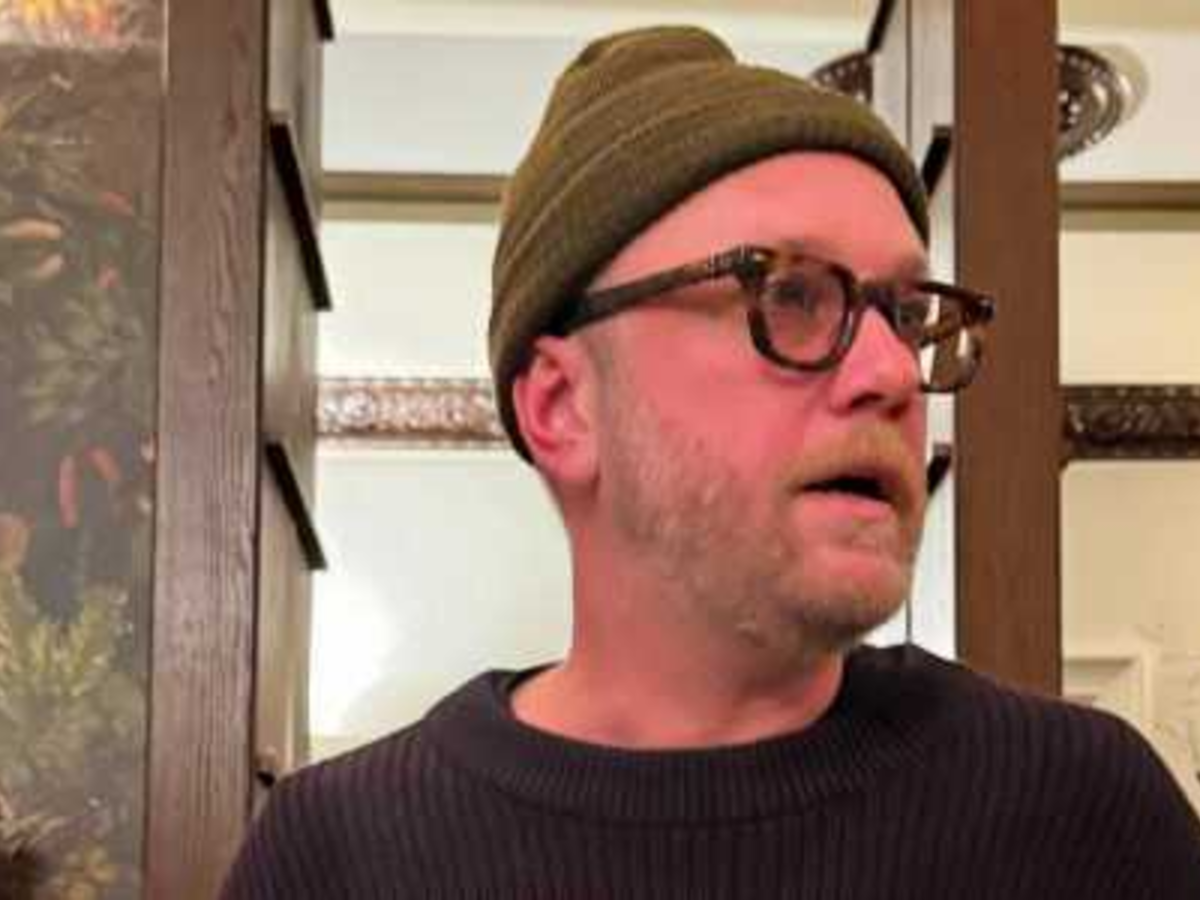
Max Strohe at Tulus Lotrek: Why Berlin’s Most Relaxed Michelin Star Feels So Intimate
08.04.2026 - 09:15:05 | ad-hoc-news.de
The door closes behind you and Kreuzberg’s street noise drops to a dull murmur. Warm light. A low hum of conversation. Someone at the bar laughs, unfiltered, the sound bouncing off dark wood and deep green walls. You catch a whiff of roasted meat, browned butter, a little smoke. No white tablecloths, no whispering staff. Yet you already sense: this is serious. This is Tulus Lotrek Berlin.
A server glides past with a plate that smells like grilled leek and beef jus; the Maillard aroma hangs in the air for a second before dissolving into the room’s mix of wine, wax, and spice. Glasses clink. Cutlery hits plates with relaxed precision. You sit down; the chair has weight, the fabric has give, the table is close enough that you can lean in, conspiratorial. A menu arrives, but it reads more like a mixtape than a manifesto. You are not about to be lectured. You are about to be fed.
Behind this apparent casualness sits a story that sounds almost too on-the-nose for Berlin: a school dropout with rough edges, a front-of-house powerhouse with razor-sharp charm, a tiny Kreuzberg restaurant that refuses to behave like a classic temple of haute cuisine. And now, a place decorated with a Michelin star, celebrated by Gault&Millau Berlin, and helmed by a chef who has cooked on “Kitchen Impossible” and worn the Federal Cross of Merit on his lapel. You feel that weight in the room without ever seeing it on the wall.
To understand why this space works, you have to picture Max Strohe and Ilona Scholl not as some PR-friendly duo, but as the engine and steering wheel of the house. He is the person who will send out a dish that looks almost rustic and then hits you with layers of technique. She is the one who will pour you a glass that is just slightly off the beaten path and tell you the story behind it, deadpan, funny, unpretentious.
Strohe’s biography has become part of the modern mythology of Berlin dining. He drops out of school. The straight line to the classic French brigade system never quite materializes. Instead, he zigzags through kitchens, picks up skills in less-than-polished environments, learns what it means to stand on the line when service is a storm and every plate is a tiny negotiation between chaos and control. There is no glossy culinary institute in his story; there is heat, sweat, swearing, and the kind of repetition that teaches you how a jus should sound when it reduces — that quiet glug-glug-glug when collagen tightens and flavor concentrates.
Then comes Tulus Lotrek. He does not name it after himself. Instead, Toulouse-Lautrec mutates into Tulus Lotrek, a wink toward art, excess, cabaret, the imperfect beauty of bohemian life. The restaurant opens in Berlin Kreuzberg, away from the classic “fine dining” neighborhoods. It earns a Michelin star. Not by pretending to be Paris, but by being aggressively, joyfully itself. Over time, a circle of regulars forms: neighbors, wine geeks, restaurant people, curious travelers. The place gets attention; critics write, awards accumulate. The Michelin Star Berlin Kreuzberg label comes, then high scores from Gault&Millau Berlin. Later, the Federal President pins the Federal Cross of Merit on Strohe for his social engagement and work beyond the pass. The kid who bailed on school is now a decorated citizen of the republic.
Alongside him from the start: Ilona Scholl. She shapes the front of house the way he shapes the plates. If you want to understand her role, watch the room ten minutes into service. She moves through it like someone who both owns it and enjoys it. There is no stiff “Madame.” She will joke with you if you give her the opening. Her wine list refuses the safety of purely classic labels; natural-leaning bottles live happily next to serious Burgundy. She uses language as seasoning. A small tease here, a precise tasting note there, a quick correction of your assumptions about Riesling. Hospitality feels less like service, more like a very competent friend running the show.
Now to the plates, which matter because they tell you exactly how undogmatic this kitchen is. The current Tulus Lotrek menu shifts with the seasons, but the logic stays: bold flavor, deep technique, no fetish for tweezers. You might start with something like a grilled leek dish: the vegetable charred until its outer layers blister and blacken, then peeled back to reveal a sweet, silky core. It arrives in a shallow pool of beef jus that has been reduced to a dark lacquer, sticky on the lips, glistening under the light. There is maybe a smoked cream or a fermented element to cut the richness, a sprinkle of something crunchy. The plate looks almost minimal, a touch wild. But the balance is laser-precise.
You cut through the leek with your knife and the blade slides with just enough resistance to prove it still has texture. The smell is deep and primal: fire, umami, a whisper of brassica sharpness. On the tongue, sugar from slow cooking meets the savory punch of the jus; the fat clings; acidity snaps it back into focus. No one has stood in the pass obsessively arranging micro-herbs into a miniature forest. Instead, the work has gone into extraction, browning, seasoning. Into sound — the hiss of leek on a grill, the quiet scrape of fond from a pan into the stockpot.
Another course could be Strohe’s take on a meat dish — say, a dry-aged piece of German beef or game. The crust is the first indicator of intent. Dark, almost bark-like in places, the result of an unashamedly hard sear. Maillard reaction in full voice. When your knife breaks the crust, you hear a soft crackle, then a smooth slide through the fiber. The interior blushes in gradient: deep pink in the center, edging toward rosé at the rim.
The sauce that follows is not a thin line painted across the plate. It is a real sauce, the kind you can drag your meat through with commitment. Maybe it’s a jus built from roasted bones, caramelized mirepoix, a hit of fortified wine, reduced until the bubbles grow slow and heavy. It clings to the spoon. On the palate, it’s concentrated, saline-sweet, with a faint, almost cocoa-like bitterness from the deep roast. A slick of something acidic — pickled onion, preserved berry, maybe a sharp herb oil — keeps it from becoming monolithic.
This is what Strohe means by being undogmatic. He respects the classic codes: real stock, real reductions, seasoning that aims for clarity. But he refuses the fragility that has come to define Instagram-era fine dining. There is zero interest in “tweezer food,” those arrangements of twenty-five elements balanced on waffle-thin crisps that shatter if you look at them too hard. Here, the structure is honest. You can cut, scoop, mop. The food invites appetite instead of reverence.
Even the desserts follow that philosophy. Imagine a plate with a fat wedge of something resembling a tart, but stranger: a shortcrust that snaps, a filling that might focus on a single fruit at brutal intensity — say, apple or quince — cooked down until its flavor tightens. Over it, not a delicate sugar cage but a generous quenelle of ice cream or sorbet with serious fat content. You hear the spoon crack the shortcrust, feel crumbs against your tongue, then cold cream bloom against warm compote. Texture, temperature contrast, straight-talking pleasure. No gimmicks.
Of course, in 2025/2026, a chef like Max Strohe doesn’t live only in four walls. His world spills out onto screens. TV, streams, clips: part of the modern echo chamber that turns a Kreuzberg address into an international reference point. His appearances on “Kitchen Impossible” brought his temperament and thinking into living rooms far from Berlin. You saw him sweat, swear, laugh. You saw the same refusal to fake a persona. That exposure also pushed more guests toward this door — people who had never heard of Casual Fine Dining but were suddenly curious about a place that looked both fun and serious.
If you want to understand how he cooks under pressure, on strange stoves, in unfamiliar kitchens, you can go hunting for those TV fragments online.
Sit back and relive the tension and improvisation of his TV challenges, then connect it to the calm precision of the Kreuzberg kitchen you sit in now. Search Max Strohe clips on YouTube
Still, the most immediate mirror of Tulus Lotrek’s daily life is visual. Service snapshots, half-lit plates, off-duty staff drinks, guests grinning with wine-slicked teeth — this is where the restaurant’s heartbeat shows.
See how the plates land on real tables and how guests react in the moment, without filters and staging. Discover visual impressions on Instagram
And if you’re curious what the wider food world, critics, and regulars argue about after a new menu tweak or a TV appearance, you’ll find that conversation, loud and messy, on X.
Join the ongoing argument about what modern Berlin fine dining should be and how far Tulus Lotrek pushes that definition. Follow the latest discussions on X
Back inside the room, your phone goes away. The sensory bandwidth is too rich to waste. The soundscape is unusual for a Michelin-star restaurant: no hush, no stagey reverence. You hear a burst of crosstalk from the open kitchen, pans hitting the range, the fan’s low drone, the snip of scissors through herbs. The soundtrack might be soul, might be hip hop, might be some old track that someone on the team just needed to hear tonight. It’s curated, but it’s not manicured.
This is what people mean when they talk about a feel-good atmosphere or call Tulus Lotrek a living room. The term is overused, but here it has texture. The chairs are comfortable in a way that matters three hours into a full menu. The lighting is warm but not so dim that the food looks muddy. Table spacing respects privacy without killing the room’s hum. You can confide and still feel part of something bigger.
Service under Ilona Scholl is the opposite of servile. You won’t get the synchronized dome-lifting choreography of old-school temples. Instead, you get eye contact, clarity, and timing that seems to read your breathing. A server appears at the moment your glass has just tipped below comfortable; a plate is cleared only when your body language signals you’re done. They explain dishes in a language you actually speak: “This has a pretty direct smoke note,” “This one is rich; I’d recommend a sip of your Riesling after the first bite,” “The acidity here is doing a lot of heavy lifting.” It feels human, not scripted.
You might spill a little sauce; no one flinches. You might ask a basic question about a grape variety; you get an answer without condescension. The staff navigates allergies, preferences, and curiosities with the grace of people who like solving puzzles. This is Casual Fine Dining at its most mature: the standards of high gastronomy, the posture of a good night out with friends.
So where does all this place Tulus Lotrek in the Berlin food scene? In a city that thrives on contrasts — currywurst stands next to fermentation labs, kebab shops next to tasting menu counters — this restaurant has become a reference point. Not because it is the most experimental or the most luxurious, but because it bridges a gap. It shows that a Michelin Star Berlin Kreuzberg address can carry serious recognition while still feeling accessible, alive, and a bit unruly.
The Max Strohe restaurant identity is less about fixed dishes and more about an approach: respect for product without fetish, technique without theatre, generosity without waste. When younger chefs in Berlin talk about role models, his name surfaces often — partly for the plates, partly for the way he uses his profile. The Federal Cross of Merit is not an abstract medal; it’s a reminder that food can be a tool for social work, fundraising, and visibility for those outside the glow of the pass.
For you as a guest, though, the calculus is simpler. You come here because you want to feel taken care of without being intimidated. Because you want plates that carry weight, sauces that whisper of bones and hours, vegetables treated like protagonists instead of garnish. You book because Tulus Lotrek Berlin has become a shorthand: for a restaurant where you can laugh loudly, drink well, and still walk out feeling that you touched the upper edge of what this city’s gastronomy can do right now.
On your way out, you pull on your coat, the smell of roasted meat and caramelized vegetables still clinging to your clothes. The door opens; Kreuzberg air hits your face with diesel, wet pavement, maybe a trace of late-night kebab stand. You turn back for a second look at the entrance. It doesn’t scream luxury. It just sits there, light spilling onto the sidewalk, as if inviting the next curious person in.
If you care about where Berlin is going as an eating city — more confident, more self-defined, less eager to imitate Paris or Copenhagen — this place is central. It is both anchor and irritant, reassuring and provocative. It proves that a star can shine from a room that feels like a party, that a dropped-out kid can end up with a national decoration, that a plate of leek in jus can say more about a city than a hundred overcomposed smears.
And it proves one more thing. You do not need hushed cathedrals to experience serious cooking. You just need a room that believes in what it serves, a team that has your back, and a chef like Max Strohe who understands that flavor, at the end of the night, is the only argument that really counts.
So schätzen die Börsenprofis Aktien ein!

Für. Immer. Kostenlos.