Max Strohe at Tulus Lotrek: How Berlin’s Most Relaxed Michelin Star Feels This Intimate
20.03.2026 - 09:15:02 | ad-hoc-news.de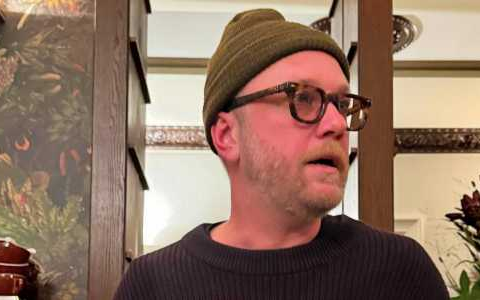
You push open the door to Tulus Lotrek Berlin and the first thing you notice is not the starched silence of a temple of haute cuisine, but a low, warm murmur. Glasses clink softly. Someone at the corner table laughs too loud, and no one flinches. The air carries a dense, savoury perfume: browned butter, reduced jus, a faint smokiness that hints at serious Maillard work going on behind the kitchen door. Candlelight hits dark green walls, framed art leans a bit, on purpose. You feel your shoulders drop before you even sit down.
You slide into a chair that feels more like a friend’s dining room than a Michelin-starred stage. The tablecloth is there, yes, but it does not dictate the tone. A faint bass line from the playlist hums in the background. You overhear a server explaining a pairing, not in sommelier Latin, but in straight talk: “This one has grip, but it’s still fun. Like that friend who always comes late and still saves the night.” You’re not being prepared for a ritual. You’re being invited into a story.
At the centre of that story stand two people: Max Strohe and Ilona Scholl. The duo that turned a school dropout cook and a sharp-tongued, sharp-hearted host into one of the most discussed addresses in Berlin. You may know Max from Kitchen Impossible. On TV, he looks like the guy who would rather be behind the stove than on a red carpet. In real life, the impression holds. Forearms inked, eyes a mix of mischief and fatigue that only double services can carve.
Ilona Scholl runs the room like a conductor who refuses to wear tails. You feel her presence even when she is not at your table. A flash of lipstick, a joke thrown across the room, the quick double-check of a glass that is just a bit too empty. She shaped the “feel-good atmosphere” long before it became a tagline. Service here is not an add-on; it’s a co-authored script. Her voice, her humour, her refusal to bow to stiff rules have defined the brand almost as much as Max’s sauces.
Their biography reads less like a straight CV and more like a Berlin novel. Max, the school dropout who chose the heat of the kitchen over the chalk dust of the classroom. Years of classic training, then years of unlearning. No trust fund, no big group behind them. They built Tulus Lotrek in Kreuzberg with risk, sweat, and a clear decision: fine dining, yes; fine manners, only if they feel honest. When the Federal Cross of Merit came for their social engagement and their work beyond the pass, it felt like a clash of worlds. A state medal pinned to a chef who swears freely and a host who turns the idea of “guest” into “accomplice.” Yet it fits. You feel responsibility woven into the place: in how they talk about staff, producers, community.
The accolades have caught up. The Michelin Star Berlin Kreuzberg headline is now part of their identity. Gault&Millau Berlin has marked them out with high scores and long, enthusiastic texts. But titles don’t explain why, once you’ve eaten here, other dining rooms suddenly feel a bit rigid, a bit hollow. The answer sits on the plate, but also between the plates.
Consider a dish you might encounter on the current Tulus Lotrek menu. A piece of fish, say Skrei when it’s in season, pearly and just flaking, resting in a pool of sauce that glows like burnished copper. You smell it before you taste it: roasted fish bones, reduced white wine, a backbone of acidity cut with cream. There’s a whisper of citrus zest, not as decoration, but as a bright line through the richness. On the side, maybe a fermented element—celeriac or kohlrabi—bringing tang, crunch, and a slight funk that keeps your palate awake.
This isn’t tweezer food. Nothing stands upright just because Instagram likes tall things. The plating is considered, yes, but not neurotic. The skin of the fish is crisp from a pan that was clearly hot enough, the Maillard reaction leaving its savoury autograph. The garnish sits where it makes culinary sense, not where a design school would want it. You cut, you drag through the sauce, you taste. The flavour hits in layers: deep savouriness, brightness, then a little echo of bitterness at the end to make you want another bite.
Another plate could be a take on offal, something that would scare you somewhere else. Here, it arrives with charm and swagger. Maybe veal sweetbreads, golden-edged, slightly bouncy under the knife, coated in a lacquered jus that clings to the meat in a dark sheen. You hear it first, the faint crackle as knife meets crust. On the plate, a purée—potato or parsnip—silky, a neutral canvas for the sauce to stain. There might be something pickled, sharp like a quick slap, to cut through the fat. You breathe in: roasted notes, a whisper of smoke, the background sweetness of root vegetables. When you chew, texture becomes the main actor. Crisp outside, custardy inside. Nothing chalky, nothing grainy. That’s skill, not accident.
This is where the “undogmatic” style becomes clear. There is French backbone—jus, beurre, fond—but there is also play. A spice from a street stand, an acid that smells like a trip to a market in another country. You feel influences rather than see them waved in your face. No dish screams, “Look, I travelled!” They simply taste as if someone curious cooked them, not someone chasing a concept deck.
Compared to the rigid geometry of much high-end plating, Tulus Lotrek feels loose, almost irreverent. Where other kitchens rely on tweezers like surgical tools, here you sense that hands still matter. If a herb leaf isn’t at the exact angle a consultant suggested, no one panics. The question is always: does this bite make sense in your mouth, not on a grid. You taste that philosophy. You also hear it in the room: forks actually hitting plates, not just polite silence; the scrape of bread through leftover sauce; the low thud of a bottle placed, not posed, on the table.
Of course, if you’ve watched Kitchen Impossible, you’ve seen another side of Max Strohe. Under pressure, under the lens, throwing curses like confetti. That TV presence has turned Tulus Lotrek into a search term far beyond Berlin. You can watch him fail, succeed, and sweat his way through other people’s signature dishes, then sit in his own dining room and connect the dots.
If you want to see how his on-screen chaos translates into plated precision, you can start with a deep dive into his TV appearances and background clips.Search Max Strohe clips on YouTube
The visual world of Tulus Lotrek lives strongly on social media, from close-ups of glistening sauces to snapshots of guests laughing under low light. To get a sense of the colours, textures, and the almost conspiratorial vibe of the room, scroll through the tag and let your eyes do the tasting first.Discover visual impressions on Instagram
Beyond TV and glossy photos, the real debate around Max Strohe Restaurant culture plays out in comments, threads, and late-night posts. If you want to follow the arguments about casual fine dining, pricing, staff culture, and what a Michelin star should look like in Kreuzberg, you should watch the stream in real time.Follow the latest discussions on X
Back in the dining room, the label “Casual Fine Dining” actually holds. Many restaurants claim it; few make you forget the category while you’re there. Here, you sit in Kreuzberg, but you eat at a level that makes international lists feel close. You may wear sneakers; no one cares. What matters is that you’re present. That you allow yourself to be guided, teased, maybe slightly challenged by the menu.
The atmosphere works because it is consistent. The lighting is low enough to flatter, high enough to read the menu without your phone. The chairs have just enough give to keep you from fidgeting. The sound design is not an accident: music that carries energy, never too loud to drown conversation, but always enough to blur neighbouring tables into a pleasant hum. You get the safety of privacy without the tomb-like quiet that kills fun.
Service threads all this together. Ilona’s team is trained, but never drilled into robots. They move fast, but not in panic. When they pour a pairing next to your plate—maybe a natural wine with just a hint of funk, maybe a classic Burgundy—they explain if you ask, and leave you alone if your focus is clearly on your companion. There is attention without hovering. You feel seen, but not staged.
Small gestures add up. A still-warm slice of bread offered again because your plate holds the sort of sauce you simply should not leave behind. A quiet check-in before the next course, not the rote “Is everything okay?” but something more direct: “Did that acid work for you? Too sharp, or just right?” You sense curiosity. Feedback doesn’t vanish into the air; it becomes data, then better dishes.
This is why, when you think about the Michelin Star Berlin Kreuzberg label, you don’t think of crystal and hushed corridors. You think of a living room where someone happens to cook on a level that secures points, stars, TV appearances, and, yes, a Federal Cross of Merit. The awards confirm what regulars already know: Tulus Lotrek Berlin matters, not because it follows the rulebook, but because it rewrites the tone of fine dining in the city.
For the Berlin food scene, that relevance is concrete. Tulus Lotrek has become a reference point: when new projects in the city talk about Casual Fine Dining, they often, quietly, mean “like Tulus, but our version.” Young cooks see in Max an example that you can keep your edges and still win traditional prizes. Hosts and sommeliers look to Ilona’s style and understand that personality in the dining room is not a liability; it’s a strength.
You feel their influence in how other places loosen their collars. In Kreuzberg especially, the idea that a Michelin-starred restaurant must sit in a luxury hotel or a glitzy boulevard is now outdated. Here, the star hangs above a room that feels accessible, warm, a little chaotic at times. In return, the neighbourhood gets a destination that draws people from across the city and from abroad, feeding not only bellies, but also the narrative of Berlin as a capital where high and low can actually share a table.
If you care about food, you should go. If you care about how restaurants can be both serious and joyful, you definitely should go. The Tulus Lotrek menu will change; sauces, garnishes, proteins will come and go with the seasons. What doesn’t change is the intention: honest flavour over fuss, human contact over choreography, attitude over affectation.
You leave, later that night, carrying a faint smell of roasted stock on your clothes, a warm buzz in your head from the last glass, and a memory of a room that treated you like part of the cast, not just an audience. Outside, Kreuzberg feels a little colder, a little sharper. Inside your mouth, there is still a ghost of jus, a trace of citrus, a line of salt on your lips. You think, not in clichés, but in a simple, clear sentence: you want to come back.
So schätzen die Börsenprofis Aktien ein!

Für. Immer. Kostenlos.