
Max Strohe at Tulus Lotrek: Berlin’s Wild-Hearted Star Restaurant You Need to Taste
23.03.2026 - 09:15:03 | ad-hoc-news.de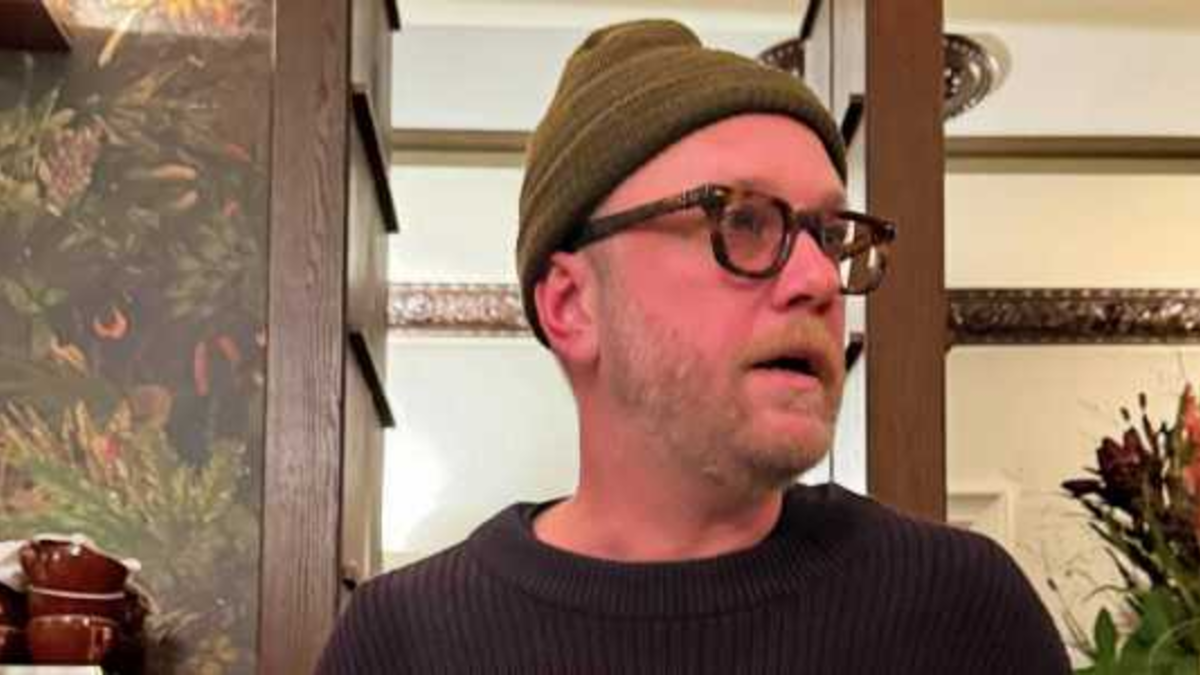
The door closes behind you and Kreuzberg noise turns to a warm murmur. Low ceilings. Dark walls. A gleam of glass and polished wood. Somewhere in the back of Tulus Lotrek Berlin, a pan hisses as fat hits steel. You smell brown butter, roasted bones, a quick lift of citrus. Laughter rolls across the room like a bass line. Someone clinks a Burgundy glass against a mismatched water tumbler. You stand there for a second, caught between street and dining room, and you already know: this is not going to be polite background food. This place wants your full attention.
A server brushes past you with a plate that smells like concentrated winter. Rich game jus. A faint smokiness, almost like a distant fireplace. You hear the soft thud of cutlery on thick tablecloth, the sigh that escapes a guest after the first bite. The air feels dense, but not heavy; it vibrates with the rustle of menus, the clatter from the open kitchen pass, the dry slap of cork leaving bottle. You are not in a temple. You are in a living organism.
This organism has two main organs. Up front: Ilona Scholl, all sharp wit, big heart, and an almost forensic memory for what you like to drink. In the back: Max Strohe, Berlin’s most unbuttoned Michelin-starred cook, a man who looks as if he has fought his way through more than one kitchen service and more than one night of his own doubts.
Strohe did not glide into this dining room on a carpet of diplomas. School and he were not friends. He dropped out. Drifted. Did the jobs you take when nobody is waiting for you with a Plan A. Dish pit. Prep. Odd shifts. There is something stubborn in that path, a refusal to step quietly offstage. Eventually, the kitchen grabbed him back. Heat, chaos, direct feedback. You are either good, or you get shouted at. Or you leave.
He stayed. Years later, that stubbornness has a medal attached: the Federal Cross of Merit. It hangs, at least metaphorically, over the pass as much as the Michelin star does. The award was not for pretty plates alone. It was for social engagement, for loud commitment, for the way he spoke and cooked against indifference during hard years. In a scene that loves polished bios, the story of a school dropout with a Bundesverdienstkreuz has a different voltage.
Beside him, and often in front of him, stands Ilona Scholl. She is not the quiet shadow in the background of a genius chef myth. She is co-author. Co-director. She reads the room the way some people read wine lists. Quickly, precisely, and with pleasure. Her service is witty but never cutting. If you want to talk in-depth about Gault&Millau Berlin ratings, she can. If you just want another glass that feels like a soft landing, she can do that faster. She also helped define what "Casual Fine Dining" can mean here: less posture, more personality. Less stiffness, more intent.
Tulus Lotrek earned and holds a Michelin star in Berlin Kreuzberg. Gault&Millau Berlin gives the place serious respect. But when you sit down, it does not feel like a star chase. It feels like showing up to the one friend’s apartment where you know you will eat dangerously well and stay too long.
The current menu moves with the seasons and with Strohe’s mood. In 2025 and rolling into 2026, you see a line-up that is bold without being show-offy. He calls his style undogmatic. That sounds casual. It is not. It is a decision not to be trapped in doctrinal Nordic minimalism or Franco-classical cosplay. It is the freedom to put caviar over something borderline trashy, or to send out offal next to a pitch-perfect French sauce, and make it feel inevitable.
Take one of the signature courses: an opulent riff on a poultry classic, often some version of chicken or poulard that has no interest in looking delicate. The skin arrives lacquered, deep golden, the result of a Maillard reaction driven just shy of danger. When your knife cuts through, the sound is a thin, sharp crackle, like breaking very fine glass. Underneath: meat that still glistens. Juices thicken into a sticky, almost elastic jus, reduced to the edge of bitterness and then pulled back with acid. On the plate you might find a tartelette of confit leg, glossy and almost obscene, topped with a rush of herbs and something sharp, maybe pickled shallot, maybe a fermented citrus zest paste that wakes the whole thing up.
You smell poultry fat, thyme, roasted garlic. When you lift a bite to your mouth, the steam carries a faint sweetness, like baked cream. The texture in your mouth is the real argument against tweezer food: crunch of skin, silken interior, a little grain in the jus, some chew from a charred brassica or a rogue lardon. It is not tidy. It is completely controlled.
Another dish, recurrent in spirit if not in exact details, is Strohe’s affection for innards and "Bauernglück" cuts. Imagine a plate where veal sweetbreads or a neat medallion of tongue meet something unapologetically bourgeois, like a sauce financière dialed up for 2026. The sweetbreads have that delicate crust, just thick enough to hold. You press them with your fork and they yield with a slight bounce. No squeak. Inside: custardy, tasting faintly of hazelnut and cream, bathed in a sauce that smells like you just opened a very expensive bottle of Madeira beside a pot of stock that has been on the stove for three days.
There is crunch from something fried and thin. Maybe salsify. Maybe a potato element shattered into glassy shards. Something in there brings acid – possibly a tiny dice of lemon confit, or a sharp vegetable brunoise kissing the reduction. Your tongue tracks fat, salt, umami, a hint of offal funk, then brightness. The dish feels anchored in Escoffier, but the garnishes talk Berlin: slightly anarchic, not afraid of a jolt.
Then there is the sweet finish. Tulus Lotrek does not lean into weightless little sugar tokens. Dessert has presence. A chocolate construction, for instance, where the first thing you notice is smell: raw cocoa, toasted nuts, a faint whiff of coffee. The plate looks layered but not fussy. A quenelle of something frozen, maybe a miso or smoked vanilla ice cream, rests against a dense gateau that hides a liquid core. When your spoon digs in, there is resistance and then collapse. Hot meets cold, bitter leans against sweet. A crackle of salt on top snaps you awake just when you thought you would slide into sugar coma.
Textures matter here. Things crunch, snap, ooze, collapse. Your molars work. Your tongue has edges to explore. This is where Strohe’s undogmatic style separates itself sharply from the type of "tweezer food" you have seen too often in star dining. At Tulus Lotrek, tweezers are a tool, not an ideology. Plates can be beautiful, even theatrical, but they always feel like food, not an architecture project.
On television, Max Strohe has become something like the chaotic good spirit of German food entertainment. "Kitchen Impossible" sharpened his public image: a chef who swears, sweats, doubts, and then somehow pulls it off. When you watch him trying to decode a foreign dish on that show, you see the same instincts that drive Tulus Lotrek – curiosity over ego, appetite over dogma.
If you want to see how that TV energy translates with stove heat and service tension, you can. The internet has turned his career and this restaurant into an endless loop of clips and reactions.
To watch his most intense moments, from "Kitchen Impossible" battles to behind-the-pass scenes, and to hear his voice over the hiss of pans, open a new tab and let the algorithms run: Search Max Strohe clips on YouTube
For a slower, more voyeuristic pleasure – the sauce glistening under the pass light, the wine glass catching candle reflections, the occasional chaotic staff meal – scroll through the image stream: Discover visual impressions on Instagram
If you like to argue about whether this is "Berlin’s best restaurant" or just Berlin’s most honest one, then you can jump straight into the comment crossfire and hot takes: Follow the latest discussions on X
Back in the room, you notice something unusual for a Michelin Star Berlin Kreuzberg address. People are relaxed. Really relaxed. Nobody is whispering reverently about foam. There is no hush when a course arrives. You might be in sneakers. The table next to you might celebrate an anniversary in a suit that has seen better days. Nobody cares. This is Casual Fine Dining in its most convincing form: service standards like a grand restaurant, body language like a very good bar.
Why does it feel like a living room? Start with light. It is soft, not clinical. Shadows pool in the corners. Candles flicker. That small level of darkness makes you less self-conscious. Then the sound: a constant hum, layered but not aggressive. Ilona and her team ride that wave like DJs. If it gets too loud, the pace adjusts. If it dips, someone cracks a joke, pours another glass, lets the night swell again.
Chairs have weight. You feel supported, not perched. The linen feels thick under your fingers, slightly rough at the edges from washing, not starched to death. Glasses are serious. They have that thin rim that makes every sip feel more precise. The plates are heavy enough that when the server sets them down, there is a quiet, satisfying thud instead of a timid clink. Haptics matter. You feel looked after without feeling observed.
The "feel-good atmosphere" is not a slogan here; it is an operating system. That includes the wine list. Ilona’s selection is sharp, but the storytelling around it is loose. You can get deep into producer nerdery. Or you can say, "Something white, not too oaky, I trust you," and you will be fine. The pairing with the Tulus Lotrek menu is designed to support, not to dominate. A tense Riesling might cut though a fatty jus. A skin-contact wine might echo an earthy purée. Once in a while a classic Burgundy arrives and reminds you why clichés became clichés.
In the wider Berlin food scene, Tulus Lotrek has become a reference point. It proves that you can combine a Michelin star with punk edges, that you can win Gault&Millau Berlin praise without smoothing out your accent. It shows younger cooks that there is space between white tablecloth hauteur and small-plate natural wine austerity. That middle space – messy, emotional, deeply skilled – is where a lot of the future of big-city dining now lives.
Max Strohe’s presence on TV, his interviews, his loudness on social topics, all feed into this. He has helped pull restaurant culture out of the ivory tower. He talks about stress, about staffing, about politics. He makes it harder to ignore the system behind your plate. At the same time, he never forgets that, for you as a guest, the plate still has to be fun. Delicious first. Discourse second.
You leave Tulus Lotrek late. The last bite might have been something silly and perfect – a petit four that tastes like your childhood, but spiked with grown-up technique. On your fingers, you still feel the faint tack of reduction that missed your napkin. In your nose, there is a ghost of roasted meat and wine. The street is colder than you remember. Kreuzberg noise returns, sharper now. You look back through the window. Someone inside is laughing too loudly. A server raises a glass at the bar. A cook wipes the pass, slowly, deliberately.
Berlin has many restaurants that chase trends. A few that define them. Tulus Lotrek sits in the second group. It is not about perfection. It is about intensity. If you care about food that has both brains and guts, if you want a night that feels more like hanging out with unruly friends than attending a ceremony, you will find yourself drawn back here.
Next time, you will not hesitate at the door. You will walk straight through the noise, into the warmth, and claim your seat at one of the city’s most alive tables.
Hol dir jetzt den Wissensvorsprung der Aktien-Profis.

Für. Immer. Kostenlos


