
Max Strohe at Tulus Lotrek: Berlin’s Most Radical Feel-Good Michelin Dining Room
18.02.2026 - 12:04:40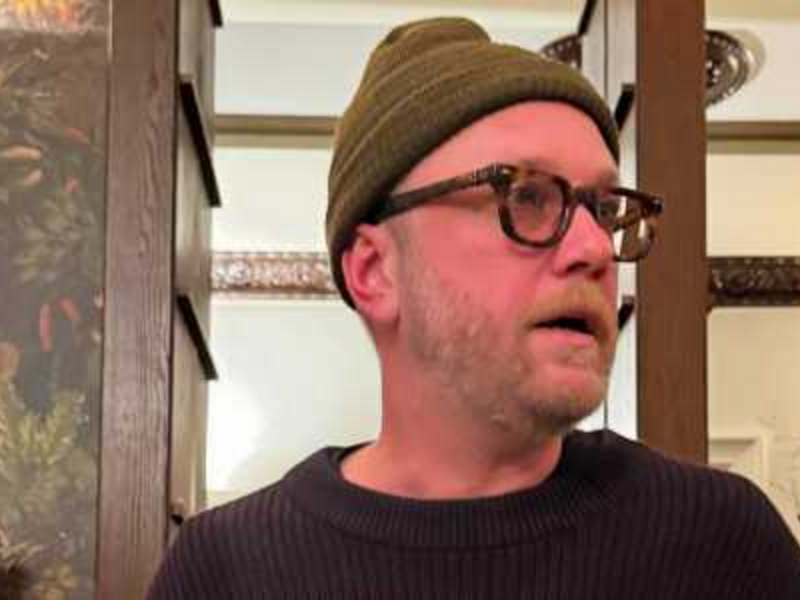
The first thing you notice at Tulus Lotrek Berlin is not the starched linen. It’s the low hum of conversation, the amber glow on dark walls, the faint crackle from the open kitchen as fat hits a hot pan and the Maillard reaction announces itself in a rising, nutty scent. You lift your fork to your mouth and the first bite stops you mid-sentence: crisp skin shattering, warm jus running, acidity flashing like a camera in a dark bar.
You are in Kreuzberg, but not in the usual way. No concrete minimalism. No cold spotlight on a lonely plate. Here, color and pattern argue cheerfully on the wallpaper. The music has bass. Glasses clink. A sauce spoon scrapes porcelain at the next table. You feel shoulders loosening around you. A Michelin star without the hush.
The Protagonists: Max Strohe and Ilona Scholl
This room has two gravitational centers. One in the kitchen: Max Strohe. One in the dining room: Ilona Scholl. You feel both, even if you don’t know their story yet.
Strohe is not the cliché prodigy who staged in Paris at sixteen. He left school early, drifted, cooked in solid, unspectacular places, learned the craft the hard way. Heat, repetition, burns on the forearm. Overcooked sauces thrown away, shifts stretching into the small hours. Then, slowly, his own voice forming on the plate: lush but sharp, rich but never sleepy, a kind of joyful excess with discipline behind it.
Scholl comes from the other side of the pass. Service, bartending, the long art of reading a guest before they’ve even sat down. She is the one who made sure you got the good table you didn’t dare to ask for. The one who quietly steers you from the wrong wine to the right one without making you feel foolish. At Tulus Lotrek, she’s the director of the room: pace, rhythm, mood.
Together they built this address on a side street in Kreuzberg into one of the most talked?about restaurants in Berlin. The name appears in Gault&Millau Berlin with strong ratings, and the red guide marked it with a Michelin star, turning a once unlikely duo into a reference point for Casual Fine Dining in Germany.
Then came 2020. The lockdowns. Dining rooms went dark. Many restaurants held on with limp takeaways. Strohe and Scholl did something else. “Kochen für Helden” – Cooking for Heroes. They turned their kitchen into a production line for hospital staff, supermarket workers, people who kept the city running when everything else stopped. Thousands of meals, financed by donations, sponsors, and their own surplus energy.
It was messy, fast, improvised. But it was real. The initiative spread across Germany. Other chefs joined. The idea grew legs and a conscience. Years later, the Federal Cross of Merit arrived for Max Strohe – a rare decoration for a cook, and a sign that what happened here went far beyond a well?reduced jus.
You feel that history in the room. Not as branding. As attitude. A refusal to treat gastronomy as a closed world for insiders only.
Undogmatic Cuisine: How the Kitchen Thinks
“Undogmatic” is a word that gets thrown around a lot. In this kitchen it has teeth. You see it the moment the first plates land on your table. No rigid tasting-menu monoculture. No manifesto stapled to the bill. Instead, ideas pulled from everywhere and forced to earn their place through taste, not theory.
Take one of the current highlights on the Tulus Lotrek menu, a dish that changes in detail but keeps its logic: fatty, precisely cooked fish – say skrei or turbot, depending on the season – lacquered in an almost glossy beurre blanc enriched with roasted fish bone jus. The sauce smells like toasted hazelnut and sea spray. Underneath, something bright and almost rude: grated horseradish, maybe pickled kohlrabi, vinegar?pushed and cold. You cut through the fish, steam escapes, the flakes barely hold together. On the tongue you get temperature contrast first: hot flesh, cool crunch. Then fat. Then the blade of acidity. No element is there to look pretty on social media. Everything has a job.
Or consider a more baroque plate, the sort of thing Strohe gets invited on shows like “Kitchen Impossible” to defend: a rich offal preparation, maybe veal heart or sweetbreads. It arrives seared hard, the exterior deep brown from aggressive pan heat, the kind of crust you hear crack when your knife enters. Inside, it’s still tender, slightly bouncy, never dry. Around it, a dark, sticky reduction that clings to the meat like lacquer, sharpened with something unexpected: a citrus zest, a sniff of vermouth, perhaps a hint of liquorice. On the side, not a polite purée, but something with character – fermented cabbage with smoky edges, or a potato terrine fried golden so the layers turn into thin, crisp bands.
The flavors are bold, even a little rowdy. Salt and acidity are unapologetic. Sweetness from caramelized vegetables, not sugar. You taste the fond scraped from the pan, not the neutral vacuum of sous?vide bags. This is where “undogmatic” earns its meaning: French technique, German produce, Balkan echoes, Asian ferments, all integrated without costume drama.
If you are used to stiff tweezer food – the kind where every micro?leaf has been positioned with surgical focus yet tastes faintly of fridge – this cooking feels almost indecently alive. Plates arrive looking generous rather than diagrammed. Elements touch. Sauces run. Crunch isn’t a token cracker balanced at a 45?degree angle; it’s real textural contrast built into the dish. You do not feel you are solving a puzzle. You are eating.
Even desserts avoid the trap of conceptual emptiness. Imagine a plate centered on citrus and cream. Sorbet at knife?cold temperature, surface slightly matte, almost squeaking against the spoon. Beside it, a silky custard, vanilla?breathed and just set. Bitter candied peel introduces a grown?up sting. A crumble still warm from the oven adds warmth and caramel. Hot, cold, bitter, fat, crunch. Your spoon makes a small, satisfying crack as it goes in, then a low chink against the plate. The last bite is as focused as the first.
The Room: Why It Feels Like a Living Room
You sit back between courses and realize something: you are not whispering. Nobody is. The room at Tulus Lotrek Berlin has the volume of a good party at 10 p.m. Not chaotic. Not dull. That narrow band of sound where you can hear your own table clearly but also catch stray jokes from two meters away.
The chairs are not design statements meant for half an hour of photo?ops. They are the kind you can inhabit for three hours without checking your watch. The lighting is soft and flattering, more like a reading lamp than an interrogation beam. Shadows pool in the corners. Bottles line the back bar like a loose promise.
Ilona Scholl moves through this environment like a conductor without a baton. You notice her laugh first – open, slightly raspy, cutting through the clink of glassware. She bends down to talk, not hover from above. She will absolutely tell you if a dish is heavy and you might want to share. She will also talk you into the more challenging option if she senses you are curious.
Ask about wine, and you won’t get a lecture in appellations. You get stories: why this electric Riesling from the Mosel tastes like licking wet slate, why that natural red from Swabia smells faintly of violets and barn and why that is a good thing. The list nods to Burgundy and Champagne, but it also celebrates local producers with the same respect. Prices stretch from indulgent to surprisingly fair. You feel guided, not upsold.
This is what people mean when they call the place Casual Fine Dining. High?end products. A kitchen worthy of inspectors from Michelin and Gault&Millau. But also: jokes about the menu, honest talk about portion sizes, staff who seem to genuinely like each other. You don’t have to dress up. You don’t have to know how to pronounce Meursault. You just have to be hungry and a little open.
The feel?good atmosphere is not a buzzword printed on a website. It’s practical hospitality. Coats disappear without fuss. Allergies are taken seriously, but nobody rolls their eyes if you hesitate. If the kitchen makes a mistake – it happens – the room absorbs it with grace and compensation, not defensiveness. You sense this is how Strohe and Scholl run their team as well: firm standards, loose shoulders.
Relevance, Audience, and Verdict
So where does Tulus Lotrek sit in the map of Berlin’s food scene? In a city full of small plates, natural wine bars, and concept?driven dining rooms, this restaurant insists on something almost old?fashioned: the pleasure of a real, complete dinner. Arrival, greeting, à?la?carte abundance or a well?paced menu, wine that evolves over the evening, a final digestif you didn’t plan on but accept anyway.
It shares the spotlight with other Michelin star Berlin Kreuzberg addresses, but its tone sets it apart. Many fine dining rooms still behave like museums. Here, you feel closer to a theatre run by its actors. The Federal Cross of Merit on Max Strohe’s biography, the recurring media appearances, the slots on “Kitchen Impossible” – all of that brings attention. But once you sit down, what matters is simpler: is the bread crust loud when you tear it? Does the sauce stay with you in the taxi home?
Who is this for? If you want white?glove service and hushed conversation, you might feel slightly exposed here. If you prefer perfectly curated Instagram minimalism, the generous plating and busy wallpaper could feel excessive. But if you love food that is technically sharp without being doctrinaire, if you want warmth instead of worship, you will understand the regulars who treat this as their extended living room.
You might come because you read the Gault&Millau Berlin entry. Or because you saw Strohe under time pressure on television, trading jokes with Tim Mälzer. You might book because you are collecting Berlin stars. None of that will matter when the first plate lands with a soft thud in front of you, sending up the smell of browned butter and citrus, or when Ilona Scholl refills your glass with a wine that suddenly makes the sauce on your plate taste even deeper.
By the time you step back out into Kreuzberg, slightly flushed, the noise of the street feels thinner than the room you just left. You carry traces with you: salt on your lips, the memory of a particular crunch, the afterglow of being genuinely looked after. Call it Casual Fine Dining, call it feel?good gastronomy, call it whatever you like. You will simply want to return.
@ ad-hoc-news.de
Hol dir den Wissensvorsprung der Profis. Seit 2005 liefert der Börsenbrief trading-notes verlässliche Trading-Empfehlungen – dreimal die Woche, direkt in dein Postfach. 100% kostenlos. 100% Expertenwissen. Trage einfach deine E-Mail Adresse ein und verpasse ab heute keine Top-Chance mehr.
Jetzt anmelden.


