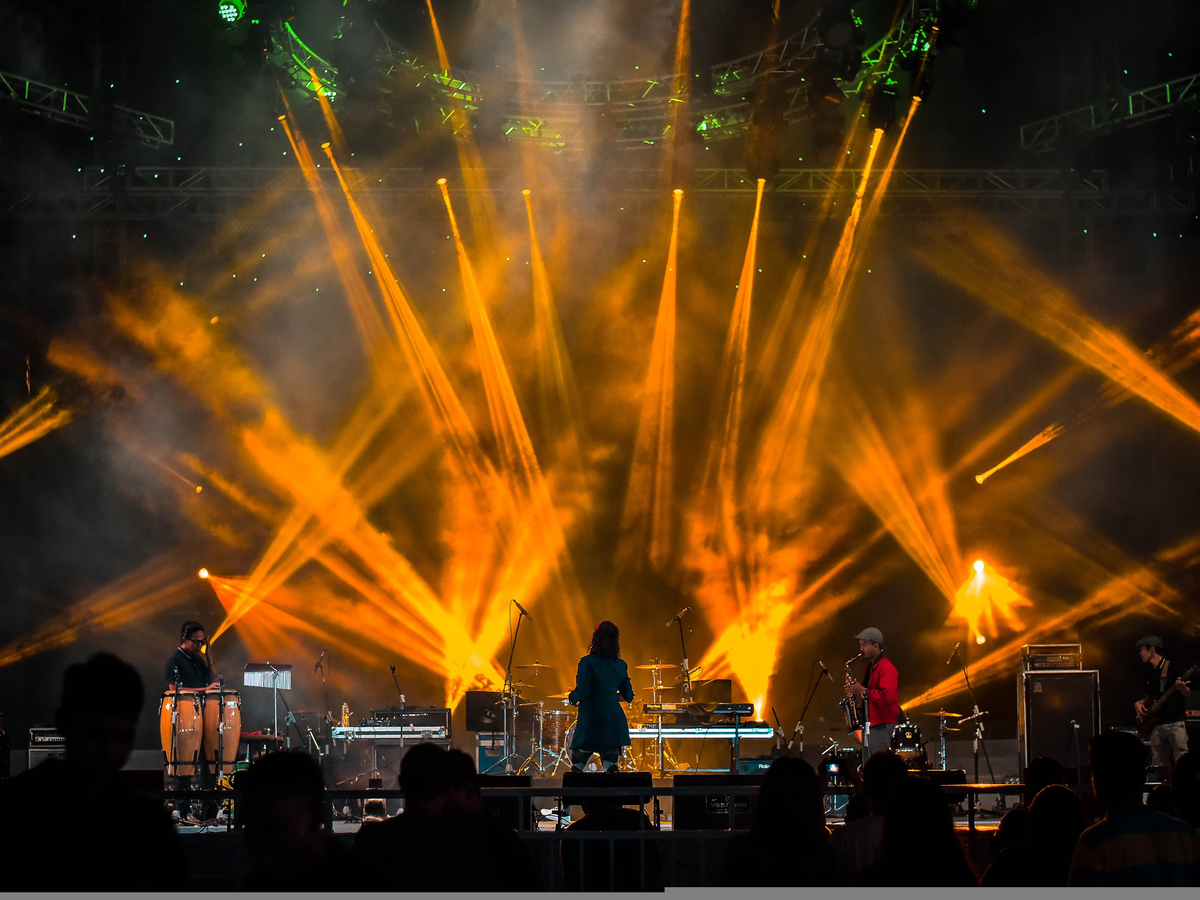
Massive Attack 2026: Are They Finally Coming Back Live?
25.02.2026 - 19:59:55 | ad-hoc-news.de
If you're suddenly seeing the words Massive Attack all over your feed again, you're not alone. Fan forums, X threads and Discord servers are lighting up with one shared question: are Massive Attack actually gearing up for a full live return? For a band that treats touring like rare solar eclipses, even the smallest move feels seismic to fans who've waited years to hear Teardrop, Angel or Unfinished Sympathy ring out in a dark room again.
Check the official Massive Attack live page for fresh updates
Right now the energy around the band sits in that dangerous, addictive space between rumor and reality. You've got long-time listeners tracking every tweak to the official site, nervous first-timers praying for US and UK dates, and TikTok kids discovering Mezzanine like they just unlocked a new DLC for their mood. It feels like something is coming, even if the band are doing their usual quiet, shadowy drip-feed of information.
So let's slow the scroll and put everything in one place: the hints, the live layout, the songs you can realistically expect, and the wild theories fans are spinning while we all hit refresh.
The Backstory: Breaking News in Detail
Massive Attack have always moved on their own timeline, and that's a big part of why this current buzz feels so intense. In an era where huge pop acts announce 50-date world tours with glossy trailers and branded credit-card presales, Massive Attack still prefer subtlety. Recently, fans started clocking updates around the band: refreshed artwork on socials, whispers from European venues about potential holds, and increased traffic towards the band's official live portal, which has become the de facto place to watch for anything resembling confirmation.
What we're seeing right now is a pattern that's familiar if you've followed them over the years. The band almost never opens with a big "world tour" announcement. Instead, they tend to roll out carefully chosen shows in key cities, often tied to something bigger like an anniversary, a political message, or a fresh audio-visual concept. In past cycles, European festival appearances have doubled as test runs for bigger production ideas that later reappear in more focused headline dates.
Behind the scenes, booking chatter points to renewed interest in both UK and mainland European venues that fit Massive Attack's preferred vibe: places with strong sound systems, room for heavy visuals, and audiences that won't talk over the quiet bits. Industry watchers are also connecting dots between the band's environmental activism in recent years and potential touring plans. Massive Attack have previously spoken about trying to rethink the carbon impact of tours, partnering with researchers to find cleaner touring models. Any new run of shows is likely to reflect that, whether through fewer flights, clustered dates, or venues with stronger sustainability credentials.
For fans in the US, the mood is a little more anxious. Historically, American runs have been shorter and more selective. That scarcity has turned every hint — a festival rumor here, a promoter tease there — into fuel for speculation. UK fans, meanwhile, are looking closely at major cities like London, Bristol, Manchester and Glasgow, where the band's legacy runs deepest and where tickets tend to vanish in minutes whenever they surface.
What does all this mean if you're just trying to know if you should start saving for trains, flights, or hotel points? It means we're in the "alignment" stage: venues being held, production concepts being tested, dates being shuffled around other big touring schedules. When moves finally go public, they'll likely be curated and limited rather than a massive, months-long run. If you care about seeing Massive Attack live at least once, this is the kind of period where staying plugged into official channels really matters, because the gap between announcement and "sold out" can be brutally short.
The Setlist & Show: What to Expect
If you've never caught Massive Attack in person, the biggest thing to understand is that they don't run a nostalgia jukebox. Even when the set leans on classics, the show arrives like a full-body experience, somewhere between a protest, a film, and a club night gone beautifully wrong.
Recent tours have tapped heavily into the holy trinity of albums — Blue Lines, Protection, Mezzanine — but in dramatically updated form. Songs like Angel tend to land late in the set as slow-building pressure cookers, with distorted bass that you feel in your ribcage more than you hear with your ears. Teardrop usually surfaces as an emotional centerpoint, often with live vocals that deliberately avoid copying the recorded version line-for-line. The band like keeping things a little unstable; the hooks you know are there, but the textures around them change.
Expect Unfinished Sympathy to show up either towards the end of the main set or as a finale. Live, it usually drops the studio gloss and leans into rawer dynamics: the strings feel thicker, the beat punches harder, and the vocal lines slice straight through the noise of the room. Long-time fans talk about that moment like a ritual; newer fans, especially Gen Z listeners who found the track through playlists or TV syncs, tend to walk out stunned at how big it feels when it isn't compressed by headphones.
A typical Massive Attack night flows more like a film than a standard "here's a hit, here's some banter" show. Atmospheric openers like Risingson or United Snakes are likely to set a dark, slow-motion tone, building tension while huge, minimal visuals swell behind the band. Once the crowd is locked in, they usually pivot between older and newer material: maybe a moody Future Proof, a version of Inertia Creeps with elongated, nervous breakdowns, or Safe From Harm brought forward with new urgency.
Vocals and guests are another layer. Massive Attack are effectively a collective, and lineups can shift depending on who's available and what kind of tone they want from a tour cycle. That can mean rich, smoky takes on tracks like Black Milk, or bristling energy on Karmacoma. Don't be surprised if certain deep cuts replace fan-favorite tracks on some nights. The band prefer to challenge themselves rather than hit copy-paste on the same show for months.
Visually, the production is usually intense but stripped of rock-star ego. Think: huge LED walls, stark typography, glitchy political messaging, and data-driven prompts that give you something to think about while the bass rattles your stomach. They've been known to flash stats on climate, migration, surveillance and inequality across the screens, forcing you to hold your own life up to the numbers while your favorite songs bleed through. It can be confrontational, but that's the point. This is the opposite of a "phone-in-the-air-for-Instagram" experience, even if everyone still tries.
So if you're planning ahead and dreaming in setlists, put your money on a core spine of Mezzanine and early-era tracks, with enough curveballs to keep serious heads guessing: maybe Dissolved Girl, Group Four, Protection, Eurochild, or an unearthed rarity. The band like to reframe their own catalog instead of just replaying it, so any new tour cycle is an excuse to hear familiar songs bent into new shapes.
What the web is saying:
Rumor Mill: What Fans Are Speculating
Right now, fan spaces are basically running like unsupervised labs of conspiracy, and it's weirdly fun. On Reddit, long threads are breaking down tiny digital clues: an updated copyright line here, a slightly tweaked font there, a background image that seems to echo older tour posters. One theory claims that specific color schemes on the site line up with different album eras, hinting at a possible "timeline" style show that moves chronologically from Blue Lines to their more recent material.
Another cluster of fans is convinced we're heading for an anniversary-focused run, especially around the enduring weight of Mezzanine. Instead of just a straight album-in-full performance, the idea doing the rounds is a "deconstructed" version of the record live, where tracks are broken apart, remixed and recombined with newer arrangements and visuals. That fits the band's personality; they've never been big on neat nostalgia cash-ins.
There's also endless chatter about who might show up on stage. Because Massive Attack have always worked with a rotating crew of collaborators, every potential tour sparks fantasy casting. Will legacy vocalists appear? Will we see surprise cameos from newer artists the band have co-signed or remixed? TikTok comments are full of younger fans pairing Massive Attack tracks with current alternative, hyperpop or dark R&B voices and asking "what if?"
Ticket pricing is another hot topic. After the last few years of "dynamic pricing" drama around major pop and rock tours, there's a running worry that Massive Attack shows could end up in the same inflated territory. Some fans point to the band's politics and anti-corporate streak as a reason to expect more grounded pricing structures, while others argue that venue fees and production costs are brutal for everyone right now, no matter how left-leaning your messaging is. Until dates and prices are official, the only safe bet is that demand will outweigh supply in most major cities.
On TikTok and Instagram Reels, the vibe is different but just as intense. You've got aesthetic edits using Teardrop and Paradise Circus as the soundtrack to late-night drives, city skylines and breakup montages, all captioned with things like "If Massive Attack tour I'm selling a kidney" or "Need them to announce dates before I age out of the pit." For a whole slice of younger listeners, any live dates might be their very first chance to see a band they mostly know from playlists and TV syncs.
One particularly wild theory doing the rounds: that the band could organize a run of smaller, semi-secret shows under a different name or with minimal branding, announced last-minute and documented only through word of mouth and phone cameras. Is it likely? Probably not on a large scale — production that heavy doesn't just appear overnight — but the idea captures something true about the fandom: people want to feel like they're part of a story, not just customers at another big-ticket event.
Until official news locks things in, the rumor mill will keep spinning. For now, the smartest play is staying close to confirmed sources, keeping expectations flexible, and being ready to move quickly once anything concrete lands.
Key Dates & Facts at a Glance
- Official live hub: The band directs fans to their dedicated live page for updates on future shows, presales and announcements.
- Core markets: Historically, Massive Attack have focused heavily on the UK and mainland Europe, with more selective touring in North America and other regions.
- Setlist staples: Fan-favorite songs that almost always appear live include Teardrop, Angel, Unfinished Sympathy, Safe From Harm, and Inertia Creeps, often in reworked form.
- Show style: Performances typically blend live band, rotating vocalists and large-scale visuals featuring political and social messaging.
- Audience profile: Strong crossover between Gen X original fans and newer Gen Z/Millennial listeners who discovered the band through streaming and TV/film placements.
- Ticket sell-through: Past tours have sold out quickly in major cities like London, Bristol, Paris, Berlin, New York and Los Angeles, with limited extra dates added.
- Production themes: Visual content has addressed topics like surveillance, climate breakdown, war, migration and data capitalism, making shows feel like both concerts and commentary.
- Rarity factor: Unlike many legacy acts, Massive Attack do not tour every year, which makes each live cycle feel like an event rather than a routine.
FAQ: Everything You Need to Know About Massive Attack
Who are Massive Attack, in simple terms?
Massive Attack are a Bristol-born collective widely credited with shaping what the world came to call "trip-hop" — although the band themselves have never been keen on that label. Their sound fuses hip-hop beats, dub, soul, post-punk and electronic textures into slow-burning, cinematic songs that feel built for late nights and big feelings. At the core of the group are Robert "3D" Del Naja and Grant "Daddy G" Marshall, surrounded over the years by a changing cast of vocalists, musicians and visual collaborators.
If you're not an album person, you almost definitely know them from tracks like Teardrop (yes, the one used as the House theme), Unfinished Sympathy, Angel or Protection. Those songs have quietly rewired the DNA of modern alternative, electronic and R&B music, influencing everyone from The Weeknd and FKA twigs to alternative rappers and film composers.
What makes a Massive Attack show different from a regular concert?
Massive Attack shows don't feel like "greatest hits plus stage banter." They're closer to immersive experiences built around tension, mood and political awareness. The stage is usually kept dark, with the performers partially shadowed while huge LED walls carry text, numbers and visuals that clash with or amplify what you're hearing. Instead of talking at length between songs, the band let the art and the production speak.
Sonically, expect heavy low-end that makes your chest vibrate, mixed with fragile top lines and live vocals that often twist the familiar recorded versions of songs into something rougher or more urgent. If you go in expecting an EDM-style drop and fireworks, you'll be confused; if you go in ready to sink into a slow, detailed, emotionally loaded set, you'll walk out wired.
How can you realistically catch Massive Attack live?
The most reliable move is to track official channels and move quickly. That means keeping an eye on the band's website — especially the live section — plus their main social platforms and reputable ticketing sites. Because tours don't happen constantly, demand tends to be intense. Presales and fan club codes, when they appear, are usually snapped up fast.
If you live in a major city with a strong alternative or electronic live scene, you've got better odds of getting a date. London, Bristol, Manchester, Paris, Berlin, Amsterdam, New York and Los Angeles historically sit high on the list. Fans in other regions often travel in, turning certain shows into pilgrimage-style gatherings where different generations of listeners finally share a room with the music that’s been living in their headphones for years.
What kind of setlist should a first-time fan hope for?
If you're new to Massive Attack and worried you won't recognize much, relax. The band usually balance deep cuts with the songs that pulled most people in. You're very likely to get Teardrop, Angel and Unfinished Sympathy in some form, along with key tracks like Safe From Harm, Inertia Creeps, or Karmacoma. The rest of the set might reach back to Blue Lines and Protection, then branch into later material that leans more electronic or political.
The important thing is to understand that they love reshaping their catalog. Tempos can shift, intros can be extended, verses can be muted or swapped, and new visual contexts can make an old lyric cut differently. That unpredictability is part of the appeal — you're not just hearing the record replicated, you're hearing what the songs mean to them now.
Why do people talk about Massive Attack in almost "mythic" terms?
It's a mix of timing, influence and scarcity. Their early records landed at a moment when club culture, hip-hop, dub and indie were crashing into each other, and Massive Attack distilled that chaos into music that sounded like nothing else. Those records influenced an entire generation of producers and singers who then shaped the next waves of pop, R&B and electronic music. Add to that the fact that the band rarely flood the market with constant releases or massive tours, and you get a sort of mythic aura — they appear, change the temperature of the room, then disappear again.
There's also the political dimension. While some legacy acts coast on vibes, Massive Attack have consistently used their stage and visuals to dig into uncomfortable topics, from war and surveillance to climate breakdown. That gives their work a weight that sticks, especially for fans who care about music that acknowledges the real world instead of just escaping it.
Are Massive Attack shows phone-friendly, or should you just be present?
You'll see phones, obviously — this is the 2020s — but Massive Attack shows reward attention more than constant filming. The lighting is often dark and contrasty, which doesn't always translate well on camera, and a lot of the visual content is text-based or data-heavy, designed to hit you in the moment rather than as a tiny rectangle on your screen later.
Most long-time fans will tell you it's worth grabbing one or two short clips for your story, then putting the phone away and letting the sound and visuals swallow you whole. These are sets built to be felt more than documented, and there's something powerful about being fully present with thousands of strangers while a song like Angel slowly detonates.
What should you expect emotionally from the night?
Massive Attack live isn't "happy" in the traditional, festival-singalong way. It's deeper than that. The mood usually floats somewhere between catharsis, dread, longing and defiance. Tracks like Teardrop or Protection can hit like therapy sessions, especially if you've attached them to memories. The harder-edged songs, with their thick bass and tense rhythms, feel like protest music for people who overthink everything.
You might walk out buzzing, quiet, emotional, or weirdly motivated — sometimes all at once. That blend is why so many fans talk about seeing Massive Attack as a "bucket list" experience: it doesn't feel like another night out, it feels like checking in with a part of yourself that only wakes up when those songs are loud.
So schätzen die Börsenprofis Aktien ein!

Für. Immer. Kostenlos.