Led Zeppelin: Why the Legend Still Owns Rock in 2026
25.02.2026 - 03:59:42 | ad-hoc-news.de
If your feed has suddenly turned into a shrine to Led Zeppelin, you are absolutely not alone. Between fresh reunion whispers, remastered drops, and a new wave of Gen Z discovery on TikTok, the Zep revival feels louder than it has in years. For a band that hasn’t released a studio album since 1979, that’s wild — and it says a lot about how hard their music still hits in 2026.
Explore the official Led Zeppelin universe here
You have teens discovering "Stairway to Heaven" for the first time and losing it, older fans revisiting 1970s bootlegs, and a whole ecosystem of creators breaking down Jimmy Page riffs and Robert Plant’s high notes. Mix all that with constant reunion talk and you get one big question hanging over every comment section: is Led Zeppelin actually coming back in a real way, or is this just nostalgia turned up to 11?
The Backstory: Breaking News in Detail
First, a reality check. As of early 2026, there is no officially confirmed full Led Zeppelin reunion tour. No arena on-sales, no verified festival headlining slots with the full classic lineup. Anyone claiming otherwise is skipping the fine print.
What is real is a steady drumbeat of activity that keeps sparking headlines and fueling those rumors:
- Anniversary cycles: Every big album milestone becomes an excuse for fresh coverage. Fans just watched the 50th anniversaries of Houses of the Holy (2023) and Physical Graffiti (2025) get deep-dive write-ups, playlists, and remastered listening parties across platforms.
- Ongoing reissues & remasters: Page has spent the last decade overseeing updated editions of the catalog. Whenever a new high-resolution or immersive audio version hits major streamers, plays spike, and so do "are they coming back?" threads.
- Legacy shows under the microscope: The 2007 London O2 reunion show — the last true Led Zeppelin concert with Page, Plant, and Jones under the band name — gets treated like a Rosetta Stone for modern rock shows. New HD uploads, reaction videos, and breakdowns keep dragging that night back into the discourse.
On the interviews side, recent chatter from individual members pours gasoline on the rumor fire without ever fully lighting it. In various rock and culture magazines over the past few years, Robert Plant has stayed consistent: he’s grateful for the past but wary of becoming a "heritage act." He’s said in different ways that Led Zeppelin was of a specific era and energy, and that trying to perfectly recreate that decades later would feel forced.
Jimmy Page, on the other hand, has kept the door a little more open in public comments. He often hints that he’d love to play live again in some form and has talked about unreleased material, archives, and his obsession with sound quality. That’s all fans need to start imagining special one-off shows, tribute nights with guests, or even a hybrid "Zep celebration" project.
John Paul Jones has stayed the quiet workhorse, popping up in experimental projects, soundtracks, and occasional live appearances. He rarely throws big quotes into the rumor mill, but the fact that he’s still musically active helps fans believe that, physically, a one-night-only Zep celebration could still happen.
So where’s this "breaking news" feeling coming from if nothing is officially locked? A few ingredients:
- Festival wish lists: Major US and UK festival subreddits constantly mock up fantasy posters with Led Zeppelin at the top. Every time a big headliner slot stays "TBA," fans start connecting dots that probably aren’t there.
- Syncs and soundtracks: Whenever a Led Zeppelin song lands in a buzzy streaming series or film trailer, Shazam spikes and younger listeners flood Spotify. Think of how "Immigrant Song" blew up around superhero trailers a few years back — the same thing keeps happening on a smaller scale.
- Short-form content: TikTok guitar teachers breaking down "Whole Lotta Love," drummers attempting "Moby Dick," and vocal coaches reacting to "Black Dog" create the illusion that Zep is actively trending, even if it’s all off old recordings.
For fans, the implication is this: we’re in a weird in-between space. There might not be a tour announcement waiting tomorrow, but there’s clearly demand, attention, and money on the table — enough for promoters to keep trying and for the members to keep getting asked about it. That keeps hope alive, while the official silence preserves the band’s mythic status.
The Setlist & Show: What to Expect
If Led Zeppelin did walk back on stage in 2026, the biggest obsession wouldn’t just be that it’s happening. It would be the setlist. What actually makes the cut when a band with eight studio albums and one of the most mythic catalogs in rock has, realistically, two hours to play?
We already have a good blueprint: the 2007 O2 Arena show in London. That performance leaned heavily on stone-cold classics, while still giving room to deeper album tracks. A modern fantasy setlist built off that show and fan wish lists would almost certainly include:
- "Good Times Bad Times" – As an opener, it’s unbeatable. Short, punchy, and a perfect way to say, "Yes, it’s really us."
- "Ramble On" – A fan favorite that blends pastoral lyrics with crunching riffs. Ideal for sing-alongs and phone-flashlight moments.
- "Black Dog" – The call-and-response sections would be electric with a 2026 crowd screaming every line back at Plant.
- "In My Time of Dying" – The blues epic slot, with extended slide guitar and slow-burning dynamics for Page to stretch out.
- "No Quarter" – A showcase for Jones, with eerie keys and spacey improvisation. In 2026, this could turn into a full psychedelic light show centerpiece.
- "Dazed and Confused" – If they played it, you’d get bow-on-guitar theatrics, swirling visuals, and thick, heavy grooves.
- "Stairway to Heaven" – The moment every casual fan is waiting for. Even if the band has rolled its eyes at obvious choices in the past, this song is basically non-negotiable on a reunion night.
- "Kashmir" – Usually reserved for late in the set or as a final pre-encore track. Its hypnotic, marching feel and orchestral weight make arenas feel like temples.
- "Whole Lotta Love" – The most likely encore centerpiece, with room for medleys, theremin freak-outs, and crowd call-backs.
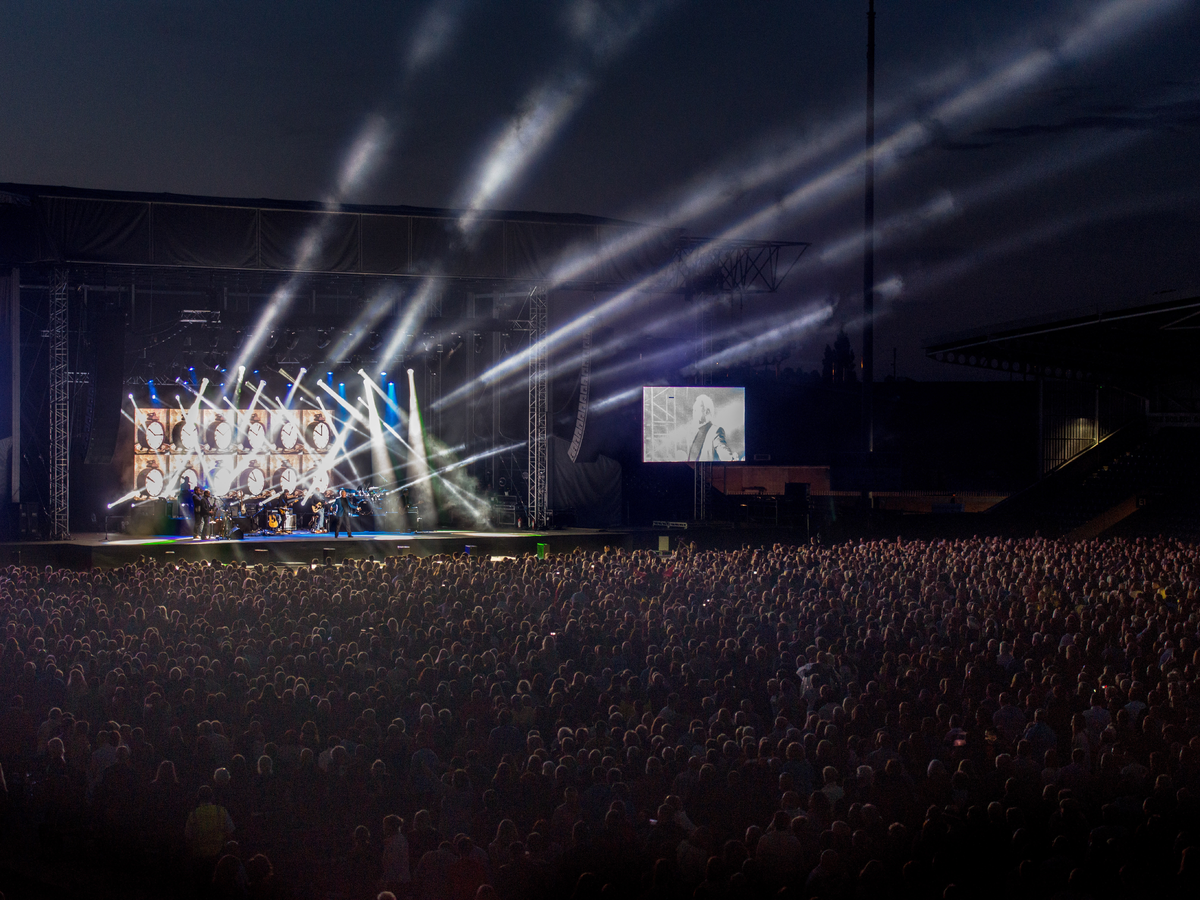
Atmosphere-wise, you can already picture the clash of generations. Up front: fans who saw them in the 70s or at least at the O2, standing next to twenty-somethings who know the entire catalog through playlists. Instead of lighters, you get a constellation of phone screens. Instead of waiting months for bootlegs, full HD clips hit social minutes after the show starts.
Critically, the band’s sound would almost certainly lean heavier and slower than the original recordings. Age changes range, tone, and stamina. Plant has already spent years reinterpreting old songs live, shifting melodies and keys so he isn’t just chasing his 20-year-old voice. Any modern Zep show would probably follow that path: honoring the core riffs and choruses while subtly reshaping the vocal lines and arrangements so they feel honest now, not frozen in 1973.
The production side would be another big talking point. Zeppelin in their prime were pioneers of massive live rigs and dramatic lighting. Translated into 2026, that might mean:
- Huge LED walls with archival footage, abstract visuals, and live close-ups of Page’s hands or Jones’ bass work.
- Modern surround sound mixing in arenas, pushing effects like theremin whines and echoing drums around the room.
- Minimal onstage chatter – letting the songs and visuals do the talking, with only a few heartfelt speeches about Bonham and the passage of time.
Would ticket prices be brutal? Absolutely. In major US and UK markets, you’d be looking at a Taylor Swift or U2 level of pricing, with premium floor seats easily crossing the high hundreds or more on the secondary market. That reality is already part of fan discussions: some argue that a legendary act deserves legendary pricing, others insist a band born in the counterculture shouldn’t be reduced to VIP packages. But realistically, demand would be so insane that dynamic pricing would take over within minutes.
What the web is saying:
Rumor Mill: What Fans Are Speculating
If you wander through r/music, r/rock, or even random TikTok comment sections, a few Led Zeppelin talking points keep coming back like a looped riff.
1. The Reunion Debate: Full Band vs. Celebration Lineup
The most common theory: if anything happens, it won’t be framed as a traditional reunion tour, but as a "celebration" of the band’s legacy. That leaves room for special guests, younger players, and rotating lineups while still putting Page, Plant, and Jones at the center.
Fans name-check people like Jason Bonham (John Bonham’s son, who already played with them in 2007), plus modern rock vocalists who grew up worshipping Plant. Some argue that sharing the mic and instruments with a new generation would make a one-off show more sustainable and less physically brutal for the original members.
Others push back hard, saying anything without the surviving core three doing the bulk of the heavy lifting would feel like a tribute band with a giant budget. That tension — authenticity vs. practicality — drives endless comment wars.
2. Holograms and AI: The Line in the Sand
With AI vocals and hologram tours creeping further into the music business, a chunk of fans are terrified that someone, somewhere, might pitch "AI-enhanced Led Zeppelin" or a virtual John Bonham behind the kit. The reaction is mostly disgust: people cite the band’s raw, human chemistry and chaotic live energy as the entire point of Zeppelin. The idea of algorithmic "new" Zep songs or AI-stitched performances is widely seen as crossing a line.
That said, a smaller group imagines tasteful uses of tech — maybe immersive Dolby Atmos experiences of original multitracks or official "play-along" stem releases for musicians. Those ideas get much more love.
3. Ticket Price Panic and FOMO
Even without dates on the calendar, fans are already gaming out how much they’d pay, how fast they’d click, and which cities would even get shows. Reddit threads do mock "what if" seating charts, calculating hypothetical prices based on other heritage acts. Cynical users predict that big-city floor tickets would be gone in seconds, leaving normal fans to battle resellers or fly to random secondary markets.
At the same time, you see a lot of "I don’t care, I’d sell my laptop to be there" energy. For some people, Zeppelin is a bucket-list, once-in-a-lifetime name — the band their parents or grandparents talked about like a religious experience. The emotional FOMO is intense even for people who mostly listen to hyperpop or rap on a normal day.
4. TikTok "First Time Hearing" Culture
Another running theme: the endless wave of "first time hearing Led Zeppelin" reaction videos. Older fans sometimes roll their eyes at obviously exaggerated takes, but they also love watching younger listeners freak out over Bonham’s drums on "When the Levee Breaks" or the shift in "Stairway to Heaven" from ballad to full-band explosion.
For Gen Z, that content isn’t joke material — it’s how a lot of them genuinely find the band. Algorithms feed them a clip of "Whole Lotta Love" or "Kashmir" during a late-night scroll, they go hunting for the full track, and suddenly they’re deep in a 1971 live version rabbit hole.
5. Secret Shows & Tiny Venues
Because Led Zeppelin built a reputation on surprise and intensity, fans love spin-off theories about ultra-small club shows or unannounced appearances. A recurring fantasy: the band dropping into a 500-cap London or LA venue under a fake name, word-of-mouth only, and ripping through an hour-long set before the internet even knows what’s happening.
Is that remotely realistic for a band of this scale in 2026? Almost certainly not. But as long as Zeppelin’s myth stays alive, so does the dream of them ignoring modern hype machinery and just plugging in somewhere unannounced.
Key Dates & Facts at a Glance
- Band formed: 1968 in London, UK, with Jimmy Page, Robert Plant, John Paul Jones, and John Bonham.
- Debut album: Led Zeppelin released January 1969.
- Breakthrough US exposure: Late 1960s and early 1970s tours across major US cities, building a reputation as one of the loudest, heaviest live bands on the circuit.
- Classic album run: 1969–1975, from Led Zeppelin through Physical Graffiti, often cited as one of the most consistent streaks in rock.
- Drummer John Bonham’s death: 25 September 1980. The band chose to end Led Zeppelin rather than continue under the name without him.
- Official disbanding statement: Released in December 1980, confirming that they would not carry on as Led Zeppelin after Bonham’s passing.
- Notable reunion events: Live Aid (1985), Atlantic Records 40th Anniversary concert (1988), and the key one: O2 Arena, London, 10 December 2007.
- O2 reunion details (2007): Jason Bonham on drums, full headline-length set, widely regarded as one of the best "one night only" returns in rock history.
- Studio albums: Eight official studio albums, from Led Zeppelin (1969) to In Through the Out Door (1979).
- Iconic songs still dominating playlists: "Stairway to Heaven," "Whole Lotta Love," "Kashmir," "Black Dog," "Immigrant Song," "Rock and Roll" and more.
- Chart achievements: Multiple UK and US number-one albums, and massive catalog streaming numbers decades after release, underscoring their ongoing influence.
- Official home base online: The band’s official site and archival hub is available at the link embedded earlier in this article.
FAQ: Everything You Need to Know About Led Zeppelin
Who are the members of Led Zeppelin?
Led Zeppelin’s classic lineup is four people: guitarist and producer Jimmy Page, vocalist and lyricist Robert Plant, bassist and keyboardist John Paul Jones, and drummer John Bonham. This lineup never changed during the band’s original run from 1968 to 1980. Page came out of the British session scene and the Yardbirds, Plant and Bonham brought a raw blues and soul edge from the Midlands, and Jones anchored everything with his musical training and arrangement skills. Together, they didn’t just play heavy rock — they fused blues, folk, Eastern influences, psychedelia, and proto-metal into something that still feels huge and alive.
Is Led Zeppelin touring in 2026?
As of now, there is no confirmed Led Zeppelin tour for 2026. No verified announcements from the band’s official channels, no pre-sales through major ticketing platforms, and no festival lineups listing Led Zeppelin as an active touring act. What you’re seeing instead is a swirl of speculation, old footage resurfacing, and the band’s catalog getting renewed attention through streaming, remasters, and sync placements. Individual members have their own projects — Robert Plant with his solo and collaborative work, Jimmy Page with archive and production-focused activity, John Paul Jones popping up in different musical contexts — but a full-scale "Led Zeppelin 2026 World Tour" doesn’t exist in the real world at this point.
Why did Led Zeppelin break up in the first place?
The main reason is simple and personal: John Bonham’s death in 1980. Bonham wasn’t just the drummer; he was a core part of the band’s identity and chemistry. After he died, the remaining members chose not to continue under the Led Zeppelin name, releasing a statement that said they could not carry on as they were. That decision helped lock the band’s legacy in place — instead of grinding through lineup changes or chasing trends, Zeppelin froze their story as a finite, explosive run. That’s also part of why every reunion rumor feels so loaded: it isn’t just about music, it’s about whether they should reopen something they deliberately chose to close.
What are Led Zeppelin’s most important albums if you’re new?
If you’re just starting, three records usually get mentioned as essential:
- Led Zeppelin IV (1971): You get "Stairway to Heaven," "Black Dog," "Rock and Roll," and "When the Levee Breaks" all on one album. It’s the most famous entry point for a reason.
- Physical Graffiti (1975): A double album that shows everything they can do — heavy riffs, acoustic tracks, experimental jams, swagger, and atmosphere.
- Led Zeppelin II (1969): Lean and powerful. This is the record where they fully lock in as a heavy, groove-based band, with highlights like "Whole Lotta Love" and "Ramble On."
From there, you can go backwards to the blues-heavy debut and the acoustic-leaning Led Zeppelin III, or forward into the more polished, keyboard-friendly territory of Houses of the Holy and In Through the Out Door. There’s no wrong order, but IV is still the gateway drug for most people.
Why do people keep comparing Led Zeppelin to modern rock and metal bands?
Because so much of what you hear in rock and metal today has some link back to them. Page’s riff writing and guitar tone influenced generations of players. Bonham’s drum sound — huge, open, and groove-driven — became a template for rock production. Plant’s vocal style, from soft folk passages to high-pitched screams, echoes in everything from 80s metal to modern alternative. Even the way bands structure live shows — extended solos, dynamic build-ups, quiet-to-loud transitions — owes a debt to Zeppelin tours in the 70s. So when you hear a heavy band today with big, melodic riffs and wide-open drums, people instinctively toss out, "That’s very Zep."
Are there any unreleased Led Zeppelin songs still hidden away?
Jimmy Page has spoken multiple times over the years about digging through archives, tapes, and live recordings. Some of that work already surfaced in expanded reissues and bonus discs: alternate mixes, outtakes, and live cuts. Does that mean there’s an entire finished "lost album" sitting in a vault? That’s unlikely. What’s more realistic is that there are still bits of studio material, demos, and concert recordings that haven’t had a wide official release. Fans love to speculate about a massive final box set tying everything together, but until Page or the band’s official channels say so, it stays in rumor territory.
How should a new fan listen to Led Zeppelin in 2026 — playlists or full albums?
You can absolutely start with playlists; that’s how a lot of people do it. A "Best of Led Zeppelin" queue on your favorite platform will give you the big anthems quickly. But once you feel those songs, full albums tell a deeper story. Zeppelin were an album band: sequencing mattered, moods shifted from track to track, and they liked the journey from acoustic tracks to full-blown electric epics. Try putting on Led Zeppelin IV or Physical Graffiti with no skips, late at night or on headphones. You’ll catch details — room sounds, transitions, tiny guitar overdubs — that don’t hit the same way in shuffled playlist mode.
Will Led Zeppelin’s music still matter to Gen Z and beyond?
The short answer is that it already does. Kids discover "Immigrant Song" through memes, "Stairway to Heaven" through guitar tutorials, and "Kashmir" via edit culture. The reason the songs stick is that underneath all the mythology, they’re just strong: big melodies, heavy grooves, and emotional peaks. You don’t have to care about 1970s rock lore to get chills when the drums crash in on "When the Levee Breaks." As long as streaming platforms keep surfacing these tracks and creators keep using them in new contexts, Led Zeppelin will keep getting passed down — not as homework, but as stuff that still genuinely hits.
Whether or not the band ever walks on stage again together, that part of the story is already written. The music escaped its era. It lives wherever you hit play.
So schätzen die Börsenprofis Aktien ein!

Für. Immer. Kostenlos.