HNO doctor in Berlin Steglitz / Lankwitz – HNO Praxis Berlin with Dr. Dr. Cyrus Djamchidi
07.04.2026 - 07:07:51 | ad-hoc-news.de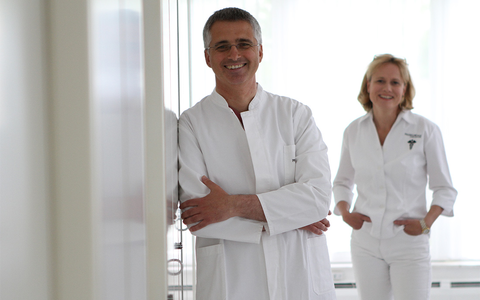
Looking for an HNO doctor in Berlin Steglitz / Lankwitz who takes time for you, speaks your language and understands complex issues around ears, nose, throat and jaw area? At HNO Praxis Berlin of Dr. Dr. Cyrus Djamchidi in Berlin-Steglitz, many patients from Steglitz-Zehlendorf, Lankwitz and beyond find exactly this mix of specialist expertise and a down?to?earth, family?like atmosphere, according to the practice’s own information.[^1]
The practice is geared towards people who value clear explanations instead of medical jargon, who may be a bit anxious before ENT examinations, or who are looking for a Persian-speaking ENT doctor in Berlin for themselves or relatives. Located in the south of Berlin, close to Steglitz and Lankwitz, it offers modern ENT diagnostics and treatment for children, adults and older patients, without the impression of an “assembly-line practice”, as described by the practice.[^1]
Book an appointment online via Doctolib
Online booking is particularly convenient for Berliners with tight schedules. According to the Doctolib profile of the practice, patients can choose available time slots themselves and manage appointments digitally, which is helpful for working people, parents and those travelling from other parts of the city.[^2]
Telephone contact details and current office hours are listed on the practice website and on Doctolib; both should always be checked shortly before visiting, as hours may change.[^1][^2]
Image idea: Bright waiting room scene in a Berlin practice, with a calm patient looking at information material, subtle city map of Steglitz-Lankwitz in the background.
One special feature of HNO Praxis Berlin: Dr. Dr. Cyrus Djamchidi speaks Farsi (Persian) fluently, as stated on the practice website.[^1] For many people with Iranian, Afghan or Tajik background in Berlin, mother?tongue care is more than a comfort – it can significantly reduce misunderstandings and stress. Complex complaints such as recurring sinus infections, dizziness or throat problems are often difficult to describe, even in one’s native language. Having the option to explain symptoms in Farsi can make a decisive difference.
Studies in communication research show that medical consultations in a patient’s native language often improve satisfaction and understanding of diagnoses and treatment plans, and can reduce the risk of errors.[^3] That is why multilingual practices are increasingly seen as an important building block for equitable healthcare in diverse cities like Berlin.
According to the practice, Persian-speaking patients in particular appreciate that they can ask follow?up questions spontaneously in Farsi and also bring along relatives who may not feel confident in German.[^1] This can be especially useful in situations where shared decision?making is important, for example when several treatment options are available and their advantages and disadvantages need to be weighed up calmly.
For children and older people in the Persian-speaking community, an ENT doctor who is able to switch flexibly between German and Farsi can also contribute to mutual trust. The practice positions itself as open to cultural questions and sensitive to the fact that perceptions of illness and health can differ between cultures.[^1]
In addition to his specialization as an ENT doctor (otolaryngologist), Dr. Dr. Cyrus Djamchidi also holds a dental degree and is licensed as a dentist, according to the practice website.[^1] This dual perspective – medicine and dentistry – can be particularly valuable in the anatomically complex head and neck region, where structures of the nose, sinuses, jaw and teeth are closely related.
Medical sources emphasize that, for example, chronic sinusitis of the maxillary sinus can occasionally be linked to dental causes, such as infections or procedures in the upper jaw region.[^4] In such constellations, it may be important that the specialist understands both ENT and dental perspectives, in order to classify findings correctly and plan further steps in a coordinated fashion.
A simple, non?advisory scenario: A patient has recurring pressure in the cheek area and believes it to be a pure sinus problem. In some cases, however, a source near the roots of the upper molars may also be considered.[^4] An ENT specialist who is also a dentist can interpret such cross?sectional issues more comprehensively. This does not replace dedicated dental diagnostics, but can help ensure that the right questions are asked early and that referrals, if needed, are well?targeted.
According to the practice, this interdisciplinary view of the head and neck area is a clear profile feature of HNO Praxis Berlin and is also reflected in the cooperation with other healthcare providers.[^1]
Another important trust signal: According to its website, Dr. Dr. Cyrus Djamchidi is an attending/affiliated physician at DRK Kliniken Berlin Westend.[^1] DRK Kliniken Berlin Westend is a well?known hospital in the district of Charlottenburg?Wilmersdorf, providing, among other services, otolaryngology and related inpatient care.[^5]
In Germany, attending or affiliated physicians (sometimes called “Belegärzte” in German) are specialists who can treat their own patients in a cooperating hospital, particularly for procedures that require hospital infrastructure.[^6] This typically means that certain operations or inpatient treatments can be carried out in a hospital setting while maintaining continuity of care by the same specialist.
For patients from Steglitz, Lankwitz and the broader Steglitz?Zehlendorf and southwest Berlin area, it can be reassuring to know that their ENT doctor cooperates with a hospital like DRK Kliniken Berlin Westend. In case a procedure should become necessary that cannot be performed on an outpatient basis, transitions between practice and hospital can often be organized in a more coordinated way.
The practice positions itself as modern and technically up to date, while deliberately avoiding an “assembly?line” feel.[^1] According to the website, emphasis is placed on individual consultations and a friendly, almost family?like atmosphere.[^1] For many patients, especially those who may be tense before ENT examinations, this atmosphere can be a key factor in choosing a practice.
There is a further aspect where HNO Praxis Berlin stands out: transparency regarding accessibility. According to the practice, the premises are not barrier?free; there is no elevator in the building.[^1] In the context of medical marketing, this honesty is not only legally appropriate but also respectful: people who use wheelchairs or have significant mobility restrictions should know this in advance in order to plan accordingly or choose a barrier?free practice.
For patients who can manage stairs, the practice can still be a good option. The website notes that parking spaces are available, which is especially convenient for those coming by car from Lankwitz, Lichterfelde, Tempelhof or surrounding areas.[^1] Combining car access with public transport connections in Steglitz?Zehlendorf can make the journey more flexible.
Regarding office hours and possible Saturday appointments, readers should consult the current information on the practice website and on Doctolib, as opening times can change.[^1][^2] At the time of research, specific Saturday hours are not explicitly detailed on the main practice page, so it is safest to check Doctolib or call directly for the latest schedule.
Beyond structural details, fairness and service are expressed in small things: according to the practice, waiting times are kept as short as possible, and staff aim to explain organizational steps transparently, from scheduling to possible referrals.[^1] Upselling of unnecessary services is expressly not part of the self?image; instead, the emphasis is on medically appropriate, comprehensible diagnostics and treatment.
HNO Praxis Berlin can be especially suitable for different groups of readers in Berlin:
Firstly, for people who are seeking an ENT doctor in Berlin with a calm, personal tone. Many Berliners report that short, rushed consultations are exhausting. According to its self?description, this practice deliberately takes time to listen and to explain findings in an understandable manner.[^1] For chronic ENT issues such as frequent sinus problems or recurring sore throats, this relational continuity can be an important factor in feeling well looked after. (General information on sinus conditions and their typical diagnostic approaches is available, for example, from the German Society for Otorhinolaryngology, Head and Neck Surgery.)[^7]
Secondly, for patients from the Persian-speaking community in Berlin who are specifically looking for a Persian doctor in Berlin in the ENT field. Whether it is about children who feel safer when the doctor can talk to the parents in Farsi, or older relatives who are more comfortable in their mother tongue – the combination of specialist ENT knowledge and Farsi language skills is relatively rare and therefore particularly valuable.
Thirdly, for people with issues that may lie at the borderline between ENT and dental findings. Examples include symptom constellations involving the temporomandibular joint, the area of the upper jaw or facial pain around the sinuses. Medical literature describes that pain in the face can sometimes radiate from teeth, sinuses or temporomandibular joint and must therefore be differentiated carefully.[^4][^8] While each case requires individual evaluation, an ENT specialist who also has dental qualifications can develop a broader view of possible causes and coordinate with other disciplines more effectively.
Fourthly, for people from Steglitz, Lankwitz, Marienfelde, Lichterfelde and the wider Steglitz?Zehlendorf district who want an ENT doctor relatively close by and appreciate good transport and parking options. Berlin’s south is well connected via bus lines and nearby S?Bahn and U?Bahn stations; combined with the option of driving, this makes the practice attractive for families and working people from the surrounding neighborhoods.[^9]
Fifthly, for patients who prefer to book appointments online. The integration of Doctolib makes it possible to choose time slots without long telephone waiting times and to see directly when something is free.[^2] For many working Berliners who work shifts or irregular hours, this is now almost standard – but not all practices offer it yet. HNO Praxis Berlin thus aligns itself with the expectations of a digitally savvy urban population.
Practical information about the practice can be found primarily on the official website of HNO Praxis Berlin and via Doctolib.[^1][^2] The practice is located in Berlin?Steglitz, within easy reach for residents of Steglitz?Zehlendorf and the neighboring district Tempelhof?Schöneberg, including Lankwitz. The exact address, telephone number, e?mail contact and details on public transport connections are best retrieved directly from the website in order to obtain current data.
On the website, Dr. Dr. Cyrus Djamchidi introduces himself with his educational background and qualifications, including his dual licensure as physician and dentist and his further training as ENT specialist (otorhinolaryngologist).[^1] Such transparency about career path and additional qualifications supports patients in assessing specialist expertise. In Germany, medical specialists in ENT complete several years of regulated, structured training after medical school and licensure.[^10]
In addition, general information on ENT diseases, diagnostic methods such as endoscopy of the nasal passages and sinuses, hearing tests and other procedures is provided through reputable medical societies and patient information services, which can help patients prepare for a consultation.[^7][^11] The practice itself emphasizes that information on the website does not replace an individual consultation – a medically important distinction that also underlines its conscientious approach.[^1]
Anyone considering an appointment at HNO Praxis Berlin should think in advance about what they want to address: for example, recurring ear infections, tinnitus, dizziness, nasal obstruction, allergies affecting the nose and throat, snoring issues, or throat discomfort. Reputable sources such as the German ENT Society or independent patient portals recommend noting down symptoms, medications and questions before visits to specialists so that important points are not forgotten in the conversation.[^7][^11]
For parents bringing children to an ENT doctor, it can be helpful to prepare them in an age?appropriate way and explain that ears, nose and throat are only being examined from the outside and with small instruments. Pediatric ENT consultations often include playful elements to reduce anxiety, although the specific approach varies from practice to practice.[^7] According to its own presentation, HNO Praxis Berlin strives to create a friendly environment that is also suitable for younger patients.[^1]
Allergies, especially hay fever and allergy?related nasal symptoms, are also part of the typical topics in ENT practices. Medical guidelines emphasize that diagnosis and possible therapy options should be tailored individually and may involve cooperation between ENT specialists, allergologists and general practitioners.[^12] While the practice website does not provide detailed allergy program descriptions, patients with such issues can discuss with Dr. Dr. Djamchidi which diagnostics and steps make sense in their particular case.[^1]
Another key area in ENT medicine is hearing health. Independent medical sources emphasize that sudden hearing loss, persistent ear noises (tinnitus) or acute pain in the ear should be evaluated promptly by an ENT doctor.[^11] For example, acute hearing loss (so?called “sudden deafness”) is considered an urgent situation by German ENT societies, requiring rapid clarification.[^11] Such general recommendations underline how relevant accessible ENT practices like HNO Praxis Berlin are for the local healthcare network, although they do not make any statement about specific services or capacities of a single practice.
The cooperation with DRK Kliniken Berlin Westend also fits into this picture: hospitals with ENT departments or related units can take over diagnostics and treatments that exceed the scope of an outpatient practice, for example certain surgeries or inpatient monitoring.[^5][^6] Patients who are treated in a practice by an attending physician may benefit from the fact that they already know the specialist who looks after them in the hospital environment, which can reduce stress and uncertainties.
Many Berliners also value the possibility of combining ENT care with a broader view of general health. The head and neck area is connected to numerous other systems, from the respiratory tract to the nervous system. Medical organizations such as the German ENT Society or the National Health Portal stress that symptoms like dizziness, facial pain or swallowing difficulties can have very different causes and therefore require structured, guideline?oriented diagnostics.[^7][^10] An ENT specialist is the central point of contact for this, often in cooperation with general practitioners and other specialties.
In this context, HNO Praxis Berlin positions itself as a partner for the long term rather than just for one?off acute visits.[^1] This includes, according to the practice, keeping medical explanations understandable and involving patients in decisions as much as possible.[^1] In Berlin’s fast?paced everyday life, this can be a decisive argument for those who are looking not only for a technically competent ENT doctor, but for a style of medicine that values clarity and respect.
As for payment modalities, the practice website does not explicitly and prominently state at first glance which insurance groups (statutory health insurance, private, self?paying) are accepted.[^1] For this reason, patients should inquire directly – by phone, by e?mail or via a note through Doctolib – whether and under what conditions their specific health insurance is accepted. This procedure is recommended by independent patient advisory services as well, especially for specialist and elective services.[^13]
If you live in Steglitz, Lankwitz, Steglitz?Zehlendorf or the neighboring districts, or if you are looking for a Persian-speaking ENT doctor in Berlin, HNO Praxis Berlin with Dr. Dr. Cyrus Djamchidi may be a good address to consider. The combination of ENT specialization, dual qualification as physician and dentist, cooperation with DRK Kliniken Berlin Westend and a practice philosophy oriented towards personal care creates a profile that stands out in a saturated city like Berlin.
Appointments can be requested easily online.
Book an appointment online via Doctolib
Additional information on the team, technical equipment and possible focal points of the practice can be found on the official practice website.
Visit the official practice website of HNO Praxis Berlin
Because medical needs are always highly individual, nothing in this article replaces a personal consultation. However, it can help you assess whether the tone, language options and structural features of this practice match what you are looking for in an ENT doctor in Berlin.
Internal guide: When to see an ENT for sinus problems in Berlin
Internal guide: Tips if you are anxious about doctor visits
Internal guide: Healthcare options in Berlin Steglitz & Lankwitz
Image idea: Portrait of Dr. Dr. Cyrus Djamchidi in a consultation room, talking calmly with a patient, ENT instruments discreetly visible.
Image idea: Exterior view of a typical Berlin Steglitz street with practice signage, showing easy access and urban neighborhood character.
Sources
[^1] https://www.praxisclinic.de/ueber-mich/index.php/ – HNO Praxis Berlin, About me (Dr. Dr. Cyrus Djamchidi) – Accessed 2026-04-07
[^2] https://www.doctolib.de/praxis/berlin/praxisclinic-hno-berlin-steglitz – Doctolib profile: HNO Praxis Berlin Steglitz – Accessed 2026-04-07
[^3] https://pubmed.ncbi.nlm.nih.gov/18568419/ – Flores G. et al., The impact of medical interpreter services on the quality of health care – Accessed 2026-04-07
[^4] https://www.ncbi.nlm.nih.gov/pmc/articles/PMC4608273/ – Patel NA. et al., Odontogenic sinusitis: a comprehensive review – Accessed 2026-04-07
[^5] https://drk-kliniken-berlin.de/westend/ – DRK Kliniken Berlin Westend, Hospital information – Accessed 2026-04-07
[^6] https://www.kbv.de/html/1150_51067.php – Kassenärztliche Bundesvereinigung (KBV): Informationen zu Belegärzten – Accessed 2026-04-07
[^7] https://www.hno.org – Deutsche Gesellschaft für Hals-Nasen-Ohren-Heilkunde, Kopf- und Hals-Chirurgie e.V., Patient information (general) – Accessed 2026-04-07
[^8] https://www.dgzmk.de – Deutsche Gesellschaft für Zahn-, Mund- und Kieferheilkunde: Informationen zu orofazialem Schmerz – Accessed 2026-04-07
[^9] https://www.berlin.de/ba-steglitz-zehlendorf/ – Berlin.de: Borough office Steglitz-Zehlendorf, general information on district and transport – Accessed 2026-04-07
[^10] https://www.bundesaerztekammer.de – Bundesärztekammer: Weiterbildungsordnung, Facharzt für Hals-Nasen-Ohrenheilkunde – Accessed 2026-04-07
[^11] https://www.gesundheitsinformation.de/ohrenerkrankungen.html – Gesundheitsinformation.de (IQWiG): Ear disorders – Accessed 2026-04-07
[^12] https://www.awmf.org/leitlinien/detail/ll/061-001.html – AWMF Guideline Allergic Rhinitis – Accessed 2026-04-07
[^13] https://www.patientenberatung.de – Unabhängige Patientenberatung Deutschland: Fragen an Arztpraxis und Facharztwahl – Accessed 2026-04-07
So schätzen die Börsenprofis Aktien ein!

Für. Immer. Kostenlos.