Dr. Dre: Is The Doc Finally Plotting One Last Era?
07.03.2026 - 03:14:19 | ad-hoc-news.de
If you're a Dr. Dre fan, you can feel it in the timeline right now: something's brewing. Between cryptic studio photos, throwback posts, and rappers casually name?dropping late?night sessions with Dre, the internet has quietly entered Dr. Dre watch mode. No official album date. No confirmed tour. But the clues are stacking up in a way that has long?time heads and Gen Z fans refreshing their feeds like it's 1999 all over again.
Check the official Dr. Dre hub for anything they drop first
You've got veteran producers hinting that Dre has "folders" of finished tracks. You've got fans dissecting every bar of his Super Bowl Halftime cameo with Snoop Dogg, Eminem, Mary J. Blige, and Kendrick Lamar like it was a soft launch for a final chapter. And underneath all the noise is a very real question: are we heading toward one last, fully?formed Dr. Dre era – album, shows, guests, the whole ecosystem – or is this just another round of Detox?style wishful thinking?
The Backstory: Breaking News in Detail
To understand what's actually happening around Dr. Dre right now, you have to separate three layers: confirmed facts, credible industry chatter, and pure fan fantasy. Officially, Dre remains one of hip?hop's most powerful behind?the?boards figures, quietly working out of his Los Angeles studio while running business projects and occasionally popping up for high?profile cameos. There hasn't been a formal tour announcement or a locked?in album rollout in the past few weeks, but the conversation around him has surged again.
Part of that spike comes from the long tail of his recent high?visibility moments. The Super Bowl Halftime Show with Snoop, Em, Kendrick and Mary didn't just pull older fans back in; it sent younger listeners down a rabbit hole. Streams of classics like Nuthin' But a 'G' Thang, Still D.R.E., and The Next Episode jumped hard in the weeks after, and that energy never fully cooled off. Labels, streaming platforms, and playlist editors all clocked that reaction, and any time a Dr. Dre rumor pops up, those same tracks surge again.
Meanwhile, producers and rappers who orbit Dre keep talking. In recent interviews, artists have hinted that Dre has "stupid" amounts of unreleased material sitting on hard drives. Some have described marathon studio nights where Dre works like it's still the Death Row era, obsessing over hi?hats, kick drums, and tiny EQ tweaks that most people would never hear. Others suggest he's more interested in curating, polishing, and mentoring than dropping a traditional solo album.
That's where the "breaking news" part for fans lands: the likelihood of focused Dre activity is higher than it's been in years, even if it doesn't arrive in the classic "here's the big album" format. Industry insiders privately talk about a couple of realistic scenarios:
- A tightly curated project built around younger West Coast voices, with Dre as executive producer and occasional rapper.
- Selective live appearances in key cities – Los Angeles, London, New York – built as "celebration" shows of his catalog rather than a 40?city slog.
- Expanded anniversary editions of his cornerstone albums, paired with short documentary pieces and possibly one?off performances.
For fans, the implication is simple: don't expect Detox to suddenly materialize, but do expect Dre to use his legacy more actively. In plain language, this might be the start of the "final form" of Dr. Dre's public career: less quantity, more curation, and moves that feel big even if they're rare. And that is exactly why stan Twitter, Reddit threads, and TikTok edits are going feral over every tiny new detail.
The Setlist & Show: What to Expect
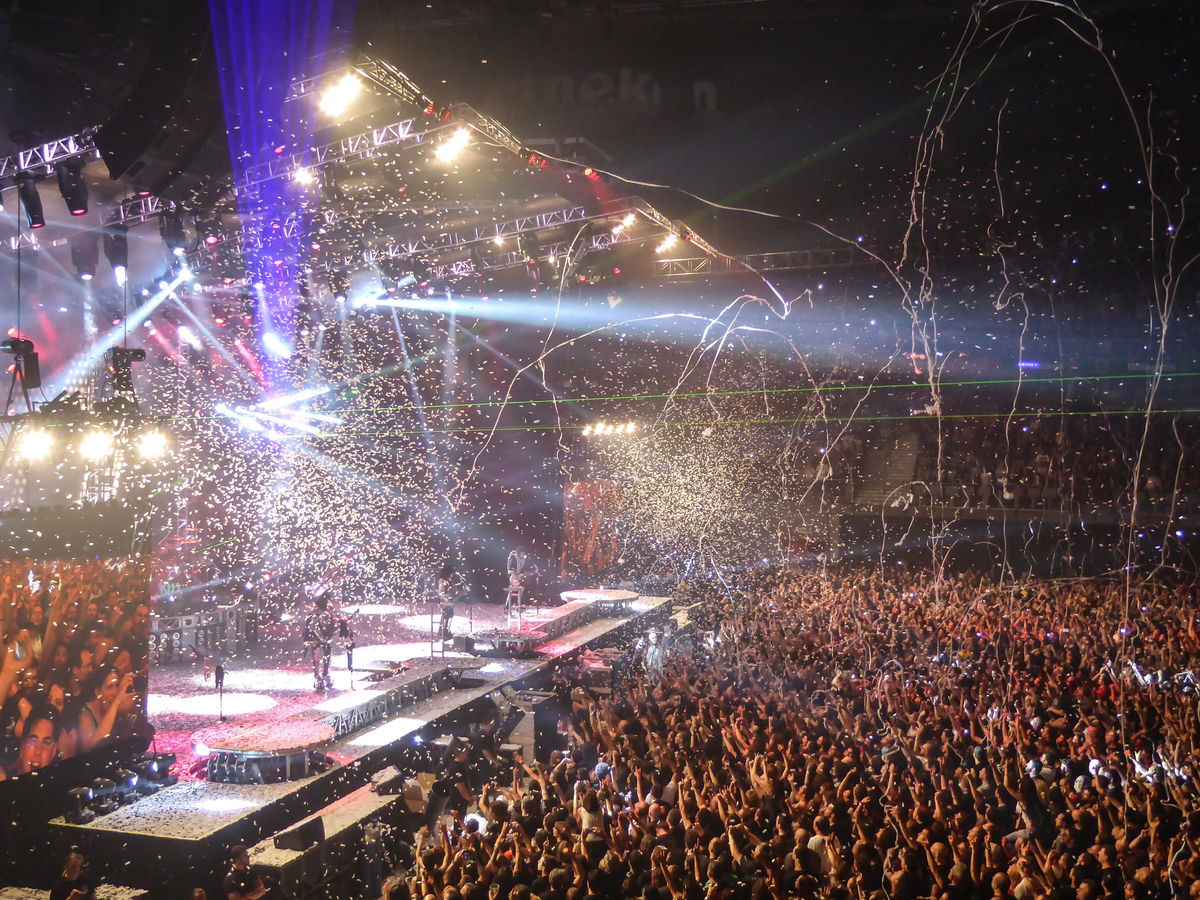
When people talk about a potential Dr. Dre live show or mini?run, they're not imagining a DJ set and a few verses. They're imagining a full?scale hip?hop universe built around three decades of classics. You already saw a compressed version of that during the Super Bowl: a carefully sequenced run through Dre's most iconic moments, each one linked to a star he helped build.
Any real?world show right now would almost certainly revolve around the core catalog:
- Nuthin' But a 'G' Thang – the Snoop introduction that still feels like a California summer distilled into four minutes.
- Let Me Ride – a slower, heavier cut from The Chronic that long?time fans treat like gospel.
- California Love – even if 2Pac only appears on screen, this is non?negotiable.
- Still D.R.E. – the piano riff that refuses to age and turns entire arenas into viral TikToks.
- The Next Episode – a guaranteed mosh?point when the beat drops and the hook hits.
- Forgot About Dre – still one of Eminem's most replayed guest spots, and a perfect call?and?response moment.
- Kush and cuts from 2001 – because that album is basically a greatest hits lineup on its own.
Recent Dre?adjacent events and nostalgia shows give us a rough template. Expect a live band locking in with those enormous, clean drums he's famous for. Expect a stage design that leans into LA iconography – lowriders, studio gear, maybe even a re?created console setup on stage. And expect Dre to balance his role between conductor and frontman: sometimes at the mic, sometimes behind an MPC or keyboard, often standing dead center while friends and collaborators cycle through.
Atmosphere?wise, any Dre show in 2026 is going to feel less like a standard tour stop and more like a culture summit. You'll have OGs who bought The Chronic on cassette next to Gen Z fans who discovered him via GTA radio stations, TikTok edits of Still D.R.E., or their parents playing 2001 on long drives. That mix changes the energy in the room. Instead of everyone waiting for the one TikTok hit, you get an arena that knows almost every hook and reacts to deep cuts like Xxplosive or What's the Difference just as hard as the singles.
If Dre decides to bring guests – and let's be honest, he will – a modern set could easily plug Kendrick Lamar, Anderson .Paak, and newer Compton voices into the classic framework. Imagine Snoop sliding out for The Next Episode, then Paak drumming and singing through a reworked version of Kush, then a younger rapper debuting a new Dre?produced track in the middle of all that nostalgia. That's the exact kind of "past meets present" tension that makes a Dre show go viral on YouTube overnight.
In short, if you manage to land a ticket for any Dre?curated event, plan for a career?spanning setlist, strategic guest chaos, and the kind of sound design that makes even nosebleed seats feel like they're sitting in the studio.
What the web is saying:
Rumor Mill: What Fans Are Speculating
If you open Reddit or TikTok right now and type in "Dr. Dre", you'll fall into a rabbit hole of theories fast. Some of them are pure meme, some are delusional in a fun way, and some actually line up with how Dre has moved his whole career.
1. The "Final Album" Theory
One of the loudest fandom ideas is that Dre is quietly building a final, definitive body of work – not Detox specifically, but a project that acts like a closing chapter. The theory goes like this: with his legacy already locked, he can afford to ignore trends, pick the best songs from years of sessions, and deliver one record that sounds nothing like streaming?era fast food. Fans picture dense, cinematic beats, live instrumentation, and guest spots that feel earned, not algorithmic.
Why people buy it: every time a collaborator mentions those "hard drives of music", it reignites this narrative. Dre has already shown he'll shelve albums if they don't hit his personal standard, so the idea he's chiseling away at something big is easy to believe.
2. The "Pop?Up Tour" Theory
Another popular Reddit and TikTok idea: instead of a conventional world tour, Dre could announce a limited run of pop?up shows in key cities, maybe tied to anniversaries of The Chronic or 2001. Think LA, New York, London, maybe a surprise European festival. Tickets would be expensive – fans are already arguing about hypothetical prices – but the pitch would be simple: "See Dr. Dre perform the soundtrack of three decades once, maybe for the last time."
This theory also folds in the streaming era reality: a short run of beautifully filmed shows can live forever on YouTube, documentaries, or streaming specials, meaning Dre wouldn't have to grind through a 60?date schedule to make an impact.
3. The "Executive Producer Era" Theory
Then there's the more grounded take: Dre won't focus on a solo album at all, instead cementing his legacy as the architect behind other people's classics. In this version, he locks in with a small circle of artists – maybe another full?length with an MC he trusts, maybe a West Coast compilation – and puts his name on the cover as "produced and mixed by Dr. Dre" in big letters. Fans point to his past work with Eminem, 50 Cent, Kendrick Lamar, Anderson .Paak, and Snoop as proof that he shines most when he's in a mentor/producer role.
4. The TikTok & Vinyl Crossover Theory
A more niche but very real conversation is about format. Younger fans who discovered Dre via short?form clips are now buying The Chronic and 2001 on vinyl. Reddit threads obsess over first presses, remasters, and which version "hits" the hardest on a decent sound system. Some fans genuinely believe that any new Dre project will be built with vinyl in mind – long songs, clean mixes, knock?heavy drums that justify a proper home listening session.
Across all of these theories, one thing is obvious: no one is neutral about Dr. Dre. People either think he's sitting on the greatest unreleased soundtrack of the last decade or that he's done enough and doesn't owe the world anything else. The truth, as always with Dre, will probably land somewhere in the middle – carefully chosen moves, maximum impact, minimal noise.
Key Dates & Facts at a Glance
- Real name: Andre Romelle Young.
- Born: February 18, 1965, in Compton, California.
- First major group break: World Class Wreckin' Cru in the mid?1980s as a DJ.
- Breakthrough era: Late 1980s with N.W.A, producing and rapping on Straight Outta Compton.
- Solo debut: The Chronic, released December 1992 – widely considered one of the most influential hip?hop albums ever.
- Follow?up classic: 2001 (sometimes known as Chronic 2001), released November 1999, loaded with hits like Still D.R.E., The Next Episode, and Forgot About Dre.
- Key collaborator launches: Helped break Snoop Dogg in the early '90s, Eminem in the late '90s, and later played a crucial role in the rise of 50 Cent and Kendrick Lamar.
- Super Bowl milestone: Headlined the Super Bowl LVI Halftime Show in Inglewood, California, alongside Snoop Dogg, Eminem, Mary J. Blige, Kendrick Lamar, and 50 Cent.
- Core sound traits: Clean, heavy drum mixes, cinematic synths, live instrumentation, and obsessive attention to detail.
- Label history: Founding figure at Death Row Records in the early '90s, later founder of Aftermath Entertainment.
- Business moves: Co?founded Beats Electronics, later acquired by Apple, cementing his status as one of music's most successful producer?entrepreneurs.
- Streaming era footprint: Songs like Still D.R.E. and The Next Episode regularly rack up hundreds of millions of streams and trend repeatedly on TikTok and YouTube.
- Live appearance style: Rare but high?impact; Dre tends to choose curated, high?profile stages over constant touring.
FAQ: Everything You Need to Know About Dr. Dre
Who is Dr. Dre, really?
Dr. Dre is more than a legendary rapper; he's one of the core architects of modern hip?hop. Born Andre Young in Compton, he started as a DJ, moved into production with World Class Wreckin' Cru, and then exploded into national consciousness with N.W.A. What makes Dre different from most of his peers is that his impact runs on three levels at once: as a producer, as a solo artist, and as an executive who spots talent before everyone else.
He helped define the sound of West Coast rap in the '90s, then pivoted and did the same thing for mainstream rap in the 2000s by backing Eminem and 50 Cent. Even when he wasn't dropping his own albums, his fingerprints were all over the biggest records on the charts. For a lot of fans, calling him just a "rapper" feels undersized; he's more like a one?man ecosystem.
What is Dr. Dre best known for musically?
If you strip it down to essentials, Dre is known for immaculate, powerful production and a run of albums and singles that never really left circulation. Tracks like Nuthin' But a 'G' Thang, California Love, Still D.R.E., The Next Episode, and Forgot About Dre are still hard?wired into playlists, movie syncs, sporting events, and memes.
On the production side, fans love his ultra?clean drum sound – kicks that punch without distorting, snares that snap, and bass that feels huge without turning into mud. He combines that with live instruments, synth leads, and carefully layered vocals so even the simplest loop feels massive. His albums also play like movies: intros, skits, beat switches, and sequencing are all treated like story beats.
Where does Dr. Dre fit in the current music era?
Right now, Dre sits in a rare position: he's an active legend. He doesn't need to chase trends or TikTok sounds; trends orbit around things he did 20 or 30 years ago. His influence shows up in everything from trap drum programming to the way newer artists obsess over mix quality. Producers who grew up on his records openly copy his clean low?end and his approach to layering melodies.
At the same time, younger fans are discovering him in very modern ways. A clip of Still D.R.E. might go viral for a dance trend, then lead a 17?year?old back to an entire album made before they were born. Dre operates at that intersection: part history lesson, part active blueprint.
When could fans realistically see new Dr. Dre music or shows?
There are no officially confirmed release dates or tour schedules currently locked in public view, and Dre has a long history of taking his time. That said, patterns matter. When you see a cluster of collaborators talking about fresh sessions and hear about Dre being in the studio for long stretches, it usually means something is in motion, even if it's not a classic solo album.
Realistically, fans should expect selective moves rather than a full, old?school album campaign: guest production on big?ticket projects, curated appearances, potential anniversary celebrations, and maybe, if the stars align, a more focused Dre?led release that pulls together years of work. If anything major drops, it will almost certainly appear – or at least be teased – via official channels like his site and close collaborators' socials first.
Why is Dr. Dre so careful – and slow – with releases?
Dre's perfectionism is legendary. Collaborators have talked about him spending hours on a single snare sound, re?recording verses because a syllable felt off, and shelving near?complete records if he didn't think they matched the standard of The Chronic or 2001. That obsessive approach is part of why his discography is relatively small but extremely respected.
From a fan perspective, it's frustrating – people have been joking about Detox for over a decade. But from a legacy perspective, it works. There are almost no "forgotten" Dre releases. When his name is on something in a big way, it feels considered, heavy, and replayable. In an era where artists drop loosies every week, that kind of scarcity actually makes his moves feel bigger.
How can new fans get into Dr. Dre in 2026 without feeling lost?
If you're just arriving at Dre's world, the easiest on?ramp is a three?step path:
- Start with the obvious hits – run through Still D.R.E., The Next Episode, California Love, Forgot About Dre, and Nuthin' But a 'G' Thang. You'll instantly recognize how many of these you've already heard in movies, games, streams, and TikToks.
- Then live inside the albums – listen to The Chronic and 2001 front to back, no shuffle. Pay attention to how the skits, intros, and sequencing set the mood. Even if some references feel dated, the production still slaps.
- Finally, follow the branches – go explore the artists Dre helped break. Dive into Snoop's early work, Eminem's first Aftermath era, 50 Cent's breakthrough, and Kendrick Lamar's rise. You'll start to hear the Dre DNA in all of it.
By the time you've done that, you'll understand why older fans talk about him with a kind of protective intensity – and why any rumor of new music sends people into overdrive.
What makes a "Dr. Dre" show different from a regular rap concert?
Three things: sound, structure, and symbolism. Sound?wise, Dre's obsession with mix quality carries into live settings, so you're more likely to get a show where the drums punch without overpowering the vocals and the low end is big but controlled. Structurally, he thinks in albums, not just singles, which means a setlist that tells a story instead of just cycling through hits in random order.
Symbolically, a Dre show is never just about him. It's about N.W.A, Death Row, Aftermath, the West Coast, and the artists who came through his orbit. When he's on stage, he’s also standing in for all of that history. That's why fans talk about potential Dre shows the way rock fans talk about seeing a legacy band: it's not just a night out, it's a piece of music history in real time.
Whether 2026 ends up being the year Dre steps back into the spotlight fully or just another year of carefully chosen cameos, one thing hasn't changed: when he moves, the whole genre pays attention – and you probably will too.
So schätzen die Börsenprofis Aktien ein!

Für. Immer. Kostenlos.