Dow Jones: Silent Crash Loading or Once-in-a-Decade Buy-the-Dip Opportunity?
10.02.2026 - 23:36:04 | ad-hoc-news.de
Get the professional edge. Since 2005, the 'trading-notes' market letter has delivered reliable trading recommendations – three times a week, directly to your inbox. 100% free. 100% expert knowledge. Simply enter your email address and never miss a top opportunity again. Sign up for free now
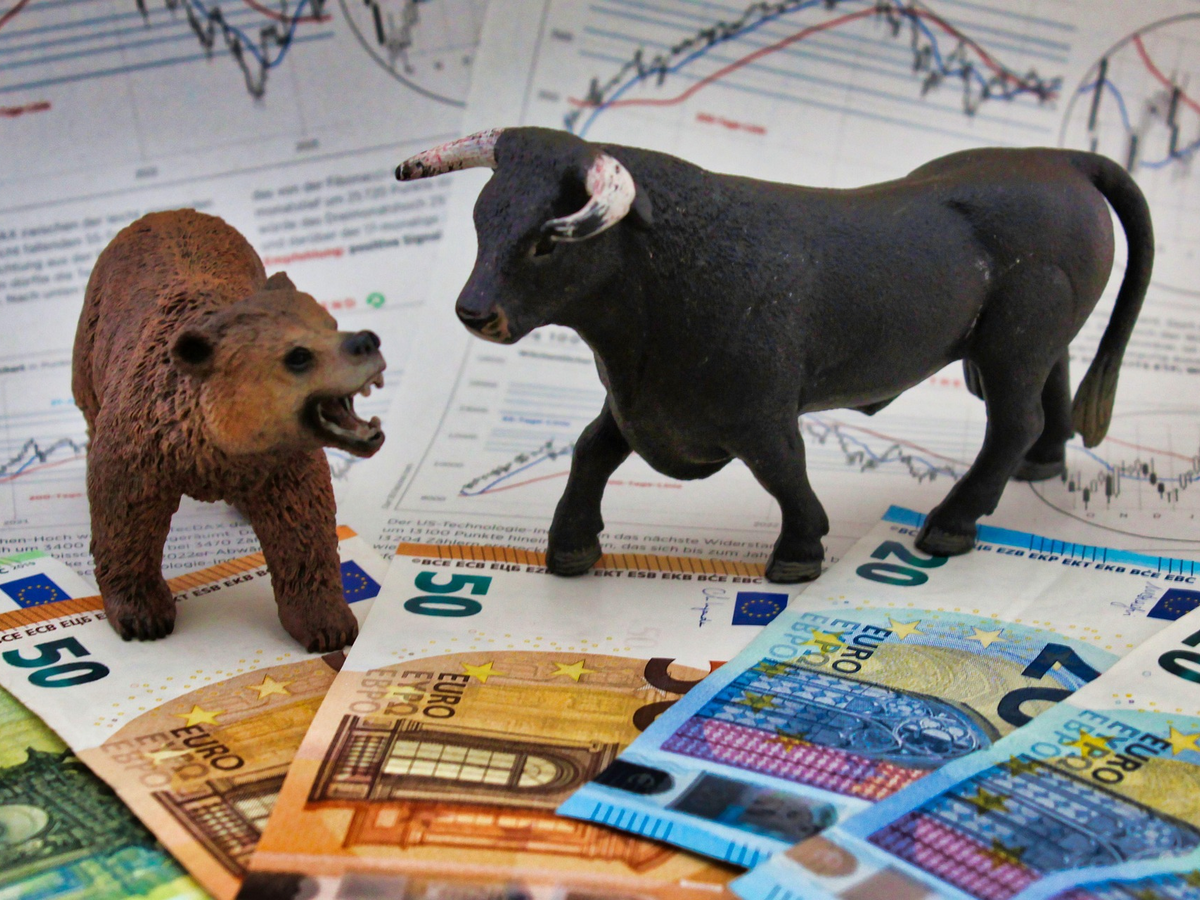
Vibe Check: The Dow Jones right now is moving in a tense, choppy range – a classic tug-of-war between nervous profit-taking and aggressive dip-buying. No clean breakout, no full-on crash, just a dangerous, indecisive zone where both Bulls and Bears can get wrecked if they get too confident.
Want to see what people are saying? Check out real opinions here:
- Watch live Dow Jones battle streams and trader reactions on YouTube
- Scroll the latest Wall Street mood swings and chart posts on Instagram
- Binge viral TikTok trading hacks and US30 strategies
The Story: Right now, the Dow Jones Industrial Average sits at the epicenter of a multi-layered macro drama. Forget the calm headlines – under the surface, this is one of the most fragile and opportunity-rich environments blue-chip traders have seen in years.
The narrative is dominated by a few explosive themes:
- Fed Policy & Rates: The market is obsessing over when and how aggressively the Federal Reserve will pivot. Every word from Jerome Powell, every dot on the dot plot, every question at a press conference is moving expectations – and those expectations are moving the Dow.
- Inflation Data (CPI/PPI): Inflation has cooled from peak panic levels, but the last miles are the hardest. Any hotter-than-expected CPI or PPI print revives fears that rates will stay elevated for longer, pressuring valuation multiples and punishing rate-sensitive Dow components.
- US Earnings Season: This is where the real story is told. Industrial titans, banks, healthcare giants, and legacy tech inside the Dow are drawing a sharp line between winners and losers. Solid earnings with cautious guidance create confusion: is this a late-cycle plateau or the start of a new expansion?
- Recession vs Soft Landing: Wall Street is split. One camp thinks we get a soft landing – slower growth, but no crash. The other camp believes the lag effect of tight policy hasn’t fully hit yet. The Dow, stacked with cyclical names, is the playground where these macro views get priced in.
On CNBC’s US markets coverage, the storyline keeps circling the same pressure points: bond yields trying to stabilize, the Fed refusing to guarantee fast cuts, and investors asking if the economy is genuinely resilient or just running on fiscal steroids and consumer credit. That uncertainty is exactly why the Dow’s recent behavior feels like a series of fake breakouts and violent reversals instead of a smooth trend.
Social sentiment mirrors that chaos. On YouTube, you see thumbnails screaming "Dow Crash Imminent" right next to "Massive Rally Ahead". TikTok is full of ultra-short-term scalpers bragging about flipping US30 spikes, while Instagram chart posts show messy ranges instead of clean, trending channels. This is not a calm bull market; this is a battlefield.
Deep Dive Analysis: To understand the Dow’s next big move, you have to zoom out to the macro dashboard: bond yields, the US dollar, and the global risk cycle.
1. Bond Yields – The Invisible Gravity
Bond yields are the invisible gravity field underneath every move in the Dow. When yields rise sharply, the discount rate on future earnings climbs, making stocks – especially dividend payers and defensives – less attractive compared to "risk-free" Treasuries. When yields ease off, the pressure lifts and equities can breathe.
The current environment is a dangerous stalemate:
- Yields are no longer in full-blown panic mode, but they are still elevated enough to keep valuation debates alive.
- Any hint of stickier inflation or hawkish Fed commentary can trigger a sudden spike in yields and an instant hit to the Dow.
- On the flip side, if yields drift lower on expectations of future cuts, high-quality blue chips suddenly look like attractive "Bond Alternatives" again – especially to institutions starving for reliable yield.
2. Fed Policy – The Ultimate Market Algorithm
Powell and the FOMC have one job: kill inflation without blowing up the labor market. The Dow’s job is to constantly price in how likely they are to succeed. Recent Fed messaging has been crystal-clear on one thing: they do not want to loosen too fast and accidentally re-ignite inflation.
That means:
- Rate cuts are not guaranteed on the market’s preferred schedule.
- Any disappointment in timing ("fewer cuts", "later cuts") hits cyclical Dow components first – think industrials, financials, consumer names.
- However, a genuinely dovish surprise – softer language, signs of comfort with inflation trajectory – could unleash an explosive short-covering rally in the Dow as Bears rush to get out of the way.
3. The Dollar Index – Global Liquidity Thermometer
The US dollar matters massively for a global index like the Dow. Many Dow companies are multinational exporters. A stronger dollar can hurt their foreign revenues when converted back into dollars, while a softer dollar often supports earnings and risk appetite.
Right now, the dollar sits in a sensitive zone:
- If the dollar firms up on higher-for-longer rate expectations, global liquidity tightens, emerging markets wobble, and risk appetite shrinks – bad cocktail for the Dow.
- If the dollar weakens on expectations of future cuts or improving global growth, multinational Dow names can get an extra earnings tailwind and fresh interest from overseas investors.
The Sector Rotation: Tech vs Industrials vs Energy Inside the Dow
The Dow is not the Nasdaq. It is a heavyweight mix of industrials, financials, healthcare, staples, legacy tech, and some growth flavor. The recent story has been a wild sector rotation that keeps traders guessing.
1. Tech & Growth Inside the Dow
Even though the Dow is more old-school, the few mega-cap tech and tech-adjacent names inside it still punch far above their weight in sentiment. When rates fall or stabilize, these names catch a bid, giving the index a psychological lift even if classic cyclicals are struggling.
2. Industrials & Cyclicals
These are your macro barometers. When the market believes in a soft landing and ongoing capex, industrials and machinery names get love. When recession fear flares up, they get sold hard and fast.
Recent flows show a nervous pattern: brief rotations into industrials on upbeat data, followed by sharp pullbacks whenever a data print or Fed speech rekindles slowdown anxiety. That jittery rotation is exactly what you expect in late-cycle conditions.
3. Energy & Commodities
Energy names in the Dow live and die with oil prices and geopolitics. Any spike in crude due to supply shocks or geopolitical drama can create short-term strength in energy, sometimes offsetting weakness in other sectors. But if demand fears dominate, energy fades, reinforcing the risk-off tone.
Overall, the Dow is not giving a clean risk-on or risk-off signal – it is more like a rotation carousel. Capital keeps moving from one pocket to another instead of committing fully to a single narrative.
The Global Context: Europe, Asia, and the Liquidity Web
The Dow does not trade in a vacuum. Europe’s slowdown fears, China’s fragile recovery, and Bank of Japan/ECB policy shifts all feed directly into US liquidity and sentiment.
- Europe: Softer growth data, fiscal constraints, and lingering energy issues have made European equities less attractive for many global players. When flows rotate out of Europe, some of that capital hunts for relative safety and depth – which often means US blue chips inside the Dow.
- Asia & China: Every new headline about Chinese stimulus, property market stress, or export trends hits global risk sentiment. The Dow benefits when China looks stable and demand for US goods/services holds up. It suffers when China looks wobbly and global trade jitters rise.
- Central Bank Divergence: Different pace of tightening/loosening between the Fed, ECB, and BOJ impacts FX, carry trades, and cross-border flows. That, in turn, shapes how much foreign capital is willing to sit in US equities versus elsewhere.
In short: if global growth data outside the US starts surprising positively, the Dow can ride a wave of synchronized optimism. If global data deteriorates, the Dow becomes a risk-off punching bag.
Sentiment: Fear, Greed, and Smart Money Flow
The current vibe across social and institutional channels is a strange mix:
- Retail Traders: On TikTok and YouTube, a lot of short-term traders are hyper-focused on scalping fast moves in US30. They talk in terms of instant breakouts, "daily flips", and "smash the buy button". Emotion is high, discipline often low.
- Institutional & Smart Money: Fund flows and positioning point to caution, not euphoria. Smart money is more interested in quality balance sheets, cash flow visibility, and defensive moats than YOLO breakouts. They are active, but they are not all-in. This creates a subtle divergence: loud retail excitement vs quieter institutional hedging.
- Fear & Greed Balance: Sentiment is not in extreme panic, but it is far from full-blown greed. It feels like a mid-range zone where both sides can be squeezed. That is exactly the environment where surprise macro data or unexpected Fed commentary can trigger an outsized move.
Key Levels & Market Structure
- Key Levels: Instead of obsessing over a single price print, focus on the important zones: a broad resistance band overhead where rallies keep stalling, and a demand zone below where dip buyers consistently step in. A clean break above resistance with volume and strong breadth would signal that Bulls are finally in control. A decisive breakdown through the lower demand zone would confirm that Bears have seized the momentum.
- Sentiment Control: Right now, neither camp fully owns Wall Street. Bulls are defending every sharp drop with aggressive dip-buying, while Bears are selling into every pop, betting that the macro reality will eventually bite. That balance will not last forever – one side is going to get squeezed in a big way.
Conclusion: So where does this leave you – is the Dow Jones a trap or a treasure right now?
Here is the blunt truth: we are in a late-cycle, high-noise, high-opportunity phase. The Dow is not trending cleanly; it is chopping inside crucial zones while macro, Fed expectations, and global data fight for dominance. That is exactly the kind of environment where:
- Impatient traders over-leverage and get stopped out repeatedly.
- Disciplined traders respect risk, watch the macro calendar like a hawk, and wait for high-conviction setups near well-defined zones.
For Bulls, the opportunity is clear: if inflation keeps drifting lower, if the Fed signals comfort with gradual easing, and if global growth stabilizes, the Dow could transition from choppy sideways action into a powerful upside breakout as institutional money rotates harder into quality blue chips.
For Bears, the risk story is equally compelling: if inflation flares again, if yields spike on hawkish repricing, or if global data starts rolling over hard, the Dow’s cyclical backbone could turn from resilient to vulnerable very quickly, turning this choppy range into the ceiling of a much larger downturn.
Your edge is not predicting the future perfectly – it is preparing for both paths:
- Define your personal important zones: where would you be comfortable buying a controlled dip, and where would you stop out if the macro tide clearly turns?
- Respect the event risk: CPI, PPI, Fed meetings, major Dow component earnings – these are not days to "wing it" with oversized positions.
- Watch rotation, not just price: if breakouts come with strong breadth across industrials, financials, and defensives, that is real strength. If rallies are narrow and driven by just a few names, be suspicious.
The Dow is not boring right now – it is a coiled spring inside a macro minefield. For traders who combine macro awareness, technical structure, and disciplined risk management, this environment is full of asymmetric setups. For gamblers chasing every candle, it is a slow-motion liquidation trap.
Bottom line: the next big move in the Dow will not be random. It will be the logical outcome of how inflation, Fed expectations, global growth, and sector rotation line up. Stay sharp, stay flexible, and treat every headline as a potential volatility trigger, not a trading signal by itself.
Trade the narrative, not the noise – and remember, surviving the chop is how you stay in the game for the real trend.
Tired of poor service? At trading-house, you trade with Neo-Broker conditions (free!), but with real professional support. Use exclusive trading signals, algo-trading, and personal coaching for your success. Swap anonymity for real support. Open an account now and start with pro support
Risk Warning: Financial instruments, especially CFDs on indices like the Dow Jones, are complex and come with a high risk of losing money rapidly due to leverage. You should consider whether you understand how these instruments work and whether you can afford to take the high risk of losing your money. This content is for informational purposes only and does not constitute investment advice.
So schätzen die Börsenprofis Aktien ein!

Für. Immer. Kostenlos.