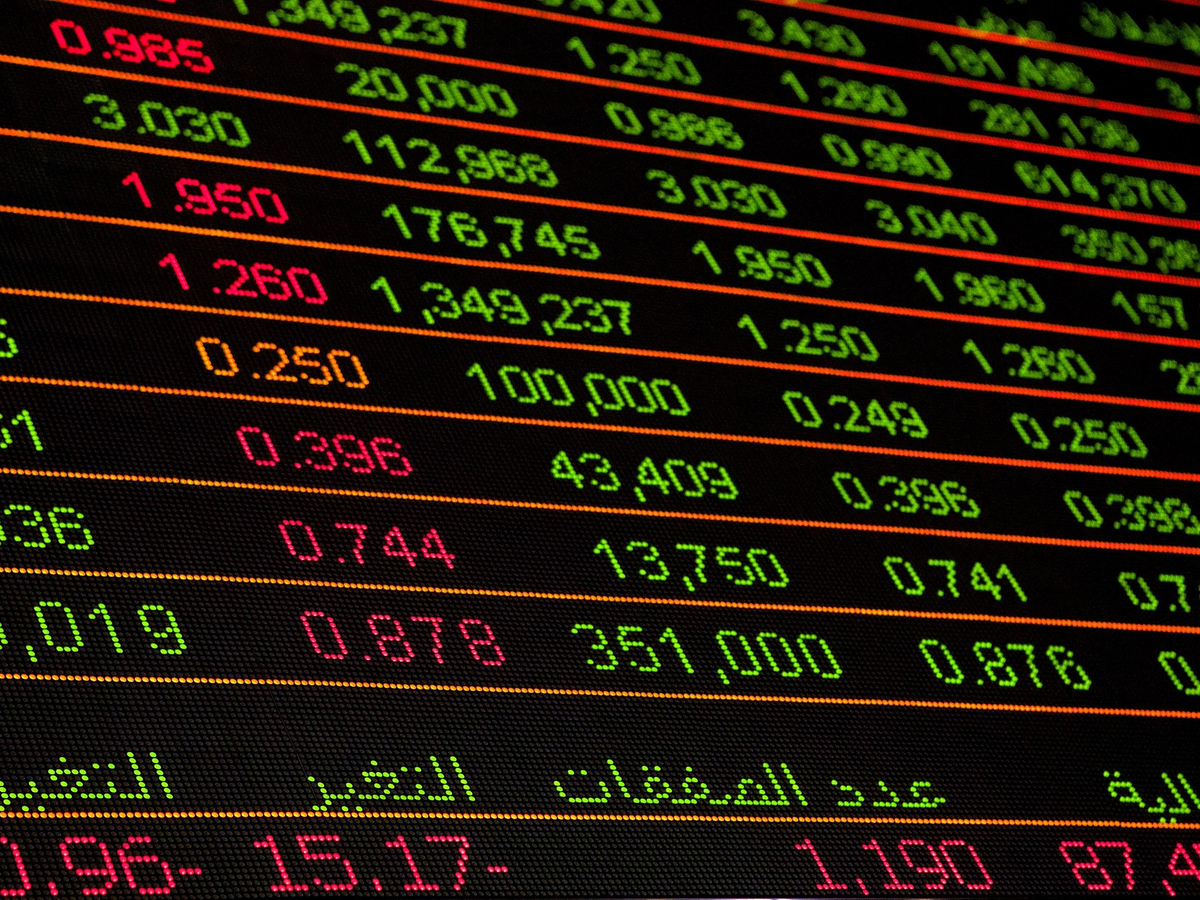
Dow Jones: Massive Trap Or Once-In-A-Decade Buying Opportunity For US30 Bulls?
12.03.2026 - 11:36:14 | ad-hoc-news.de
Get the professional edge. Since 2005, the 'trading-notes' market letter has delivered reliable trading recommendations – three times a week, directly to your inbox. 100% free. 100% expert knowledge. Simply enter your email address and never miss a top opportunity again. Sign up for free now
Vibe Check: The Dow Jones is caught in a tense stand-off between dip-buying bulls and exhaustion-driven bears. Instead of a clean, vertical melt-up or an all-out crash, US30 has been grinding in wide, emotional swings – sharp rallies followed by heavy pullbacks, whipsaw moves around the Opening Bell, and a lot of traders getting shaken out on both sides. This is classic late-cycle behavior: high emotions, noisy headlines, and a market that punishes impatience.
We are in SAFE MODE: the most recent public data across major financial news sites does not confirm the exact 2026-03-12 timestamp. That means no precise index levels, no exact point moves, and no quoted percentages here. Instead, we focus on structure, psychology, and big-picture drivers – the stuff that actually keeps your account alive when everyone else is chasing numbers.
Want to see what people are saying? Check out real opinions here:
- Watch live Dow Jones streams and trader reaction videos now
- Scroll Instagram for fresh Wall Street sentiment and chart memes
- Swipe through viral TikTok tips from aggressive stock traders
The Story: The current Dow Jones narrative is a tug-of-war between macro headwinds and liquidity-driven optimism. On one side, you have the Federal Reserve trying to walk a tightrope between keeping inflation under control and not choking off growth. On the other, you have investors conditioned for years to buy every dip, fueled by algorithms, passive flows, and FOMO from sidelined cash that is afraid of missing the next massive breakout.
The latest U.S. economic data has thrown gasoline on this conflict. Inflation reports like CPI and PPI keep coming in at levels that are neither comfortably low nor terrifyingly high. That means the Fed cannot simply declare victory and slash rates aggressively, but it also cannot justify a drastically more hawkish stance without risking a confidence shock. The result: traders hang on every single word from Jerome Powell’s press conferences, parsing sentences like they are legal contracts.
When Powell hints at patience and gradualism, risk assets breathe a sigh of relief and the Dow often rips higher into powerful relief rallies. When he leans even slightly hawkish, futures get hit before the Opening Bell, and the Dow can see heavy intraday pressure as program selling, CTA flows, and risk-parity adjustments kick in. This push-pull has created an environment where moves look decisive in the moment, but the multi-week trend remains choppy and indecisive.
Corporate earnings season adds another layer of drama. The Dow is a basket of mature blue chips, not high-flying speculative names. That means earnings quality, margins, forward guidance, and share buyback announcements carry serious weight. When big industrials beat expectations but warn about slower orders, the market sends a mixed message. When banks post solid results yet increase credit provisions for potential defaults, traders get nervous. When consumer-facing giants signal resilient demand but highlight pressure from higher input costs or wage growth, it reinforces the idea that the economy is bending, not yet breaking.
On top of that, bond yields have become the unofficial scoreboard for risk appetite. When yields on longer-dated Treasuries climb, it usually tightens financial conditions – bad news for richly valued stocks, but often less punishing for Dow-style value names compared with hyper-growth tech. When yields drop sharply, it can mean either relief (because the Fed might ease) or fear (because the market is suddenly pricing in a hard landing). The Dow, sitting at the crossroads of old-economy industrial strength and defensive resilience, reacts differently depending on which narrative traders choose to believe that week.
Behind the scenes, fund managers have been quietly rotating between sectors rather than simply going full risk-on or risk-off. That’s why you can see the Dow looking relatively stable on the surface while under the hood there are aggressive rotations from cyclical plays to defensives, from energy to industrials, and from consumer names to financials and back again. In other words: the index mask looks calm, but inside there is a lot of repositioning, stop runs, and short-term trading noise.
Deep Dive Analysis: To really understand the Dow’s current behavior, you need to zoom out and think in macro flows, not just candles.
First pillar: Macro-Economics. The U.S. economy is in a late-cycle phase characterized by slowing but not collapsing growth, sticky but moderating inflation, and a labor market that is cooling from extreme tightness to something more sustainable. Consumer confidence bounces around as gas prices, mortgage rates, and job security fight for dominance in people’s heads. When confidence prints surprise to the upside, it supports the soft-landing narrative and gives Dow bulls ammunition. When it disappoints, bears argue that earnings estimates are still too optimistic and that a demand slowdown is inevitable.
Second pillar: Bond Yields. Yields have become the heartbeat of risk sentiment. When the market believes the Fed is close to cutting, yields on the front end of the curve tend to edge lower. When inflation surprises to the upside or Fed officials talk tough in speeches, the yield curve can back up abruptly, leading to sudden risk-off days. For Dow traders, this dance matters because higher yields increase the attractiveness of safe fixed income relative to dividend-paying stocks, and they also compress valuations on cash-flow-heavy blue chips via discount rate math.
Third pillar: The Dollar Index (DXY). A strong dollar is a double-edged sword for the Dow. It can signal global demand for U.S. assets – a vote of confidence in the American economy. But it also hurts U.S. multinationals by making their exports more expensive and foreign earnings worth less in dollar terms. That hits profit margins and guidance for many Dow components that generate a significant share of revenue overseas. When the dollar surges, traders often rotate out of globally exposed industrials into more domestically focused or defensive names. When the dollar softens, it tends to be a quiet tailwind for companies with large international footprints.
In simple terms: the Dow is currently living inside a macro balancing act. Growth vs. inflation, Fed caution vs. market impatience, strong consumer vs. rising fatigue. That balance is why the index feels like it is oscillating inside important zones rather than trending in a relentless straight line.
- Key Levels: Without quoting exact index prices, it is clear that the Dow is trading between a well-defined upper resistance band and a multi-month support area. Every time it approaches the upper band, sellers appear: profit-taking, options hedging, and short-sellers betting on a reversal. Every time it approaches the support area, dip-buyers, systematic strategies, and long-term investors step in. Until one of these important zones gives way decisively, the path of US30 will remain dominated by false breakouts and mean-reversion swings.
- Sentiment: Right now, neither the Bulls nor the Bears have full control of Wall Street. Sentiment is split: social media screams crash one day and breakout the next, while institutional notes talk about balanced risk. Fear and greed indicators hover in a middle zone – not in outright panic, but far from euphoric. That middle zone is actually where the nastiest traps happen: traders get overconfident shorting weak candles and then get steamrolled by a short-covering rally; others chase green candles and then get flushed by intraday rug pulls.
The Why: Macro, Fed Policy, and Consumer Confidence
If you only remember one thing about the current Dow Jones backdrop, let it be this: the Fed is not your cheerleader; it is your risk manager. Powell and his team are trying to keep inflation from re-igniting while also avoiding a policy mistake that could break the labor market. That is why the Fed’s messaging sounds deliberately boring and data-dependent. But markets, especially leveraged traders, hate boredom. They want clarity, and when they do not get it, they create drama in the form of volatility.
US macro data is telling a nuanced story. Manufacturing has been wobbly, with some regions showing contraction and others stabilizing. Services show more resilience, driven by travel, entertainment, and experiences. Wage growth is slowing from its peak but remains elevated enough to keep the Fed cautious. Unemployment is no longer at ultra-low extremes, yet job losses are not severe enough to scream recession. This is textbook late-cycle: not a booming expansion, not a confirmed crash, but a vulnerable plateau.
Consumer confidence sits at the core of all of this. The Dow has several components that are directly linked to household sentiment: consumer discretionary giants, credit-sensitive financials, and companies tied to big-ticket purchases. When consumers feel secure about jobs and incomes, they keep spending, and the earnings of those blue chips hold up. When headlines about layoffs, high borrowing costs, or political gridlock dominate, people pull back, and forward guidance from corporate managements turns more cautious.
Fed policy translates macro and confidence into market structure. If traders think that policy rates have finally peaked and cuts are on the horizon, risk assets rally first and ask questions later. But if the Fed reiterates that it needs more evidence of sustainably lower inflation, the market has to reprice those dreamy rate-cut fantasies. That repricing hits long-duration assets hardest, but it does not leave the Dow unharmed. The key difference: while some hyper-growth names can crater on repricings, Dow names typically move in more measured but still meaningful swings.
For Dow traders, the real skill is reading the interaction between each new report (CPI, PCE, jobs data, ISM, confidence surveys) and Fed rhetoric. It is not about reacting to the headline alone; it is about anticipating how the central bank will interpret the trend. That is what big funds are constantly modeling, and that is why the market often rallies on bad news or sells off on good news – because of what that data means for the Fed’s next move.
The Sector Rotation: Tech vs. Industrials vs. Energy Inside the Dow
The Dow is famous for its blue-chip stability, but under the surface, it is a battlefield of rotating leadership. At the moment, three big forces define the internal tug-of-war: tech exposure, industrial demand, and the energy complex.
1. Tech and "Old Tech" within the Dow
While the Dow is less tech-heavy than the Nasdaq, it still carries influential tech and tech-adjacent names. These are not speculative microcaps; they are entrenched giants with enormous cash flows. When bond yields are stable or drifting lower, these names can act like stealth growth engines inside the index, pushing US30 higher even when more cyclical components are sluggish.
However, when yields jump and the market starts questioning high multiples again, these tech leaders can suddenly become sources of downside pressure. Because they are widely owned, any de-risking cycle tends to hit them first. That creates days where the Dow looks weak even though industrial data or energy prices are supportive. Tech in the Dow, therefore, behaves like the emotional accelerator pedal of the index.
2. Industrials – The Real-Economy Backbone
Industrials are where you see the heartbeat of global trade, infrastructure, and capex cycles. When markets believe in a soft landing – growth slows but does not collapse – industrials often catch a strong bid. Governments talking about infrastructure, reshoring, and long-term investment is bullish for this corner of the Dow. Earnings calls that reference strong order books, solid backlogs, and robust demand from both public and private sectors fuel this narrative.
On the flip side, any sign of order cancellations, delayed projects, or weaker international demand hits these names hard. Investors immediately price in the risk that global growth is fading faster than hoped. That is why industrials experience powerful rallies followed by sharp corrections – they are highly sensitive to any change in the macro tone. For Dow traders, watching industrial earnings and guidance is like having an early-warning radar for the business cycle.
3. Energy – Volatility Wrapped in Cash Flows
Energy names inside the Dow are tied to commodity cycles, geopolitics, and inflation expectations. When oil prices climb because of supply cuts, geopolitical tensions, or resilient demand, energy stocks often outperform and offer a strong cushion to the index. They throw off large cash flows, pay solid dividends, and attract value-oriented investors who want real assets exposure.
But energy is also inherently volatile. Sudden drops in crude prices, whether from demand fears or surprise increases in supply, can drag these names down sharply. For the Dow, this means energy sometimes acts as a buffer in inflationary environments and sometimes as a drag during growth scares. The interplay between energy names and sectors like industrials and financials can determine whether the index shrugs off a macro wobble or amplifies it into a more dramatic move.
The Global Context: Europe, Asia, and Cross-Border Liquidity
The Dow Jones might be an American index, but its lifeblood is global. What happens in Europe and Asia sets the tone long before the New York Opening Bell.
In Europe, slower growth, periodic energy shocks, and ongoing political uncertainty keep risk appetite in check. When European indices struggle, global risk sentiment often deteriorates overnight. European banks, exporters, and industrials provide an early read on global demand: if they are under pressure, Dow components with similar profiles tend to open weaker. Conversely, when European markets stage strong relief rallies on better economic data or central bank support, U.S. futures often follow higher, providing a tailwind to the Dow at the open.
Asian markets are equally crucial. China’s growth story, in particular, is a massive swing factor. If stimulus measures, credit easing, or policy shifts out of Beijing reignite optimism about Chinese demand, global cyclicals and commodity-linked plays respond. That translates into strength for certain industrial and materials names in the Dow. When Chinese data disappoints or geopolitical tensions flare, traders quickly price in global demand risk, and those same names see selling pressure.
Japan, South Korea, and emerging Asian markets also play into the overnight mood. Strong sessions in Asia signal that global investors are willing to embrace risk; weak sessions hint at de-risking and tighter liquidity. With algorithmic trading and futures markets running around the clock, the Dow today reflects global capital flows more than ever. Money moves across borders at the speed of a headline, and US30 is one of the primary destinations for that capital when investors are seeking perceived safety in large, liquid, U.S.-listed blue chips.
This is why traders cannot afford to be U.S.-only tunnel-visioned anymore. If you are trading the Dow without watching Europe’s close or Asia’s overnight session, you are stepping into the game halfway through. Global liquidity, central bank divergence, and currency moves all feed into how much risk global funds are willing to carry in U.S. equities on any given day.
The Sentiment: Fear vs. Greed and Smart Money Flows
Let’s talk psychology. The Dow’s current environment is defined by conflicting emotions: quiet fear under the surface, and loud greed on social feeds. Traditional sentiment gauges, like fear/greed composites, are hovering in a mixed zone. They are not screaming capitulation, but they are not flashing full-blown euphoria either. That makes this phase especially tricky: the crowd is uncertain, and when the crowd is uncertain, smart money gets busy.
Retail traders are fragmented. Some are still in "buy every dip" mode, trained by years of central-bank backstops. Others have been burned enough times to become hyper-cautious, only stepping in after obvious breakouts – which often end up being bull traps in a choppy environment. This emotional whiplash shows up in social platforms: one day, "Dow crash" is trending, the next day everyone is chanting "ATH incoming" after a big green candle.
Institutional players operate differently. They are less emotional about headlines and more focused on positioning and flows. Many funds run playbooks that shift exposure based on volatility regimes, yield curves, and macro surprises. When realized volatility rises, they cut equity risk across the board – including Dow exposure. When volatility fades and economic data stabilizes, they gradually add back exposure, often quietly and over several sessions, not in one big splash.
There is also the issue of options positioning. Dealer gamma, large open interest around major strike zones, and hedging flows can create invisible walls of support and resistance for the Dow. When big option expiries approach, the index often gets magnetized toward heavy strike clusters. This adds yet another layer of whipsaw, as intraday moves get pushed and pulled by gamma hedging rather than fundamental news.
In this context, "smart money" is not about some secret cabal with perfect information. It is about systematically managing risk when retail traders are chasing narratives. That means scaling in around important zones instead of aping into breakouts, trimming when greed picks up, and buying fear when the timeline goes pure doom. The Dow is particularly sensitive to these flows because its constituents are heavily used in institutional strategies, from risk-parity to factor investing.
Bulls, Bears, and the Next Big Move in US30
So where does that leave us? The bulls argue that as long as the economy avoids a hard landing, the Dow offers exactly what the world wants: profitability, dividends, and relative safety. They see every pullback into important zones as an opportunity to reload for the next move higher, backed by long-term demand for U.S. equities from both domestic and international investors.
The bears counter that margins are peaking, the earnings bar is still too high, and the impact of past rate hikes has not fully hit the economy yet. They view each rally toward the upper resistance band as a chance to fade exuberance, betting that once growth data rolls over more decisively, the Dow will finally crack below its multi-month support region.
The truth is that the next big move will likely come when one of three things breaks the current equilibrium:
- A clear shift in Fed policy tone – either a more aggressive easing path that fuels a risk-on wave, or a renewed hawkish push that triggers an extended risk-off phase.
- A meaningful surprise in macro data – either a sequence of stronger-than-expected growth and controlled inflation that validates the soft-landing narrative, or a series of negative shocks that tilt the probability toward recession.
- A structural change in earnings expectations – either blue chips proving they can defend margins and cash flows even in a slower environment, or a wave of downgrades that forces analysts and investors to reset their outlooks lower.
Until then, expect a market where patience beats aggression. The easy, linear uptrend is not the current game. The game now is survival, discipline, and exploiting mispriced fear and greed inside the range.
How Traders Can Navigate This Dow Jones Regime
For day traders, the focus should be on intraday levels, volatility conditions around the Opening Bell, and how price reacts near prior session highs and lows. Fade extended emotional moves into important zones instead of chasing them, and respect the power of macro headlines hitting during the session.
For swing traders, it is about the bigger structure: identify the upper resistance band and lower support area of the current range. Bullish strategies revolve around accumulating near support when sentiment is fearful and trimming into strength as price pushes toward the upper band. Bearish strategies revolve around building positions into overextended rallies when optimism peaks and looking for confirmation from macro or earnings catalysts.
For investors, this is not the worst environment. It is uncomfortable, but it is also where quality blue chips can be accumulated gradually when others are paralyzed by uncertainty. The key is avoiding leverage, avoiding emotional overtrading, and knowing the difference between a temporary drawdown inside a range and a genuine structural break in the macro story.
Conclusion: The Dow Jones Right Now – Landmine Field or Launchpad?
The Dow Jones is not screaming crash, and it is not screaming melt-up. It is whispering something more subtle: "Respect the cycle." This is a mature, late-stage environment where macro, rates, earnings, and global flows all matter at the same time. Quick narratives, viral clips, and one-liner predictions miss the point.
Is there risk? Absolutely. A misstep from the Fed, a sharper downturn in global growth, an earnings shock, or a geopolitical spike could tilt the index into a deeper drawdown and break those important zones that have held for months. Bears are not crazy for being cautious.
Is there opportunity? Also absolutely. As long as the economy stays in a soft-landing corridor, as long as inflation keeps trending gradually lower, and as long as global investors keep seeing U.S. blue chips as the least-ugly house on the block, the Dow can continue to attract capital. Range-bound markets are where disciplined accumulation, smart hedging, and selective stock picking shine.
The key takeaway: do not treat US30 as a lottery ticket. Treat it as a reflection of global capital flows, monetary policy, and corporate resilience. The next big breakout or breakdown will not come out of nowhere; it will emerge from the ongoing tug-of-war we are watching right now. Your job is not to guess the exact tick. Your job is to prepare a plan for both scenarios and execute with discipline when the market finally shows its hand.
If you can keep your risk tight, your emotions quiet, and your perspective wide, this choppy, indecisive Dow could become your best teacher – and maybe your best opportunity – of the cycle.
Tired of poor service? At trading-house, you trade with Neo-Broker conditions (free!), but with real professional support. Use exclusive trading signals, algo-trading, and personal coaching for your success. Swap anonymity for real support. Open an account now and start with pro support
Risk Warning: Financial instruments, especially CFDs on indices like the Dow Jones, are complex and come with a high risk of losing money rapidly due to leverage. You should consider whether you understand how these instruments work and whether you can afford to take the high risk of losing your money. This content is for informational purposes only and does not constitute investment advice.
So schätzen die Börsenprofis Aktien ein!

Für. Immer. Kostenlos.