Def Leppard 2026: Why This Tour Really Matters
24.02.2026 - 22:59:41 | ad-hoc-news.de
You can feel it in every comment section: classic rock is having another moment, and Def Leppard are right in the middle of it. Between fresh tour dates, viral throwback clips and fans comparing ticket stubs from the 80s to now, Def Leppard aren’t just a nostalgia act in 2026 – they’re a living, loud, still-evolving band getting ready to plug back in.
If you’re already planning your next loud night out, you’ll want this page bookmarked:
See all official Def Leppard 2026 tour dates & tickets here
Whether you first heard "Pour Some Sugar on Me" from your parents’ CDs, on Guitar Hero, or in a random TikTok edit, this run of shows is built to hit every era of the band – and maybe hint at what’s next.
The Backstory: Breaking News in Detail
Def Leppard’s touring instinct basically never went away. After the huge co-headlining stadium waves earlier in the decade, the band have shifted into a mode that feels both bigger and more personal: fewer off-nindows, tighter routing, and a heavy focus on cities where demand hasn’t dropped one bit. Recent announcements on the band’s official channels have centered around extended touring through 2025 and into 2026, with US, UK, and European legs spaced so the band can keep production high without burning out.
If you track their moves over the last few years, there’s a clear pattern. First, they leaned hard into the nostalgia wave with massive shared bills alongside other legacy rock giants. Then, as newer fans started to show up – teens in vintage tees, TikTok kids mouthing every word to "Hysteria" – Def Leppard doubled down on reminding everyone they still write and record. The studio album "Diamond Star Halos" underlined that point: this is not a band content to just replay 1987 forever.
The current buzz is a result of a few overlapping threads:
- Rolling momentum from recent tours: Reviews from the last couple of years have called out how strong Joe Elliott’s vocals still are, how tight Rick Allen and Rick Savage lock the rhythm in, and how sharp Phil Collen and Vivian Campbell sound trading solos. That word-of-mouth has turned casual listeners into must-see ticket buyers.
- Anniversary energy: Every year seems to mark a milestone in Def Leppard history – "Pyromania" turning 40+, the long shadow of "Hysteria", and the band’s induction into the Rock & Roll Hall of Fame. Media outlets keep circling back for fresh interviews, and the band have been surprisingly open about their past and future.
- Streaming-era discovery: Gen Z listeners aren’t discovering Def Leppard in order – they hear a sync in a show, they Shazam it, and then fall down the rabbit hole from "Animal" to "Love Bites" to deeper cuts. That non-linear discovery has made demand spike in cities that used to be considered "heritage rock" strongholds only.
Recent interviews with UK and US music press have all hit a similar note: the band are proud of the past but not ready to become a museum piece. They’ve talked about writing sessions on the road, sharing ideas over laptops in dressing rooms, and staying curious about new technology and sounds. When pressed about exactly what’s coming after this run of shows, they’ve kept it vague but hopeful – phrases like "we’re always writing" and "there are ideas bubbling" come up a lot.
For fans, that “always writing” line matters. It means every tour could be a testbed: new arrangements, deep cuts shuffled in, or even the occasional unreleased tease in soundcheck. It also explains why the band keep the production modern – LED walls, updated visuals, and sound mixes that hit as hard on newer songs as they do on the classics.
There’s also a practical angle. Big rock tours are expensive. In the wider touring industry, dynamic pricing and VIP experiences are now baked in. Def Leppard’s camp has been trying to balance that reality with fan expectations, especially for long-time followers who remember much cheaper tickets in the 80s and 90s. That tension shows up online, and the band’s team has been quietly adjusting packages and presales to keep things from boiling over.
So what’s actually happening in 2026? In short: Def Leppard are keeping their foot on the gas. They’re playing major US markets plus a strong UK/Europe push, leaning on the big hits the casual fans demand while leaving space each night to surprise the hardcore faithful. And behind every date on that tour page, there’s the sense that this could be one of the last truly massive global cycles from a band that came up with vinyl and MTV but somehow still thrives in the algorithm era.
The Setlist & Show: What to Expect
If you haven’t seen Def Leppard live yet, the first thing to know is that they treat the setlist like a balancing act. There are the immutable songs – the ones that would probably cause a minor riot if they left them out – and then there are the rotating slots where they keep longtime followers on their toes.
From recent tours, a "standard" night has looked something like this (order can shift):
- "Animal" – often used early to light the fuse, with the whole crowd yelling the chorus back.
- "Foolin’" – that slow build into a huge singalong hook, a total sweet spot live.
- "Love Bites" – the power ballad moment, lighters and phone flashlights everywhere.
- "Let It Go" or another early-era cut – a nod back to the "High 'n' Dry" days.
- "Armageddon It" – pure "Hysteria" era swagger.
- "Rocket" – often stretched out with visuals and extended grooves.
- "Too Late for Love" or a rotating deep cut – this is where hardcore fans lose their minds.
- "Bringing On the Heartbreak" into "Switch 625" – the classic one-two, giving the guitars room to flex.
- "Hysteria" – title track, massive chorus, usually a centerpiece of the night.
- "Pour Some Sugar on Me" – still the detonator. Even people who swear they’re "over" it shout every word.
- "Rock of Ages" – huge call-and-response moment.
- "Photograph" – often used as a closer or encore anchor.
Layered into that, recent shows have included newer tracks like "Kick" and cuts from "Diamond Star Halos" to prove the modern catalog can stand up next to the 80s juggernauts. What stands out from fan reviews is how these newer songs don’t feel like bathroom-break material. The band plays them with the same confidence and maximalism as the hits, with big harmonies and visuals that tie into the newer artwork.
Atmosphere-wise, expect something surprisingly multigenerational. You’ll see OG fans in original tour shirts with tour dates long faded, parents bringing teens, and whole friend groups who clearly bought tickets just for a loud, unpretentious singalong night. The demographic mix changes a bit show to show – US amphitheaters skew a little more tailgate-party, UK arenas feel more like a homecoming – but the mood is consistent: friendly, rowdy, and deeply emotional when the ballads roll in.
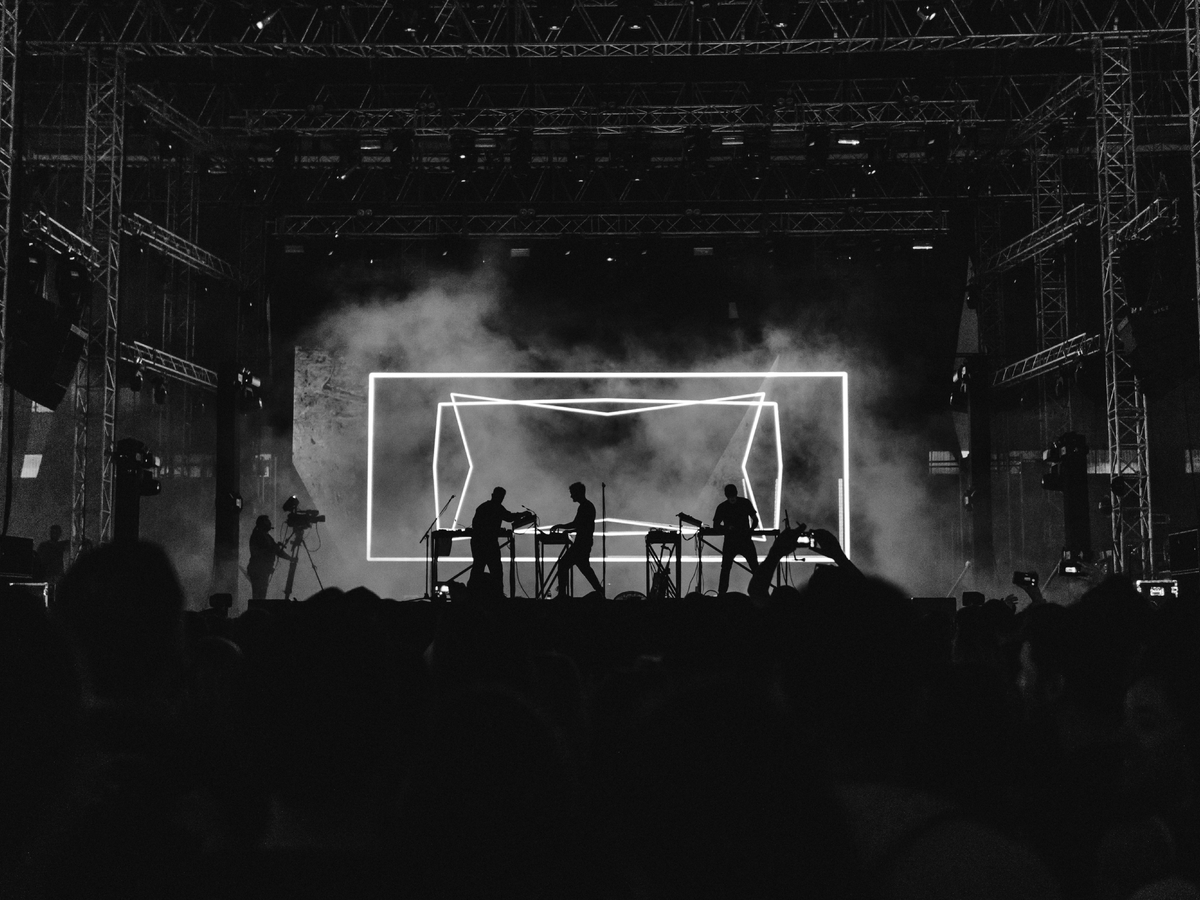
Production is another piece worth flagging. Modern Def Leppard shows are not retro in the cheap way. You get huge LED screens throwing out archival footage, lyric snippets, abstract graphics, sometimes even 80s-style neon reimagined in a crisp, modern way. The lighting shifts with each era: cold blues and purples for "Love Bites", hot reds and golds for "Pour Some Sugar on Me", and cool, starry backdrops for "Hysteria".
Then there’s Rick Allen. Every review from the last few years mentions the same thing: watching him command the kit with his customized setup is still one of the most inspiring parts of the night. The camera work usually throws him up on the big screens during key drum fills, and the roar from the crowd every time he’s highlighted is its own kind of song.
So if you’re the kind of fan who wants to plan your emotional peaks, here’s how it usually flows: early adrenaline with "Animal" and "Foolin’", nostalgic gut-punches in the middle third with "Love Bites" and "Hysteria", a full-on party run through "Pour Some Sugar on Me" and "Rock of Ages", and then a cathartic singalong closer in "Photograph". Everything around that core rotates just enough that you can check recent setlists online and still be surprised when your night finally hits.
What the web is saying:
Rumor Mill: What Fans Are Speculating
Where there’s a legacy band and a busy tour page, there’s a rumor thread for every city. Reddit, TikTok and fan forums have been buzzing, and a few themes keep popping up.
1. Will there be a full "Hysteria" album play in 2026?
This one never dies. Any time an anniversary year rolls around, fans start manifesting a front-to-back "Hysteria" performance. On Reddit, you’ll find long wishlists: people arguing over exact running order, which deep tracks must return, and how wild it would be to hear "Gods of War" with modern production. So far, the band has stuck to mixing a heavy dose of "Hysteria" songs into the set rather than dedicating the entire night to one album, but the demand is loud. If any special one-off or festival slot were to be branded around a full-album concept, it would sell out in a heartbeat.
2. New album or just singles?
With the band hinting they’re always writing, speculation has split into two camps. One side believes a full studio album is brewing – maybe a spiritual cousin to "Diamond Star Halos" that leans into their glam and 70s influences even harder. The other side thinks Def Leppard might go the modern route and drop singles or EPs tied to tours, freeing them from big album cycles. Fan comments point out how well a couple of newer songs have gone over live, so there’s optimism that whatever comes next won’t feel like an afterthought.
3. Surprise guests on select dates?
Any time a band shares a stage with other legends, fans start mapping out possible cameos. Threads have suggested everything from guest guitarists on "Photograph" to a surprise vocal feature on "Pour Some Sugar on Me" in specific cities. While the band rarely turns the show into a parade of guests, bigger festivals and hometown-ish stops are the likeliest spots for something unannounced to happen. That speculation keeps ticket demand high in those markets.
4. Ticket price drama and "real fan" access
This is where things get heated. Screenshots of ticketing pages and VIP packages float around X and Reddit with classic rock fans comparing prices to their 80s and 90s memories. Some accuse the whole touring ecosystem of pushing casual fans out; others argue that the production scale and demand justify it. On TikTok, younger fans are more likely to focus on getting decent upper-bowl seats or lawn tickets with friends than chasing front-row VIP. A common thread: people want transparent fees and at least one tier that feels reachable without blowing the month’s budget.
5. Deep cut dreams
Hardcore fans use every tour announcement as a chance to campaign for the deep cuts: "Die Hard the Hunter", "Billy’s Got a Gun", "Paper Sun", "Slang", you name it. You’ll find full fan-curated "ideal setlists" on forums, complete with pacing notes and emotional arcs. Occasionally, the band does slip in a surprise, and when they do, clips of that song hit social feeds fast. If you care about deep tracks, your best move is to keep stalking recent setlists city by city – when something rare shows up twice, it might be a short-lived mini-run.
6. Is this the "last" big run?
With members in their 60s, some fans worry each tour could be the last of this scale. The band themselves haven’t leaned into a farewell angle; they talk more about pacing, health, and doing this for as long as it feels good and sounds right. But the idea that these huge productions won’t last forever adds urgency to ticket-buying decisions. That sense of "see them now" is very real, especially in regions they don’t hit as often.
Put all that together and the vibe online is a mix of nostalgia, FOMO, and genuine curiosity about what the next Def Leppard chapter looks like. The loudest voices are the ones sharing first-concert stories and promising that even the skeptical friends they dragged along ended the night hoarse and converted.
Key Dates & Facts at a Glance
- Band origin: Formed in Sheffield, England, in 1977, emerging from the late-70s UK rock scene.
- Classic lineup era: Joe Elliott (vocals), Rick Savage (bass), Rick Allen (drums), Steve Clark (guitar), Phil Collen (guitar). Vivian Campbell later joined after Clark’s passing.
- Breakthrough album: "Pyromania" (1983) – pushed them into MTV heavy rotation and US mainstream success.
- All-time monster: "Hysteria" (1987) – multi-platinum with hits like "Pour Some Sugar on Me", "Love Bites", "Hysteria", "Animal" and "Rocket".
- Notable later-era albums: "Adrenalize" (1992), "Slang" (1996), "Euphoria" (1999), self-titled "Def Leppard" (2015), and "Diamond Star Halos" (2022).
- Signature songs likely in 2026 sets: "Photograph", "Rock of Ages", "Pour Some Sugar on Me", "Hysteria", "Foolin’", "Love Bites", "Animal".
- Drummer Rick Allen’s comeback: Returned to the band after losing his left arm in a 1984 car accident, using a customized drum kit and triggering technology.
- Rock & Roll Hall of Fame: Inducted in 2019, cementing their status as one of the defining rock bands of their era.
- Global reach: Hundreds of shows across North America, UK, Europe, Japan, South America and beyond across multiple decades.
- Typical show length: Around 90–120 minutes, depending on whether they’re headlining or sharing a bill.
- Where to find current tour dates: The band’s official tour hub at defleppard.com/tour is where new shows, upgrades and announcements land first.
- Fan-favorite live traditions: Big crowd singalongs on "Pour Some Sugar on Me", emotional swells during "Love Bites", and roaring applause for Rick Allen every time the cameras zoom in.
FAQ: Everything You Need to Know About Def Leppard
Who are Def Leppard and why do they still matter in 2026?
Def Leppard are a British rock band that fused hard rock, pop hooks and layered vocal harmonies into something instantly recognizable. They came up alongside the New Wave of British Heavy Metal but leaned more melodic and radio-ready than most of their peers. What keeps them relevant in 2026 isn’t just their back catalog – it’s the way those songs still land live, and the fact that younger listeners keep discovering them on streaming platforms and social media.
In a music world obsessed with fast cycles, Def Leppard offer something different: songs that have lived on playlists for decades, now being sung by multiple generations in the same arena. A track like "Hysteria" or "Love Bites" hits differently when you’re hearing it next to a parent who wore out the cassette the first time around. That emotional layering is a big part of why their tours still feel like events, not just heritage obligations.
What can you expect at a Def Leppard concert if it’s your first time?
Expect a polished, high-energy, very song-first show. This is not a band that spends 15 minutes noodling or giving long speeches between tracks. The pacing is tight: they stack hits, drop in a few deeper cuts for the faithful, maybe slot in a newer song, and keep the crowd locked in from the opening chords to the last chorus.
Visually, you’ll get big screens with live footage and art, sharp lighting cues, and a production style that feels modern without trying to chase EDM or pop trends. Sonically, the backing vocals and guitar layers are thick but clear. Joe Elliott focuses on phrasing and power more than screaming, which suits where his voice is now and makes the singalongs even more accessible. If you’re worried about not knowing every track, don’t be – the hits alone will carry you, and you’ll probably recognize more songs than you expect.
Where should you sit or stand for the best Def Leppard experience?
This depends on what you want from the night. If your goal is to be physically close to the band, the front of the lower bowl or floor near the stage will give you facial expressions, guitar-trading moments and a lot of crowd energy. If you care most about the mix, many fans swear by mid-bowl seats opposite the stage – that’s where you get a well-balanced sound picture, full view of the screens, and the ability to watch the entire show like a movie.
For festivals or outdoor amphitheaters, the lawn can be surprisingly fun. You trade closeness for that communal, summer-night vibe – blankets, dancing, friend-circle singalongs. If you’re short or easily overwhelmed in crowds, grab a slightly raised seat rather than committing to the crush up front. And if you’re bringing someone discovering the band for the first time, a good rule is: center-ish, not too far side, and high enough that they aren’t staring at the back of the tallest person in the venue.
When is the best time to buy tickets for Def Leppard?
Official onsales and presales are where you’ll see the widest seat selection, but also the most chaos. If you’re gunning for specific sections or VIP packages, you’ll want to be registered for official presales and logged in the minute they go live via the band’s recommended ticketing partners, usually linked through the tour page at defleppard.com/tour.
If you’re more flexible and just want to be in the building, keeping an eye on prices in the weeks after the initial rush can help. Dynamic pricing sometimes settles, and resale listings can move down closer to the show if supply stays high. That said, certain cities – especially classic rock hubs and places the band doesn’t hit often – tend to stay hot. In those markets, waiting can backfire. General rule: if a show is important to you emotionally, grab a reasonably priced ticket early and don’t watch the market obsessively afterward.
Why do Def Leppard lean so heavily on the hits in their setlists?
Because the hits are why arenas fill, and because those songs were designed for big rooms. A track like "Pour Some Sugar on Me" was built on crowd participation from day one – the rhythmic chant, the stop-start riffs, the call-and-response vocals. "Rock of Ages" is basically a masterclass in writing a chant that sticks. Those songs are cultural landmarks now, not just catalog entries.
That said, the band has a long history of slipping in less obvious choices. Over the years they’ve rotated songs like "Let It Go", "Too Late for Love", "Paper Sun" and others. Newly discovered fans often start with the hits and then work backward into the albums, so giving them that anchor live makes sense. It’s like a guarantee: you will get the spine of "Pyromania" and "Hysteria" and a few bonuses if you’re paying attention.
How has Def Leppard adapted to younger audiences and the streaming era?
They haven’t tried to reinvent themselves as a totally different band, which is part of why it works. Instead, they’ve leaned into their strengths – layered vocals, big choruses, tight songwriting – and made sure their catalog is widely available and properly curated on streaming. Official playlists highlight both hits and deep cuts, which helps algorithm-driven discovery feel more like a guided tour than a random shuffle.
On social media, they’ve embraced archival clips, behind-the-scenes peeks and fan-shot footage rather than aggressive trend-chasing. That fits a band whose current selling point is authenticity and longevity. When TikTok or Instagram edits go viral using their tracks, the band might amplify them, but they don’t contort themselves to fit every meme. Younger fans often find that refreshing – it feels like the band is letting the music speak instead of trying to cosplay as 20-somethings.
Why do so many fans describe a Def Leppard show as emotional, not just fun?
Because these songs are attached to very specific life memories for a lot of people. First cars, first breakups, first makeouts, first arena show, last summer before everything changed – all of that gets baked into tracks like "Hysteria" and "Love Bites". When you stand in a crowd and hear thousands of voices on the same chorus, those memories surface hard.
There’s also the band’s own history. Rick Allen’s survival and continued presence behind the kit, Steve Clark’s legacy, the resilience after industry shifts – fans carry that story into every show. So when the lights drop and the first notes hit, there’s a shared sense of gratitude that this is still happening at all. You’re not just watching a nostalgia tour; you’re participating in a decades-long conversation between a band and the people who never stopped listening.
Historical Flashback: How Def Leppard Became Arena DNA
To really understand why 2026 Def Leppard tickets move so fast, it helps to rewind. In the early 80s, the band were part of a wave of heavier UK acts, but they leaned solution-focused: how do you make big riffs and pop hooks live in the same song? With producers and obsessive studio work, they carved out a sound packed with stacked vocal harmonies, precision guitar layers and choruses that could cut through radio compression and tiny TV speakers.
"Pyromania" put them in living rooms across America. "Hysteria" took that foundation and blew it up into something almost cinematic – huge drums, intricate arrangements, songs that still sound oddly modern even after decades of production trends. That run cemented them as one of the DNA bands of arena rock: if you hear any modern act leaning on gang vocals, big glossy riffs, and emotional-but-not-emo choruses, there’s probably a Def Leppard influence somewhere down the line.
All of that history feeds into why the current tours feel like more than just greatest-hits nights. You’re watching a band that helped write the rulebook for this kind of show, still playing their own moves live, in front of people who learned those rules almost by osmosis. In 2026, with rock constantly declared "dead" and then reborn every few months on social media, Def Leppard are the reminder that some songs never really leave – they just wait for the right volume.
So schätzen die Börsenprofis Aktien ein!

Für. Immer. Kostenlos.