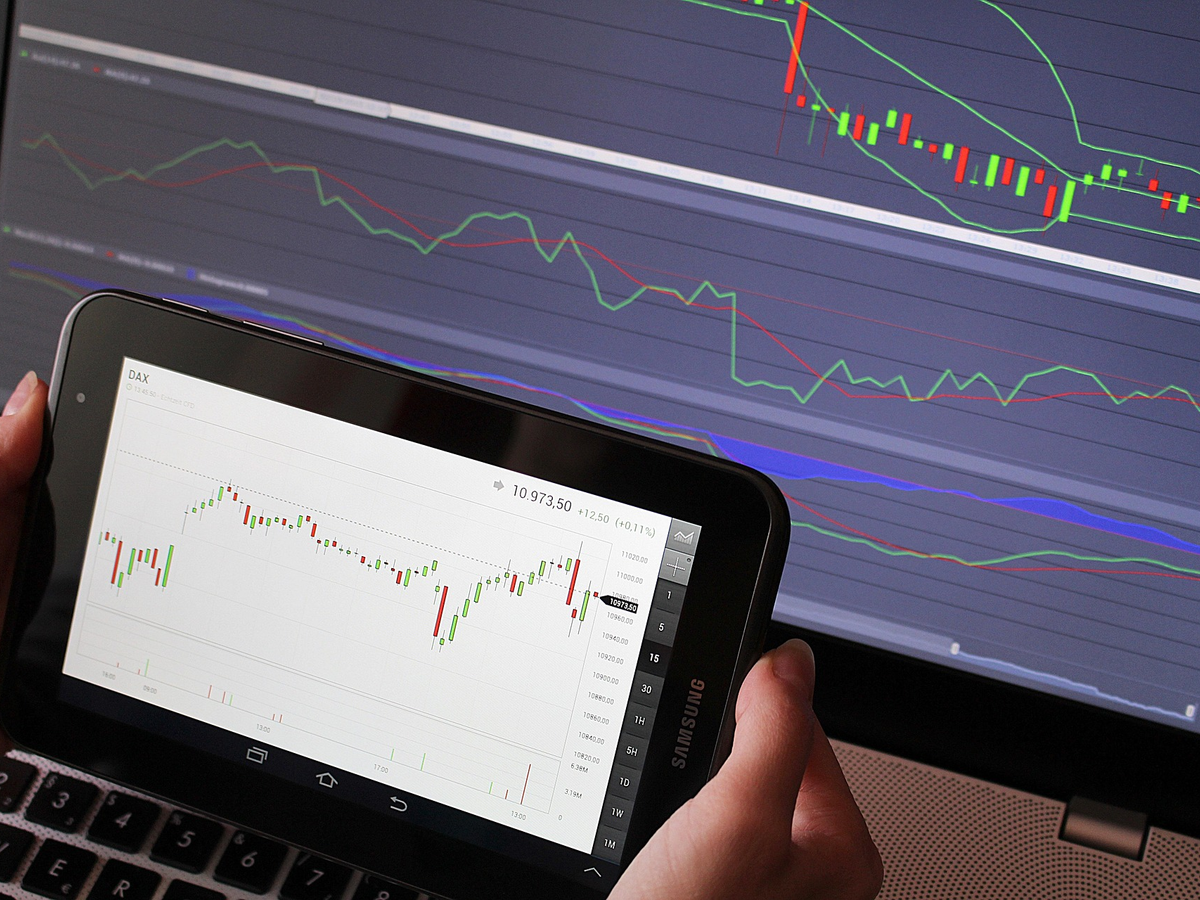
DAX Breakout Or Bull Trap? Is Germany’s Flagship Index Hiding More Risk Than Opportunity Right Now?
24.01.2026 - 07:28:46 | ad-hoc-news.de
Get the professional edge. Since 2005, the 'trading-notes' market letter has delivered reliable trading recommendations – three times a week, directly to your inbox. 100% free. 100% expert knowledge. Simply enter your email address and never miss a top opportunity again. Sign up for free now
Vibe Check: The DAX 40 is showing a confident, upward-tilted structure, with German blue chips grinding higher after a period of sideways chop. Buyers keep defending the dips, sellers try to fade every push, but so far the market is leaning toward a controlled, disciplined uptrend rather than a panic melt-up or a brutal crash. Volatility is present, but not chaotic; this looks like a market where the bulls are still in the driver’s seat, even if they are constantly checking the rear-view mirror for macro surprises.
Instead of a clean one-way rally, we are seeing classic ‘buy-the-dip’ behavior around key zones, followed by profit-taking on strength. In other words: this is not blind euphoria, it is a tactical bull market, and tactical bull markets can run longer than most traders expect.
The Story: What is actually driving the DAX 40 right now? You cannot explain this index by just looking at German headlines – you need the full European and global macro picture.
1. ECB & Rate Expectations:
The European Central Bank is still walking a tightrope: inflation has cooled from the extreme peaks, but it refuses to vanish completely. The market narrative is that the ECB is closer to gentle easing over the medium term than to another aggressive tightening cycle. That subtle shift is massive for the DAX. Lower future rates mean:
- Cheaper financing for industrials and exporters.
- Higher valuations for growth stories and quality blue chips.
- A friendlier backdrop for risk assets overall.
Yet, the ECB is not signaling a reckless pivot. The tone remains cautious: inflation risks, wage dynamics, and energy prices are still being watched closely. That keeps a “risk premium” in the system. Bulls have the edge, but bears are not extinct; they are just waiting for the next ugly data print.
2. German Macro: Weak Headlines, Strong Market?
Here is the paradox: Germany’s real economy has not been glowing. Manufacturing surveys have been stuck in cautious territory, industrial production has looked tired at times, and the word “recession” has been thrown around more than German traders like to admit. The auto giants face structural shifts (EV transition, China competition, regulation), and chemical and industrial heavyweights still feel the pressure of higher energy costs and global demand uncertainty.
So why is the DAX not collapsing? Because markets are forward-looking. Traders are starting to price in:
- Stabilisation rather than free fall in manufacturing.
- Energy prices that are elevated compared to the pre-crisis era, but less explosive than during the peak of the gas shock.
- The possibility that the “German slowdown” has already been largely discounted in past corrections.
In short, the DAX is trading the future improvement story, not the backward-looking pessimism.
3. Euro vs. Dollar: Silent Driver of German Exports
For DAX companies, the EUR/USD exchange rate is essentially a second P&L line. When the euro is weaker versus the dollar, exporters like autos, machinery, and industrial tech can look more competitive on the global stage. When the euro strengthens aggressively, margin pressure returns.
Right now, the currency backdrop is more nuanced than the usual “strong dollar crushes Europe” story. The Federal Reserve is no longer in maximum-hawk mode, while the ECB is still juggling its own inflation narrative. That tug-of-war tends to limit extreme currency moves. For the DAX, that means:
- No massive tailwind from a collapsing euro.
- But also no massive headwind from a violently surging euro.
Translation: earnings visibility for exporters is not perfect, but it is less chaotic than in previous crisis periods. That supports a steady, grind-higher DAX behavior rather than violent trend reversals – as long as there is no sudden macro shock.
4. Energy Prices & Industrial Output:
Energy is still the joker card in the European deck. If gas or oil prices spike again due to geopolitical tensions or supply disruptions, German industry will feel it quickly. Chemical producers, heavy industry, and manufacturing hubs remain highly sensitive to energy input costs.
At the moment, the energy situation is tense but not catastrophic. Storage levels, alternative supply routes, and a healthier risk management culture among corporates all help reduce tail risk. Combine that with still-soft but stabilising industrial output, and you get an environment where investors are willing to rotate selectively into German cyclicals rather than abandoning them completely.
5. Earnings Season: Stock-Picking Market Inside the Index
The DAX 40 is no longer just an “old economy” basket. Tech-flavored names, health care, industrial automation, and financials are all well-represented. Recent earnings seasons have underlined one thing: this is a stock-picker’s index.
- Companies that guide cautiously but show solid order books get rewarded.
- Those that miss and blame “macro” without a credible plan get punished.
This environment creates internal dispersion: some DAX components are in sustained uptrends, others are lagging hard. Index-level moves may look moderate, but under the hood the rotation is intense. That is fuel for active traders.
Social Pulse - The Big 3:
YouTube: Check this analysis: https://www.youtube.com/watch?v=K8uQv9A6f1Q
TikTok: Market Trend: https://www.tiktok.com/tag/dax40
Insta: Mood: https://www.instagram.com/explore/tags/dax40/
Across these platforms the vibe is clear: retail is split. One camp screams “European breakout”, the other waits for “the big crash”. That tension is exactly what fuels two-way trading opportunities.
- Key Levels: The market is trading in a well-defined upward channel with important zones where buyers have repeatedly stepped in and sellers have repeatedly defended rallies. Watch the recent swing highs as a crucial resistance zone and the latest higher-lows as a key support band. A clean break above resistance opens the door to a fresh leg higher, while a decisive loss of that support band would signal a potential trend shift.
- Sentiment: The Euro-Bulls are slightly in control, but not in full-on euphoria. It feels like cautious optimism: money is rotating into risk, but nobody believes in a stress-free rally. That is actually bullish – the biggest tops usually form when everyone is convinced nothing can go wrong.
Trading Scenarios: Opportunity vs. Risk
Scenario 1 – Bullish Continuation:
If global risk appetite stays healthy, US markets avoid a major shock, and the ECB maintains its cautiously friendly tone, the DAX can continue its upward grind. In that case:
- Dips into the established support zones remain potential “buy-the-dip” opportunities for trend-followers.
- Breakouts above resistance can trigger momentum trades, with traders targeting new extension zones as long as pullbacks remain shallow.
This scenario is supported by stabilising macro data, contained energy prices, and earnings that are “good enough” rather than spectacular.
Scenario 2 – Bull Trap & Reversal:
The risk side of the coin: if a negative catalyst hits – a weaker-than-expected German industrial report, a renewed inflation scare forcing the ECB to turn more hawkish, or a sharp spike in energy prices – sentiment could flip quickly. Then:
- Those key support bands become danger zones; failure to hold them would invite heavier selling.
- High-flying sectors, especially anything that re-rated aggressively on hopes of lower rates, could see fast profit-taking and potentially sharp corrections.
This is where disciplined risk management matters. You do not want to be the last buyer in a crowded trade if the macro narrative suddenly changes.
Scenario 3 – Sideways & Choppy:
There is also the “pain trade” scenario for both bulls and bears: an extended sideways range. Macro data stays mixed, central banks talk a lot but do little, and the DAX oscillates between support and resistance without a clear breakout.
For swing traders, this can be pure gold: fade the edges, respect the range, and harvest volatility while everyone else complains about “no direction”. But it requires patience, discipline, and a clear plan.
Risk Management – Non-Negotiable:
Whatever your bias, remember:
- Use clearly defined stop zones around those key levels.
- Size positions according to volatility, not emotions.
- Avoid overexposure to a single sector; the DAX is concentrated, and a shock in autos, financials, or industrials can move the whole index.
Conclusion: The DAX 40 right now is neither a doom chart nor a parabolic bubble – it is a calculated battleground. Germany’s flagship index sits at the intersection of global liquidity, European rate policy, industrial reality, and energy risk. That mix creates exactly what active traders crave: movement, narrative, and clear technical structures.
Is there risk? Absolutely. A negative surprise in German data, a sudden jump in energy prices, or a more aggressive ECB stance could turn this controlled uptrend into a painful unwind. But there is also real opportunity: as long as support zones keep holding and the macro narrative does not break down, the path of least resistance leans upward, with tactical pullbacks offering chances for disciplined entries.
Bottom line: Germany is not “to the moon” yet, but the DAX is very much alive. Bulls have the initiative, bears still have teeth, and traders who respect both the chart and the macro story can turn this environment into a powerful playground – if they manage risk like professionals and refuse to trade on hype alone.
Tired of poor service? At trading-house, you trade with Neo-Broker conditions (free!), but with real professional support. Use exclusive trading signals, algo-trading, and personal coaching for your success. Swap anonymity for real support. Open an account now and start with pro support
Risk Warning: Financial instruments, especially CFDs on indices like the DAX 40, are complex and come with a high risk of losing money rapidly due to leverage. You should consider whether you understand how these instruments work and whether you can afford to take the high risk of losing your money. This content is for informational purposes only and does not constitute investment advice.
So schätzen die Börsenprofis Aktien ein!

Für. Immer. Kostenlos.