Bitcoin’s Next Move: As Whales Accumulate and Supply Shrinks, Is This a Generational Opportunity or a Trap for Late FOMO Buyers?
22.02.2026 - 05:49:16 | ad-hoc-news.de
Get the professional edge. Since 2005, the 'trading-notes' market letter has delivered reliable trading recommendations – three times a week, directly to your inbox. 100% free. 100% expert knowledge. Simply enter your email address and never miss a top opportunity again. Sign up for free now
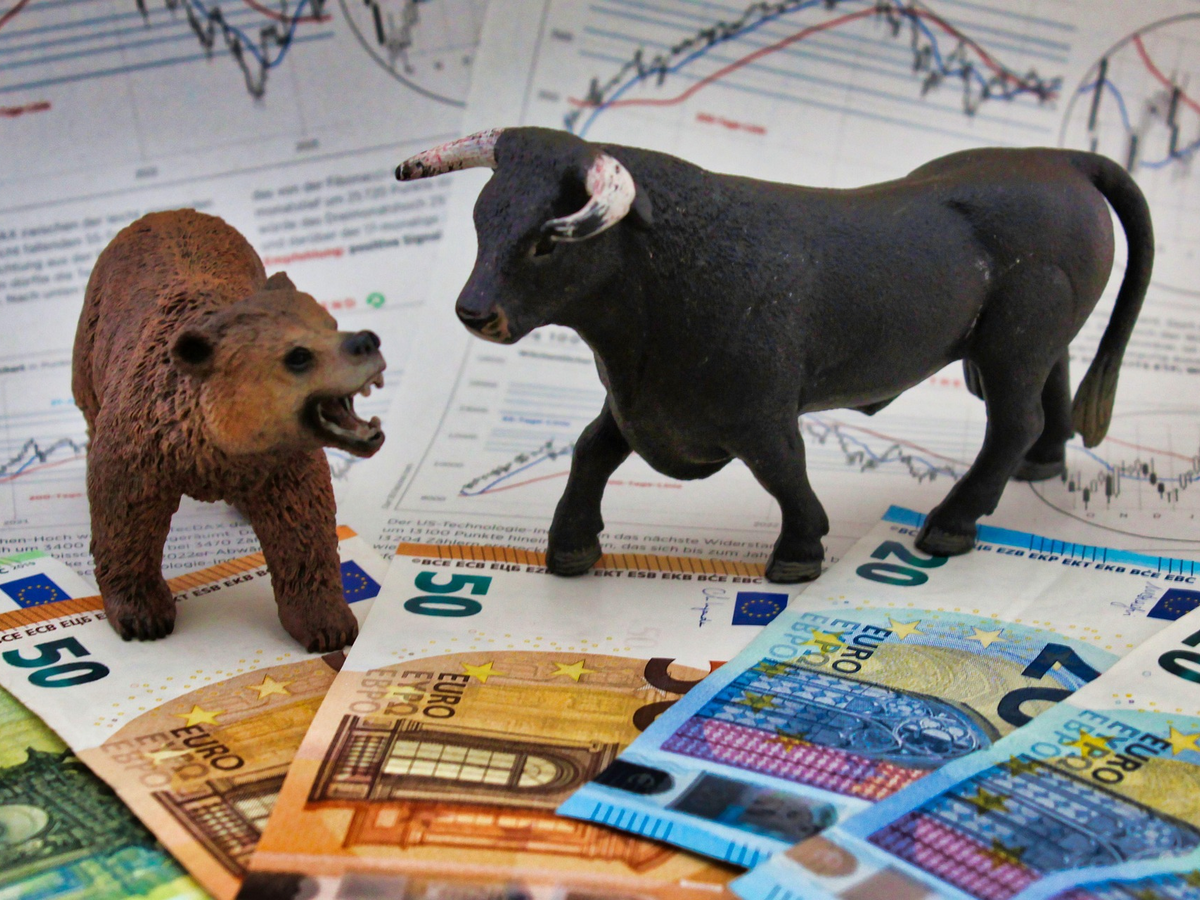
Vibe Check: Bitcoin is in one of those classic crypto moments where the chart looks like a coiled spring. Price action has been moving in a tense, sideways consolidation with sharp spikes and quick dips as both bulls and bears fight for control. No clean trend, just a grinding battle between massive whale accumulation and nervous latecomers afraid of becoming exit liquidity. Volatility is simmering under the surface, and the next decisive leg – up or down – is setting up right now.
Want to see what people are saying? Check out real opinions here:
- Watch brutal no-filter Bitcoin price prediction battles on YouTube
- Scroll the latest Bitcoin breakout charts and hype threads on Instagram
- Binge viral TikTok strategies from Bitcoin day traders and HODLers
The Story: What is actually driving Bitcoin right now? It is not just memes and moon-boys anymore. The whole structure of the market has changed with spot Bitcoin ETFs, the latest halving, and an increasingly aggressive macro backdrop.
On the news side, the current narrative is dominated by spot ETF flows and institutional adoption. Bitcoin is no longer the Wild West plaything of degen retail traders only; heavyweight asset managers, pension funds, and corporate treasuries are now using regulated ETFs and custodial solutions to get exposure. When these players allocate, they tend to buy in huge size and hold for the long haul. That slow, steady accumulation creates a powerful underlying bid that is very different from the boom-and-bust retail manias of earlier cycles.
At the same time, the halving has already cut block rewards again, putting fresh, constant pressure on miners. Every four years, Bitcoin’s issuance schedule tightens, and miners see their revenue squeezed overnight. In the current post-halving environment, many smaller or inefficient miners are under stress, forced to sell inventory or shut down. The big, well-capitalized mining operations are upgrading hardware, cutting costs, and trying to survive in a brutally competitive landscape where only the strongest remain. All of this is happening while the hashrate remains strong to elevated, signaling that the network is still heavily secured by serious capital investment.
On the regulatory front, the chessboard is messy but evolving in Bitcoin’s favor long term. Regulators continue to crack down on shady altcoins and unregistered securities, but Bitcoin keeps standing out as the most battle-tested, decentralized asset in the space. It is the one token most regulators are reluctantly accepting as a kind of digital commodity rather than a security. That subtle shift matters for the huge pools of capital that need legal clarity before they can go all-in.
Meanwhile, macro conditions are pouring gasoline on the digital gold narrative. Inflation may not be at full panic levels every single month, but the long-term message is clear: fiat currencies keep bleeding purchasing power. Governments are running oversized deficits, central banks are trapped between fighting inflation and keeping debt markets alive, and savers are realizing that keeping cash idle is a silent rug pull over time. In that environment, Bitcoin’s fixed supply and transparent monetary policy are not just memes – they are a direct hedge against the slow grind of fiat debasement.
Combine all that: constrained new supply after the halving, steady institutional inflows via ETFs, ongoing macro uncertainty, and a market structure where a huge percentage of coins are locked away by long-term HODLers. The result is a powder keg. Price may look like it is just chopping around, but under the surface, coins are flowing from weak hands to strong hands, from impatient traders to long-term allocators, from panic to conviction.
Deep Dive Analysis: Let us zoom out and talk macro, whales, and the deeper psychology of this phase.
1. Digital Gold vs Fiat: Why Bitcoin’s Story Keeps Getting Stronger
For over a decade, critics have mocked the “digital gold” narrative, but step back and look at the scoreboard. Every time a new money-printing cycle kicks off, Bitcoin eventually adapts, digests the volatility, and then grinds higher over the long term. The core reason: fiat currencies are structurally designed to be inflationary. You can change central bank leadership, tweak policy rates, or rewrite banking regulations – but the one thing that never happens is a permanent cap on the money supply.
Bitcoin is the inverse of that. It has a hard-coded, transparent issuance schedule. There is no emergency meeting where some committee suddenly decides to create more coins. No bailout package. No quantitative easing. No quiet adjustment of the rules. For anyone who has watched their savings eroded by rising prices, rent spikes, shrinking paychecks in real terms, or the wild expansion of central bank balance sheets, this predictability looks more and more attractive.
That does not mean Bitcoin is safe or stable – far from it. The price is wild. Massive rallies and brutal crashes are still the norm. But beneath that chaos is a simple proposition: would you rather hold something whose supply can be changed at the stroke of a pen, or something whose supply is transparently fixed and diminishing over time? That fundamental choice is what keeps pulling new people into the Bitcoin rabbit hole.
2. Whales vs Retail: ETF Giants and the New Power Players
The second big shift in this cycle is who actually owns the float. In the early days, it was mostly cypherpunks and degen traders. Then came the retail mania era, with exchanges packed full of small accounts trying to day-trade their way to freedom. Now, we are seeing a new layer on top: institutional whales using ETF wrappers, custodians, and prime brokerage to build long-term positions.
Think of the spot ETFs and large asset managers as mega-whales. When they receive inflows from financial advisors, family offices, or retirement plans, they are not trying to scalp a tiny move. They buy and park. That buying takes coins off the liquid market, especially when combined with classic HODLers who keep stacking sats and cold-storing them for years.
Retail, on the other hand, is still often chasing green candles. You see it on social media: when the price has a massive pump, suddenly everyone is bullish and trying to long the breakout; when there is a sharp dump, the same accounts scream that crypto is dead and capitulate at the bottom. The brutal truth is this: short-term emotional traders are mostly providing liquidity to whales, not front-running them.
Right now, on-chain data and ETF reporting suggest that larger entities are quietly accumulating while the noisy crowd is split between fear and overconfidence. That is usually the kind of stealth accumulation phase that precedes a major directional move. Whether that move is a clean moon mission or one last brutal shakeout first is the real question.
3. Tech Side: Hashrate, Difficulty, and the Post-Halving Supply Squeeze
On the technical and fundamental side of the network, things look intense but healthy. Hashrate – the total computing power securing the network – has been hovering at strong levels, even with miners facing reduced block rewards after the halving. Difficulty adjustments keep tuning the system so that blocks arrive roughly every ten minutes, regardless of how many miners are online.
The important part for investors: less new Bitcoin is entering the market every day, but demand has a habit of spiking in waves. When demand surges into a reduced-supply environment, you get classic supply shock dynamics. That is how you get violent upside candles when sentiment flips from fear to FOMO.
Post-halving, miners have to sell fewer coins to cover operating expenses if they are efficient, or they are forced to shut down if they are not. The weaker miners capitulate; their coins get absorbed by stronger hands. Over time, this tends to concentrate coin ownership among entities that are either structurally bullish or financially strong enough to hold through deep drawdowns.
4. Sentiment, Fear & Greed, and the Psychology of Diamond Hands
Sentiment right now is weirdly split. You see pockets of extreme bullishness every time Bitcoin has a strong rebound – loud calls for new all-time highs, victory laps, aggressive leverage. But right beneath that, there is an undercurrent of doubt: memories of past crashes, liquidation cascades, and painful bear markets are still fresh.
The psychological game is simple but savage:
- When prices grind higher, people who are sidelined feel FOMO. They chase. Often late.
- When prices sharply correct, the same people feel panic. They sell. Often at the bottom.
- Diamond hands are built by enduring both phases without losing conviction in the long-term thesis.
The real edge is to use fear as an opportunity to accumulate and euphoria as a cue to take risk off the table, not the other way around. But that requires having a clear plan before the volatility hits – not improvising when red or green candles are frying your nervous system.
Right now, fear is not at maximum, but it is not pure greed either. This kind of mid-level uncertainty is exactly where stealth accumulation happens. Whales like to buy when the crowd is bored, confused, or distracted, not when everyone is chanting “to the moon” in unison.
Key Levels and Market Structure
- Key Levels: Instead of fixating on exact numbers, think in terms of important zones. Above, there is a large resistance zone where previous rallies have stalled, acting like a psychological ceiling where profit-taking tends to hit. Below, there are major support areas where buyers have consistently stepped in after sharp sell-offs. A decisive breakout above resistance with strong volume could ignite aggressive FOMO, while a clean breakdown below key support could trigger a fast, cascading flush as leveraged longs get liquidated.
- Sentiment: Who is in Control? Right now, neither side has absolute control. Whales are leaning quietly bullish, stacking and holding. Short-term traders are more reactive, flipping bias with every move. Bears still have enough ammo to push sharp corrections, but each deep dip finds buyers faster than typical dead markets. That tug-of-war is the definition of a coiling phase before a major expansion in volatility.
Conclusion: Risk, Opportunity, and How to Play This Without Getting Wrecked
This phase of the Bitcoin cycle is both dangerous and full of opportunity. On the risk side, you have:
- Brutal volatility that can wipe out over-leveraged positions in minutes.
- Macro uncertainty – central bank decisions, recession fears, regulatory headlines – that can flip sentiment instantly.
- High expectations baked into the market after ETFs and the halving, which means disappointment can trigger sharp drawdowns.
On the opportunity side, you have:
- A maturing asset with growing institutional adoption and clearer regulatory status than most of crypto.
- A hard, predictable supply schedule in a world of endlessly expanding fiat supply.
- A post-halving environment where new issuance is structurally constrained just as global awareness and accessibility explode.
The winning mindset is not blind moonboy optimism or doom-maxi pessimism. It is calculated aggression. If you believe in the long-term digital gold thesis, the logical move is to build a structured strategy: stacking sats over time, sizing positions so that volatility does not force you to sell, and reserving dry powder for those gut-check dips when the timeline is full of FUD.
For traders, it means respecting key zones, not chasing every breakout, and keeping leverage under control. The market does not care about your feelings; it moves to liquidate the most emotional players first. Your job is to avoid becoming easy liquidity.
Bitcoin is not guaranteed to go to the moon, and anyone promising risk-free upside is selling you a fantasy. But it remains one of the purest macro bets on hard digital money versus soft fiat, on open protocols versus closed monetary committees, and on individual sovereignty versus centralized control. That is why, even after all the crashes and clown phases, it keeps coming back to the center of the global conversation.
HODL with a brain. Trade with a plan. And never forget: in this game, risk management is the ultimate alpha.
Tired of poor service? At trading-house, you trade with Neo-Broker conditions (free!), but with real professional support. Use exclusive trading signals, algo-trading, and personal coaching for your success. Swap anonymity for real support. Open an account now and start with pro support
Risk Warning: Cryptocurrencies like Bitcoin (BTC) are extremely volatile and subject to massive price fluctuations. Trading CFDs on cryptocurrencies involves a very high risk and can lead to the total loss of invested capital. You should only invest money you can afford to lose. This content is for informational purposes only and does not constitute investment advice. DYOR (Do Your Own Research).
So schätzen die Börsenprofis Aktien ein!

Für. Immer. Kostenlos.