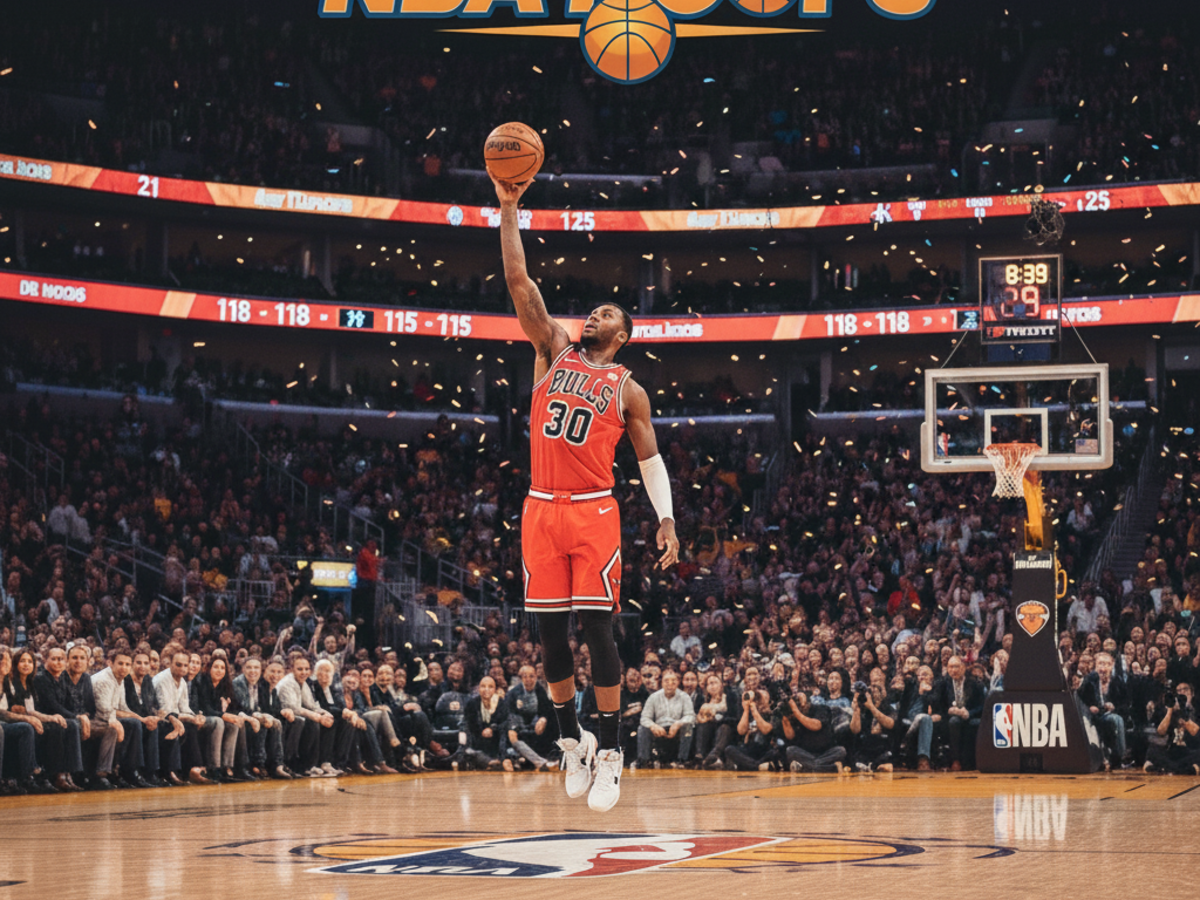
Anthony Edwards Reaches 10th 40-Point Game This Season, Closing on Luka Doncic's League Lead
15.03.2026 - 00:12:39 | ad-hoc-news.de
Anthony Edwards has entered an elite offensive tier this season, notching his 10th game of 40-plus points in the Timberwolves' victory over Golden State on March 13. The All-Star guard finished with 42 points on 13-of-22 shooting (59%), adding 4 three-pointers, 8 rebounds, and 5 assists—a complete performance that highlights the offensive versatility Minnesota will rely on in a tightening playoff race.
As of: March 14, 2026
Marcus Steele, Senior NBA Content Editor. Edwards' scoring consistency has shifted the Timberwolves' championship calculus at the season's critical juncture.
The Scoring Explosion: Context and Trajectory
Edwards' 10 forty-point games rank second in the NBA this season, trailing only Luka Doncic's 11. This metric matters because it reflects not outlier performances but a genuine scoring baseline—Edwards is operating at an MVP-caliber offensive level with regularity. His 59% field-goal rate in the Warriors game exemplifies the efficiency driving these high-volume nights. The combination of volume, consistency, and shooting percentages positions Edwards among the league's most dangerous offensive threats heading into the final stretch.
The Timberwolves entered the season with championship ambitions centered on Karl-Anthony Towns' floor spacing and defensive versatility alongside Anthony Davis–caliber rim protection. Edwards' ascent into a primary scoring role—not secondary—has fundamentally altered how Minnesota operates offensively. He is no longer a complement to another star's scoring; he has become the engine.
Playoff Implications and Seeding Pressure
The Warriors matchup carried playoff-positioning weight. Minnesota's standing in the Western Conference playoff hierarchy remains fluid with roughly three weeks remaining in the regular season. Every win in this window influences both playoff seeding and momentum entering April. A dominant Edwards performance in a neutral-court test against a Finals-tested opponent signals readiness. The Timberwolves' success hinges on whether Edwards can sustain this offensive level when playoff rotations tighten and defensive schemes home in specifically on limiting his scoring.
Edwards' shooting efficiency—particularly from three-point range and mid-range areas—becomes the key variable. In playoff series, teams invest significant defensive attention to players averaging 40+ points in consecutive games. If his percentages dip under that heightened focus, Minnesota may need to lean more heavily on secondary scoring or playmaking. The 5 assists in the Warriors game hint at increased willingness to initiate offense for teammates, a trait that could help sustain effectiveness when defenses collapse.
Comparison to League Standards and Historical Precedent
Trailing only Doncic for 40-point games this season places Edwards in rare company. In recent NBA history, reaching double-digit 40-point games is associated with eventual MVP voting consideration or deep playoff runs. Michael Jordan, LeBron James, and Wilt Chamberlain achieved such frequency regularly, but modern defenses and three-point emphasis make Edwards' consistency noteworthy. The fact that he's achieving this on strong efficiency—not just high volume—separates genuine star-level performance from unsustainable hot streaks.
For context, fewer than five players have ever recorded 10+ forty-point games in a single season outside of the 1980s and 1990s. Edwards doing so in an era of zone defenses, advanced analytics-driven perimeter focus, and increased international talent depth underscores the quality of his offensive creation.
Defensive Sustainability and Team Construction Questions
While Edwards' offensive explosion receives justified attention, the Timberwolves must balance this scoring surge with defensive durability. High-usage offensive games often coincide with defensive fatigue in the NBA's modern pace. Minnesota's coaching staff faces the strategic choice of managing Edwards' workload—allowing rest periods despite scoring appetite—or riding his momentum through the regular season and managing minutes in playoffs when stakes multiply.
The Warriors game tested Minnesota against perimeter-heavy offense. Edwards' ability to stay attached to Stephen Curry or Klay Thompson–level shooters while generating 42 points on the other end demonstrates two-way engagement. This balance becomes essential in playoff matchups where offensive-minded guards can expose team defenses. If Edwards is scoring at this rate but allowing 25-point games defensively to opposing guards, Minnesota's playoff ceiling remains capped.
Momentum and the Final Regular-Season Push
With the postseason approaching, Edwards' current trajectory creates both opportunity and pressure. The next 15-20 games will determine whether this scoring tear is sustainable or peaks prematurely. If Edwards can maintain 35+ points per game on respectable efficiency while the Timberwolves secure a top-three Western seed, the team enters April with dangerous chemistry and proven execution. Conversely, if opposing teams aggressively double-team and Edwards' supporting cast struggles to capitalize on additional spacing, Minnesota could regress toward a play-in scenario.
The Timberwolves' offensive rating and three-point percentage directly correlate with Edwards' success. When he scores, teammates generate better looks. When defenses over-commit to stopping him, open shooters emerge. This symbiotic relationship underpins Minnesota's ceiling. The Warriors game exemplified optimal outcomes: Edwards dominated while the team won decisively.
Related reading
Disclaimer: This article is for informational purposes only.
So schätzen die Börsenprofis Aktien ein!

Für. Immer. Kostenlos.