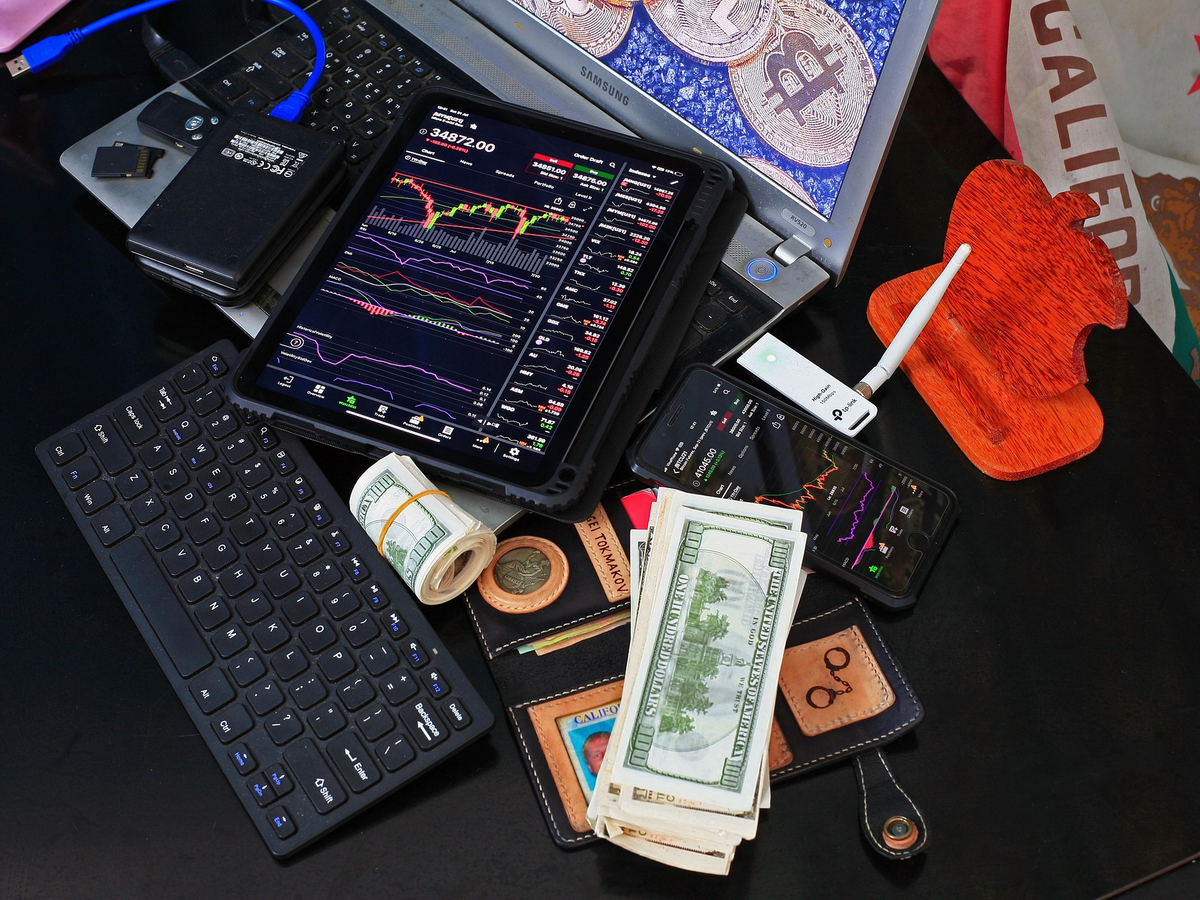
AI Mania Or Stealth Tech Wreck? Is The NASDAQ 100 Setting Up For A Brutal Reset Or A Monster Breakout?
04.02.2026 - 09:08:53 | ad-hoc-news.de
Get the professional edge. Since 2005, the 'trading-notes' market letter has delivered reliable trading recommendations – three times a week, directly to your inbox. 100% free. 100% expert knowledge. Simply enter your email address and never miss a top opportunity again. Sign up for free now
Vibe Check: The NASDAQ 100 (US Tech 100 / NDX) is moving in classic late-cycle tech fashion: wild rotation under the surface, crowded AI trades, and a fragile balance between FOMO and fear. Price action has been choppy, swinging between aggressive dip-buying and sudden air pockets when sellers hit the tape. In other words, this is not a calm trend market – it is a high-volatility battleground where both bulls and bears are taking turns landing punches.
For traders, that means one thing: opportunity, but only if you respect risk. The index isn’t melting up in a straight line anymore; it’s reacting to every hint about interest rates, every AI headline, and every whisper from the big tech earnings calls. We are in a phase where narrative and macro are just as important as charts.
The Story: To understand what’s really driving the NASDAQ 100 right now, you need to zoom out and connect three big forces: AI hype, bond yields, and the Fed’s path.
1. The AI Narrative – From Simple Hype To Full Ecosystem Trade
The first leg of this tech cycle was all about the obvious winners: the mega-cap AI darlings and the chipmakers powering the new infrastructure build-out. Wall Street initially treated AI as a narrow story – a handful of names doing the heavy lifting. Now the narrative has expanded. It’s not just about the core semiconductor giants and cloud platforms anymore. It’s about everything tied into the ecosystem: data centers, networking, cybersecurity, software automation, and even old-school enterprise IT names trying to rebrand themselves as AI plays.
This expansion is a double-edged sword. On one side, it supports the index as more sectors join the AI party. On the other, it’s a classic late-phase behavior: Wall Street trying to justify stretched valuations by constantly widening the story. When every earnings call has the word "AI" shoved into it, that’s bullish for momentum in the short term, but a warning sign for longer-term sustainability.
2. Bond Yields vs. Tech Valuations – The Macro Gravity
Tech valuations live and die by the level of bond yields. When yields push higher, the market starts to question the price investors are paying for long-duration growth. When yields ease, tech gets that sweet tailwind again. Recently, the relationship has been brutally clear: any hint that inflation might re-accelerate or that the Fed might stay tighter for longer has triggered sharp, aggressive selling in high-multiple tech names.
At the same time, the market is still clinging to the idea of an eventual Fed pivot. Every economic data release – jobs, inflation, growth – is being filtered through one simple question: does this bring rate cuts closer or push them further away? The NASDAQ 100 is trading like a leveraged bet on that answer. If the market senses that cuts are delayed or reduced, you see those sudden tech wobble days. If data looks supportive of easing, the AI complex lights up again and the dip-buying bots turn back on.
3. Earnings Season – Sorting Real AI Winners From Story Stocks
The latest earnings rounds out of big tech and semiconductors have done something extremely important: they’ve started to separate "AI winners" from "AI tourists." Companies that can show real revenue traction tied to AI infrastructure, cloud demand, or inference workloads are still getting rewarded, even in a nervous tape. But those that only offer buzzwords without clear growth or margin expansion are getting punished brutally.
This is key for NASDAQ 100 traders: the index is no longer being held up evenly. Under the hood, there is a growing gap between leaders and laggards. Some names are quietly in their own private bull markets, while others are slipping into stealth bear trends even though the index headline looks "fine." That’s how late-stage tech cycles usually evolve before a decisive breakout or reset.
Social Pulse - The Big 3:
YouTube: Check this analysis: https://www.youtube.com/results?search_query=nasdaq+100+analysis
TikTok: Market Trend: https://www.tiktok.com/tag/nasdaq
Insta: Mood: https://www.instagram.com/explore/tags/techstocks/
On YouTube, you’re seeing a split narrative: some creators are screaming "AI supercycle" and "new ATHs incoming," while others are warning about a looming "tech rug pull." TikTok is flooded with short clips hyping AI stocks and option plays on the NASDAQ 100, which is classic late-stage FOMO behavior. Instagram’s tech crowd is flexing charts of mega-cap winners and data-center plays, but you can also feel the nervousness – people are bragging about wins, but they’re also talking about hedging, volatility, and not wanting to end up as bagholders after an AI bubble pop.
- Key Levels: The index is circling around important zones where traders are watching for either a clean breakout continuation or a deeper shakeout. Multiple attempts to push higher have been met with profit-taking, while dips are still attracting buyers. That kind of sideways-to-choppy structure around a key area often precedes a big directional move. Think of it as the market coiling up energy – either for a renewed leg higher or for a sharper mean-reversion drop.
- Sentiment: Right now, neither side fully owns the tape. The Tech-Bulls still have the structural story – AI, cloud, semis, digital transformation – and they’ve been conditioned for years to "buy the dip" on every pullback. The Bears, however, finally have ammunition: high valuations, macro uncertainty, and the risk that the Fed doesn’t deliver the easy-money environment the market is still quietly hoping for. That creates a fragile equilibrium where headlines can flip the mood intraday.
Technical Scenarios: Where Can This Go Next?
Scenario 1 – Bullish Breakout: If bond yields stabilize or drift lower and upcoming data doesn’t scare the Fed into more hawkish talk, the NASDAQ 100 has room for another momentum push. In this case, dips toward recent support zones likely continue to get absorbed, and money rotates back into the AI leaders and high-quality growth. Traders will talk about stair-stepping their way toward new highs, momentum strategies will re-engage, and the fear of missing the "next AI leg" could drive a renewed FOMO rally.
Scenario 2 – Choppy Range, Slow Distribution: The more dangerous, less obvious path is a prolonged sideways range where the index looks "okay" on the surface but leaders quietly roll over one by one. This is how stealth tech wrecks often start. The headline index moves sideways, but under the hood, breakouts fail, earnings rallies get sold, and previously untouchable names start putting in lower highs. Traders feel the fatigue, but the real damage only becomes clear later.
Scenario 3 – Hard Reset: If inflation data re-accelerates or the Fed doubles down on a "higher for longer" message, the market could quickly rotate out of high-multiple growth and into safer corners. In that setup, the NASDAQ 100 doesn’t just drift down – it can experience sharp, fast air-pocket moves as systematic strategies de-risk and retail traders race for the exit. The AI narrative would not die, but the prices attached to it could get repriced in a hurry.
Risk/Reward Mindset: How To Think Like A Pro Here
For active traders, the key is to stop thinking in absolutes – "AI bubble" vs. "AI supercycle" – and start thinking in timeframes and risk bands. On a short-term basis, volatility is your friend if you have a plan: defined levels where you are wrong, clear position sizing, and respect for leverage, especially on derivatives and CFDs.
Medium-term, the question is simple: are you comfortable holding richly valued tech if the macro backdrop gets less friendly? If yes, you need a clear strategy for hedging or trimming when the tape starts flashing warning signs. If not, then your job is to trade the swings without marrying the story – surf the AI waves, but don’t become the last bagholder when the music pauses.
Longer-term, the structural case for digital infrastructure, semiconductors, and AI-driven productivity is real. But even real revolutions go through brutal corrections. The market’s job is to overshoot in both directions. Your job is not to predict every twist, but to survive long enough to benefit from the big picture without getting blown up by the short-term noise.
Conclusion: The NASDAQ 100 right now is not a calm, passive investor playground – it is a high-octane arena where narratives, macro data, and crowd psychology collide every single session. AI is still the dominant story, but it’s no longer a free ride. Bond yields are the silent bouncer at the door, deciding how wild the party can get. The Fed is the DJ, controlling the tempo with every statement. And social media is pouring gasoline on every move, amplifying both FOMO and fear.
Is this a massive opportunity? Absolutely – but only for those who treat risk management as seriously as they treat upside potential. The next big move in the NASDAQ 100, whether it’s a breakout or a reset, will likely be fast, emotional, and unforgiving to traders who are overleveraged, overconfident, or late to react.
So tighten your game plan. Define your zones, know your exits, and decide in advance whether you’re trading the AI wave or investing through it. In this kind of market, the real edge is not just spotting the trend – it’s surviving the volatility long enough to actually cash in on it.
Tired of poor service? At trading-house, you trade with Neo-Broker conditions (free!), but with real professional support. Use exclusive trading signals, algo-trading, and personal coaching for your success. Swap anonymity for real support. Open an account now and start with pro support
Risk Warning: Financial instruments, especially CFDs on Tech Indices like the NASDAQ 100, are highly volatile and come with a high risk of losing money rapidly due to leverage. You should consider whether you understand how these instruments work and whether you can afford to take the high risk of losing your money. This content is for informational purposes only and does not constitute investment advice.
So schätzen die Börsenprofis Aktien ein!

Für. Immer. Kostenlos.