A Dental Practice in Berlin Steglitz Where Medicine and Dentistry Meet
11.04.2026 - 07:01:55 | ad-hoc-news.de
Moving to a new country can be exciting, but when a tooth suddenly starts to hurt or a crown breaks, the excitement quickly turns into stress. Many international residents in Berlin discover that finding a dental practice they can genuinely trust is not as straightforward as it sounds. The German healthcare system works differently than in many other countries, insurance rules are confusing, and making an appointment in German can feel like a small bureaucratic mountain to climb. On top of that, dental anxiety is very real for many people, no matter where they come from. The idea of sitting in a chair, not fully understanding what the dentist is saying, can be enough to postpone an important treatment again and again.
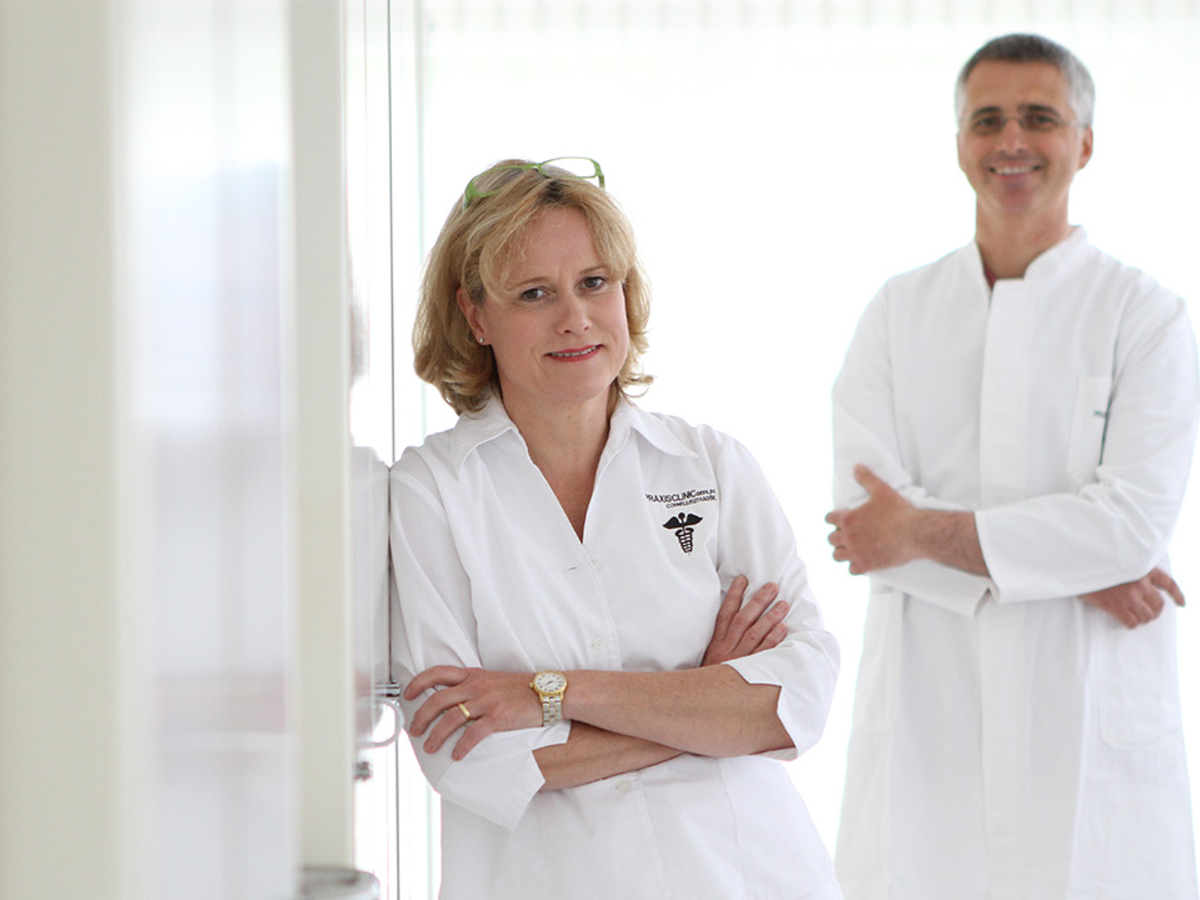
In this situation, a Dental Practice in Berlin Steglitz that understands both the medical and emotional needs of patients becomes more than just a place for fillings and cleanings. It becomes a safe anchor in a foreign city. The Zahnarzt-Praxis of Dr. Djamchidi & A. Jannack in Berlin-Steglitz is one such place, combining medical depth, a unique double qualification, and a strong focus on communication in English and German.
For expats used to different healthcare systems, there are several layers of uncertainty. Will the dentist recommend unnecessary treatments? Will they understand previous medical conditions or medications from another country? How can you get a second opinion without feeling like you are offending the doctor? This is exactly where a practice that combines classic dental expertise with broader medical training stands out. When your dentist also has a physician's perspective, complex questions about general health, medications, and interactions with dental procedures can be addressed in a much more comprehensive way.
Dental anxiety often builds on past negative experiences: rushed treatments, pain that was not properly controlled, or the feeling that one was not really listened to. For someone far from home, that fear can be amplified by uncertainty about the local medical culture. The team at this Steglitz dental practice is keenly aware of this. Their philosophy places the patient at the center, not the procedure. That means listening, explaining, and offering options, rather than simply prescribing a course of action.
At the same time, they combine this empathy with high-level expertise in fields like implantology, endodontics, oral surgery, and microscopic dentistry. This blend is especially relevant for international patients, who may have already invested significantly in dental work in their home country and want to preserve or carefully improve that work rather than start from zero.
One of the defining USPs of this Dental Practice (in German: Zahnarzt-Praxis) in Berlin-Steglitz is the so-called double approbation of Dr. Djamchidi. He is not only a licensed dentist, but also a fully trained physician and ENT (ear, nose, throat) specialist. This dual qualification – often described internationally as an MD plus DDS combination – is particularly valuable in the field of implantology and oral surgery.
When an implant is placed, especially in the upper jaw near the maxillary sinus, the procedure is not just about drilling a hole and inserting a titanium screw. The upper jawbone in the region of the molars is closely related to the maxillary sinus, a delicate air-filled cavity inside the facial bones. If a person has had sinus infections, allergies, nasal polyps, or previous ENT surgeries, these conditions can significantly influence how safe and predictable an implant procedure will be.
A physician and ENT specialist like Dr. Djamchidi brings a much deeper understanding of this anatomy and its variations. He is trained to evaluate the maxillary sinus floor, detect anatomical risks, and interpret imaging in a way that bridges both medical and dental perspectives. For example, some patients have a very thin bony layer between the tooth roots and the sinus. Others may have reduced bone height because of long-term tooth loss. In such cases, a sinus lift procedure – carefully elevating the sinus membrane and placing bone substitute material to increase bone volume – may be required to support a stable dental implant.
Here, the double approbation provides clear safety benefits. As an ENT specialist, Dr. Djamchidi understands the sinus membrane, surrounding structures, and potential complications from inside and outside. He will look not only at the tooth gap but at the entire upper jaw, nasal cavity, and sinus system. For patients who have chronic sinus problems, snoring issues, or past nasal surgery, this interdisciplinary view can be crucial in planning whether, when, and how an implant should be placed.
Beyond the sinus area, many medical conditions influence oral surgery. Patients with cardiovascular disease, diabetes, autoimmune disorders, or taking anticoagulants need tailored treatment plans. A physician-dentist like Dr. Djamchidi is trained to interpret your medical records, understand international medication names, and communicate with your general practitioner or specialist when necessary. This is particularly reassuring for expats who may be taking medications started in another country and are not sure how these interact with German treatment protocols.
In implantology, biocompatibility and long-term health are crucial. The choice of implant material, the design of the prosthetic crown, and the surgical technique all influence how well the implant will integrate with bone and soft tissue. A doctor who is used to thinking about system-wide effects will consider not only the local jaw situation but the whole body: immune responses, healing capacity, allergy potential, and medication influences. Patients benefit from a more holistic risk assessment and from treatment that is tailored not only to their teeth but also to their general health.
Moreover, ENT expertise becomes important in diagnosing the source of facial pain. Not every toothache is purely dental. Sometimes, discomfort in the upper jaw can be referred pain from the sinus or from neighboring structures. A typical example: a patient feels pain over the upper molars and assumes that a root canal or extraction is needed. However, the real cause may be an acute maxillary sinusitis. A practitioner trained in both ENT and dentistry can differentiate between these conditions with greater precision and avoid unnecessary dental interventions.
In the context of a modern Dental Practice in Berlin Steglitz, this means that when you come in for an implant consultation or an oral surgery evaluation, you are not just getting a local check of one tooth. You are being assessed as a complete person with a specific medical history, sinus anatomy, and general risk profile. That is a strong foundation for safe, minimally invasive procedures, whether it is a single implant, a complex full-arch solution, or a carefully planned sinus lift.
Another valuable aspect for international patients is communication. Medical and dental English can be quite complex, and misunderstandings can be dangerous. In this practice, you can discuss topics like the maxillary sinus floor, bone augmentation, twilight sleep sedation, and postoperative care in clear English, reducing anxiety and giving you real control over your decisions. A second opinion also becomes more meaningful when it is based on a dual medical-dental understanding of your case.
While implantology and oral surgery create new structures in the jaw, another core philosophy at this Steglitz dental practice is tooth preservation – in German, the principle of "Zahnerhalt vor Zahnersatz" (saving the tooth before replacing it). This philosophy is embodied by Annette Jannack, who focuses strongly on endodontics, modern root canal treatment, and minimally invasive restorative dentistry.
Endodontics is often misunderstood. Many patients associate "root canal" with pain, long sessions, and questionable results. Yet in the hands of a dedicated, well-trained practitioner using modern instruments and microscopic dentistry, root canal treatment can be a precise, gentle, and highly effective way to keep a natural tooth functioning for many years.
The basic idea of endodontics is to treat diseases of the dental pulp – the soft tissue inside the tooth that contains nerves and blood vessels – as well as the surrounding root tissues. When deep decay, trauma, or repeated dental work damages the pulp, it can become inflamed or infected. Without treatment, this can lead to persistent pain, abscess formation, and bone loss around the root tip. In the past, extraction was often the only option. Now, with fine instruments and digital imaging, even severely compromised teeth can often be saved.
In this practice, a typical root canal treatment with Annette Jannack begins with a detailed diagnosis. Using digital radiographs and, where indicated, three-dimensional imaging, she evaluates the length, curvature, and complexity of the root canals. Many teeth have more canals than people expect, and they can be curved, calcified, or very narrow. Microscopic dentistry – working under high magnification – allows her to see details that would otherwise remain hidden, such as tiny accessory canals or micro-fractures.
Once the tooth is numbed and fully isolated with a rubber dam (a flexible sheet that keeps saliva out and protects the throat), the inflamed or infected pulp tissue is removed. Modern nickel-titanium instruments and rotary files are used to shape the root canals gently but thoroughly. During this process, the canals are repeatedly irrigated with special solutions that disinfect and dissolve organic debris. The goal is to eliminate bacteria as completely as possible and to create a clean, biologically compatible environment inside the root.
After cleaning, the canals are dried and filled with a biocompatible material, usually gutta-percha, combined with a sealer that closes small irregularities. The three-dimensional filling aims to prevent bacteria from re-entering and colonizing the space. In many cases, the tooth is then reinforced with a carefully designed filling or a crown to restore its structural integrity. Especially in the back of the mouth, where chewing forces are high, a root-treated tooth may need a crown or onlay to prevent fracture.
The philosophy behind all this complex work is simple: a natural tooth, even one that has undergone endodontic therapy, often functions better than the best artificial replacement. Natural teeth preserve bone volume, maintain a natural bite, and support a balanced jaw joint. They also preserve proprioception – the subtle sensory feedback that tells your brain how hard you are biting. This contributes to a more natural, comfortable chewing experience.
For expat patients who may already have crowns, fillings, and root canals from multiple countries, this approach is particularly important. Instead of simply removing and replacing older work, Annette Jannack will first evaluate whether a careful retreatment or a conservative restoration can extend the life of an existing tooth. Modern endodontics even makes it possible to re-treat failed root canals, remove old posts, and address persistent inflammation at the root tip with microscopic precision.
This attention to detail and tooth preservation is not just technically impressive; it also creates financial and emotional benefits. Preserving teeth reduces the need for complex prosthetics and large-scale implant reconstructions later in life. It respects the investment patients have already made in their oral health, whether in Berlin, Zehlendorf, or on the other side of the world. And it aligns with a minimally invasive ethic: do only as much as necessary, but as thoroughly and precisely as possible.
For many patients, the words "root canal" or "oral surgery" immediately trigger anxiety. This fear is not irrational: dental treatment touches highly sensitive areas of the body, and most people have at least one bad memory of a stressful appointment. For expats navigating a new healthcare system, anxiety can be compounded by uncertainty: Will the dentist be gentle? Will I understand enough German? What if I need complex treatment – will I be pressured into it?
The Dental Practice of Dr. Djamchidi and Annette Jannack in Berlin-Steglitz has consciously developed an "anxiety-free" concept that addresses these concerns on multiple levels. First and foremost, they invest time in conversation. The initial anamnesis (medical history) is not a rushed formality but a genuine dialogue. Patients are encouraged to describe their fears, previous experiences, and expectations in their own words, whether in English or German. By listening, the team can adapt both the treatment plan and the way they communicate.
For many anxious patients, control is key. Knowing what will happen, in what order, and which sensations are normal can significantly reduce stress. Here, explanations are given step by step, with the option to pause, ask questions, or stop a procedure at any time. Visual aids, radiographs, and models help patients understand their oral situation and the rationale behind each recommendation. A second opinion is welcomed, not discouraged, because informed patients make better long-term decisions and feel more confident in their care.
Pain control is another central pillar. Local anaesthesia techniques are tailored to individual needs, and modern anaesthetic agents allow for both rapid onset and long-lasting comfort. For patients with severe dental anxiety or for more extensive procedures such as multiple implant placements or complex root canal surgeries, options like sedation or twilight sleep can be discussed. In twilight sleep, patients remain responsive but deeply relaxed, with little or no memory of the procedure afterward. This can transform an experience that would otherwise be unbearable into something manageable and even surprisingly calm.
Some patients also appreciate complementary approaches, such as gentle homeopathic support for anxiety or postoperative healing. While these methods never replace evidence-based dentistry, they can be integrated as supportive measures, especially when they align with the patient's personal beliefs and experiences.
The environment of the practice also contributes to a sense of safety. Being treated in a historic Altbau with high ceilings and classic Berlin architecture feels different from a purely clinical setting. Warm colors, natural light, and attentive staff create a sense of being welcomed rather than processed. Even the simple act of being greeted in clear English by a receptionist who understands international insurance letters can ease the tension many expats feel when they walk into a medical office in Germany.
Location matters, especially in a large city like Berlin. The practice is situated in Berlin-Steglitz, in the southwest of the city, close to the well-known shopping and business district around Schloßstraße. This area is easily accessible from many residential neighborhoods, including Zehlendorf and other parts of Berlin Southwest, by public transport, bicycle, or car.
The building itself is a classic Berlin Altbau – a historic structure with character, high ceilings, and the kind of architectural details that define much of traditional Steglitz. However, this charm comes with a practical consequence: the practice is not barrier-free. There is no elevator, and access requires climbing stairs. This is an important point of honesty for patients with limited mobility. While many people appreciate the authentic atmosphere of such a building, those who rely on wheelchairs or have severe mobility issues will need to know in advance that there is no step-free access.
For those who are able to use stairs, the location offers several advantages. Steglitz is well connected via S-Bahn, U-Bahn, and various bus lines, making it straightforward to combine a visit to the dentist with other errands, shopping, or a walk through the nearby green areas. Compared to inner-city districts with dense, narrow streets, Berlin Southwest often provides better options for street parking or nearby parking garages, which can be a relief for patients arriving for more complex procedures or for those who prefer to drive after sedation with an accompanying person.
The immediate neighborhood reflects the mixed character of Steglitz: residential streets with leafy trees, traditional cafés, and local shops blend with modern retail and services along Schloßstraße. For expats, this area feels simultaneously lively and relaxed, less hectic than the city center but far from remote. Coming to an appointment can thus feel like part of everyday urban life rather than a stressful medical expedition.
For many international patients, a visit to a new dental practice in a foreign country is an emotional journey as much as a medical one. To make this journey as smooth as possible, it helps to know in advance what to expect. At the Zahnarzt-Praxis of Dr. Djamchidi & Annette Jannack in Berlin-Steglitz, a typical first visit unfolds in several clear stages, each designed to build trust and provide clarity.
The journey begins even before you enter the practice. When you call or write an email to schedule your appointment, you will notice that the team is used to working with international patients. You can mention that you prefer communication in English, and you can briefly describe your main concern: pain, a broken tooth, interest in implantology, a second opinion, or a general check-up and prophylaxis. The staff will help you identify what type of appointment you need and how much time should be reserved.
On the day of your appointment, you arrive at the Altbau building in Steglitz and climb the stairs to the practice. Inside, you are greeted by reception staff who help you with registration forms and, if necessary, explain how your German public or private insurance works in the context of dental care. For expats who are new to the system, this can be particularly reassuring. You can also bring previous x-rays, treatment plans, or medical reports from your home country; these will be integrated into your file.
The anamnesis phase is more than just ticking boxes. You will be asked about your general health, medications, allergies, past surgeries, and previous dental experiences. If you have ENT problems, sinus issues, or complex medical conditions, this is the moment to mention them. For nervous patients, it is also the right time to openly share fears and expectations. The more the team knows about you as a person, the better they can tailor the treatment.
Next comes the clinical examination. Depending on your complaint, either Dr. Djamchidi or Annette Jannack – sometimes both – will examine your teeth, gums, jaw joints, and, where relevant, ENT-related structures. In cases of suspected implant needs, sinus proximity, or unexplained pain, additional imaging may be recommended. This can include digital x-rays or three-dimensional imaging that reveals the detailed shape of the jawbone, tooth roots, and the maxillary sinus floor.
After gathering all the diagnostic information, you sit down for a detailed consultation. Here, the unique combination of skills within the team becomes clear. If you are considering implants, for example, Dr. Djamchidi will explain not only the dental aspects but also the anatomical and medical context. You will hear about bone quality, sinus position, and risk factors in a way that is understandable, even if you have no medical background. If endodontic retreatment or complex tooth preservation is on the table, Annette Jannack will walk you through the options, showing you how microscopic dentistry and modern techniques can often save teeth that once would have been lost.
Throughout this discussion, your preferences and priorities matter. Some patients wish to preserve every tooth possible; others prefer a faster implant solution. Some want to minimize the number of appointments; others value a step-by-step, gentle approach. Together with you, the dentist will create a treatment plan that balances medical necessity, aesthetic goals, time frames, and financial considerations. Cost estimates are transparent and can be provided in English so you can make informed decisions or discuss them with your insurance provider.
When treatment begins, whether for prophylaxis, a filling, root canal treatment, or implant surgery, the atmosphere remains calm and structured. The team will explain each step as it happens: when an injection is given, when a drill is used, when you may feel vibration or pressure but not pain. For anxiety-prone patients, signals can be agreed upon – for example, raising a hand when you need a break. In longer sessions, short pauses are built in to prevent fatigue.
If sedation or twilight sleep is part of the plan, you will receive detailed instructions about preparation and aftercare. A responsible adult should accompany you and take you home afterward. During the procedure, your vital signs and comfort are monitored closely, combining the standards of oral surgery with the safety awareness of a medical setting.
After treatment, you are not left alone with your questions. Postoperative instructions are explained verbally and, if needed, provided in writing in English. You learn what is normal, what signs should prompt you to call the practice, and how to support healing with proper oral hygiene, diet, and rest. Follow-up appointments are scheduled as necessary to monitor success, remove sutures, or adjust occlusion (bite) on new crowns or restorations.
Over time, as you return for regular prophylaxis – professional cleanings, check-ups, and preventive advice – the practice becomes less foreign and more like a familiar health partner. The dental hygienists and dentists get to know your individual risk profile: for example, whether you are prone to gum disease, whether your saliva environment encourages tartar buildup, or whether your lifestyle and diet create specific challenges. Prevention is then tailored to you, helping you avoid emergencies and maintain the results of more complex treatments.
What makes a dental practice stand out in a city as large and diverse as Berlin is not just technology or location, but a coherent philosophy that spans everything from diagnosis and treatment to communication and atmosphere. In Berlin-Steglitz, the Zahnarzt-Praxis of Dr. Djamchidi & Annette Jannack offers a particularly strong combination for both locals and international residents.
The double approbation of Dr. Djamchidi – physician, ENT specialist, and dentist – brings a rare level of interdisciplinary expertise to implantology and oral surgery. Complex questions about the maxillary sinus floor, bone augmentation, and systemic health are addressed with a depth that gives patients real confidence. For expats with complicated medical histories or past ENT problems, this integrated perspective is a major safety advantage.
At the same time, the focus of Annette Jannack on endodontics, tooth preservation, and microscopic dentistry ensures that the philosophy of "Zahnerhalt vor Zahnersatz" is not just a slogan, but daily practice. Whenever possible, teeth are saved rather than replaced, using advanced root canal treatment, minimally invasive restorations, and careful long-term planning. This benefits both the biological integrity of the mouth and the emotional and financial well-being of patients.
Anxiety-free dentistry is not an empty promise here but a structured concept: empathetic communication in English and German, clear explanations, respect for second opinions, and tailored options such as sedation or twilight sleep. Pain control, predictability, and respect for the patient's pace are part of every consultation and every procedure.
Situated in a classic Altbau in Steglitz, near Schloßstraße and within easy reach of Zehlendorf and other parts of Berlin Southwest, the practice offers an authentic Berlin environment with the practical advantage of good transport links and parking options. While the lack of an elevator and the presence of stairs must be honestly acknowledged, many patients appreciate the combination of historic architecture and modern medicine.
Perhaps most importantly, this Dental Practice in Berlin Steglitz understands that international patients bring with them not only different languages but also different expectations shaped by healthcare systems from around the world. By bridging physician-level medical understanding with high-level dentistry, and by creating a space where questions are welcomed and decisions are shared, the practice of Dr. Djamchidi & A. Jannack becomes more than just a place to fix teeth. It becomes a trusted health partner in the heart of Berlin, for long-term oral health, aesthetic confidence, and peace of mind – whether you are a long-time local or have just begun to call this city home.
So schätzen die Börsenprofis Aktien ein!

Für. Immer. Kostenlos.