
A Dental Practice in Berlin Steglitz Where Medicine and Dentistry Meet
28.02.2026 - 07:01:09 | ad-hoc-news.de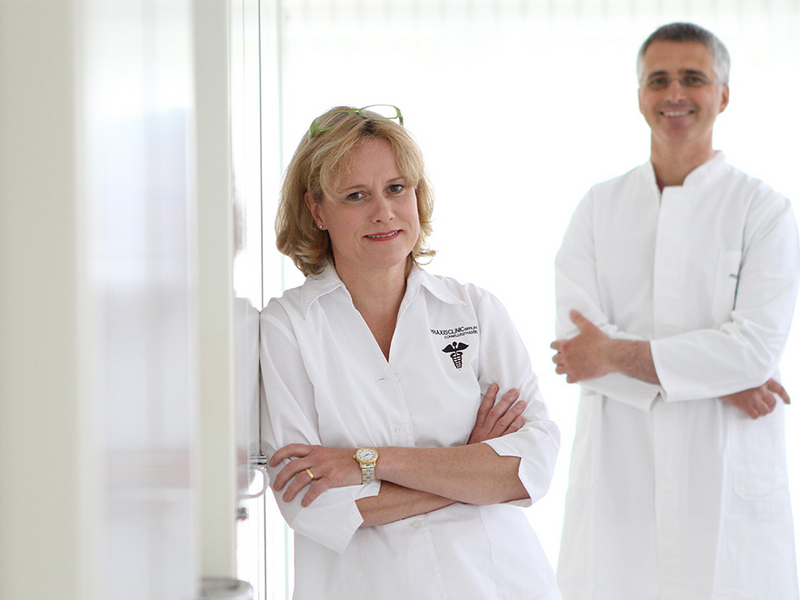
Moving to a new country comes with many challenges: new language, different healthcare systems, and unfamiliar expectations around appointments, insurance, and costs. When it comes to something as intimate and anxiety-provoking as dental treatment, these challenges feel even bigger. Many international residents in Berlin delay necessary care because they are unsure where to go, whether anyone will really speak English, and if their fears and past bad experiences will be taken seriously.
In Berlin, it is not difficult to find a Zahnartz, but it is surprisingly hard to find a dental practice that combines modern technology, truly bilingual communication, and a holistic medical perspective that looks beyond just the teeth. This is where Zahnarzt-Praxis Berlin Steglitz (Dr. Djamchidi & A. Jannack) stands out: a Dental Practice in Berlin Steglitz that brings together dentistry, medicine, and a deep commitment to tooth preservation under one roof.
For expats and international Berliners, this practice offers more than standard check-ups. It offers understanding. The team is used to working with patients who are new to the German healthcare system, people with dental anxiety, and those who simply want a clear, honest second opinion in English before making big decisions about implants, root canal treatment, or aesthetic procedures.
One of the most distinctive features of this dental practice is the professional profile of Dr. Djamchidi. Unlike most dentists, he holds a double approbation: he is both a fully qualified physician and ENT specialist, and a dentist. This combination is particularly valuable in the fields of implantology and oral surgery, where the border between dentistry and general medicine is very thin.
Dental implants are not just a matter of screwing a small titanium post into the jaw. They require a deep understanding of bone biology, sinus anatomy, nerve pathways, healing capacity, and general health. Because the upper molar area is located directly under the maxillary sinus floor, implants in this region often require delicate procedures such as sinus lifts or bone augmentation. Complications can affect not only the teeth, but also the nasal passages and surrounding structures.
As an ENT specialist and dentist, Dr. Djamchidi can assess these risks from both sides. He understands how the maxillary sinus communicates with the nose and upper airways, how chronic sinusitis can influence the success of an implant, and how to plan minimally invasive interventions that respect the delicate structures of the face. This "double view" means that patients receive implantology that is not just technically precise, but medically integrated.
For example, before placing implants near the maxillary sinus floor, thorough diagnostics are crucial. This may involve 3D imaging, clinical examination of the nasal and sinus area, and evaluation of the patient's medical history. Where a purely dental view might only consider bone height and prosthetic planning, a physician–dentist like Dr. Djamchidi also considers ventilation of the sinus, prior infections, allergic tendencies, and general risk factors such as smoking or systemic disease. This reduces the chance of post-operative sinus problems and improves long-term implant stability.
In oral surgery, this dual qualification also translates into better management of complex cases. Wisdom tooth removal, cyst operations, or surgical tooth extractions can influence neighboring nerve structures or sinuses. A physician trained in ENT anatomy is particularly familiar with the three-dimensional relationships of these regions. For patients, this means greater safety, more accurate risk assessment, and treatment strategies that favor minimally invasive approaches whenever possible.
Another important advantage of the double approbation lies in the ability to view the patient as a whole. Conditions such as diabetes, autoimmune diseases, or blood-thinning medication have a strong impact on oral surgery and implantology outcomes. A practitioner with full medical training is equipped to interpret laboratory values, communicate with other physicians, and tailor the treatment protocol to the patient's overall health. This is especially reassuring for older patients or those taking multiple medications.
For international patients who may already feel uncertain in a foreign healthcare system, this integrated expertise creates trust. You are not just treated as a mouth with teeth, but as a complete person with a medical history, questions, and fears that are taken seriously.
While implantology and oral surgery are key strengths of the practice, the philosophy of Zahnarzt-Praxis Berlin Steglitz is very clear: preserve natural teeth whenever possible. This is where dentist Annette Jannack plays a central role. Her focus lies in microscopic endodontics and modern root canal treatment, which are the backbone of tooth preservation (Zahnerhalt vor Zahnersatz).
Endodontics deals with the inside of the tooth: the dental pulp with its nerves and blood vessels, and the fine root canal system. When deep caries or trauma reaches the pulp, bacteria can cause inflammation and later the death of the nerve. Many patients assume that such a tooth must be extracted. In reality, with precise root canal treatment, it is often possible to save the tooth for many years, sometimes decades.
Modern endodontic therapy is highly technical. Under microscopic dentistry, the interior of the tooth can be visualized at high magnification. This allows the dentist to locate tiny accessory canals, remove infected tissue thoroughly, and clean and shape the root canals in a way that would be impossible with the naked eye. Ultrasonic instruments, flexible nickel-titanium files, and biocompatible filling materials help seal the canals and protect the surrounding bone from further infection.
Annette Jannack uses these techniques to give compromised teeth a second chance. Rather than jumping directly to extraction and implant placement, she evaluates whether a careful root canal treatment, possibly combined with a build-up and crown, can stabilize the tooth. This approach respects the biological value of natural tooth structure. Even the most advanced implant is still a foreign body; a living tooth, even if weakened, has a periodontal ligament and natural shock absorption that no artificial replacement can fully replicate.
Saving teeth also aligns with a minimally invasive philosophy. Every extraction alters the bite and places additional load on neighboring teeth. By focusing on tooth preservation, the practice aims to maintain the natural chewing system as long as reasonably possible. For many patients, this also means fewer major surgeries and a more cost-effective overall strategy, since preserving a tooth can often be more economical long-term than replacing several teeth with complex prosthetics.
In addition to endodontics, the practice offers aesthetic dentistry that respects function and biocompatibility. This includes high-quality fillings, inlays, veneers, and crowns, planned not only for looks but also for how they influence chewing, jaw joints, and long-term tooth preservation. The goal is not a Hollywood smile at any price, but natural, harmonious aesthetics that fit the face and support oral health.
Many people carry a lifetime of dental anxiety. Previous painful experiences, insensitive treatment, or even traumatic childhood visits can make any new appointment feel like a threat. For expats, this anxiety can be magnified by language barriers: the fear of not understanding what is being done, or of being unable to stop a procedure once it has started.
Zahnarzt-Praxis Berlin Steglitz has built its processes around the concept of anxiety-free dentistry. This begins with communication. The team is used to explaining each step calmly and clearly in English, German, and other languages wherever possible. Before any treatment begins, you are invited to describe your fears. You are encouraged to ask for breaks and to set a clear stop signal so that you always feel in control.
For patients with pronounced dental anxiety, the practice offers additional options. Depending on the indication and medical suitability, treatments can be supported by gentle sedation, sometimes referred to as twilight sleep. In twilight sleep, you remain responsive but relaxed and often later remember little of the procedure. This can be particularly helpful for longer oral surgery sessions, complex implantology, or extensive root canal treatment.
Where appropriate and desired, complementary methods such as homeopathic support or herbal-based measures may be discussed, always in addition to, not instead of, evidence-based dentistry. Pain management is taken seriously, with minimally invasive local anaesthesia techniques and careful post-operative instructions to keep discomfort to a minimum.
The practice also understands that trust is built slowly. You are not pressured into major treatment plans. If you simply want a second opinion or a detailed explanation of X-rays taken elsewhere, this is respected. Many patients first come for a check-up or prophylaxis appointment to get a feel for the team before committing to more complex procedures.
The physical setting of any dental practice also plays a role in how it feels. Zahnarzt-Praxis Berlin Steglitz is located in a classic Berlin Altbau in the southwest of the city, not far from Schloßstraße and with convenient connections to the surrounding districts such as Zehlendorf and Berlin Southwest in general. The historic building creates a particular atmosphere: high ceilings, traditional staircases, and the sense of Berlin history that many locals and expats love.
It is important, however, to be transparent: the practice is not barrier-free. Access is via stairs, and there is no elevator in the building. For some patients with limited mobility, this may be a challenge and should be considered when planning a visit. At the same time, the team does what they can within the architectural limits to support patients, for example by allowing extra time for arrival and rest before treatment.
On the positive side, the surrounding streets of Steglitz often offer better parking options than the very center of Berlin, and the connection to public transport via the Schloßstraße area is very good. This combination of central yet residential location makes the practice easy to integrate into everyday life, whether you come from nearby Zehlendorf, Wilmersdorf, or further afield.
When you arrive for your first appointment at Zahnarzt-Praxis Berlin Steglitz, the experience is designed to be as clear and stress-free as possible, especially if you are new to the German system. Before the visit, you are informed about what documents to bring, how statutory or private insurance works in general terms, and what to expect in terms of treatment planning and cost estimates.
Upon entering the practice, you are welcomed at reception and given registration and health history forms. For international patients, staff can help explain any unfamiliar German terms, so you understand exactly what you are signing. Your medical history is taken seriously: medications, allergies, chronic illnesses, and previous operations are all relevant, especially for oral surgery and implantology.
The first clinical contact usually begins with a comprehensive examination. This may include digital X-rays and, if needed, advanced imaging for implant planning or complex endodontic cases. The dentist then explains the findings in simple, understandable language. You are shown which teeth are healthy, which require monitoring, and which need treatment.
If you are considering dental implants, you will meet with Dr. Djamchidi to discuss not only the state of your jawbone and bite, but also your overall health. He will explain why the anatomy of the maxillary sinus, the proximity of nerves in the lower jaw, and your general medical situation influence the choice of implant system, timing, and whether adjunctive procedures like sinus lifts are necessary. This is your opportunity to ask detailed questions and to understand each option before you decide.
If you have a tooth that another practice has recommended extracting, you might be referred to Annette Jannack for an endodontic assessment. With the help of microscopic dentistry, she will evaluate whether a root canal treatment or revision can realistically preserve the tooth. You will receive an honest evaluation: the practice does not promise miracles, but if there is a reasonable chance to save the tooth, that option is carefully explained alongside alternatives such as implants or bridges.
Treatment planning is transparent. You receive a written plan describing the sequence of appointments, the procedures involved, and a cost overview. For patients with statutory German insurance, the team helps clarify what is covered and what is considered private co-payment. For those with international or private insurance, documentation can usually be provided in a way that assists reimbursement.
On treatment days, the focus is on comfort and predictability. For anxious patients, the appointment pace can be adjusted: shorter, more frequent visits instead of one long session, or sedation if medically indicated and desired. During the procedure, each step is announced so there are no surprises. Post-treatment, you receive clear aftercare instructions in English: what to eat, which painkillers are safe, how to care for the surgical site or treated tooth, and when to come back for checks.
Prophylaxis, or preventive care, is an integral part of the patient journey. Professional cleanings, individualized home-care instructions, and early detection of problems help reduce the need for invasive treatments in the future. The aim is a long-term partnership, not one-off emergency interventions.
For many expats and international professionals living in Berlin Steglitz and the surrounding districts, finding a dental home that combines high-level clinical expertise with real human warmth can take time. Zahnarzt-Praxis Berlin Steglitz (Dr. Djamchidi & A. Jannack) distinguishes itself by uniting several qualities that rarely come together in one place.
First, the medical depth: with a double approbation as both physician/ENT specialist and dentist, Dr. Djamchidi offers a level of integrated care in implantology and oral surgery that goes well beyond the usual. Complex anatomical regions like the maxillary sinus floor are handled with the same respect for function and safety that you would expect from hospital-based medicine.
Second, the preservation mindset: under the care of Annette Jannack, modern endodontics and microscopic root canal treatment are used to keep natural teeth whenever it is sensible, following the principle of Zahnerhalt vor Zahnersatz. This reduces the need for extractions and extensive prosthetic work, and prioritizes biological solutions over purely technical ones.
Third, the patient-centered atmosphere: whether you struggle with dental anxiety, need clear explanations in English, or simply value minimally invasive, biocompatible treatment concepts, the practice is structured to listen, inform, and gently guide rather than pressure. Options like sedation, twilight sleep, and anxiety-sensitive scheduling are there to make even complex treatment tolerable.
Fourth, the local character: located in a classic Altbau in Steglitz, near Schloßstraße and well connected to Zehlendorf and the broader Berlin Southwest, the practice offers an authentic Berlin feel. While the stairs and lack of elevator mean it is not barrier-free, the central yet residential location and relatively accessible parking make it practical for many families and professionals.
Finally, there is an emphasis on continuity: from prophylaxis and tooth preservation to implants and high-quality restorations, your dental care is coordinated under one roof, with practitioners who know your history and speak your language. For international residents seeking not just a quick fix but a long-term partner in oral health, this combination is invaluable.
If you are looking for a Dental Practice in Berlin Steglitz where you can ask questions freely, receive medically grounded advice, and choose between preserving and replacing teeth in a well-informed way, Zahnarzt-Praxis Berlin Steglitz (Dr. Djamchidi & A. Jannack) is a compelling option. Here, dentistry is not an isolated craft, but part of an integrated medical approach designed to keep you healthy, comfortable, and confident in your smile for many years to come.
Hol dir den Wissensvorsprung der Aktien-Profis.

Seit 2005 liefert der Börsenbrief trading-notes verlässliche Aktien-Empfehlungen - Dreimal die Woche, direkt ins Postfach. 100% kostenlos. 100% Expertenwissen. Trage einfach deine E-Mail Adresse ein und verpasse ab heute keine Top-Chance mehr. Jetzt kostenlos anmelden
Jetzt abonnieren.


