
XPeng's Robot Arm Is Worth $6.3 Billion. The Car Company Behind It Is Trading Near Its 52-Week Low.
Published on 09/16/2026 at 17:50 | Editorial boerse-global.de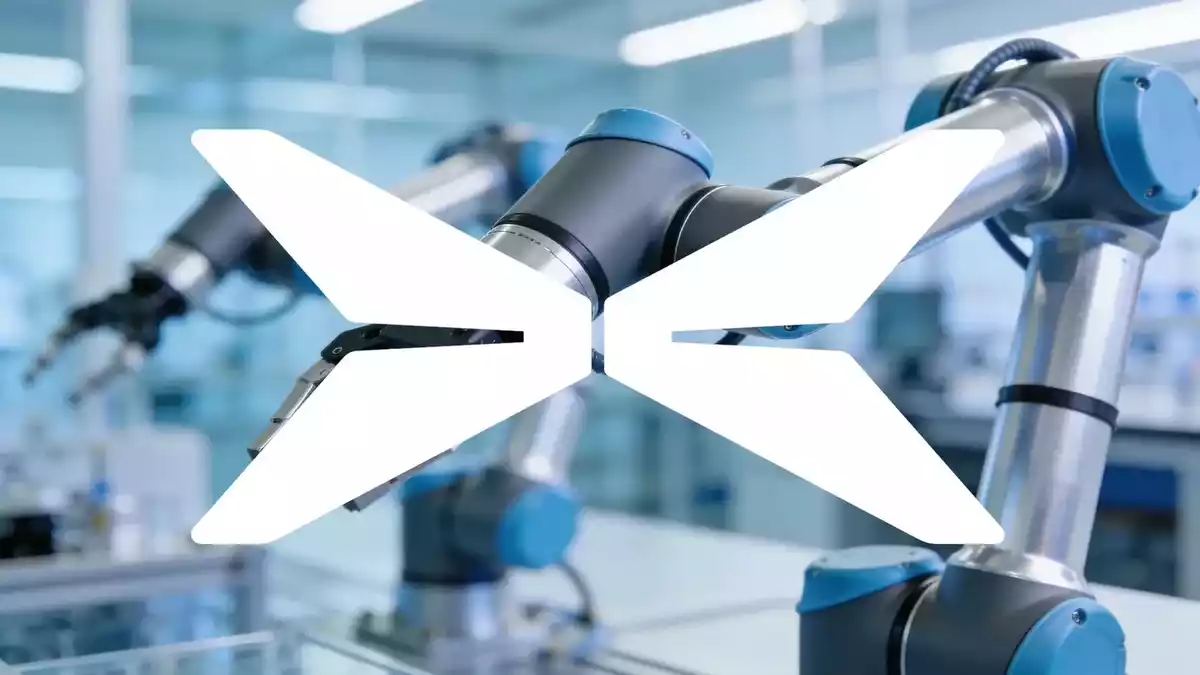
XPeng has spent the past few weeks generating headlines at a pace that would normally lift a stock. Instead, the shares are hovering just above their yearly floor — and that gap between operational noise and market verdict is where the real story sits.
A robotics unit valued like a grown-up company
The clearest signal of where XPeng's future is being priced comes from its embodied-AI division. At the end of August, the company signed purchase agreements with a group of international investors, pulling in more than $900 million in a single round. IDG Capital led the financing, with Gaorong Ventures participating and strategic backing from Tencent and Alibaba. The deal values the robotics subsidiary at over $6.3 billion — by XPeng's own account, the largest single funding round in China's embodied-intelligence sector to date.
That number stands in sharp relief against the parent company's market treatment. XPeng has shed half its value since the start of the year and now trades roughly 63% below the 52-week high of EUR 24.40 reached in November. Private investors are willing to underwrite the robot business at a multi-billion-dollar valuation; public shareholders are not extending the same courtesy to the carmaker that owns it.
The operational picture is genuinely mixed
Second-quarter 2026 results, reported in late August, explain part of that skepticism. Revenue came in at RMB 19.74 billion — about $2.91 billion — up 8.0% year over year and 51.5% sequentially. Gross margin held at 20.7%. The bottom line, however, still showed a net loss of RMB 1.34 billion.
Management guided third-quarter deliveries to a range of 115,000 to 121,000 vehicles, with revenue of RMB 21.7 billion to RMB 23.4 billion. August deliveries of 39,107 units, a 4% year-over-year increase, point to steady rather than spectacular momentum.
Should investors sell immediately? Or is it worth buying XPeng?
Wall Street is not buying the narrative yet
On September 9, UBS analyst Paul Gong cut his price target on XPeng from $18 to $12 while keeping a neutral rating. The timing was notable: the same day, XPeng announced that the production line for its humanoid robot IRON had gone live — described by the company as the world's first automated manufacturing line for advanced humanoid robots of its kind, with automation exceeding 80% in core processes.
The disconnect extends beyond one analyst. GuruFocus assigns XPeng a GF Score of just 58 out of 100, with particularly weak readings on profitability, valuation, and momentum. A forward P/E above 682 tells its own story: the market is capitalizing future ambition, not current earnings. The stock is also flagged as a potential value trap, even with a calculated upside to GF Value of more than 60%.
Analysts in South Korea have framed the tension succinctly — robotics ambitions may pay off over the long run, but near-term performance hinges on EV volumes and margins. That is precisely where the entire sector is struggling. Nio hit a fresh 52-week low of $3.57 on Tuesday after losing 25% in a month, a reminder that XPeng's weakness is part of a broader China-EV malaise rather than an isolated verdict.
Innovation is not the bottleneck
What makes the stock's slide harder to square is the sheer breadth of recent operational news. XPeng opened an X-Energy charging station in Hong Kong capable of delivering up to 1,000 kilowatts with storage support, open to all brands — a signal that the company views infrastructure as an ecosystem play rather than a walled garden. The G9L has entered right-hand-drive series production, with deliveries to Australia underway and a broader market launch slated for the fourth quarter. In the Philippines, XPeng kicks off at the end of September with the X9 and L03, both offering substantial range and fast-charging capability. And IRON, housed in a robotics unit that raised $900 million in August at a valuation north of $6 billion, is now rolling off an automated line.
Tuesday's Nasdaq session put the stock down 4.4%, making it one of the biggest decliners in the Nasdaq Golden Dragon China Index alongside Li Auto, while the index itself slipped 1.1%. The shares currently change hands at EUR 8.98, just 1.9% above their 52-week low of EUR 8.81.
Tailwinds exist — but they are industry-wide
The broader backdrop is not working against Chinese EV makers. Six domestic manufacturers accounted for 62.3% of global electrified-vehicle sales in the first half of 2026, up from 57.2% a year earlier. China's latest five-year plan for the auto industry targets a 70% share for electric and hybrid vehicles in new registrations by 2030, alongside large-scale deployment of autonomous driving.
For XPeng, that means the market environment provides a tailwind even as its own earnings profile and the recent price-target cut temper enthusiasm. Mass production of the robots is planned by the end of 2026, with a broader commercial rollout including deliveries in China and abroad set for 2027. The next hard data point arrives with the quarterly report on November 24.
Until then, investors are left weighing a company whose technological reach runs years ahead of its current valuation — and asking whether that gap represents an opportunity or a warning.
Ad
XPeng Stock: New Analysis - 16 September
Fresh XPeng information released. What's the impact for investors? Our latest independent report examines recent figures and market trends.


