

Wood Beats Steel: The Office Materials That Quietly Rewire How Stressed You Feel
Published on 10/11/2026 at 05:51 | Editorial boerse-global.de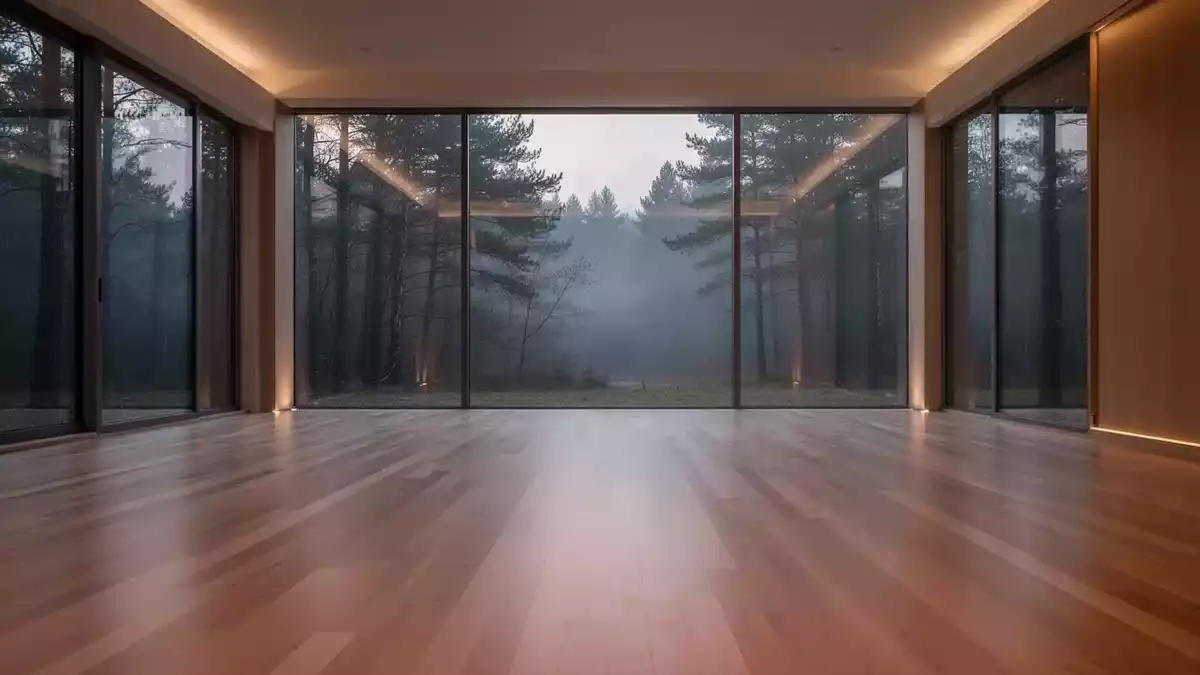
Walk into two offices and your body may register the difference before your brain does. That is the thrust of a growing body of workplace research examining how the surfaces, sounds and light around a desk shape everything from stress hormones to how long you can concentrate.
Surfaces register on the nervous system
Spaces built around biophilic design principles — natural materials, plants, daylight — have been linked to a 47 percent drop in cortisol levels. Subjective strain tracks the same pattern: on a scale of 1 to 10, people rate their burden at 1.8 in rooms finished with solid wood and wool, against 4.2 where colder materials such as stainless steel and glass dominate.
The effect extends beyond mood. Neuro-ergonomic studies indicate that the physical layout of a room influences the release of neurotransmitters including dopamine and norepinephrine, which can lift cognitive performance by as much as 34 percent. The reverse is equally stark: every visual or acoustic interruption during the working day costs the average person 23 minutes of focus.
Flooring counts too. Real wood — oak, maple, beech or walnut parquet — is durable and can improve how sound behaves in a room. Alongside material choices, workplaces are advised to hold relative humidity between 40 and 60 percent.
Ergonomics is bigger than a chair
Lena Michelsen, who heads workplace solutions at Schäfer Shop, argues that ergonomics should not be reduced to a desk and an office chair. Small strains accumulate over a working day, she notes, which is why workstations should be reviewed holistically and regularly, taking in room climate, acoustics and lighting together.
Lighting itself depends on cells called ipRGCs, which are especially responsive to blue light at around 460 nanometres. For a full working day, experts recommend lighting that shifts with the clock:
- 08:00 to 11:00 — 5,500 to 6,500 Kelvin to support focus
- 11:00 to 15:00 — 4,000 to 4,500 Kelvin for a balanced spectrum
- 15:00 to 18:00 — a warmer 2,700 to 3,000 Kelvin to ease the transition into the evening
Sitting still is the quiet hazard
Physical wellbeing suffers most from a lack of movement. Static sitting throttles blood circulation by up to 40 percent, and after roughly 30 minutes the leg muscles wind down while metabolism slows.
The DKV Report 2025 puts the average employee's sitting time at 613 minutes a day, up from 598 minutes in 2023 — a figure tied to a 37 percent higher mortality risk.
Germany's Federal Institute for Occupational Safety and Health (BAuA) sets a minimum desk surface of 1,600 by 800 millimetres, and for mixed activity a height adjustment range of 680 to 1,180 millimetres.
Two studies published in 2026 add that five-minute movement breaks every 30 minutes reduce post-meal blood sugar spikes and sharpen cognitive performance. Research from the Mayo Clinic further confirms that active stations — height-adjustable desks or treadmills — cut sitting time without denting output.


