Wildfires Across England and Wales Reach Record High
Published on 08/03/2026 at 19:27 | Redaktion boerse-global.de
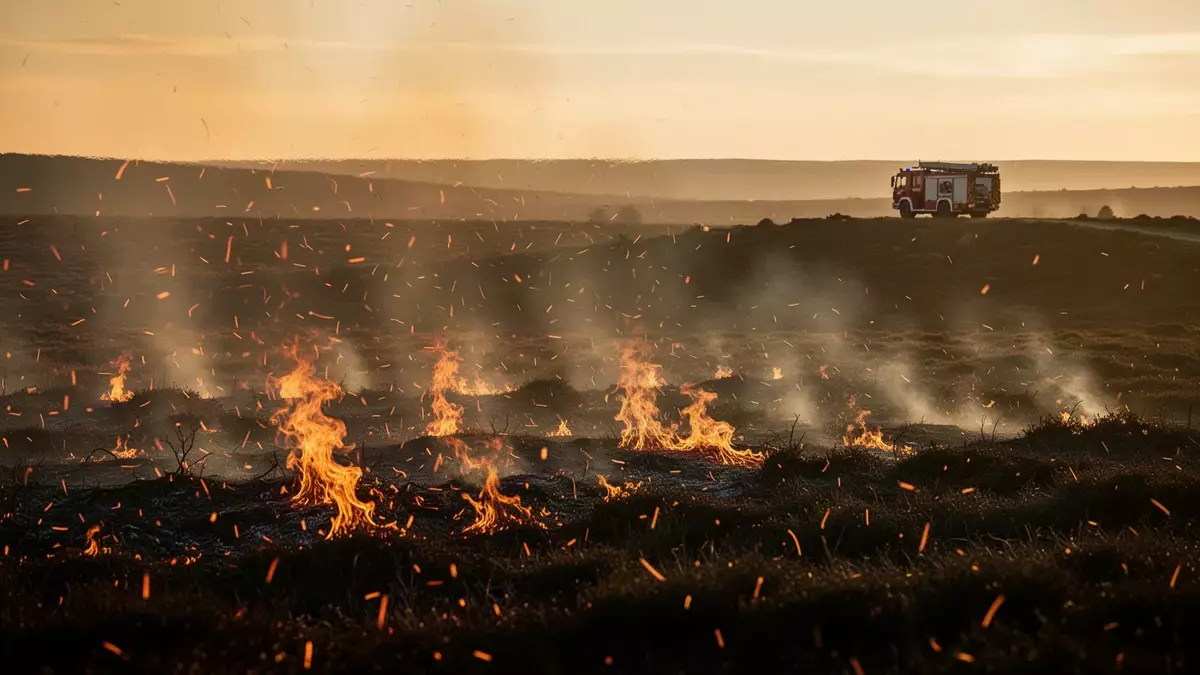
The number of wildfires across England and Wales has hit 716 as of August 3, matching the combined totals of 2021, 2023, and 2024. The surge, reported by the National Fire Chiefs Council (NFCC), comes amid growing concerns over fire service performance, budget deficits, and equipment shortages.
July was the busiest month of the year, accounting for 393 incidents. NFCC Chair Phil Garrigan said wildfires are no longer seasonal or isolated events, stressing the need for sustained investment despite recent government funding for specialist wildfire capabilities.
With wildfire risks escalating across the UK, ensuring your own workplace is protected against fire hazards has never been more critical. Many employers underestimate gaps in their fire safety documentation until it's too late. A free toolkit provides everything you need, from fire risk assessments to evacuation plans and extinguisher training materials. Download the free Fire Safety Toolkit
Northumberland Service Under Enhanced Monitoring
Northumberland Fire and Rescue Service (NFRS) was moved into the HMICFRS enhanced monitoring process, known as "Engage," on July 30, 2026. The move followed an inspection that graded the service as inadequate in five key areas, including risk information gathering, workforce competence, and leadership culture.
The inspection also flagged poor communication with staff, a lack of accurate competency records, and insufficient progress on equality, diversity, and inclusion (EDI). Chief Inspector Michelle Skeer expressed significant concerns about the service's ability to keep the public safe. NFRS Chief Fire Officer Keith Carruthers welcomed the report, noting that improvements are already underway.
Wildfire Response Stretches Regional Resources
In Suffolk, a major wildfire at Dunwich Heath that began on July 29 has devastated 150 hectares of land. The incident required assistance from fire crews across 13 counties, involving up to 120 firefighters.
Local union officials said crews were exhausted after five days of operations and pointed to a lack of specialist equipment. The service possesses only three Unimogs, and standard personal protective equipment (PPE) is unsuitable for such environments. Suffolk's fire service funding stands at £23.62 per person, notably lower than the national average of £30.80.
Other regions report similar pressures:
- Cambridgeshire: Since July 24, the service has responded to over 120 incidents, exceeding its three-year average. More than half were fires in open spaces, including a significant field fire near Whittlesey involving 50 firefighters.
- Norfolk: The fire service is projecting a £1.062 million overspend on its £43 million budget for 2026-27. Pump call-outs have risen 73% over the last five years due to extreme weather. On a single day last week, crews attended 14 open fires and five wildfires.
- Sussex: Environmental experts report that a dry July — which saw only 2% of long-term average rainfall in southern England — has led to wildfires in Ashdown Forest and critically low river levels.
While fire services across the country face mounting pressures, your business doesn't have to be caught unprepared. A free Health & Safety toolkit helps you stay compliant with UK regulations like the Health & Safety at Work Act 1974, COSHH, and PUWER, with ready-to-use risk assessments and checklists trusted by over 37,000 UK companies. Get the free Health & Safety Toolkit
Procurement and Deployment Disputes in Scotland
The Scottish Fire and Rescue Service (SFRS) is facing scrutiny over the purchase of eight Ford Ranger ultra-light pumping units. Acquired in 2023 for approximately £984,000, the vehicles remained non-operational as of June 2026. Critics have called for an Auditor General investigation, citing a lack of a formal business case or delivery timetable for equipment that could have been used in recent wildfires in the Cairngorms.
In the Highlands, a volunteer unit remains unable to deploy because of a stalled memorandum of understanding with the SFRS. Volunteers with the Highland Wildfire Response (HWR) group said they lack necessary insurance and PPE to assist, despite being ready to support professional crews during major incidents.
Transparency Regarding Public Safety Warnings
Recent reports have also highlighted a lack of transparency regarding wildfire risks. During the record-breaking temperatures of July 2022, an official Daily Hazard Assessment flagged extreme risks days before fires destroyed dozens of homes in Wennington and London. However, these warnings were not released to the public at the time. The Natural Hazards Partnership has since described such assessments as not suitable for public broadcast.
Furthermore, the UK continues to lack its own fleet of firefighting planes, often relying on ground-based firebreaks and private helicopter contracts to manage large-scale blazes. Commissioner Jonathan Smith of the London Fire Brigade noted that the increasing frequency and scale of these incidents represent a permanent change in the UK's risk profile.