
Volkswagen's Steering Fix and India Tax Standoff Converge on a Stock Already Down 31%
Published on 09/25/2026 at 15:42 | Editorial boerse-global.de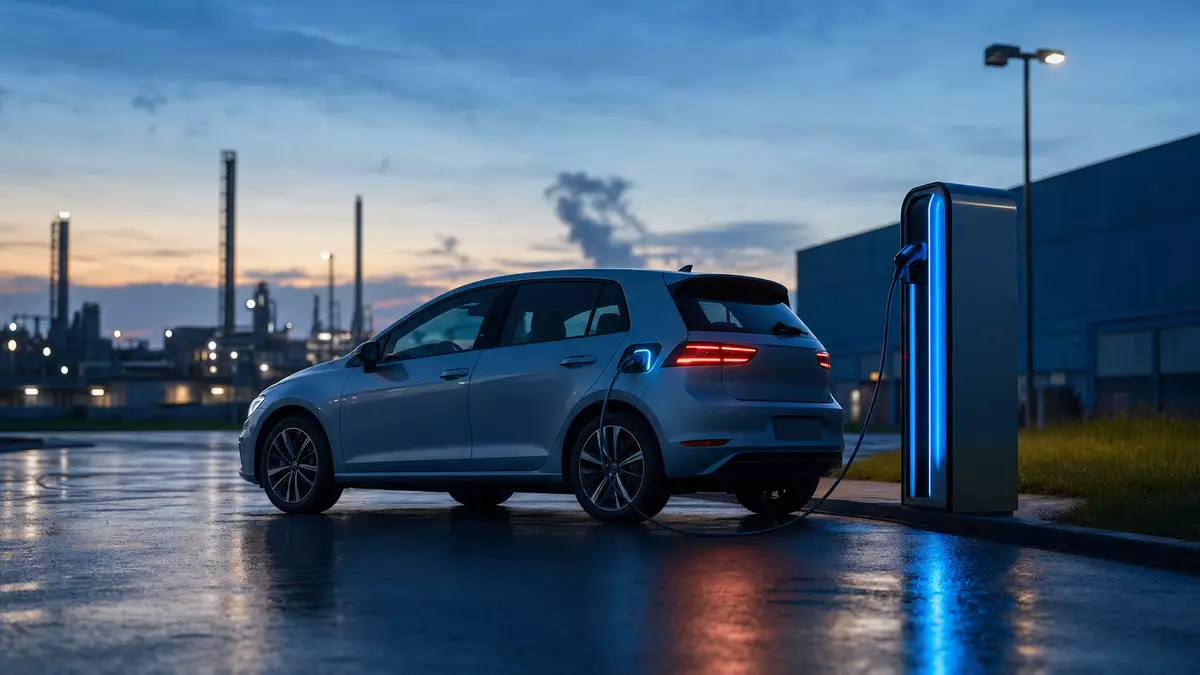
Volkswagen has found itself juggling two very different problems at once: a global service campaign to replace a corrosion-prone steering screw, and a demand from its prospective Indian partner that Wolfsburg shoulder a $1.4 billion tax claim on its own. Neither has dented the share price much on the day, but both feed into a stock that has shed 31% since the start of the year.
Nearly three million vehicles flagged, with more possibly to come
Germany's Federal Motor Transport Authority (KBA) has registered a worldwide action covering roughly 2.86 million vehicles across the VW and Audi brands. The core Volkswagen marque accounts for 2,159,054 of those, of which 895,832 are registered in Germany. Audi contributes 696,547 Q3 units, 58,555 of them on the domestic market.
Citing Handelsblatt, the total could climb to around four million vehicles across the group, with more than a million Skoda models and roughly 200,000 Seat cars also said to be affected.
The build windows stretch back a long way. Volkswagen's Golf, Golf Variant, Tiguan, Touran and Caddy were produced between 24 September 2013 and 1 July 2024, while the Audi Q3 rolled off the line between late October 2017 and May 2024.
Should investors sell immediately? Or is it worth buying Volkswagen?
The defect centres on a fastening screw on the steering gear that can weaken through corrosion and eventually break — in extreme cases cutting steering ability without warning. No material or personal injuries linked to the screw have been reported so far, according to both the KBA and the company. Volkswagen classifies the measure as precautionary and says owners can keep driving until their workshop appointment. The swap to a more corrosion-resistant screw will be free of charge and take up to an hour.
Internally, the group expects the fault to materialise only rarely, estimating that no more than 1% of recalled vehicles will show dangerous corrosion. Volkswagen has not put a figure on the financial cost of the global retrofit.
India venture hangs on who absorbs the tax bill
On the other side of the world, Volkswagen's plan for a strategic joint venture in India has run into a serious obstacle. According to media reports, Indian conglomerate JSW Group is demanding that the Wolfsburg carmaker take on a disputed tax demand of $1.4 billion entirely by itself. Without a binding indemnification against that legacy liability, the Indian partner is threatening to walk away.
At the heart of the dispute is a 2024 tax notice from Indian authorities, which accuses Volkswagen of misdeclaring imported vehicle kits from Germany, the Czech Republic and Hungary between 2012 and 2024, thereby claiming unduly low customs rates. Volkswagen denies the allegations, insists it complied with local law and is pursuing a case before a Mumbai court. A legal ruling is not expected before the end of the year.
For JSW, the legal uncertainty is unacceptable. The group is negotiating a stake in Skoda Auto Volkswagen India, which is not listed. The target ownership structure gives the Indian partner 51% and Volkswagen 49%. The planned joint venture would develop and build passenger cars with combustion engines as well as pure battery-electric and hybrid technologies for the Indian market and for export.
A provisional agreement on the framework is already in place, but valuation and financial due diligence are still under way. A binding contract was supposed to be ready by December 2026. Adding to the turbulence is the departure of Skoda chief Klaus Zellmer, who is moving to Volvo Cars.
A strategic pivot under pressure on several fronts
The delay in India lands in an already demanding phase of restructuring. Volkswagen is reworking its production network and capacity, and shifting its manufacturing focus at home: annual output of combustion models such as the Golf and Tiguan is being scaled back at the main Wolfsburg plant, while Emden and Zwickau are temporarily raising their line rates for electric models.
Volkswagen at a turning point? This analysis reveals what investors need to know now.
The technical setback from the steering campaign arrives against the same backdrop. Barely two weeks ago, high restructuring costs and planned job cuts moved into focus and weighed noticeably on the stock. The 2030 future plan envisages cutting around 50,000 positions in the indirect area, while employment protection at Volkswagen AG runs until the end of 2030. The supervisory board is also deliberating the future direction of the US business and capacity adjustments in Europe.
The expansion of its presence on the subcontinent is seen as strategically important, particularly after earlier talks with domestic manufacturer Mahindra & Mahindra fell through two years ago. Volkswagen is chasing momentum in other overseas markets as well: in China it has opened pre-orders for a new electric sedan developed with partner Xpeng, and on Thursday its MOIA America subsidiary carried its first passengers in autonomous vehicles on three fixed test routes in Orlando as part of a pilot with mobility provider Beep.
Market reaction stays muted
Despite the recall headlines, Volkswagen shares traded largely unmoved, sitting at EUR 71.68 with a modest gain of 0.3%. The picture looked softer earlier in the week, when the stock fell 1.8% on Thursday to close at EUR 71.46. Either way, the year-to-date decline stands at 31%.
Whether the hoped-for breakthrough in India still lands this year now hinges largely on how Wolfsburg handles the billion-dollar tax risk.
Ad
Volkswagen Stock: New Analysis - 25 September
Fresh Volkswagen information released. What's the impact for investors? Our latest independent report examines recent figures and market trends.


