Volkswagen's Emden Line Rolls While Anhui's Order Book Stays Thin
Published on 11/12/2026 at 16:51 | Editorial boerse-global.de
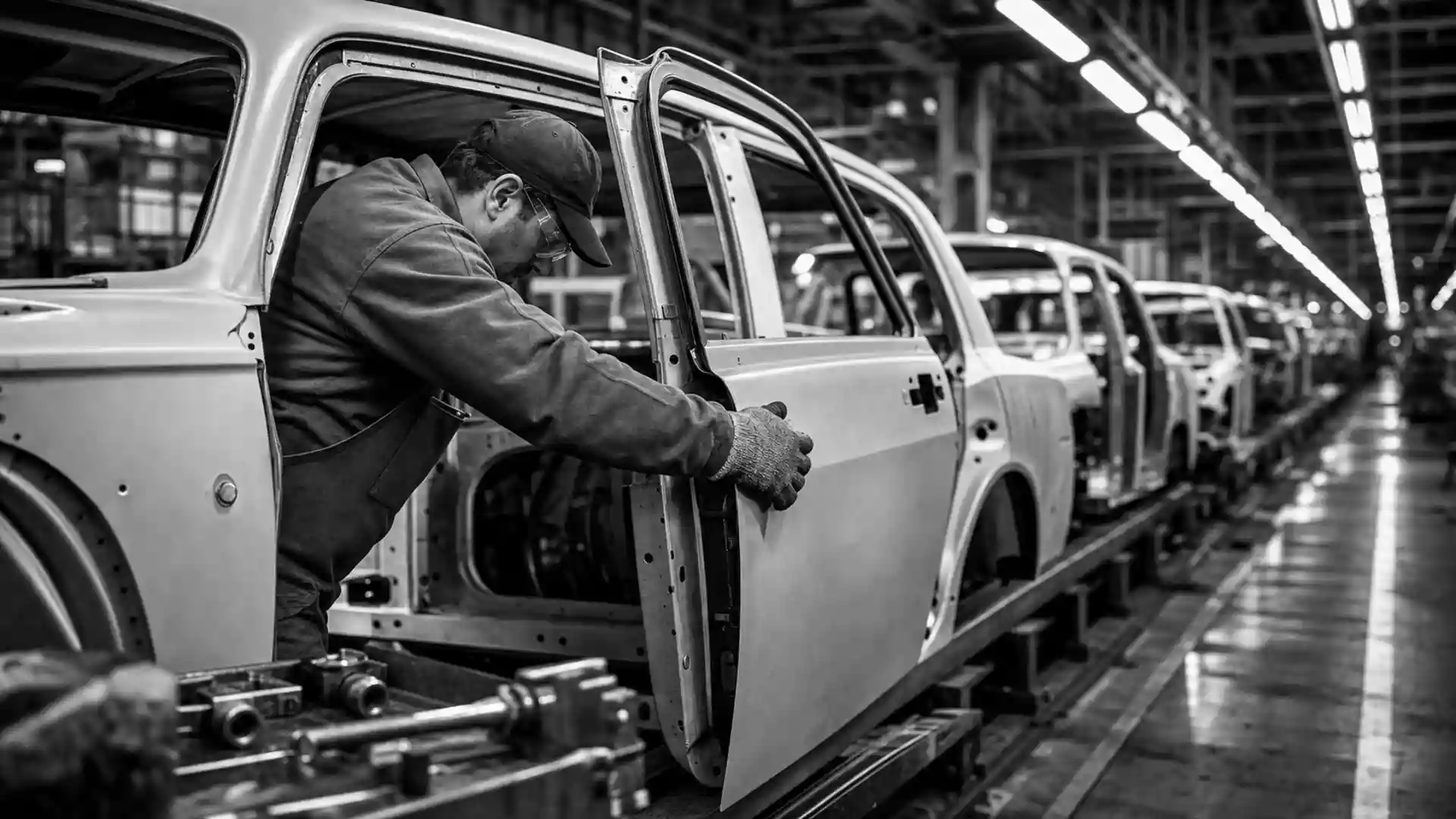
Volkswagen opened a new chapter at its Emden plant today with the start of series production of the ID. Tiguan, an electric SUV earmarked to replace the ID.4 and ID.5. Yet the launch lands alongside a far less reassuring signal from China, where the group's joint venture is running short of fresh product and the sales targets look steep.
The two developments frame the same question for shareholders: whether Volkswagen can turn volume into profit while its cost base is still being rebuilt. DZ Bank reiterated its "Hold" rating on the preferred stock on the same day, keeping a fair value of 73 euros and warning that the earnings uplift from the savings programme will arrive late.
A cautious call from DZ Bank
Analyst Michael Punzet sees a durable margin recovery as heavily constrained even in 2027, as long as the efficiency measures have not fully taken hold. Impairments at the sports-car subsidiary and in the China business weighed on the quarterly result, he argues, while rising sales of battery-only vehicles added further pressure on margins.
That framing shifts the yardstick away from raw delivery figures. What matters, in the DZ Bank view, is how much profit Volkswagen extracts from each vehicle it ships. A more favourable rating would require operational improvements to show up in profitability, not just in showroom traffic.
Should investors sell immediately? Or is it worth buying Volkswagen?
The tension is built into the transition itself. More electric cars can strengthen Volkswagen's market position while initially diluting returns, so the group has to renew its line-up and cut costs at the same time. Should savings outpace the margin drag, the company could become more profitable even with a changed sales mix. If the burdens dominate, higher electric volumes would simply prolong the earnings weakness.
China: shrinking business, new nameplates
China is where that balance is most exposed. Group deliveries there fell by just over 30% between January and September 2026, and a stabilisation would have to reach beyond a handful of successful models to lift the wider business.
There are signs of traction. Models such as the ID. AURA T6 and ID. ERA 5S drove strong growth in electrified deliveries in October, and Volkswagen is targeting a place among the country's ten largest NEV brands in 2027 — a category covering both battery-electric cars and plug-in hybrids. For the recovery case to hold, those new vehicles must win lasting demand while the savings programme bites in parallel.
Volkswagen Anhui offers a longer-dated anchor. Chief financial officer has said the loss-making joint venture aims to reach break-even by 2030; hitting that mark would remove an existing drag. Until then, the positive case rests on sales and production planning finding common economic ground.
Anhui's model gap
How demanding that is becomes clear from the venture's pipeline. According to two Reuters sources, no new ID. UNYX models are planned for 2027 and 2028, and a crossover under consideration has been put on ice. Existing models are to stay in the line-up for now, leaving the site to carry its development with the current range.
The numbers underline the gap. Between January and September 2026, 11,360 ID. UNYX vehicles were sold, while the internal target for the following year stands at 128,000. That plan demands a substantial leap in volume and turns demand into a key stress test. A limited model offensive would spare spending but make a turnaround harder if sales stay weak; the adverse scenario pairs missed targets with delayed savings, leaving China burdens in place while a growing electric share presses on group margins.
Emden's launch and the question beyond 2030
In Emden, the first customers are due to receive the ID. Tiguan in early 2027. Media reports point to several thousand pre-orders since the world premiere in early October, at an entry price of 42,695 euros. Advance sales are already running in Germany and other European markets, and the electric Tiguan will be built exclusively in Emden, alongside the ID.7 and ID.7 Tourer.
Volkswagen at a turning point? This analysis reveals what investors need to know now.
The works council, citing NDR, expects volumes after the ramp-up to match current output. Emden currently builds 780 cars a day and employs around 7,700 people. That makes the model changeover, at least initially, a project to defend existing production.
The longer horizon is less settled. Volkswagen lists Emden among four sites for which no competitive follow-on allocation can be guaranteed in stages from 2031 to 2034, and the company is examining alternative uses. The board intends to decide on the plant's future by mid-2027, according to NDR, while state premier Olaf Lies is pressing for the site to be kept beyond 2030. Because Emden now builds only electric cars, the return on its investment depends heavily on sufficient demand for what rolls off the line.
Wage talks set the next marker
For investors, two tests now sit side by side: whether the ID. Tiguan reaches the output the works council expects, and whether Volkswagen can secure a viable follow-on allocation or alternative use for Emden. The board decision will matter more to the site's valuation than the production start alone.
Group-wide, the next fixed date is the Volkswagen wage round on 24 November 2026, which puts personnel costs and the feasibility of further savings in focus. IG Metall is seeking a 5% pay increase. A workable agreement could make the austerity path more predictable, provided it limits the economic burden and is carried by both sides; a sharpening conflict could complicate implementation. Either way, the recovery case hinges on whether the savings plans turn into relief that actually reaches the P&L.
Ad
Volkswagen Stock: New Analysis - 12 November
Fresh Volkswagen information released. What's the impact for investors? Our latest independent report examines recent figures and market trends.