
Volatus Aerospace Ships First NATO Drone Batch as FAA Decision Looms
Published on 10/07/2026 at 16:51 | Editorial boerse-global.de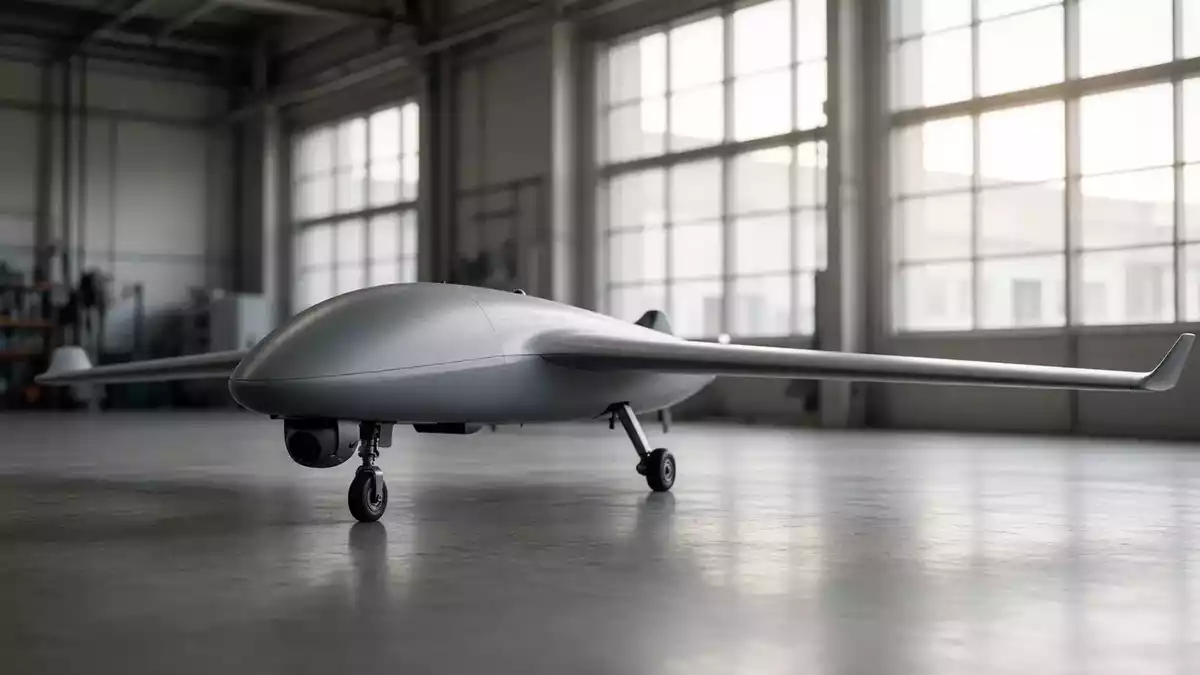
Volatus Aerospace has crossed a threshold that matters more than any conference appearance: hardware has left the building and reached a customer. The Canadian drone specialist confirmed today that it completed delivery of the first unmanned fleet under an ISR (intelligence, surveillance and reconnaissance) training contract with a NATO partner nation.
The original scope of that deal was valued at roughly CAD 4.5 million. What gives the announcement extra weight is what came alongside it — the buyer has already begun drawing on a second tranche and placed additional orders. With those expansions folded in, the contract's potential total value now reaches as much as CAD 9 million, with the remaining optional framework available to the customer through the end of 2027.
Investors responded with modest buying. Volatus shares added 0.6 percent on the day to trade at EUR 0.3425.
Mirabel Plant Turns Blueprint Into Deliveries
The completed first delivery phase demonstrates that the company can execute on demanding defense projects — a claim that until now rested largely on construction timelines. To keep pace with demand for unmanned systems and services, Volatus brought a new production site online just over a week ago: a 53,000-square-foot manufacturing and systems integration facility in Mirabel, Québec, purpose-built to scale the business.
That location handles production of drone docking stations along with the manufacturing and integration of V-series aircraft and other autonomous systems. The NATO deliveries now on the books show the plant is being put to work for real customers rather than sitting idle.
Should investors sell immediately? Or is it worth buying Volatus Aerospace?
Building recurring institutional revenue is the strategic prize here. Training and surveillance missions demand dependable hardware and ongoing support, and the contract's runway through late 2027 provides exactly that kind of visibility. The customer's early move into the second tranche signals satisfaction with what has arrived so far. How quickly the remaining options are exercised within the CAD 9 million ceiling will shape the next chapter.
A Regulatory Clock Ticks in Washington
While the NATO contract provides concrete revenue evidence, a separate process is running in parallel — and it carries its own binary risk. The public comment window at the US Federal Aviation Administration closed yesterday, clearing the way for the agency's substantive review of exemption requests filed by subsidiary Volatus Aerospace US Corp.
Those exemptions, if granted, would let the company operate the FlyingBasket FB3 heavy-lift UAS for demonstrations, external loads, cargo transport and telecommunications network support on US soil. Approval would open the door to one of the world's largest markets for civil and commercial drone services. A denial, or a slow-walked decision, would leave that segment of the US market fenced off.
Meanwhile, Volatus is keeping its profile high on the industry circuit. The company is presenting at DEFSEC Atlantic 2026, which opened yesterday and runs through tomorrow, as well as at the BC Hydro Drone Symposium, which wraps up today. Both are conference appearances only — no contract awards have been reported from either event.
The Gap Between Capacity and Confirmed Orders
Here is where the story gets less comfortable. Expanded floor space and preparations for new aircraft types raise fixed costs before they generate a single dollar of revenue. The Mirabel facility is already producing docking stations and is configured for V-series integration, but larger capacity consumes working capital on its own; it does not guarantee income.
Against a current market capitalization of EUR 250.03 million, market participants are now looking for proof that the new lines can be economically loaded with actual orders. Converting industry contacts from the current trade shows into binding supply agreements would be the clearest such proof — and would push Mirabel toward serial production. A visible jump in orders would validate the expansion strategy and restore operational momentum.
Volatus Aerospace at a turning point? This analysis reveals what investors need to know now.
The opposite scenario is equally plausible. If the hoped-for bookings fail to materialize after the conferences, skepticism could harden. Should the FAA delay or reject the FlyingBasket FB3 exemption, US market access in that segment stays blocked. And without reportable business wins, a wait-and-see posture could keep pressuring the stock.
Price Action Reflects the Waiting Game
The market's caution is already visible in the tape. At EUR 0.3400, the shares sit roughly 12 percent below their 200-day moving average. Holding the current level keeps the possibility of stabilization alive; a sentiment breakdown driven by continued silence on the order front would risk further valuation discounts.
The next hard catalyst sits with US regulators. With the comment period now closed, the FAA's substantive review of the exemption requests is underway. Over the coming weeks, investors will watch two things: whether approval comes through, and whether the trade-show presence translates into measurable procurement contracts.
Ad
Volatus Aerospace Stock: New Analysis - 7 October
Fresh Volatus Aerospace information released. What's the impact for investors? Our latest independent report examines recent figures and market trends.


