
Volatus Aerospace's Satellite-Free Autopilot Passes First Flight Test as Québec Plant Ramps Up
Published on 10/02/2026 at 15:50 | Editorial boerse-global.de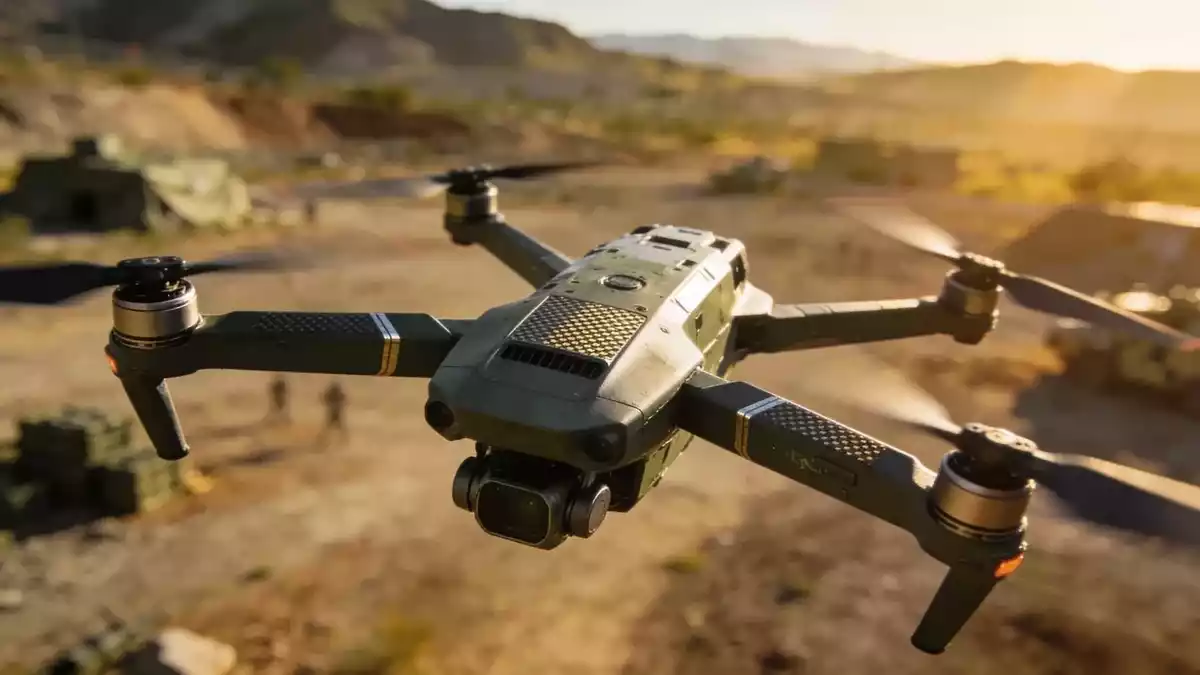
Volatus Aerospace has cleared an early hurdle in its push toward navigation systems that keep operating when satellite signals drop out. Flight trials conducted on 22 September showed that the company's V-Cortex AI Flight Controller, paired with its integrated autonomy operating system, can navigate reliably without a GNSS signal — and without leaning on any external sensors or GPS aids. The unit relied solely on the aircraft's standard onboard sensor suite.
Further test flights and demonstrations are slated for 2026, part of an effort to prove the control system's capabilities under real-world conditions. That independence matters for missions where conventional satellite signals are jammed or simply unavailable, widening the range of scenarios the aircraft can handle.
FAA Exemption Bid Targets Heavy-Lift Cargo
On the regulatory front, subsidiary Volatus Aerospace US Corp filed an exemption request with the Federal Aviation Administration roughly two weeks ago. The application seeks approval for commercial operation of the FlyingBasket SRL FB3 unmanned aircraft on specialized tasks, including external payloads, cargo transport and support for telecommunications infrastructure. The FAA has set a deadline of 6 October 2026 for public comments on the proposal.
Mirabel Facility Anchors Production Plans
Hardware capacity underpins the technology roadmap. Volatus Aerospace operates a 53,000-square-foot manufacturing and systems integration site in Mirabel, Québec, where drone docking stations are already in production. Integration of V-series aircraft and other autonomous systems is advancing in parallel at the same location, bringing development and industrial execution under one roof.
Should investors sell immediately? Or is it worth buying Volatus Aerospace?
The company has also locked in institutional orders in recent weeks. A five-year drone supply contract with the Canadian Army was agreed roughly three weeks ago, followed about a week later by a second five-year deal with the Canadian government covering reconnaissance systems. A bought-deal placement completed more than a month ago further strengthened the balance sheet.
Market Response Remains Muted
Despite the operational milestones, the stock has yet to stage a sustained recovery. In pre-market trading the shares changed hands at EUR 0.3440, giving the company a market capitalization of EUR 252.61 million — a valuation that market participants continue to treat with caution, barely rewarding the industrial scale-up so far.
The share price reaction to recent announcements has been punishing. Following news of the Canadian Army drone contract roughly three weeks ago, the stock fell 10.4 percent. A week later came the second five-year contract with the Canadian government for reconnaissance systems, alongside the FAA application for a heavy-lift drone exemption; since then the shares have shed 8.8 percent. The bought-deal placement from over a month ago continues to weigh as well, with a loss of 16.9 percent accumulated since.
Volatus Aerospace at a turning point? This analysis reveals what investors need to know now.
By Friday's session the picture had stabilized somewhat. The stock was quoted at EUR 0.3490, up 0.3 percent, and sits 4.7 percent above its 50-day moving average.
Ad
Volatus Aerospace Stock: New Analysis - 2 October
Fresh Volatus Aerospace information released. What's the impact for investors? Our latest independent report examines recent figures and market trends.


