
TKMS Faces a New Kind of Pressure: Berlin's Patience Wears Thin as the Order Book Swells
Published on 08/27/2026 at 12:41 | Editorial boerse-global.de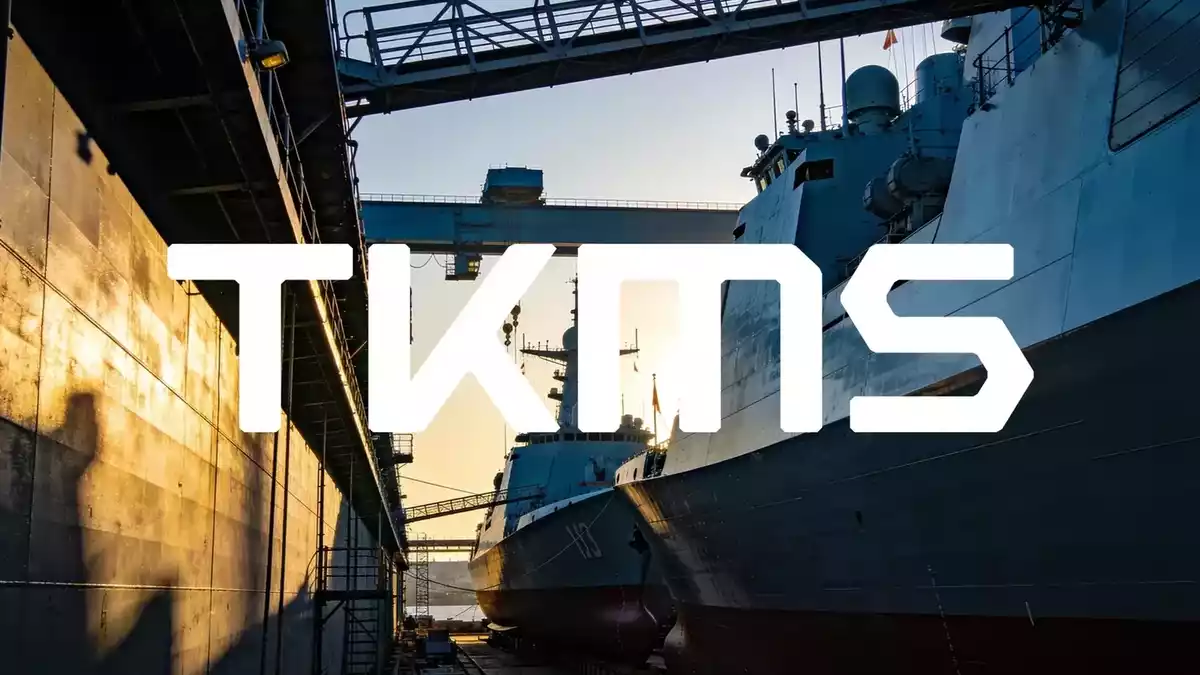
For most of the past year, the story at ThyssenKrupp Marine Systems has been one of unbroken momentum — record orders, raised guidance, and a share price that kept climbing. But the tone shifted last week when the Bundeswehr publicly criticised delivery delays at the shipbuilder, injecting a note of friction into a narrative that had been almost entirely upbeat.
The rebuke lands at an awkward moment. TKMS has never been busier. Its order backlog has swelled to a record €20.1 billion, and management recently lifted its revenue outlook for fiscal 2025/26 from a modest 1–2 percent growth target to a far more ambitious 10–12 percent. The tension between those two facts — a brimming pipeline and complaints about execution — is now the central question hanging over the stock.
A Stock Catching Its Breath
The share price has been drifting below its peak for weeks. At the latest close, TKMS traded at €91.40, down 2.1 percent on the week, though it remains comfortably above its 50-day moving average of €85.14. The gap to the 52-week high of €108.80, reached on 14 August, now stands at roughly 16 percent.
That pullback looks less like a vote of no confidence in the business model than a digestion of a sharp run-up. The stock is still up 39 percent since the start of the year and has gained 12 percent over the past month. In the most recent session, it edged 0.7 percent higher to €92.00, a modest bounce that does little to change the broader picture of consolidation.
What has changed is the narrative. The Bundeswehr's criticism, which also touched on RENK and HENSOLDT, has introduced a new variable: political scrutiny. Investors must now weigh whether the delivery delays are growing pains from a surge in demand or a deeper structural weakness in TKMS's ability to execute.
When execution slips, so does confidence — whether in shipbuilding or in your own workplace safety programme. The same scrutiny that defence contractors face applies to employers who must document how they manage risk. A free toolkit with 41 ready-to-use templates and checklists helps you keep your risk assessments current and defensible. Download the free Risk Assessment Toolkit
The Fundamentals Remain Solid
The financials, at least, continue to support the bullish case. In the nine months to 30 June, revenue rose 19 percent to €1.9 billion, while adjusted EBIT climbed 13 percent to €110 million. Management, led by CEO Miguel Ángel López Borrego and CFO Axel Hamann, has reaffirmed its long-term target of an adjusted EBIT margin above 7 percent.
The order book provides further ballast. Beyond the headline €20.1 billion figure, media reports have cited figures north of €25 billion when including newer naval contracts. A key component is the German Navy's order for four MEKO A200 frigates, with an option for four more — valued at roughly €6.3 billion for the initial vessels and around €5.3 billion for the option.
The Global Hunt for New Contracts
With the domestic pipeline well stocked, TKMS is now casting a wide net internationally. The most advanced opportunity is Canada's Canadian Patrol Submarine Project, where TKMS is competing to supply up to twelve Type 212CD submarines. The timeline is long — first delivery in 2033, full fleet by 2043 — and the process has been gruelling. López Borrego described the Canadian bid as the "toughest experience" of the past year, a telling admission from a CEO not given to complaint.
There has been progress, however. This week, TKMS signed a memorandum of understanding with OSI Maritime Systems to explore integrating the Canadian firm's navigation software into its platforms. Such agreements are a familiar pre-bid manoeuvre in defence procurement, signalling technical readiness and local partnership commitments without guaranteeing a contract.
India offers a potentially faster route to new revenue. Media reports this week named TKMS as a possible partner in India's Project 75(I) submarine programme, with final negotiations reportedly underway for six conventional submarines and an option for three more. The reports are unconfirmed, but the timing fits a broader pattern: TKMS is positioning itself simultaneously in North America, Europe, and South Asia as state navies modernise their fleets.
What Comes Next
For investors, the near-term catalyst is not the next earnings release but the outcome of these international competitions. A Canadian award would be a landmark win, though its revenue impact would not materialise for years. An Indian contract, by contrast, could feed the order book much sooner.
Until decisions land, the backlog of over €20 billion remains the most reliable anchor for the company's valuation. The question is whether TKMS can convert its pipeline into delivered submarines and frigates without further ruffling feathers in Berlin — and whether the market will keep rewarding ambition while the execution questions linger.


