
Thyssenkrupp's Steel Strategy Takes Center Stage as Furnace Goes Dark and Spin-Off Plans Crystalize
Published on 09/09/2026 at 09:11 | Editorial boerse-global.de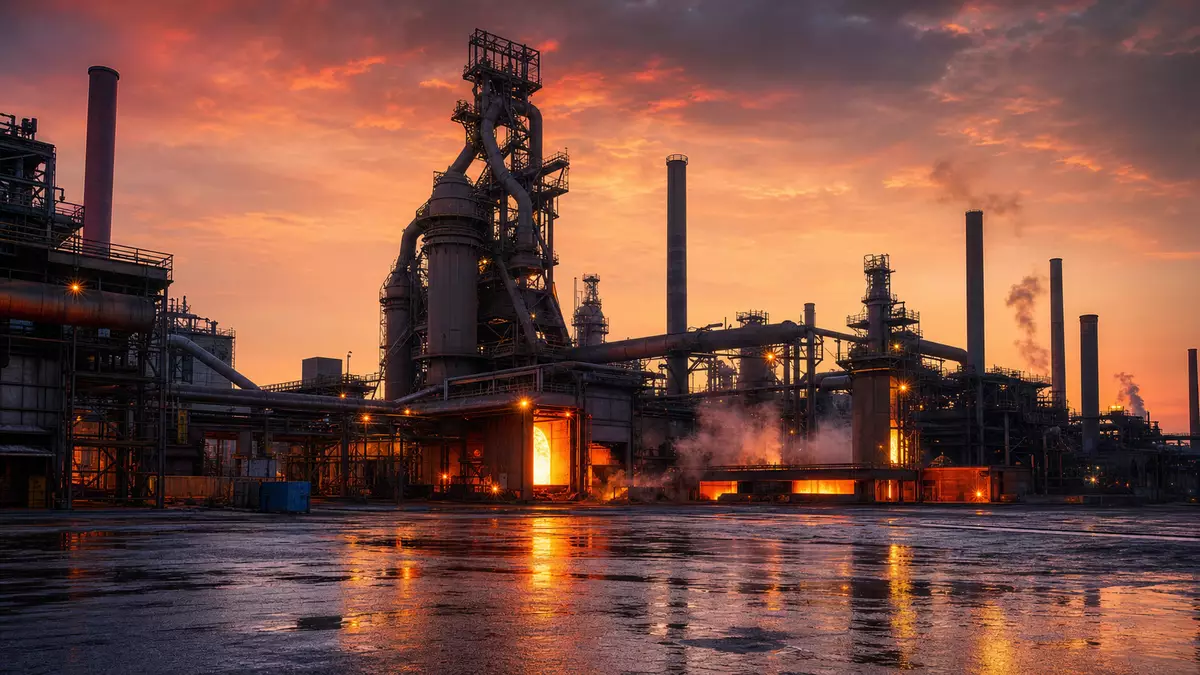
The coming weeks will test whether Thyssenkrupp's recent share-price surge rests on solid strategic ground or merely reflects a favorable steel cycle. With a planned furnace outage in Duisburg now underway and a pivotal capital markets day for the steel division scheduled for September 28 in London, investors have two very different catalysts to weigh.
The maintenance shutdown of blast furnace 2 at the Duisburg site began on August 30 and is expected to last roughly six weeks. Management stresses the pause is scheduled maintenance rather than a response to any operational fault, yet the downtime will still temporarily dent production capacity at one of the group's core steel locations. If the timetable slips, the operational impact could quickly overshadow day-to-day share-price movements.
The stock, meanwhile, has been consolidating after a powerful run. Shares closed Tuesday at EUR 15.46, down 1.8 percent on the day — a pullback the market reads as routine profit-taking rather than a shift in sentiment. Over the past 30 days, the equity has still gained 24 percent, and it sits just 2.1 percent below its 52-week high of EUR 15.79, reached on September 8. The recent dip looks less like a trend reversal and more like a breather after months of sustained upward momentum.
That rally has been fueled in large part by expectations around the group's restructuring of its steel operations. Talks with Jindal Steel International over a stake in Steel Europe collapsed in May, with Thyssenkrupp citing a changed backdrop: the regulatory environment for Europe's steel industry had turned out considerably more favorable than initially assumed. The company is now weighing a full spin-off of Thyssenkrupp Steel Europe, and the London capital markets day at the end of September is expected to shed light on whether — and in what form — the division will eventually stand alone on the market.
Should investors sell immediately? Or is it worth buying Thyssenkrupp?
Operational improvements give the strategy some backing. In the first nine months of the current fiscal year, Thyssenkrupp lifted revenue by 8 percent to EUR 8.8 billion, while adjusted EBIT rose by EUR 28 million to EUR 183 million. Management reaffirmed its full-year guidance but trimmed its revenue forecast. July also marked the completion of the exit from the HKM joint venture — a step the company describes as a historic milestone for the steel segment — and an extraordinary general meeting in early August approved the spin-off of materials distributor TK Accelis, whose IPO is still slated for this year. That news alone has helped lift the stock 7.6 percent over the past week or so.
In a separate development, an old voting-rights disclosure resurfaced, noting that Goldman Sachs had crossed a threshold at Thyssenkrupp. The notification dates back to a July event and was already public — it offers no fresh catalyst, though it does confirm that institutional investors were actively positioning in the stock over the summer.
Further down the pipeline, Thyssenkrupp has taken an investment decision on a Carbon2Chem pilot plant in Duisburg, where CO2 from metallurgical gases will be converted via methanol into synthetic aviation fuel — a nod to the group's push into future technologies as it reshapes its portfolio.
For now, the September 28 event looms largest. Investors will be looking for clarity on the structure Thyssenkrupp ultimately pursues for its steel arm — and whether the months-long share-price strength is built on a durable strategic foundation or owes more to a supportive industry environment, including EU trade protections that have boosted European steel equities broadly.
Ad
Thyssenkrupp Stock: New Analysis - 9 September
Fresh Thyssenkrupp information released. What's the impact for investors? Our latest independent report examines recent figures and market trends.


