Thyssenkrupp's Duisburg Green-Steel Plant Pushed to 2029 as Works Council Chief Crosses to Management
Published on 11/11/2026 at 04:02 | Editorial boerse-global.de
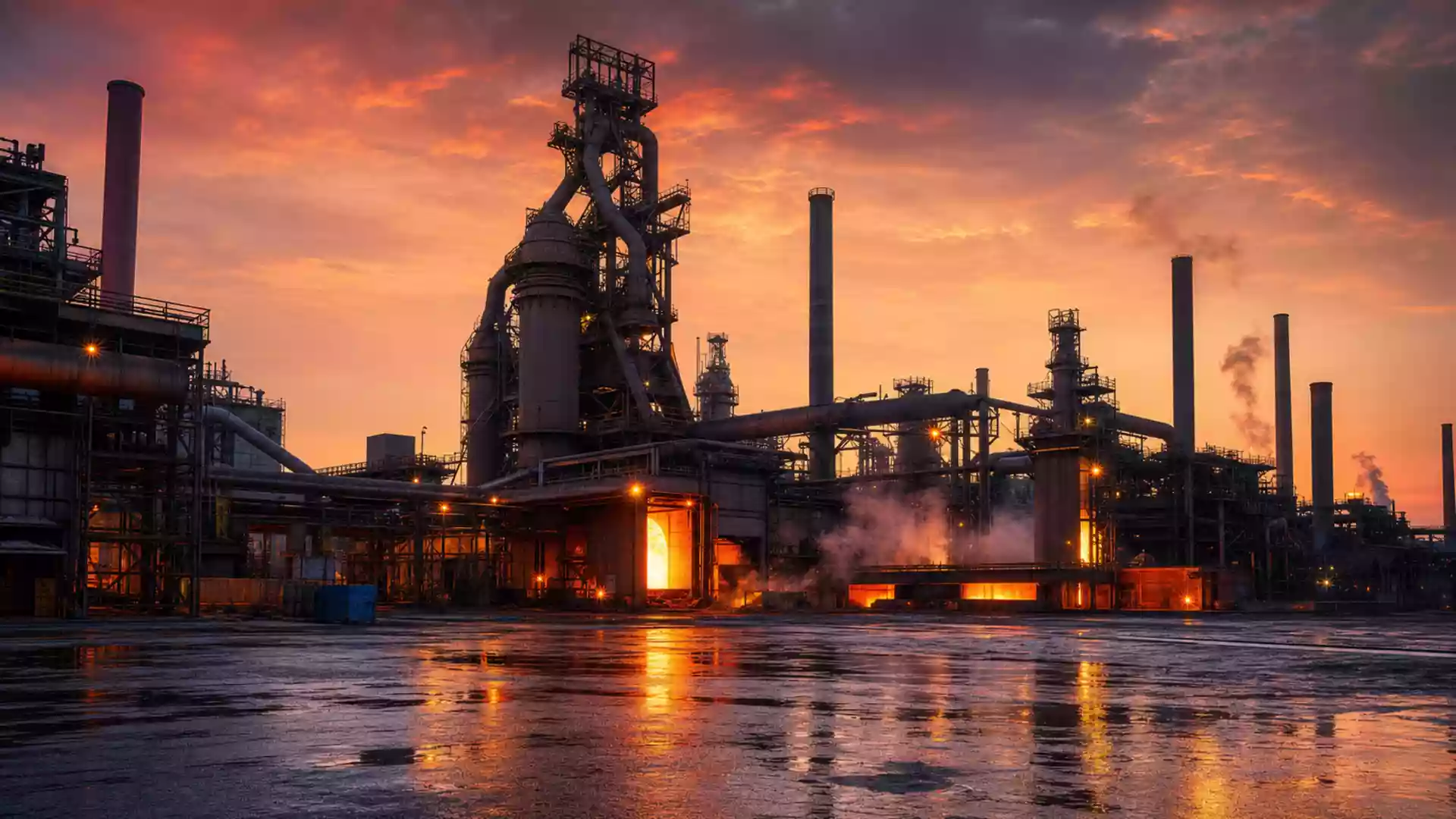
Thyssenkrupp Steel Europe now expects its direct-reduction plant in Duisburg to come on stream in 2029, two years later than the original 2027 target. A company spokesperson attributed the slip chiefly to the project's engineering phase. The revised date surfaced in a European Commission document first reported by Politico and was subsequently confirmed by the company.
The delay reshapes the timetable for the wider conversion of steelmaking at the site. It also hands the company more room on hydrogen: amended subsidy conditions allow a longer period of natural-gas operation and a gradual ramp-up of hydrogen, with the pace depending on how quickly the market can supply it.
Funding terms become final as hydrogen tender takes shape
The changed funding conditions for the tkH2Steel decarbonisation project have now become legally binding, Thyssenkrupp Steel said on 30 October. The company is also preparing a fresh hydrogen tender.
Costs for the plant stand at roughly EUR 3 billion, with up to EUR 2 billion to come from public support. Emission savings remain the project's core case: according to Thyssenkrupp Steel Europe, CO? output in gas-fired operation alone is already more than halved compared with the blast-furnace route.
Should investors sell immediately? Or is it worth buying Thyssenkrupp?
A works council veteran moves to the management side
Tekin Nasikkol, until now head of the group works council, will join the management of Thyssenkrupp Electrical Steel on 1 December as head of HR and labour director, according to a report by the Frankfurter Allgemeine Zeitung. He has sat on the steel works council since 1998 and currently also chairs the Thyssenkrupp Steel works council. His move places a long-serving employee representative in a management role at a separate unit, running alongside the broader debate over the future of the steel division.
That debate has gained momentum: IG Metall has come out explicitly in favour of making Thyssenkrupp Steel independent, and the steel unit is seen as a possible next candidate for such a step. Backing from the labour side lends support if the group pursues that path, though the specific terms of any carve-out will be what counts for any valuation.
Institutional holders redraw their positions
On the shareholder register, Morgan Stanley cut its total position in Thyssenkrupp to 4.1% from 7.96% on 2 November. Voting rights held through shares fell to 3.24% from 5.28%, while the instruments component dropped to 0.87% from 2.67%.
Thyssenkrupp at a turning point? This analysis reveals what investors need to know now.
Goldman Sachs, by contrast, reached a total position of 5.04% about a week earlier — 0.56% through voting rights from shares and 4.48% through instruments. The two banks thus sit on opposite sides of the same trade: Goldman's exposure leans heavily on instruments, while Morgan Stanley's remaining stake is weighted toward direct share voting rights.
For investors, the durability of any independence plan will hinge on the conditions under which the steel division can carry through its production overhaul — a schedule now running two years behind and a financing package still anchored by public money.
Ad
Thyssenkrupp Stock: New Analysis - 11 November
Fresh Thyssenkrupp information released. What's the impact for investors? Our latest independent report examines recent figures and market trends.