
Silicosis Crisis: Over 1,000 UK Stonemasons at Risk from Kitchen Worktop Dust
Published on 08/03/2026 at 14:57 | Editorial boerse-global.de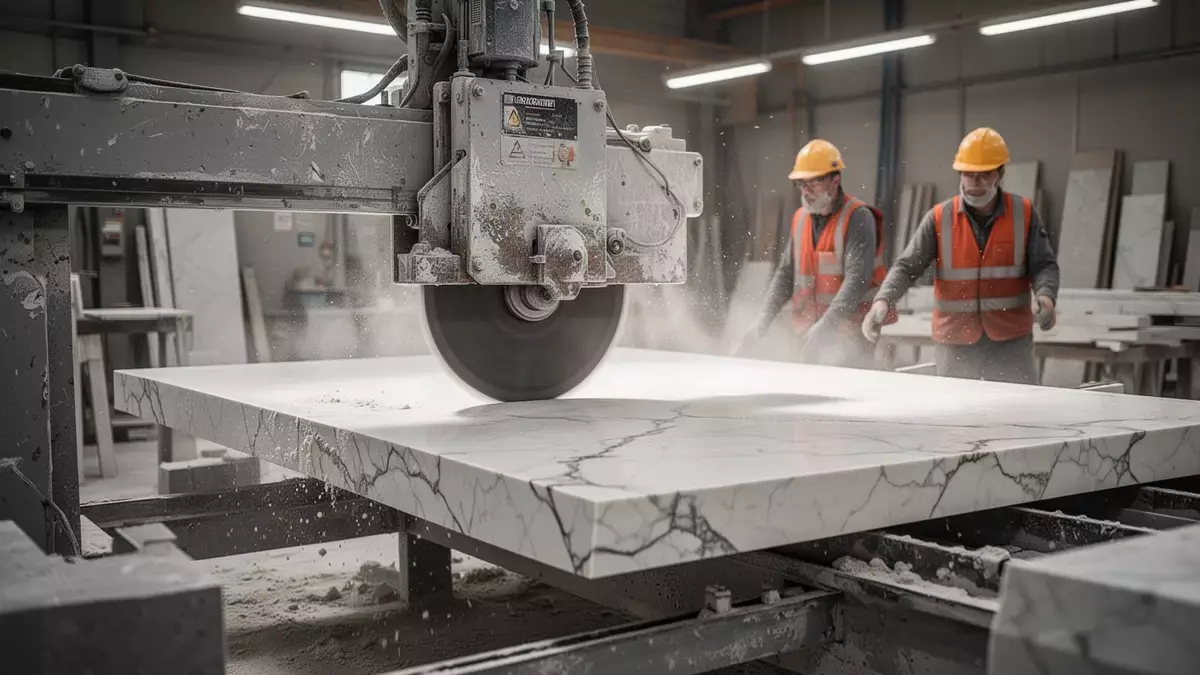
New analysis released on August 3, 2026, reveals that more than 1,000 stonemasons across the UK may have developed silicosis — a debilitating lung disease caused by inhaling dust from quartz kitchen worktops. The findings have prompted experts to call for a national screening programme covering around 7,000 tradespeople, a move that could have significant implications for employers in the fabrication and installation sector.
HSE Cracks Down on Dust Control Failures
The Health and Safety Executive (HSE) has intensified enforcement action against companies failing to control silica dust exposure. Between April and May 2026, the regulator served prohibition notices on several firms for safety breaches linked to engineered stone.
Companies named include Creative Quartz Ltd in Worcester, Mr Granite Ltd in Coventry, Surfacestone (UK) Ltd in Oldbury, and Italia Stone Ltd in Bedford. Further notices were issued to Stone Affairs Ltd, Pyramid Granite Ltd, and Marble & Granite Designs Ltd. These actions form part of a broader HSE campaign, which includes plans for more than 1,000 site visits throughout 2026 to check compliance with workplace safety regulations.
With HSE inspectors ramping up site visits and issuing prohibition notices, now is the time to make sure your own risk assessments are watertight. A free toolkit with 41 ready-to-use templates and checklists helps you document hazards properly and stay compliant. Download the free Risk Assessment Toolkit
The Scale of the Problem
The analysis highlights serious health risks across both formal and informal parts of the stone-cutting industry. Beyond the 7,000 tradespeople identified for potential screening, an estimated 4,000 workers in the informal sector are believed to be at risk — often operating in environments with little or no dust control.
The human cost is already visible, with four deaths reported among young workers in the industry. Health experts have pointed to similar silicosis epidemics in California and Australia as a warning of what could lie ahead for the UK workforce if action is not taken.
Global Bans and Safer Materials
The UK's situation follows significant regulatory shifts in other markets. Australia introduced a world-first ban on engineered stone in July 2024, following a sharp rise in silicosis cases there.
In response, some manufacturers have begun reformulating their products to reduce risk. Silestone benchtops, for example, have been reintroduced in the Australian market as QXeron — a material containing less than 1% crystalline silica. These reformulated products use up to 88% recycled materials and are designed to meet stricter safety standards while retaining the non-porous, scratch-resistant qualities of traditional quartz slabs.
Calls for National Screening
Industry experts are now advocating for a structured national screening effort to reach the thousands of workers who have spent years cutting and finishing engineered stone — a process that releases high concentrations of crystalline silica dust.
Crystalline silica is just one of many hazardous substances that can lurk in your workplace. If you handle any substances that could harm workers' health, you have a legal duty to assess the risks under COSHH regulations. A free COSHH toolkit with 43 customisable templates and toolbox talks helps you meet those obligations without the paperwork headache. Get the free COSHH Toolkit
While the UK currently has no legal maximum workplace temperature — a separate concern for construction safety — the HSE's focus remains on respiratory protection and preventing dust inhalation. Recommended measures for the industry include a shift toward safer materials, mandatory wet-cutting techniques, and improved respiratory protective equipment.


