
Siemens Energy Teams Up With NextEra and QTS to Tackle Texas Grid Bottleneck as Buyback and Board Reshuffle Advance
Published on 10/02/2026 at 13:41 | Editorial boerse-global.de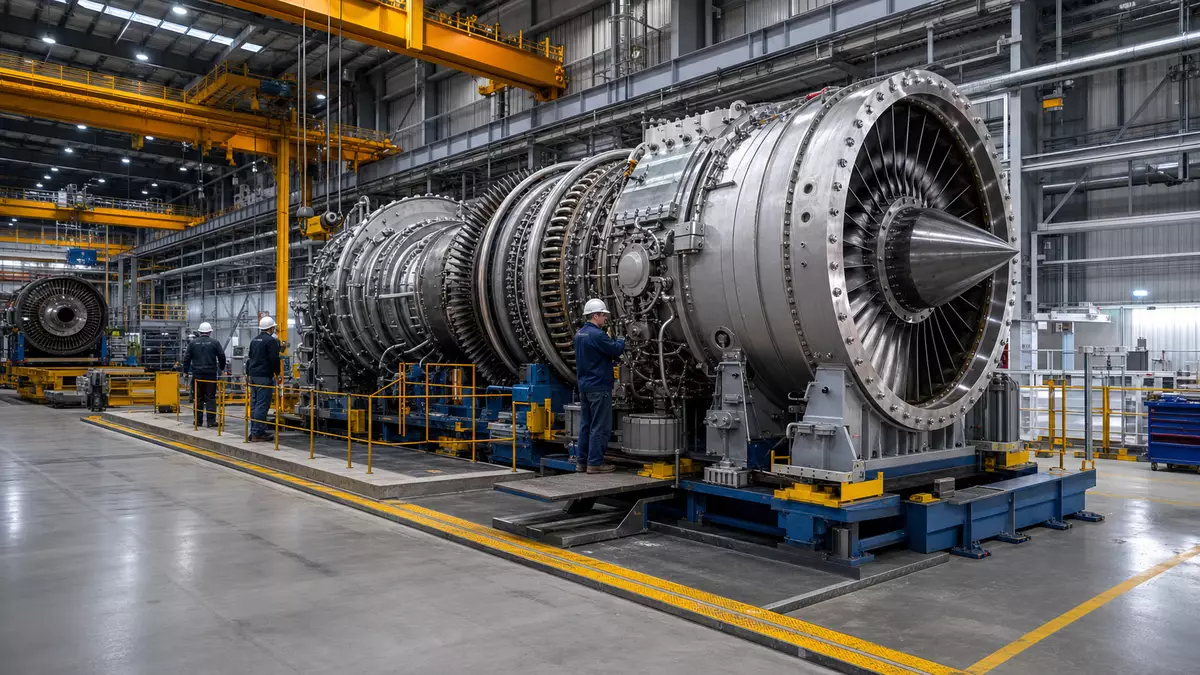
Siemens Energy is taking a page out of the infrastructure playbook that big tech has used for years: when permitting becomes the binding constraint, get ahead of it politically rather than wait for approvals to grind through. According to Bloomberg, the company is joining forces with NextEra Energy and Blackstone subsidiary QTS on a campaign aimed at pushing back against mounting local opposition to infrastructure projects in Texas, where soaring electricity demand from data centers is colliding with resistance to new transmission lines.
The move addresses what is arguably the industry's tightest choke point right now. Order books for modern generation equipment remain full, but if grid expansion stalls, deliveries and commissioning risk slipping. By engaging early alongside well-capitalized partners, Siemens Energy is trying to clear regulatory hurdles before they harden into delays.
A 119-Turbine Order Anchors the Growth Story
That political groundwork is being reinforced by fresh commercial wins. On Wednesday, the company agreed with Dynamis Power Solutions to supply 119 SGT-400 gas turbine cores, each rated at roughly 15 megawatts. Delivery of the units is scheduled to begin in 2027 and run over several years.
The order underscores the momentum in flexible power generation. While large centralized plants often require lengthy lead times, smaller gas turbines can deliver peak-load capacity to industrial customers far more quickly — a niche that is drawing increasing interest as grids strain under new demand.
Long-term maintenance contracts running 20 years accompany the deal. Such service agreements smooth out the lumpy cash flows typical of equipment manufacturing and give management firmer visibility for capital planning.
Should investors sell immediately? Or is it worth buying Siemens Energy?
Guidance Holds Firm Despite Market's Muted Reaction
Operational confidence is reflected in the financial targets. During the pre-close call for the fiscal year, management reaffirmed its full-year goals: comparable revenue growth of 14 to 16 percent and net income of around EUR 4 billion. Free cash flow is expected to reach roughly EUR 8 billion. The company also indicated an earnings margin before special items at the upper end of the 10 to 12 percent range.
That last detail failed to spark a rally. Because no formal upgrade to the annual forecast was announced, disappointment dominated trading — a reminder of how sensitive the market can be when a seemingly flawless growth story doesn't beat expectations every week. Yet the confirmation of 2026 targets points to considerable stability, and the underlying figures remain substantial.
The third tranche of the share buyback program, worth up to EUR 2 billion and running until the end of March 2027 at the latest, launched just over a week ago. In its first interim report, the company disclosed the repurchase of 290,986 of its own shares during the initial trading days — a volume that speaks both to a solid liquidity position and to management's confidence in the company's intrinsic value.
Boardroom Break From Siemens AG
Behind the scenes, a quieter shift is cementing the company's independence from its former parent. With the departure of Matthias Rebellius from the supervisory board, Siemens AG lost its formal claim to a seat on the oversight body, as its stake has fallen below the 5 percent threshold.
The Munich district court, acting on a request from the executive board, appointed Pekka Lundmark as his successor effective October 1, while Joe Kaeser remains chairman of the supervisory board. Shareholders are set to formally confirm the appointment at the annual general meeting on February 25, 2027.
The change marks more than a personnel matter. Siemens Energy now operates as a standalone player in global infrastructure rather than in the slipstream of a traditional conglomerate structure.
Siemens Energy at a turning point? This analysis reveals what investors need to know now.
Analyst Targets Point Higher
Sell-side support remains intact. Deutsche Bank reiterated its buy rating with a price target of EUR 210, while Berenberg analyst Chris Armstrong reaffirmed his buy recommendation on September 25 with a EUR 205 target, citing Siemens Energy's role as a structural beneficiary of government spending policy.
The stock closed at EUR 144.00 in the prior session and was trading at EUR 146.36 on Thursday, up 1.6 percent. That leaves it 20 percent higher since the start of the year but still 26 percent below its 52-week high of EUR 195.38. The recent consolidation looks more like a breather after a strong run than the start of a reversal.
Attention now turns to the extended conference call on fiscal 2026 results scheduled for November 11, where margin quality and cash generation are likely to take center stage. For investors willing to look past short-term reactions, the picture is of a company that has done its homework — pairing disciplined execution with a political instinct for the real bottlenecks in its growth markets.
Ad
Siemens Energy Stock: New Analysis - 2 October
Fresh Siemens Energy information released. What's the impact for investors? Our latest independent report examines recent figures and market trends.


